On December 8, 2006, the U.S. Patent Office issued U.S. Pat. No. 9,597,591 to Konami Digital Entertainment Co., Ltd. The patent concerns “a game apparatus for a virtual or simulation game that allows a game player to readily recognize that a game tool is improperly operated.” In plain language, this patent appears to relate to letting players know when they are using motion-controlled video game system accessories correctly and/or incorrectly within the space that they’ve set up for play.
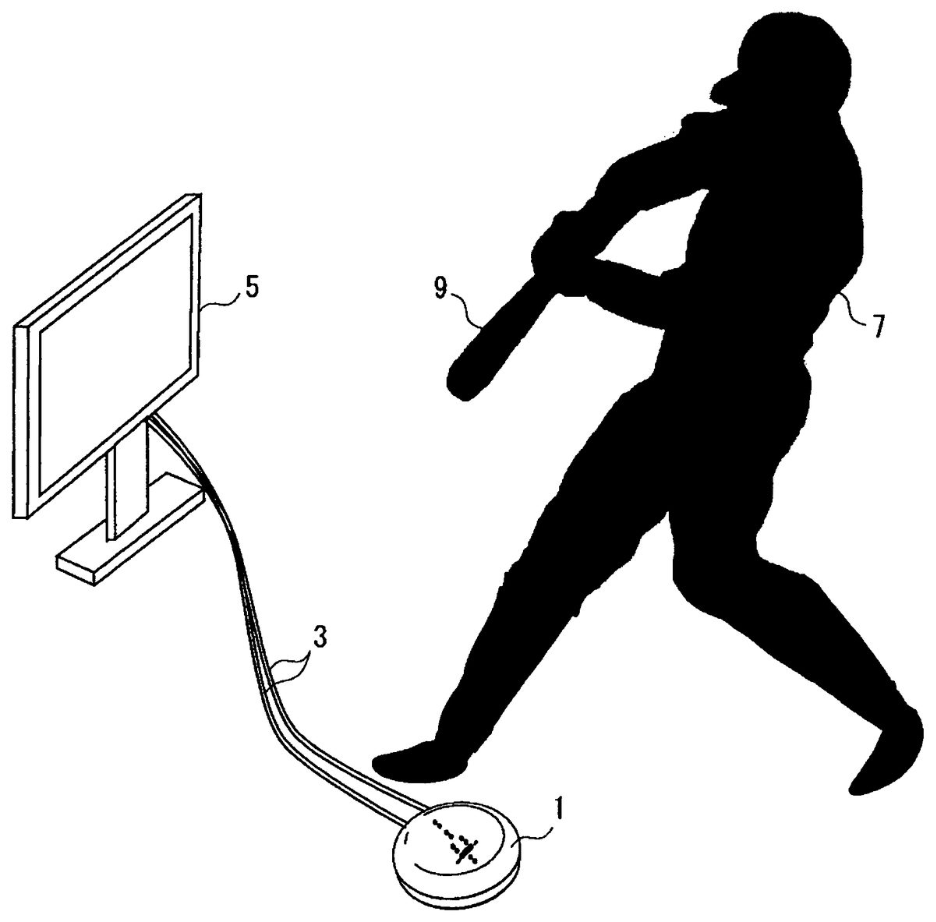
In the following figure, you can see the patent writers’ use of a baseball-themed sports game.
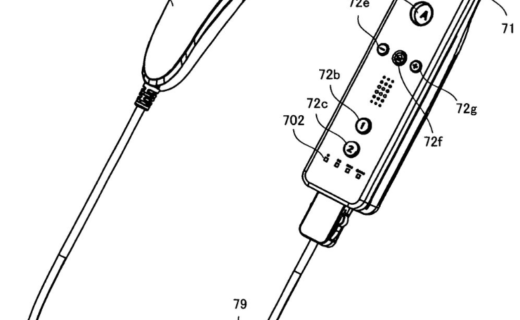
Allowing users to engage with games using unique motion input modalities has become increasingly important in the last two decades: the most popular implementation involved Nintendo’s Wii and the Wii U. Later came the Xbox Kinect, the Switch, and now the Switch 2, all consoles which have made use of motion controls in their games.
Illustrative Claim:
1. A game apparatus for playing a virtual or simulation game comprising: a game tool to be operated by a game player in a three dimensional space;
motion signal generation means for detecting a motion of the game tool in the three dimensional space and outputting a motion signal according to the detected motion;
image display means having a function of determining a movement of a movable object such as a ball displayed, based on the motion signal, on a screen where no character, which plays on the screen in place of the game player, is displayed;
motion determination means for determining, based on the motion signal, whether or not a predetermined proper motion has been made by the player with the game tool in the three dimensional space;
operation timing determination means for determining timing at which the game tool is operated as the operation timing based on the motion signal and outputting a change command for changing a moving direction of the movable object based on an advance or delay of the operation timing from a predetermined reference timing;
and moving-direction change means for giving a command to the image display means to output a video signal by which the moving direction of the movable object displayed on a screen is changed in accordance with the change command, the image display means further having a function of displaying movement of an imitated image of the game tool on the screen to confirm that the proper motion of the game tool has been made when the motion determination means determines that the proper motion of the game tool has been made and a function of changing the moving direction of the movable object displayed on the screen in accordance with the change command.