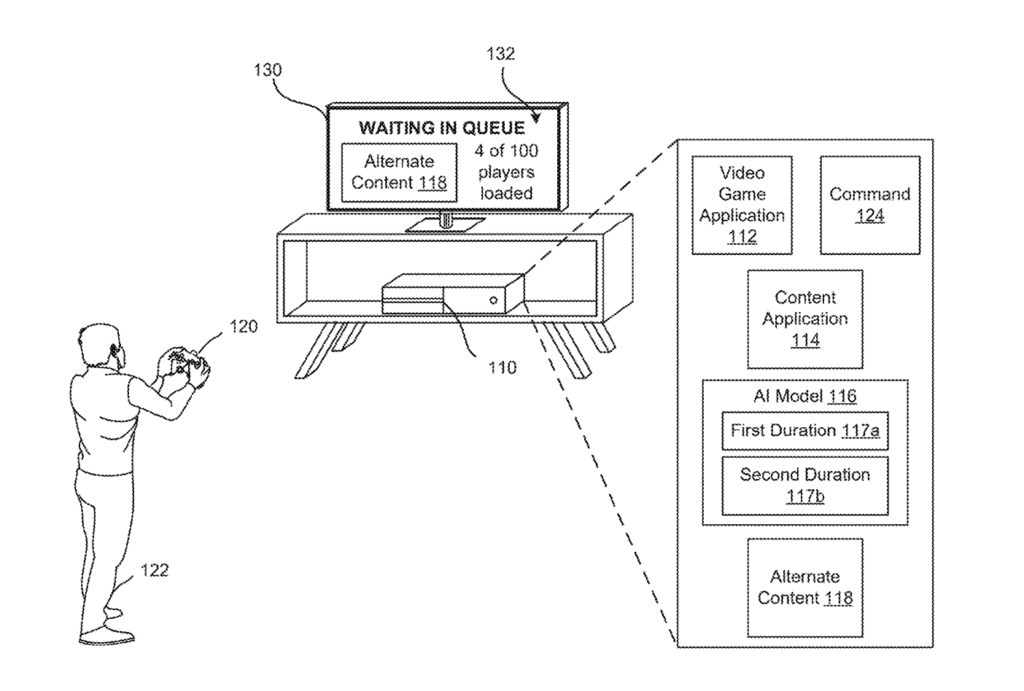
A Sony patent application, recently published as U.S. Pat. Pub. No. 20260138036, relates to showing video game players advertisements while they’re waiting for games to load. The publication concerns finding the precise timing of how to show players “alternate content” during “appropriate times.” This feature may relate to how Sony will approach serving players loading screens in the future.
Loading screens have been an annoyance for video game players since the mode of entertainment was invented, and one of the most exciting things about new console technology is the ability to cut down on loading times. In their publication, Sony acknowledges that such stoppages during gameplay can be “jarring and discontinuous,” especially with the level of immersion inspired by modern games. Sony chooses to focus on methods to reduce the “discontinuity in level of interaction,” which doesn’t necessarily mean making loading screens shorter. In fact, this publication would seem to suggest that Sony might focus on serving players “short-form videos” and other advertisements using an Artificial Intelligence (“AI”) model to generate alternate content for the downtime.
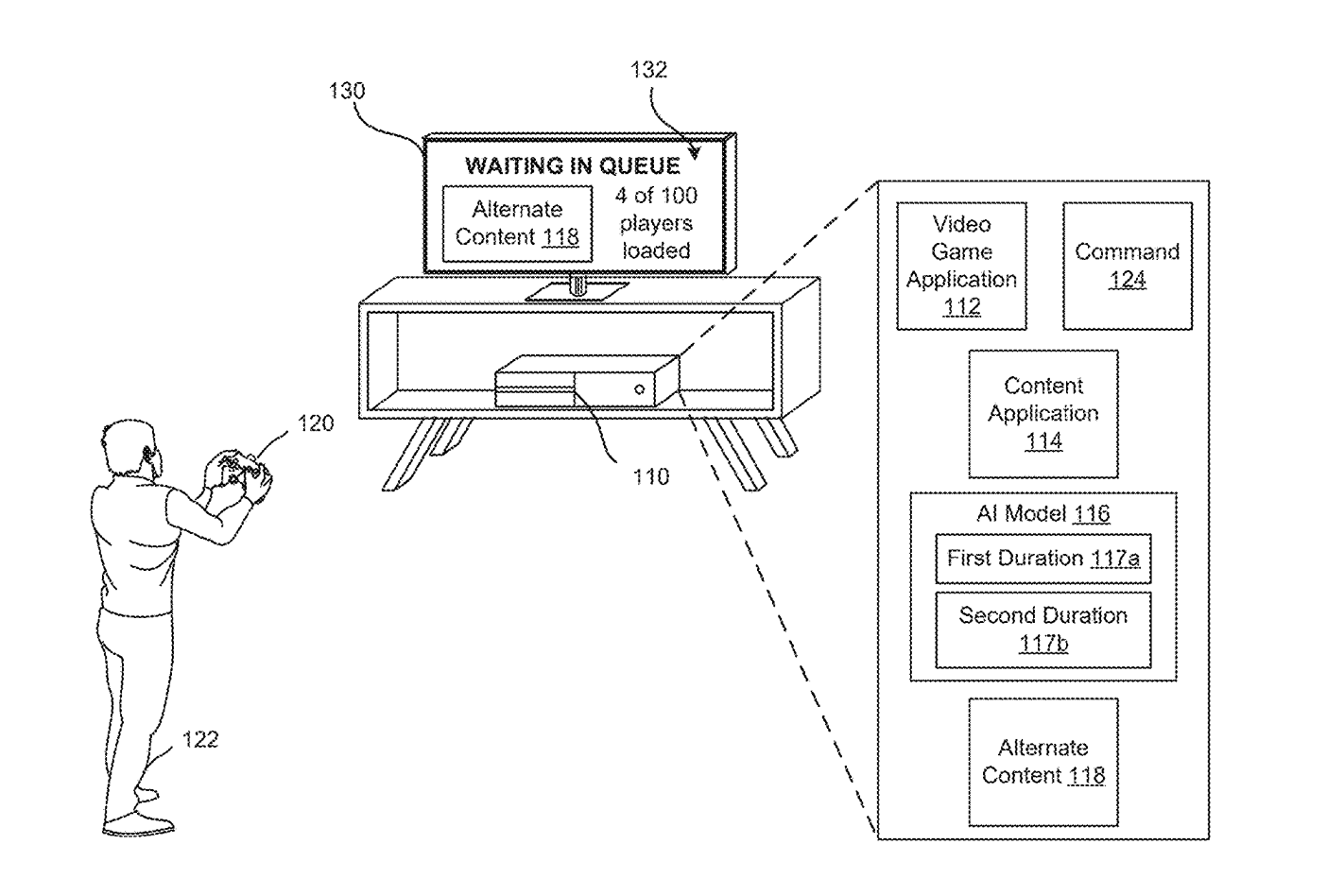
The publication also suggests that the AI model trained to fill the “appropriate times” presented by loading screens could generate alternate content unique to each player’s experience. This could take the form of past gameplay footage or information about an upcoming multiplayer match. This goes to show that, while advertisements might be one focus of this patent application, the use-cases for such techniques are broad.
Illustrative Claim:
1. A method of operating a gaming console, the method comprising, by the gaming console:during game play, providing graphical game images on a screen;
determining that an appropriate time for alternate content is about to begin;
in response to determining that the appropriate time for alternate content is about to begin, estimating a first duration of the appropriate time for alternate content; and
in response to the appropriate time for alternate content beginning, initiating the providing of alternate content on at least a portion of the screen for a second duration, the second duration shorter than the first duration.