Overview:
In the world of online gaming, fostering player interaction and enhancing social dynamics are crucial elements for player retention and engagement. A patent issued to Blizzard Entertainment describes systems and methods for creating deeper interactions between players in multiplayer games, even when they are not playing simultaneously.
U.S. Patent No. 9,076,292 (the “’292 Patent”) revolves around a Nemesis and Avenger system introduced in Diablo III: Ultimate Evil Edition, which allows players to affect each other’s gameplay across different game instances. Traditionally, multiplayer games have struggled to maintain meaningful connections between players who are often not online at the same time or are engaged in different tasks. This system addresses these challenges by allowing actions performed by one player to trigger events that impact another player’s experience, even if they are not connected at the same time.
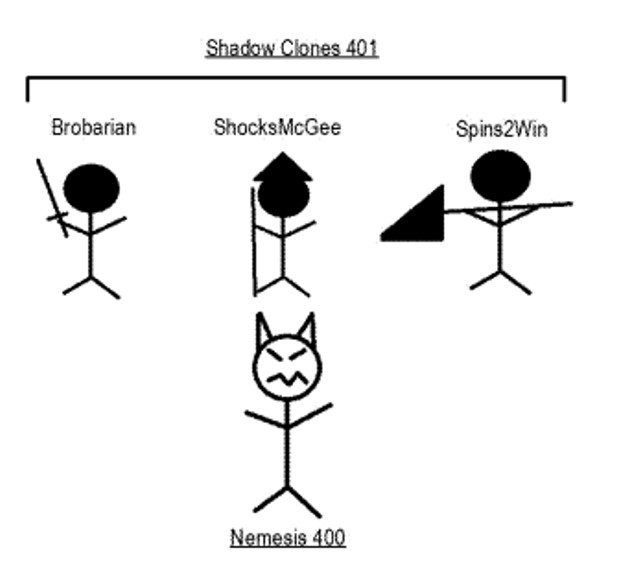
The ‘292 Patent outlines how a nemesis character, created based on a player’s in-game actions, can invade another player’s game instance, presenting a new challenge. The invasion occurs when specific invasion conditions are met, and the nemesis character is equipped with unique abilities that make it stronger than the original NPC that caused the creation of the nemesis. In some cases, this nemesis may even bring along henchmen or “shadow clones” of previous defeated players, adding a personal touch to the encounter.
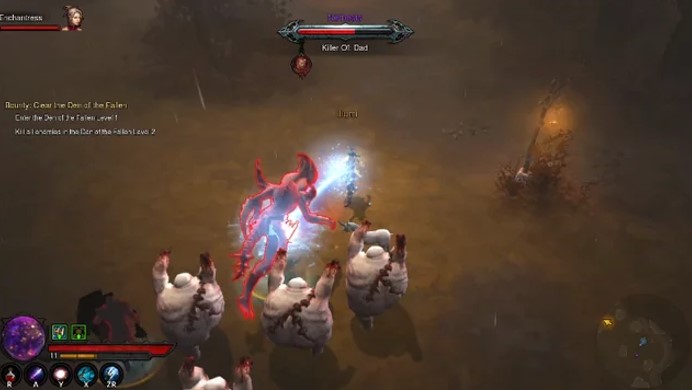
This interaction not only encourages players to engage with each other indirectly but also adds a layer of strategic gameplay, as players may need to defend against these invasions while earning in-game rewards. If a player successfully defeats the nemesis, both the invader and the defender are rewarded. On the flip side, if the defender fails, the nemesis evolves and is sent to challenge another player, creating a chain of interactions that increases player interactions in the game world. By utilizing this nemesis system, game developers can bridge the gap between players who are not actively online at the same time, fostering a more dynamic and socially engaging multiplayer experience.
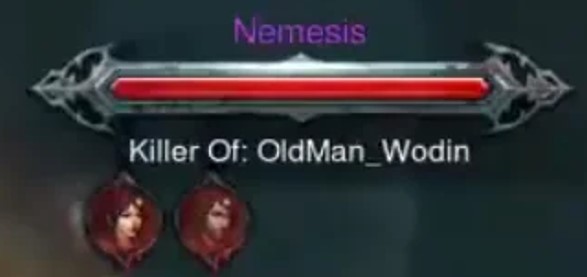
The game server may track and record every nemesis invasion, generating a “nemesis history” for the active account. This record may include the types of nemeses the player has faced, the tactics used by the nemeses, and the outcomes of the battles. The nemesis history could influence future invasions, creating a more challenging or personalized encounter. For example, if the player has previously defeated a nemesis through specific tactics, the game server may adjust future invasions to counteract those tactics. This dynamic evolution ensures that no two invasions are identical and that the player is continually challenged.
In some versions of the game, the nemesis invasions are not only combat-focused but may also feature intricate narrative elements. These invasions could be linked to the progression of the game world itself, such as a nemesis whose invasions reveal hidden lore or secrets tied to the game’s overarching story. For example, as the nemesis defeats the player characters, they may leave behind cryptic messages or pieces of a larger puzzle that leads to a deeper storyline. The player’s interactions with the nemesis, whether through combat, dialogue, or discovery of the nemesis’ motivations, can become a central plot point in the game’s world.
Abstract:
The nemesis system also introduces an element of risk and reward for players. On the one hand, successfully overcoming an invasion by a nemesis could lead to significant rewards, such as rare loot, reputation boosts, or even the unlocking of new abilities. On the other hand, the stakes can be high, especially in the case of hardcore mode players, where a nemesis’ defeat may lead to permanent loss of the player character or valuable resources.
Multiple players may band together to defeat a single nemesis, with the nemesis potentially adjusting its tactics to challenge the combined forces of the group. The involvement of multiple players introduces new layers of strategy, as players must coordinate their actions to outmaneuver the nemesis and its henchmen, who might adapt to group dynamics. This cooperative element enhances the social experience, turning the nemesis invasion into a collaborative battle rather than just a solo affair.
The presence of the nemesis system can serve as a motivating factor for players to engage more deeply with the game. The fear of an incoming invasion can push players to build skills, improve character builds, and explore different strategies. This challenge helps maintain long-term player engagement, ensuring that nemesis invasions remain a central and thrilling feature of the game.
In an approach, one or more player characters controllable by a first player account perform an action in an instance of a game world. In the event that the action meets one or more conditions for creating a nemesis, a computer system controlling the game instance selects a second player account to be invaded by a nemesis. When the second player account plays the game in the same or a different game instance, the computer system determines whether second one or more characters of the selected account meet one or more invasion conditions. If the invasion conditions are met, the computer system generates computer-controlled enemy NPCs for second one or more characters of the second player account to defeat. If the second account defeats the nemesis invasion, rewards are generated for the first and second player accounts. Otherwise, the computer system chooses a third player account for nemesis invasion.
Illustrative Claim:
1. A method comprising:
detecting that a particular event has occurred within a first game instance;
wherein the particular event involves:
first one or more player characters that are controllable by a first account, and
a particular computer-controlled character,
wherein the particular computer-controlled character has abilities that enable the particular computer-controlled character to perform a first set of actions when interacting with the first one or more player characters in the first game instance;
in response to detecting that the particular event has occurred, performing steps of:
selecting a second account from one or more accounts,
wherein the second account is a different account than the first account;
storing data associated with the second account that flags the second account to be invaded by one or more computer-controlled characters,
selecting, a new ability that is different from the abilities of the particular computer-controlled character;
after the second account has been flagged to be invaded by the one or more computer-controlled characters, detecting an invasion condition in a second game instance;
wherein the second game instance includes second one or more player characters that are controllable by the second account;
in response to detecting the invasion condition, performing the steps of:
generating the one or more computer-controlled characters in the second game instance based on a location within the second game instance associated with the second one or more player characters,
wherein generating the one or more computer-controlled characters includes:
generating a second particular computer-controlled character of the one or more computer-controlled characters with the new ability;
wherein, with the new ability, the second computer-controlled character to is able to perform a second set of actions;
wherein the second set of actions includes a new action that is different than any action in the first set of actions available to the particular computer-controlled character in the first game instance;
wherein, in the second game instance, the new ability enables the second particular computer-controlled character to use the new action when interacting with the second one or more player characters;
wherein the method is performed by one or more computing devices.