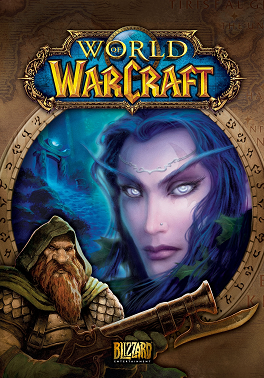
Blizzard Entertainment has filed a patent application, pending U.S. Patent Application 2025/0124631, that discusses the technology behind fitting three-dimensional digital items like armor and clothing to different character models. This feature directly affects how characters may look in World of Warcraft and potentially other Blizzard titles.
World of Warcraft is home to dozens of playable races, from Humans and Orcs to Pandaren and Draenei. Each race has unique proportions, and both genders of each race often have separate models with very different proportions. Armor sets, helmets, and other cosmetic items must scale seamlessly across all these variations. Historically, this meant manual adjustments by artists (a process that grew exponentially more complex as new races, genders, or armor sets were added).
Blizzard’s patent application addresses this exact challenge by introducing a machine learning system that automates the fitting of digital items to multiple character models. The machine learning system learns from a set of manually fitted examples, called base transforms, which define how a 3D item fits one character model versus another. For example, a helmet designed for a Human male may be used as a reference to generate a properly scaled version for a Tauren female.

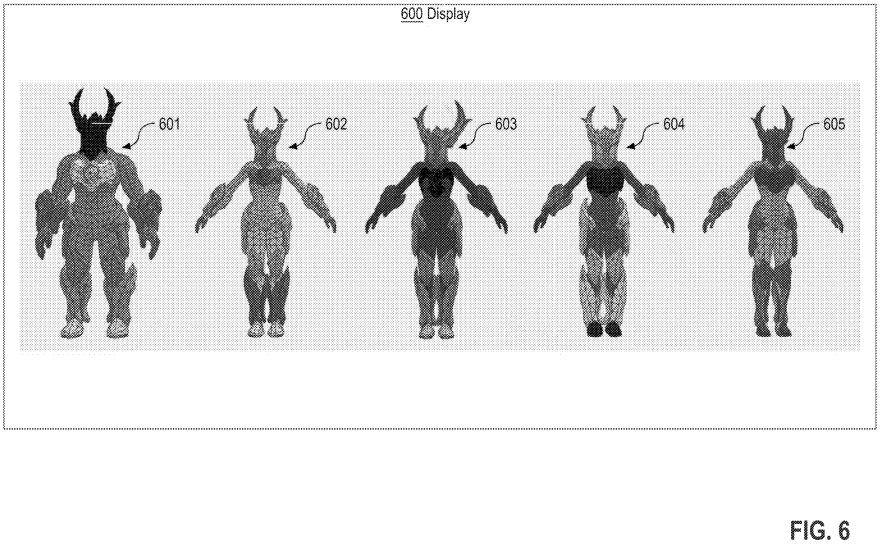
When a new 3D item is created for a “first” character model, the system computes the necessary transformations to adapt it to a “second” character model. This includes adjusting shape, size, and unique characteristics of the second model.
The system also addresses common issues like clipping (where parts of the item intersect unnaturally with the character’s body) and enforces local symmetry. It can reposition vertices, enforce symmetry planes, and ensure textures align correctly. Some claims describe a system where multiple output variations can be displayed for a player or artist to select the best fit, allowing for subtle artistic decisions while still benefiting from automation.
For players, this patent could directly impact cosmetic and transmog experiences. Armor and cosmetic items are more likely to fit flawlessly across all races and genders. New races or character models can be added without massive delays in item availability. Items retain their intended aesthetic details, so even elaborate sets can look polished on every character. This technology could also extend to mounts, pets, and other in-game items that must scale dynamically.
Illustrative Claim:
9. A system comprising:
one or more processors; and
a memory storing instructions that, when executed by the one or more processors, cause performance of:
generating a convex hull for at least a portion of a character model corresponding to a three-dimensional digital object;
affixing the three-dimensional digital object to the convex hull;
identifying a first clipped vertex from a plurality of vertices of the three-dimensional digital object;
identifying one or more neighboring vertices of the first clipped vertex from the plurality of vertices of the three-dimensional digital object;
repositioning the first clipped vertex to a nearest point on a surface of the convex hull; and
repositioning individual neighboring vertices of the one or more neighboring vertices based at least in part on the repositioning of the first clipped vertex.