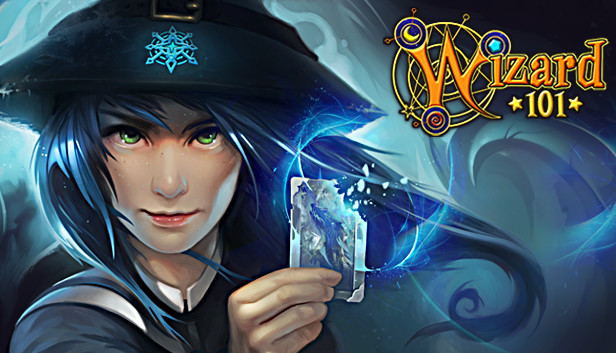
Part 1 of our three-part series exploring patents on game mechanics through the lens of Wizard101 looked at something that feels like more of a pure gameplay patent, relating to how combat turns are resolved in the game. The illustrative claim we picked from US Pat. 8,187,085 seems bereft of any “hard” technical elements:
1. A method for evaluating combat in an online game using computer-readable instructions, comprising:
- receiving from a plurality of characters in an online game selections of cards representing actions performed on targets;
- identifying values of parameters associated with the plurality of characters and the targets;
- determining effects on the targets based, at least in part, on the identified values and the performed actions; and
- automatically updating one or more attributes of the targets in accordance with the determined effects.
Pure gameplay patents, which do not address clear technical features of a game and instead focus on the rules of the game, encounter significant difficulty these days. Such patents are frequently deemed invalid under 35 U.S.C. 101 for being directed to abstract ideas without significantly more.
Today, in part 2 of our series, we’ll look at a patent claim that combines similar gameplay features with “more computery” user interface elements and the way the game visualizes a player’s choices through real-time updates of the on-screen stats and visual effects. – Ed., Scott Kelly
By Marguerite Smith, Patent Agent at Banner Witcoff. Electrical Engineering, from Miami University of Ohio.
U.S. Patent No. 8,182,320 describes a computer-implemented method for managing an online game, specifically incorporating a card-based combat system within a virtual world. The ‘320 patent details how characters in the game collect cards that represent executable actions, which players select during in-game duels. These selections determine real-time effects that are visually represented through three-dimensional elements in the virtual world. By automating the determination of card effects and integrating them into gameplay, this feature enhances the interactive experience of online combat.
Real-Time Updates Using 3D Objects
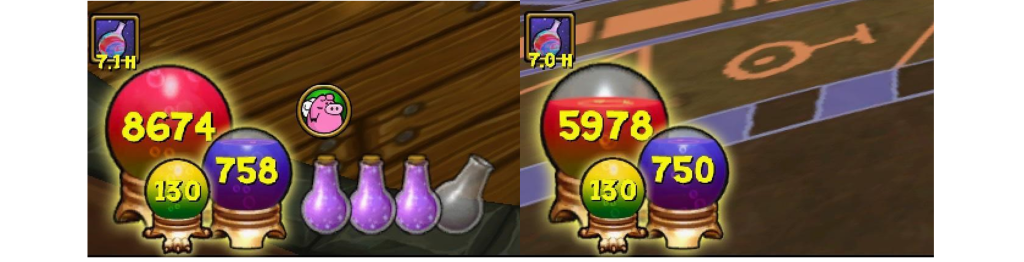
Each character has state information—such as health, mana, buffs, and debuffs—that is critical to gameplay. This state information is visualized in real-time using 3D objects. For example, a character might have a floating health bar or a magical aura that changes color based on the current health level. The 3D objects representing state information are displayed near the character. The information is visually integrated into the gameplay without cluttering the screen with interface elements. As the player’s character engages in combat or interacts with the combat ring, these 3D objects are updated in real-time to reflect the current state of the character. For example, if a character loses health, the health ring circling the character’s feet would shrink accordingly or change colors to indicate low health. Other players in the game can also view these 3D state representations. This makes it easier to gauge the status of allies or opponents in multiplayer scenarios.
Real-time updates in Wizard101 are most evident during combat, whether in PvP or PvE battles. Players’ health, visible to both teammates and enemies, dynamically adjusts based on the damage taken or healing received. Meanwhile, the mana bar, which represents a player’s spell-casting ability, is only visible to the individual player and updates in real-time as spells are cast and mana is consumed.
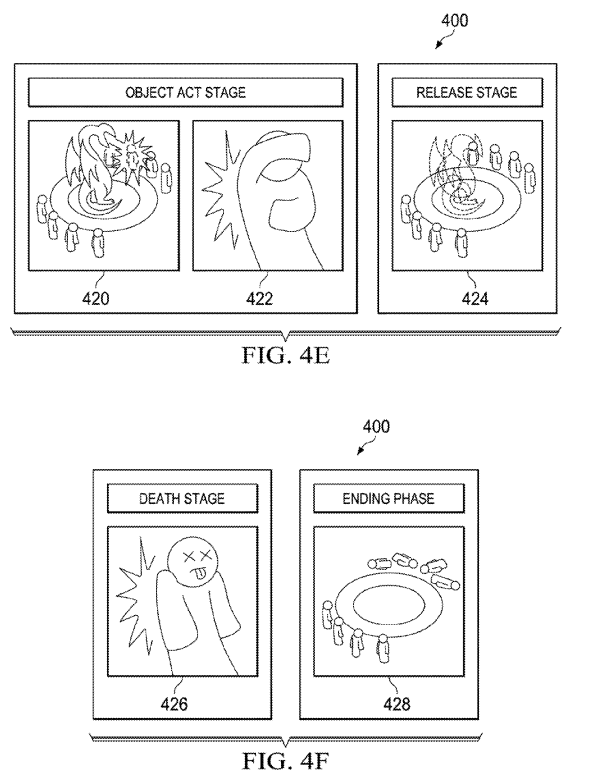
In battle, Damage-over-Time (DoT) effects, such as burns or poisons, are visually represented by spinning animations that circle the affected character, often matching the spell’s theme (e.g., flames for fire-based DoTs). Similarly, Healing-over-Time (HoT) effects also manifest as rotating visual elements, typically in the form of green or leafy magical effects that continuously revolve around the character while restoring health over multiple turns.

Combat Evaluation System
The in-game actions selected by the players are evaluated and presented in a detailed and nuanced combat experience. During combat, players select cards representing specific actions, such as attacking, defending, or casting spells. The game evaluates these selections by identifying relevant parameters, such as the character’s stats, the target’s stats, and the specifics of the action on the card. The system looks at various character attributes (such as strength, defense, and speed) and the target’s corresponding stats to calculate the outcome of actions. This includes determining how much damage is dealt, whether a status effect is applied, or how the target’s attributes change as a result of the action. The game automatically updates the attributes of the target in response to the selected action. For example, if a player uses a fireball card, the target may take damage, have a health attribute decrease, and possibly be set on fire, causing a 3D flame effect to appear around them. As the system processes the action, players see the results in real-time, with 3D visual effects representing the action’s outcome. This may include visual changes to the target (e.g., damage effects, buffs, or debuffs), as well as updates to the combat environment.
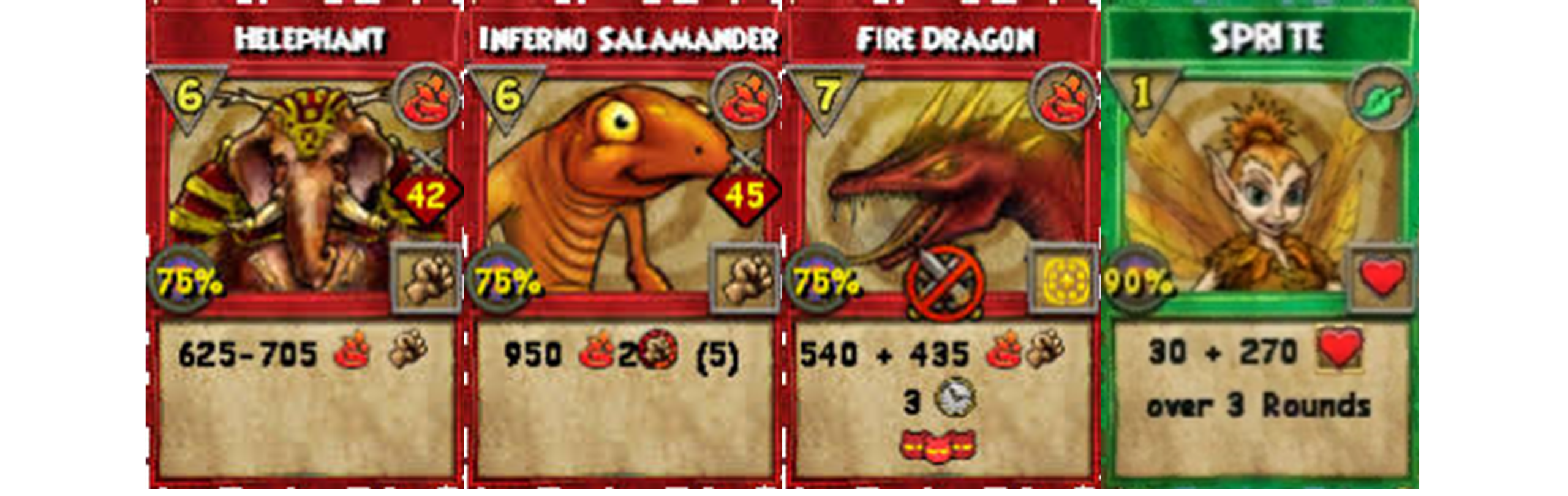
After a card-based action is executed, players experience real-time visual and statistical updates. Each of the game’s ‘schools’ (Fire, Ice, Storm, Myth, Life, Death, Balance) produces different effects. The strength of each card is detailed on the card itself, displaying base damage, healing, or buffs, along with any associated effects. Once cast, the card’s cinematic sequence plays out in the battle ring, and character and enemy attributes are updated simultaneously.
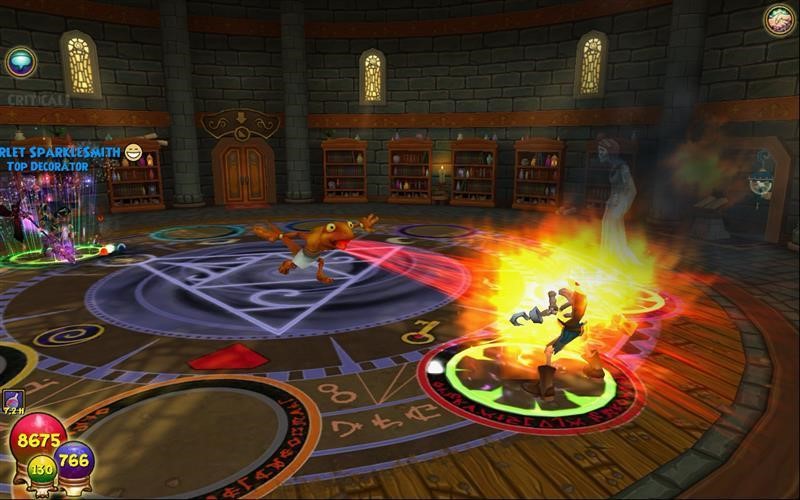
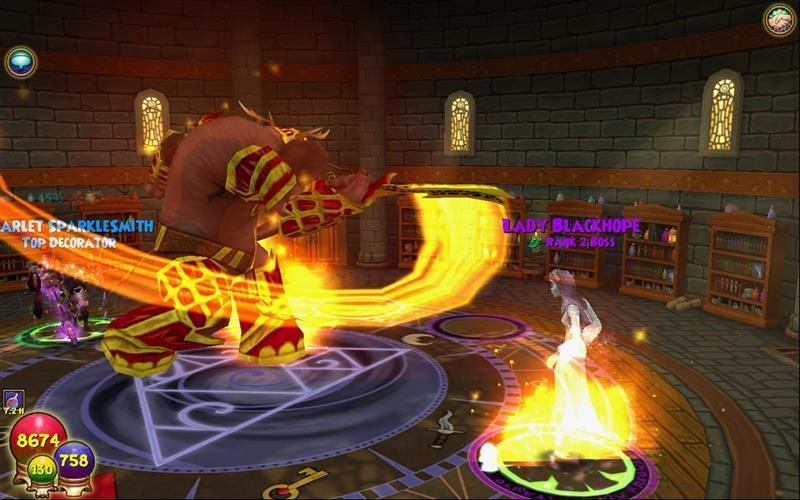
The card-based mechanics and 3D elements are key parts of Wizard101’s gameplay and a big reason why fans keep playing. Each of these features is directly tied to the game, showing how patents can improve both the way the game works and how players experience it.
Abstract:
This disclosure generally describes a massively multiplayer online role playing game (MMORPG) or, more specifically, a card-based MMORPG that enables characters in a virtual world to collect cards representing specified actions or powers and presents three-dimensional (3D) elements to players representing one or more aspects associated with the characters and environment. This 3D display can, in one implementation, offer a real-time combat engine that processes the card-based events. The 3D display may also offer hanging effects that dynamically present state information associated with the respective character. Further, the MMORPG may offer a real-time responsive and flexible chat management system.
Illustrative Claim:
1. A computer implemented method for managing an online game using computer-readable instructions, comprising:
identifying, for each of a plurality of characters in an online game, cards collected by an associated character in a virtual world, each card representing an action executable by the associated character;
presenting the plurality of characters as three-dimensional figures in the virtual world;
receiving a selection of at least one card for each of the plurality of characters during duels in the virtual world, the at least one card indicating an action executed in the virtual world;
automatically determining, for each of the plurality of characters, an effect of the at least one selected card; and
presenting, in real time, a physical manifestation of the effect associated with each of the plurality of characters using one or more three-dimensional elements in the virtual world.