U.S. Pat. No. 9,802,127

Video Game Including User Determined Location Information

AssigneeBLACKBIRD TECH LLC

Issue DateMarch 18, 2014

Patent Arcade analysis Read the full post

Blackbird Techs. v. Niantic, Inc.

Blackbird Techs. v. Niantic, Inc.
United States District Court for the District of Delaware
C.A. No. 17-cv-1810 (Del. Oct. 31, 2018)

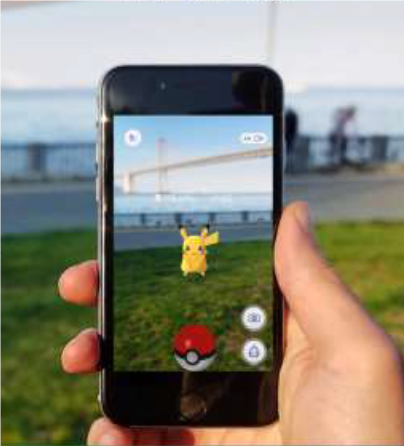
November 28, 2018 — Video game developer Niantic recently experienced a setback in its defense of a patent infringement suit brought by Blackbird Technologies in the U.S. District Court for the District of Delaware. See Blackbird Techs. v. Niantic, Inc., C.A. No. 17-cv-1810 (Del. Oct. 31, 2018). Niantic is best known for its Pokémon Go video game. In December 2017, Blackbird accused the location-based, augmented reality features (see graphic below from Blackbird’s complaint filing) of Niantic’s Pokémon Go smartphone application of infringing Blackbird’s U.S. Patent No. 9,802,127 (the ’127 patent).

Blackbird alleged that the ’127 patent, which has a priority filing date of April 2011, claims improvements in the video game field that made augmented reality more practical to execute.

Niantic sought to dismiss the suit in the wake of the U.S. Supreme Court’s Alice Corp. Pty Ltd. v. CLS Bank Int’l, 134 S. Ct. 2347 (2014), decision. Niantic argued that the ’127 patent was invalid as patent ineligible subject matter under Alice and should be dismissed at the pleading stage. The Delaware court disagreed—leaving Blackbird’s ’127 patent intact (for the time being) and leaving Niantic to defend the suit or consider settlement.

Two-Part Test under Alice
In Alice, the Court laid out a two-part test to determine whether inventions are directed to patent ineligible subject matter under 35 U.S.C. § 101. First, the court must determine whether the claims at issue are directed to abstract ideas. Second, if the claims are directed to abstract ideas, the court then considers the elements of each claim both individually and as an ordered combination, to determine whether the additional elements transform the nature of the claim into a patent-eligible application—i.e., a search for an “inventive concept.” The Alice Court stated that in applying the § 101 exception, courts must distinguish between patents that claim the “building blocks” of human ingenuity versus those that integrate the building blocks into something more, thereby transforming them into a patent-eligible invention.

Mapping Limitation Saves Blackbird’s ’127 Patent
The Blackbird court held that because the ’127 patent claims are not directed to ineligible subject matter under Alice step one, they need not even reach Alice step two. See Blackbird, slip op. at 8. The Blackbird court followed a framework similar to that which the Court of Appeals for the Federal Circuit followed in McRO, Inc. v. Bandai Namco Games Am. Inc., 837 F.3d 1299, 1313 (Fed. Cir. 2016). Courts must be wary of describing the claims at such a high level of abstraction and “untethered from the language of the claims” lest the exceptions to § 101 swallow the rule. See e.g., McRO, 837 F.3d at 1313. Similarly, the Blackbird court concluded Niantic oversimplified the claims of the ’127 patent to an inappropriate level of abstraction. Representative claim 1 of the ’127 patent is reproduced below:

1. A computer-implemented method comprising:

receiving a first position indicator representing a first current physical location for a user of a video game, wherein said first position indicator is determined at least in part by taking a global navigation satellite system reading of said first current physical location;

obtaining image data relating to said first current physical location, said image data comprising two or more camera images of said first current physical location;

mapping said image data into a virtual environment of said video game by displaying said image data as a video, wherein said user experiences within said virtual environment real life objects from said first current physical location, and said user simultaneously encounters within said virtual environment virtual objects that are not physically present in said first current physical location;

receiving a second position indicator representing a second current physical location for said user as said user navigates a geographic area surrounding said first current physical location;

saving at least said second position indicator to a memory; and

storing at least said second position indicator in said memory when said video game is not executing. (‘127 Patent, col. 9, line 19 – 43).

The Blackbird court found that the mapping step in claim 1 is tethered to specific instructions about which images are to be mapped (e.g., camera images from the user’s physical location), where those images are to be mapped (e.g., the video game virtual environment), and how those images are to be displayed (e.g., as a video wherein the user experiences both real and virtual objects within the video game virtual environment).

The ’127 patent allegedly solves the problem in the industry of being confined to a “predetermined and merely virtual location” in a video game by “incorporating a user’s physical location as part of the game environment.” And solves it with specific ways of first taking camera images of the user’s physical location (i.e., a real physical space) and then mapping those images as a video into the virtual game environment. The Blackbird court concluded that the ’127 patent claims, like the claims directed to lip-sync technology in McRO, are “directed to the creation of something physical”—the display of camera images depicting the user’s location overlaid with the virtual images from the video game “for viewing by human eyes.” The claimed improvement is to how the physical display operated, that is, to “produce better quality images” by simultaneously displaying real and virtual objects, creating a more interactive video game environment. See Blackbird, slip op. at 7-8. Moreover, the Blackbird court found persuasive that the ’127 patent claims include “specific instructions on how the mapping is done,” and were not merely result-focused. See Blackbird, slip op. at 7 (citing to Electric Power Group, LLC v. Alstom S.A., 830 F.3d 1350 (Fed. Cir. 2016)).

Click here to download the decision in Blackbird Tech. v. Niantic, Inc.

By Aseet Patel

Illustrative Figure

Abstract

A method, apparatus and computer program product for a video game including user determined location information is presented. Location information (e.g. GPS, Google Maps, an entered address or the like) determined by a user of a video game is acquired. Then user determined location information relating to a physical location determined by the user is mapped to a video game environment wherein the user of the video game experiences objects from the users entered location while playing the video game.

Description

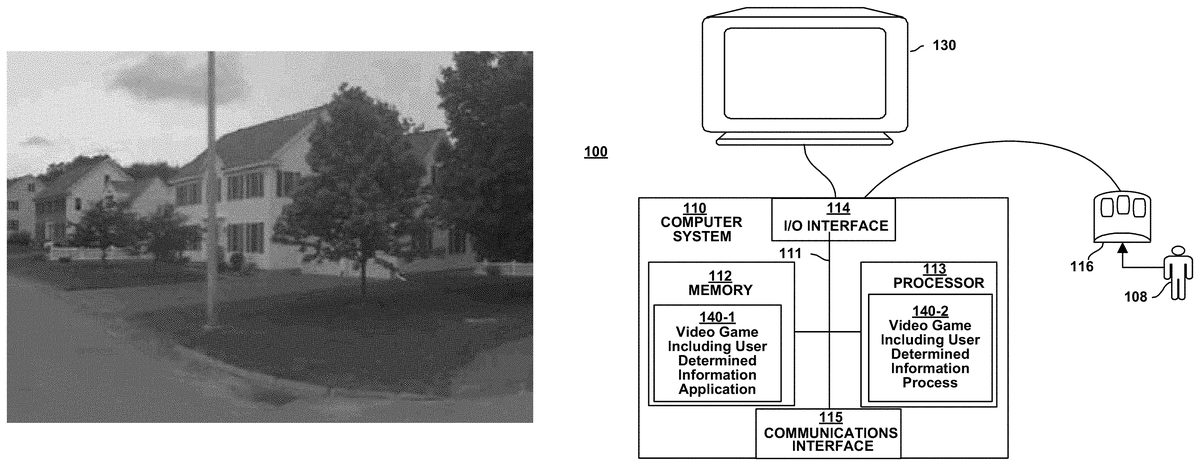
DETAILED DESCRIPTION The presently described video game including user determined location information merges video games with location information and/or mapping technology to provide a video game experience wherein user determined location information is mapped into the video game environment such that the user experiences objects from his desired environment in the video game. For example, if a user is playing a car racing game, he or she is able to race through the streets of his or her local neighborhood in the game. This is achieved by first obtaining user determined location information relating to a users location. In a particular example, the user is able to load information relating to the users current physical location. This may be accomplished by taking a GPS reading of the user's current physical location and a certain radius around the user location or by the user entering an address. Other sources of user determined location information relating to the users physical location, such as Google Maps, may also be used to acquire a set of user determined location information to be mapped into the video game. Once acquired, the information is mapped into the game. In this example, if the user is at a residence at 1 Sarah Lane in Maynard, Mass., user determined location information relating to Sarah Lane and the town of Maynard, Mass. is acquired (via GPS, Google Map®, Google Earth® and the like). The user determined location information is mapped into the video game such that the user can race around the streets of Maynard, Mass. In the game, as shown inFIG. 1, the user can leave the residence at 1 Sarah Lane, turn onto Route 117 and race to downtown Maynard. Upon entering the downtown area the user is able to race around the town, passing local points ...

DETAILED DESCRIPTION

The presently described video game including user determined location information merges video games with location information and/or mapping technology to provide a video game experience wherein user determined location information is mapped into the video game environment such that the user experiences objects from his desired environment in the video game.

For example, if a user is playing a car racing game, he or she is able to race through the streets of his or her local neighborhood in the game. This is achieved by first obtaining user determined location information relating to a users location. In a particular example, the user is able to load information relating to the users current physical location. This may be accomplished by taking a GPS reading of the user's current physical location and a certain radius around the user location or by the user entering an address. Other sources of user determined location information relating to the users physical location, such as Google Maps, may also be used to acquire a set of user determined location information to be mapped into the video game. Once acquired, the information is mapped into the game. In this example, if the user is at a residence at 1 Sarah Lane in Maynard, Mass., user determined location information relating to Sarah Lane and the town of Maynard, Mass. is acquired (via GPS, Google Map®, Google Earth® and the like). The user determined location information is mapped into the video game such that the user can race around the streets of Maynard, Mass. In the game, as shown inFIG. 1, the user can leave the residence at 1 Sarah Lane, turn onto Route 117 and race to downtown Maynard. Upon entering the downtown area the user is able to race around the town, passing local points of interest such as Clock Tower Place, local fast food places (e.g. McDonalds®), past local stores (e.g. The Outdoor Store®) and onto Route 62. By allowing the user to experience his or her desired location in the video game, an entirely new and entertaining form of game playing is achieved.

The location information can be saved, so that the user does not have to reacquire the location information every time the user plays the game. The user can move to another location, obtain user determined location information relating to the new location of the user, and experience the racing game in the new location.

In another embodiment the user enters an address he or she wants to experience with the video game. For example, the user can enter 592 South Las Vegas Boulevard Las Vegas, Nev. and start racing his or her car by Bally's Hotel, past the Flaminco Hotel etc.

While the above description used a racing game as the video game, it should be appreciated that other games (war games, sports games, fantasy games, and the like) are also able to use the physical location specified by the user as part of the game playing experience. Also, while GPS and Google Maps were used as examples of location information, it should be understood that other types of location information could also be used to provide the same video game environment.

Referring toFIG. 2, a flow diagram of a particular embodiment of a method10of providing a video game including user determined location information is presented. Method10begins with processing block12which discloses receiving information about a location for a user of a video game. Processing block14states the receiving information about a location for a user of a video game includes at least one of the group consisting of receiving an address provided by the user and receiving Global Positioning System (GPS) information relating to a physical location of the user.

Processing block16recites obtaining user determined location information relating to the location determined by the user. Processing block18discloses the obtaining user determined location information includes receiving map information relating to the location used by the user. Processing block20states wherein the user determined location information includes streets, buildings, and points of interest near the location determined by the user.

Processing continues with processing block22discloses mapping the user determined location information into a video game environment wherein the user of the video game experiences objects from the users entered location while playing the video game.

Processing block24states saving the user determined location information relating to the location determined by the user.

Processing block26discloses the video game is playable on at least one of the group consisting of a gaming platform, a computer, a hand-held gaming system, a cellular telephone and a tablet.

Processing block28states playing the video game, wherein during the playing of the video game, the user encounters objects from the location determined by the user.

FIG. 3is a block diagram illustrating example architecture of a computer system110that executes, runs, interprets, operates or otherwise performs a video game incorporating user determined location information operating application140-1and video game incorporating user determined location information operating process140-2suitable for use in explaining example configurations disclosed herein. The computer system110may be any type of computerized device such as a personal computer, workstation, video game platform, portable computing device, console, laptop, network terminal, cellular telephone, tablet or the like.

An input device116(e.g., one or more customer/developer controlled devices such as a keyboard, mouse, game controller, etc.) couples to processor113through I/O interface114, and enables a customer108to provide input commands, and generally control the graphical customer interface160that the video game incorporating user determined location information operating application140-1and process140-2provides on the display130. As shown in this example, the computer system110includes an interconnection mechanism111such as a data bus or other circuitry that couples a memory system112, a processor113, an input/output interface114, and a communications interface115. The communications interface115enables the computer system110to communicate with other devices (i.e., other computers) on a network (not shown).

The memory system112is any type of computer readable medium, and in this example, is encoded with a video game incorporating user determined location information operating application140-1as explained herein. The video game incorporating user determined location information operating application140-1may be embodied as software code such as data and/or logic instructions (e.g., code stored in the memory or on another computer readable medium such as a removable disk) that supports processing functionality according to different embodiments described herein. During operation of the computer system110, the processor113accesses the memory system112via the interconnect111in order to launch, run, execute, interpret or otherwise perform the logic instructions of a video game incorporating user determined location information operating application140-1. Execution of a video game incorporating user determined location information operating application140-1in this manner produces processing functionality in the video game incorporating user determined location information operating process140-2. In other words, the video game incorporating user determined location information operating process140-2represents one or more portions or runtime instances of a video game incorporating user determined location information operating application140-1(or the entire a video game incorporating user determined location information operating application140-1) performing or executing within or upon the processor113in the computerized device110at runtime.

It is noted that example configurations disclosed herein include the video game incorporating user determined location information operating application140-1itself (i.e., in the form of un-executed or non-performing logic instructions and/or data). The video game incorporating user determined location information operating application140-1may be stored on a computer readable medium (such as a floppy disk), hard disk, electronic, magnetic, optical, or other computer readable medium. A video game incorporating user determined location information operating application140-1may also be stored in a memory system112such as in firmware, read only memory (ROM), or, as in this example, as executable code in, for example, Random Access Memory (RAM). In addition to these embodiments, it should also be noted that other embodiments herein include the execution of a video game incorporating user determined location information operating application140-1in the processor113as the video game incorporating user determined location information operating process140-2. Those skilled in the art will understand that the computer system110may include other processes and/or software and hardware components, such as an operating system not shown in this example.

A display130need not be coupled directly to computer system110. For example, the video game incorporating user determined location information operating application140-1can be executed on a remotely accessible computerized device via the network interface115. In this instance, the graphical customer interface160may be displayed locally to a customer108of the remote computer, and execution of the processing herein may be client-server based.

During operation, processor113of computer system100accesses memory system112via the interconnect111in order to launch, run, execute, interpret or otherwise perform the logic instructions of the video game incorporating user determined location information application140-1. Execution of video game incorporating user determined location information application140-1produces processing functionality in video game incorporating user determined location information process140-2. In other words, the video game incorporating user determined location information process140-2represents one or more portions of the video game incorporating user determined location information application140-1(or the entire application) performing within or upon the processor113in the computer system100.

It should be noted that, in addition to the video game incorporating user determined location information process140-2, embodiments herein include the video game incorporating user determined location information application140-1itself (i.e., the un-executed or non-performing logic instructions and/or data). The video game incorporating user determined location information application140-1can be stored on a computer readable medium such as a floppy disk, hard disk, or optical medium. The video game incorporating user determined location information application140-1can also be stored in a memory type system such as in firmware, read only memory (ROM), or, as in this example, as executable code within the memory system112(e.g., within Random Access Memory or RAM).

In addition to these embodiments, it should also be noted that other embodiments herein include the execution of video game incorporating user determined location information application140-1in processor113as the video game incorporating user determined location information process140-2. Those skilled in the art will understand that the computer system100can include other processes and/or software and hardware components, such as an operating system that controls allocation and use of hardware resources associated with the computer system100.

The device(s) or computer systems that integrate with the processor(s) may include, for example, a personal computer(s), workstation(s) (e.g., Sun, HP), personal digital assistant(s) (PDA(s)), handheld device(s) such as cellular telephone(s), laptop(s), handheld computer(s), gaming devices, or another device(s) capable of being integrated with a processor(s) that may operate as provided herein. Accordingly, the devices provided herein are not exhaustive and are provided for illustration and not limitation.

References to “a microprocessor” and “a processor”, or “the microprocessor” and “the processor,” may be understood to include one or more microprocessors that may communicate in a stand-alone and/or a distributed environment(s), and may thus be configured to communicate via wired or wireless communications with other processors, where such one or more processor may be configured to operate on one or more processor-controlled devices that may be similar or different devices. Use of such “microprocessor” or “processor” terminology may thus also be understood to include a central processing unit, an arithmetic logic unit, an application-specific integrated circuit (IC), and/or a task engine, with such examples provided for illustration and not limitation.

Furthermore, references to memory, unless otherwise specified, may include one or more processor-readable and accessible memory elements and/or components that may be internal to the processor-controlled device, external to the processor-controlled device, and/or may be accessed via a wired or wireless network using a variety of communications protocols, and unless otherwise specified, may be arranged to include a combination of external and internal memory devices, where such memory may be contiguous and/or partitioned based on the application. Accordingly, references to a database may be understood to include one or more memory associations, where such references may include commercially available database products (e.g., SQL, Informix, Oracle) and also proprietary databases, and may also include other structures for associating memory such as links, queues, graphs, trees, with such structures provided for illustration and not limitation.

References to a network, unless provided otherwise, may include one or more intranets and/or the Internet, as well as a virtual network. References herein to microprocessor instructions or microprocessor-executable instructions, in accordance with the above, may be understood to include programmable hardware.

Unless otherwise stated, use of the word “substantially” may be construed to include a precise relationship, condition, arrangement, orientation, and/or other characteristic, and deviations thereof as understood by one of ordinary skill in the art, to the extent that such deviations do not materially affect the disclosed methods and systems.

Throughout the entirety of the present disclosure, use of the articles “a” or “an” to modify a noun may be understood to be used for convenience and to include one, or more than one of the modified noun, unless otherwise specifically stated.

Elements, components, modules, and/or parts thereof that are described and/or otherwise portrayed through the figures to communicate with, be associated with, and/or be based on, something else, may be understood to so communicate, be associated with, and or be based on in a direct and/or indirect manner, unless otherwise stipulated herein.

Although the methods and systems have been described relative to a specific embodiment thereof, they are not so limited. Obviously many modifications and variations may become apparent in light of the above teachings. Many additional changes in the details, materials, and arrangement of parts, herein described and illustrated, may be made by those skilled in the art.

Having described preferred embodiments of the invention it will now become apparent to those of ordinary skill in the art that other embodiments incorporating these concepts may be used. Additionally, the software included as part of the invention may be embodied in a computer program product that includes a computer useable medium. For example, such a computer usable medium can include a readable memory device, such as a hard drive device, a CD-ROM, a DVD-ROM, or a computer diskette, having computer readable program code segments stored thereon. The computer readable medium can also include a communications link, either optical, wired, or wireless, having program code segments carried thereon as digital or analog signals. Accordingly, it is submitted that that the invention should not be limited to the described embodiments but rather should be limited only by the spirit and scope of the appended claims.
Claims

  1. A computer-implemented method comprising: receiving a first position indicator representing a first current physical location for a user of a video game, wherein said first position indicator is determined at least in part by taking a global navigation satellite system reading of said first current physical location;obtaining image data relating to said first current physical location, said image data comprising two or more camera images of said first current physical location;mapping said image data into a virtual environment of said video game by displaying said image data as a video, wherein said user experiences within said virtual environment real life objects from said first current physical location, and said user simultaneously encounters within said virtual environment virtual objects that are not physically present in said first current physical location;receiving a second position indicator representing a second current physical location for said user as said user navigates a geographic area surrounding said first current physical location;saving at least said second position indicator to a memory;and storing at least said second position indicator in said memory when said video game is not executing.
  1. The method of claim 1 wherein said global navigation satellite system reading comprises a Global Positioning System (GPS) reading.
  2. The method of claim 1 wherein said video game comprises a genre selected from the group consisting of a racing game, a sports game, a war game, and a fantasy game.
  3. The method of claim 1 further comprising receiving map information for said geographic area surrounding said first current physical location, wherein said map information is received at least in part by loading said map information over a network from a map database located remotely from said user.
  4. The method of claim 4 , wherein said map information represents at least streets, buildings, and points of interest near said first current physical location.
  5. The method of claim 4 , further comprising displaying said map information.
  6. The method of claim 4 , wherein said map database is Google Maps.
  7. The method of claim 1 , further comprising retrieving said second position indicator from said memory when said video game starts executing.
  8. A non-transitory, machine-readable storage medium having stored thereon a computer program for a video game including local content, the computer program comprising a set instructions for causing a machine to perform the steps of: receiving a first position indicator representing a first current physical location for a user of a video game, wherein said first position indicator is determined at least in part by taking a global navigation satellite system reading of said first current physical location;obtaining image data relating to said first current physical location, said image data comprising two or more camera images of said first current physical location;mapping said image data into a virtual environment of said video game by displaying said image data as a video, wherein said user experiences within said virtual environment real life objects from said first current physical location, and said user simultaneously encounters within said virtual environment virtual objects that are not physically present in said first current physical location;receiving a second position indicator representing a second current physical location for said user as said user navigates a geographic area surrounding said first current physical location;saving at least said second position indicator to a memory;and storing at least said second position indicator in said memory when said video game is not executing.
  9. The non-transitory, machine-readable storage medium of claim 9 , wherein said global navigation satellite system reading comprises a Global Positioning System (GPS) reading.
  10. The non-transitory, machine-readable storage medium of claim 9 , wherein said computer program further comprises instructions for causing the machine to receive map information for said geographic area surrounding said first current physical location, wherein said map information is received at least in part by loading said map information over a network from a map database located remotely from said user.
  11. The non-transitory, machine-readable storage medium of claim 11 , wherein said map information represents at least streets, buildings, and points of interest near said first current physical location.
  12. The non-transitory, machine-readable storage medium of claim 11 , wherein said computer program further comprises instructions for causing the machine to display said map information.
  13. The non-transitory, machine-readable storage medium of claim 11 , wherein said map database is Google Maps.
  14. The non-transitory, machine-readable storage medium of claim 9 , wherein said computer program further comprises instructions for causing the machine to retrieve said second position indicator from said memory when said video game starts executing.
  15. The non-transitory, machine-readable storage medium of claim 9 , wherein said machine comprises a cellular telephone.
  16. A computer system comprising: a non-transitory memory;a processor;a communications interface;a global navigation satellite system reader;an interconnection mechanism coupling the non-volatile memory, the processor, the communications interface, and the global navigation satellite system reader;wherein the non-volatile memory stores instructions that are executable on the processor to perform operations comprising: receiving a first position indicator representing a first current physical location for a user of a video game, wherein said first position indicator is determined at least in part by using said global navigation satellite system reader to take a global navigation satellite system reading of said first current physical location;obtaining image data relating to said first current physical location, said image data comprising two or more camera images of said first current physical location;mapping said image data into a virtual environment of said video game by displaying said image data as a video, wherein said user experiences within said virtual environment real life objects from said first current physical location, and said user simultaneously encounters within said virtual environment virtual objects that are not physically present in said first current physical location;receiving a second position indicator representing a second current physical location for said user as said user navigates a geographic area surrounding said first current physical location;saving at least said second position indicator to a memory;and storing at least said second position indicator in said memory when said video game is not executing.
  17. The computer system of claim 17 , wherein said global navigation satellite system reader comprises a Global Positioning System (GPS) reader.
  18. The computer system of claim 17 , wherein the non-volatile memory further comprises instructions that are executable to perform an operation of receiving map information for said geographic area surrounding said first current physical location, wherein said map information is received at least in part by loading said map information over a network from a map database located remotely from said user.
  19. The computer system of claim 19 , wherein said map information represents at least streets, buildings, and points of interest near said first current physical location.
  20. The computer system of claim 19 , wherein the non-volatile memory further comprises instructions that are executable to perform an operation of displaying said map information.
  21. The computer system of claim 19 , wherein said map database is Google Maps.
  22. The computer system of claim 17 , wherein the non-volatile memory further comprises instructions that are executable to perform an operation of retrieving said second position indicator from said memory when said video game starts executing.
  23. The computer system of claim 17 , wherein said computer system comprises a cellular telephone.

Disclaimer: Data collected from the USPTO and may be malformed, incomplete, and/or otherwise inaccurate.