U.S. Pat. No. 9,555,329
MULTI-ACCESS ONLINE GAME SYSTEM AND METHOD FOR CONTROLLING GAME FOR USE IN THE MULTI-ACCESS ONLINE GAME SYSTEM
AssigneeNHN Entertainment Corporation
Issue DateSeptember 11, 2007
Illustrative Figure
Abstract
A multi-access online game system and a game control method for use in the same are disclosed. The game control method is applied to a multi-access online game system which is connected to at least one user client and includes a first server and at least one second server. The method includes: receiving an event message associated with a game from a first user client, wherein the first server receives the game-associated event message when the game-associated event message is not the real-time message, and the at least one second server receive the game-associated event message when the game-associated event message is the real-time message; determining a second user client where the real-time message is to be received; and transmitting the real-time message to the second user client. The real-time message is processed by the second server, so that the load of the first server is reduced.
Description
DETAILED DESCRIPTION Now, exemplary embodiments will be described in detail with reference to the annexed drawings. In the drawings, the same or similar elements are denoted by the same reference numerals even though they are depicted in different drawings. In the following description, a detailed description of known functions and configurations incorporated herein will be omitted when it may make the subject matter of the embodiments rather unclear. A system and method for controlling a traffic car for use in a multi-access online game according to some embodiments will hereinafter be described in detail. The embodiments exemplarily described herein can be applied to a variety of multi-access online games. Specifically, the effects of the embodiments exemplarily described herein can be maximized in the case of a multi-access online role-playing game in which a fast moving player character moves to transmit a plurality of messages. For the convenience of description and better understanding, an exemplary case in which the above-mentioned system is applied to the multi-access online role-playing racing game will hereinafter be described in detail. However, it should be noted that the scope and spirit of the present invention, as defined by the claims, is not applied to only the above-mentioned example, but can also be applied to a multi-access online role-playing racing game as well as a variety of multi-access online games capable of enabling player characters to exchange their status information with each other. FIG. 1is a block diagram illustrating a multi-access online game system according to one embodiment. Referring toFIG. 1, the multi-access online game system according to one embodiment may include an authentication server100, a game server102, a database (DB) server104, and a plurality of real-time message processing servers106. The multi-access online game system is connected to a user client108over a network. In this case, the ...
DETAILED DESCRIPTION
Now, exemplary embodiments will be described in detail with reference to the annexed drawings. In the drawings, the same or similar elements are denoted by the same reference numerals even though they are depicted in different drawings. In the following description, a detailed description of known functions and configurations incorporated herein will be omitted when it may make the subject matter of the embodiments rather unclear.
A system and method for controlling a traffic car for use in a multi-access online game according to some embodiments will hereinafter be described in detail.
The embodiments exemplarily described herein can be applied to a variety of multi-access online games. Specifically, the effects of the embodiments exemplarily described herein can be maximized in the case of a multi-access online role-playing game in which a fast moving player character moves to transmit a plurality of messages.
For the convenience of description and better understanding, an exemplary case in which the above-mentioned system is applied to the multi-access online role-playing racing game will hereinafter be described in detail. However, it should be noted that the scope and spirit of the present invention, as defined by the claims, is not applied to only the above-mentioned example, but can also be applied to a multi-access online role-playing racing game as well as a variety of multi-access online games capable of enabling player characters to exchange their status information with each other.
FIG. 1is a block diagram illustrating a multi-access online game system according to one embodiment.
Referring toFIG. 1, the multi-access online game system according to one embodiment may include an authentication server100, a game server102, a database (DB) server104, and a plurality of real-time message processing servers106.
The multi-access online game system is connected to a user client108over a network.
In this case, the network may be indicative of an Internet, a wire network including a dedicated line, and other wireless networks including a wireless Internet, a mobile communication network, and a satellite communication network.
The user client108connected to the network is indicative of a plurality of terminal units, each of which includes a game application110capable of receiving a multi-access online game service over the network. For example, the user client108may include a desktop PC, a notebook computer, a mobile phone, a PDA, and a mobile broadcast system (MBS), etc.
The authentication server100receives a log-in request (i.e., an authentication request) from the user client108, and authenticates whether a user who desires to access the game system is an authorized user who has the authority of accessing the game system. In other words, the authentication server100receives authentication request information from the user client108, and determines whether the authentication request of the user client108is valid or not. The log-in request information may, for example, include a user ID and a password, and the authentication server100determines whether the ID and password contained in the log-in request information is valid or not.
In order to determine whether the ID and password of the user is valid, the authentication server100may communicate with the DB server104, or may communicate with other DBs (not shown) storing authentication-associated information.
In order to perform the aforementioned authentication between the user client108and the authentication server100, not only the above-mentioned authentication based on the ID/password information, but also a variety of authentication methods well known to those skilled in the art, can also be employed.
When the authentication is completed, the user client108gains access to the game server102.
The game server102processes game messages of the user client108, and controls the progression of the game. The game server102receives a variety of game-associated event messages, for example, game command messages such as attack or moving messages of player characters, chatting messages between user clients108, quest messages such as quest-acceptance or completion of Non Player Character (NPC), and status information messages such as level-up or item acquisition of the player characters, so that the game server102conducts the received game-associated event messages according to a predetermined game logic.
For example, upon receiving the status information message such as the level-up message of each player, the game server102transmits the level-up information of the user to the DB server104, so that it updates level information of the corresponding user with new information. Upon receiving the quest-acceptance or completion of the user, the game server102stores the received messages in the DB server104.
Specifically, the game server102transmits event information created by a specific user to other user clients, so that a plurality of users can share a variety of events (e.g., status change messages of the player characters) encountered during the game with each other.
According to one embodiment, information messages (e.g., character status information such as a character level-up or quest information) having the low necessity of being real-time transmitted to peripheral user characters, but which must be stored in the DB server104, are processed by the game server102.
In the meantime, during the racing game, the game server102may control the NPC or a traffic car serving as an obstructive matter in the game.
The multi-access online game system ofFIG. 1includes a plurality of real-time message processing servers106. The real-time message processing server106wholly processes real-time messages from among messages transmitted from the user client108.
In the case of the racing game in which the character car moves fast and the collision between the character cars frequently occurs, the moving or collision messages between the player characters must be processed in real time.
Provided that the real-time message such as the moving message is processed by the game server102, event messages must be transmitted to N user clients for only one player character, so that the amount of load unavoidably increases.
Therefore, the multi-access online game system ofFIG. 1further includes the real-time message processing server106separated from the game server102, so that it receives the real-time messages such as the moving or collision messages of the player characters and transmits the received real-time messages to other user clients using the real-time message processing server106.
The real-time message processing server106may receive/transmit the real-time messages, and may determine the presence or absence of a player character located within a predetermined distance from the other player character which has transmitted the moving or collision messages.
For example, in the case where the moving message of the first player is transmitted to the real-time message processing server106, the real-time message processing server106determines the presence or absence of other player characters located within a predetermined distance from the first player character, which has generated the event, using location information of individual player characters, and selectively transmits the moving information of the first player character to only the user client108of the corresponding character.
Therefore, the amount of system load is lower than that of the other case in which the moving information of the player character is unconditionally transmitted to other user clients.
The above-mentioned processes may be equally applied to not only the moving messages but also chatting messages transmitted to other users who exist in the same space.
In the meantime, the real-time message processing server106may be a dedicated server for wholly controlling sub-areas created by division of the game space. The number of the real-time message processing servers may be equal to the number of sub-areas indicating the divided areas.
In this case, the game application110installed into the user client108may transmit real-time messages to the real-time message processing server106controlling the area to which the user's player character belongs.
The DB server104stores information associated with the game and provides the stored information to the game server102or the user client108according to a request of the game server102or the user client108.
The DB server104may store status information of player characters, item information, and quest information, etc. If the DB server104receives character status-, item-, and quest-information from the game server102, it stores corresponding information.
FIG. 2is a block diagram illustrating modules of the game server according to one embodiment.
Referring toFIG. 2, the game server102according to one embodiment may include a plurality of player objects200, a channel manager202, a game logic controller204, a message controller206, an online-player character information manager208, an NPC manager210, a quest manager212, an item manager214, a character manager216, and a guild manager218.
The player object200controls transmission/reception of messages between user clients108accessing the game server102. A player object200is created when a user client108gains access to the game server102and the player object200disappears when the connection between the game server102and the user client108is severed.
The player object200transmits game messages received from the user client108to the message controller206. Upon receiving the game messages of the game server102from the message controller206, the player object200transmits the received game messages to the corresponding user client108.
The channel manager202manages a variety of game areas for the racing game. In this case, the game areas may be indicative of several areas capable of being distinguished from each other, for example, a quest-execution area, a racing area, and a store area.
The game logic controller204performs a variety of control processes required for the game. For example, the game logic controller204determines whether a quest of a player character of the game is completed, or determines the winner of the race.
The game logic controller204may control the traffic cars on the game.
In the case of controlling the traffic car, the game logic controller204calculates moving information to accelerate or decelerate the traffic car, processes signals to smoothly drive the traffic car at the bottleneck point, and processes signals to change a current lane of the traffic car to another lane.
The message controller206receives game-associated messages created by the user client108from the player object200, and distributes the received messages to constituent components which will deal with the received message.
For example, if a wearing-item change message of a specific user character is received from the player object200, the message controller206transmits the received wearing-item change message to the item manager204and the character manager206. If the received message is a quest acceptance message of a specific user, the message controller206transmits a quest acceptance message to the quest manager212.
If the message controller206desires to transmit a message to the accessed user client108, it transmits the corresponding message to the player object200associated with the corresponding user client108.
For example, if the chatting message for a specific user is received in the message controller206, the message controller206transmits the chatting message to the player object200associated with a receiving user who receives the chatting message, so that the chatting message can be transmitted to the corresponding user client108.
The online-player character information manager208manages information of online user characters who access the game server102. The player character information may include detailed information of the online-player characters, for example, ID-, location-, level-, and item-information of the online-player characters.
The information of the online-player character information manager208is used when the message controller206determines information of a message receiver. For example, if a specific user changes a current character-wearing item to another item, the wearing-item change information must be transmitted to peripheral users other than the specific user.
In this case, the message controller206extracts peripheral player characters other than the specific player character, who has changed the wearing item to another item, using the information managed by the online-player character information manager208, and transmits a wearing-item change message to the player objects200of the corresponding player characters.
If the message controller206receives status change messages (e.g., moving messages, wearing-item change messages, and collision messages) of a specific player character, it transmits the status change information to the online-player character information manager208, such that the status information of the online-mode character is managed by the online-player character information manager208.
The NPC (Non Player Character) manager210manages NPC information appearing in the game. For example, in the case of the racing game, the NPC manager210manages NPC information for quest provision, and information of any traffic car appearing in the game.
The quest manager212manages quest information provided to users in the multi-access online game, and also manages quest acceptance- or quest completion-information.
If a specific user accepts a specific quest the quest acceptance message is transmitted to the message controller206, and the message controller206transmits the quest acceptance message to the quest manager212.
The quest manager212transmits the quest acceptance information to the DB server104, so that the quest acceptance information is reflected in the DB server104. In the case of the quest completion message, the quest completion message is reflected in the DB server104by the quest manager212in the same manner as in the above quest acceptance message.
The item manager214manages not only information of items created during the game, but also user-character item change information (e.g., item acquisition or item drop) of the user character.
If a specific player character acquires the item, the item acquisition message is transmitted to the message controller206, and the message controller206transmits the item acquisition message to the item manager204. The item manager204transmits the item acquisition information to the DB server104, so that the item acquisition information can be reflected in the DB server104.
The character manager216manages information of characters created by the users, receives status-change messages of the characters, and transmits the received status-change messages (e.g., a character level-up message and item acquisition information) to the DB server104.
The guild manager218manages information of a guild created by the multi-access online game users. The guild manager218receives guild-associated messages, for example, subscription/withdrawal messages of guild members and level-change messages of the guild members. And, the guild manager218transmits the guild-associated information contained in the received message to the DB server104. If there is guild-associated quest information such as a guild-member status or guild-member name, the guild manager218communicates with the DB server104to provide guild information.
FIG. 3is a block diagram illustrating the real-time message processing server according to one embodiment.
Referring toFIG. 3, the real-time message processing server106according to one embodiment may include a player object300, a game logic controller302, a message controller304, an online-player character information manager306, and a transmission-object decision unit308.
As stated above, the real-time message processing server106is adapted to share roles of the game server102, and conducts messages (e.g., collision messages or real-time chatting messages) needed to be immediately transmitted to a destination.
Therefore, the real-time message processing server106may include some parts of constituent components of the game server102. However, the real-time message processing server106does not include the quest manager212, the item manager214, the character manager216, and the guild manager218, which are needed to communicate with the DB server104.
The player object300, the message controller304, and the game logic controller302, and the online-player character information manager306shown inFIG. 3are the same as those of the game server shown inFIG. 2, so that their detailed description will herein be omitted for the convenience of description.
In one embodiment, if a variety of events (e.g., a moving event, a collision event, and a chatting-message creation event) occur about each player character during the racing game, the game application110installed into the user client108determines whether the generated event is a real-time event. If it is determined that the generated event must be conducted in real time, the game application110generates the real-time message, and transmits the real-time message to the real-time message processing server106.
In this case, the real-time message may include an ID of a player character who has transmitted the real-time message, and event content information, etc.
In one embodiment if the above-mentioned real-time message is received from a specific player character, the transmission-object decision unit308determines the presence or absence of at least one player character located within a predetermined distance from the specific player character using location information of online-mode player characters transmitted from the online-player character information manager306.
In this case, although the real-time message processing server106may include the online-player character information manager306, it should be noted that the real-time message processing server106may receive location information of each player character from the online-player character information manager208contained in the game server102only when the object (hereinafter referred to as “transmission objects”) to which the message is transmitted is decided.
As described above, the transmission object can be decided by the transmission-object decision unit308for determining the presence or absence of other player characters located within a predetermined distance from the player character which has generated the event. For example, a player character existing in the 100×100 area on the basis of the location of the player character which has generated the event may be determined to be the transmission object.
The message controller304transmits the real-time message to the player object300corresponding to the player character determined to be the transmission object. The player object300transmits the real-time message associated with a specific player character to the associated user client108.
FIG. 4is a detailed block diagram illustrating the player object300according to one embodiment.
Referring toFIG. 4, the player object300may include a buffering unit400, a timer402, and a latest-message monitoring unit404.
The buffering unit400performs buffering of the message transmitted from the message controller304.
The buffered message is transmitted to the user client108associated with the player object300.
As stated above, the messages needed to be immediately transmitted to a destination frequently occur in the racing game. Accordingly, if the buffered message is not transmitted to the destination in real time due to the problems of network environments, the buffered message may be discarded.
For this purpose, the timer402determines whether a predetermined time has expired. If the predetermined time has expired, the message temporarily stored in the buffering unit400is discarded.
The latest-message monitoring unit404transmits only the latest real-time message associated with a specific player character to the user client108.
In one embodiment the moving message associated with the specific player character is continuously buffered by the buffering unit400. The latest-message monitoring unit404determines the presence or absence of a previous moving message of the corresponding player character in the buffering unit400at a transmission time of the moving message associated with the specific player character. If the presence of the previous moving message exists, the latest-message monitoring unit404overwrites the previous moving message with the latest moving message.
As described above, the player object300allows the real-time message to maintain the latest-message status, so that the user can correctly recognize the movement of other player characters of the racing game on the basis of the latest real-time message.
FIG. 5is a detailed block diagram illustrating the game application installed into the user client according to one embodiment.
Referring toFIG. 5, the game application according to the one embodiment may include a command interpreter500, a game logic processor502, a server communication unit504, a simulation unit506, a game-data extractor508, and an event decision unit510.
The command interpreter500receives game command information inputted by the user, interprets the game command, and transmits the interpreted information to the game logic processor502. For example, the game command interpreter500determines whether the user-entry game command is a quest acceptance command or a moving command, and transmits the determined information to the game logic processor502.
The game logic processor502executes a predetermined game logic according to the game command inputted by the user.
If the game command has no need to be transmitted to the servers102and106as the game environment setup command, the game logic processor502conducts a game environment setup process in the client.
If the game command is determined to be a specific command needed to be transmitted to the servers102and106as the moving message of the player character, the game logic processor502creates a moving message corresponding to the moving command, and transmits the moving message to the server communication unit504.
The server communication unit504transmits the game message created from the game logic processor502to the game server102or the real-time message processing server106. And, the server communication unit504transmits the game message transmitted from the real-time message processing server106to the game logic processor502.
According to some embodiments, the server communication unit504is connected to the game server102and several real-time message processing servers106, and at the same time transmits a message to one of the servers102and106according to event categories indicating whether the event is a real-time event or non-real-time event.
The simulation unit506performs simulation associated with a player character of a user and player characters of other users. Upon receiving moving information of the traffic car, the simulation unit506performs simulation associated with the traffic car according to the received moving information.
The game data extractor508extracts game data needed to execute the game. For example, upon receiving a control signal of the game logic processor502, the game data extractor508extracts map data and character information data.
The event decision unit510determines whether the event created by the user command is the real-time event or the non-real-time event.
According to some embodiments, category information of the real-time event may be predetermined, and the event decision unit510determines whether the event created by the user is contained in the aforementioned predetermined event.
If the event is determined to be the real-time event, the game logic processor502generates the real-time message, and the server communication unit504transmits the real-time message to the real-time message processing server106. In this case, the real-time message includes an identifier (ID) of the player character, event content, and real-time event identifier (ID).
In this case, the real-time message processing server106may be composed of several servers106, so that the server communication unit504searches for a specific server106having a small amount of load from among the several servers106, and transmits the real-time message to the retrieved server106.
In a modified embodiment, the server communication unit504may transmit the real-time message to the real-time message processing server106controlling a specific area including the user's player character.
FIG. 6is a flow chart illustrating a channel-entrance processing step according to one embodiment.
Referring toFIG. 6, the user client108transmits log-in information to the game server102at step S600.
In this case, the log-in information may include a user ID and a password. The game server102authenticates the user by interacting with the authentication server100, and transmits the log-in response information to the user client108at step S602.
If the log-in process is completed, the game server102queries the DB server104for user information at step S604. The DB server104transmits the requested user information to the game server102at step S606.
In this case, the user information may include player character information, quest-associated information, item information, and guild information, etc.
The user information is managed by the online-player character information manager208of the game server102at step S608.
Thereafter, the user client108and the game server102perform transmission/reception of game packets according to the user command at step S610.
The game server102performs control operations associated with the game logic using the game packets transmitted to the user client108at step S612. In this case, the game control operations may include an operation for transmitting the game packets to other players, an operation for transmitting simulation information created by the moving- or collision-message, and an operation for transmitting the moving information associated with the traffic car.
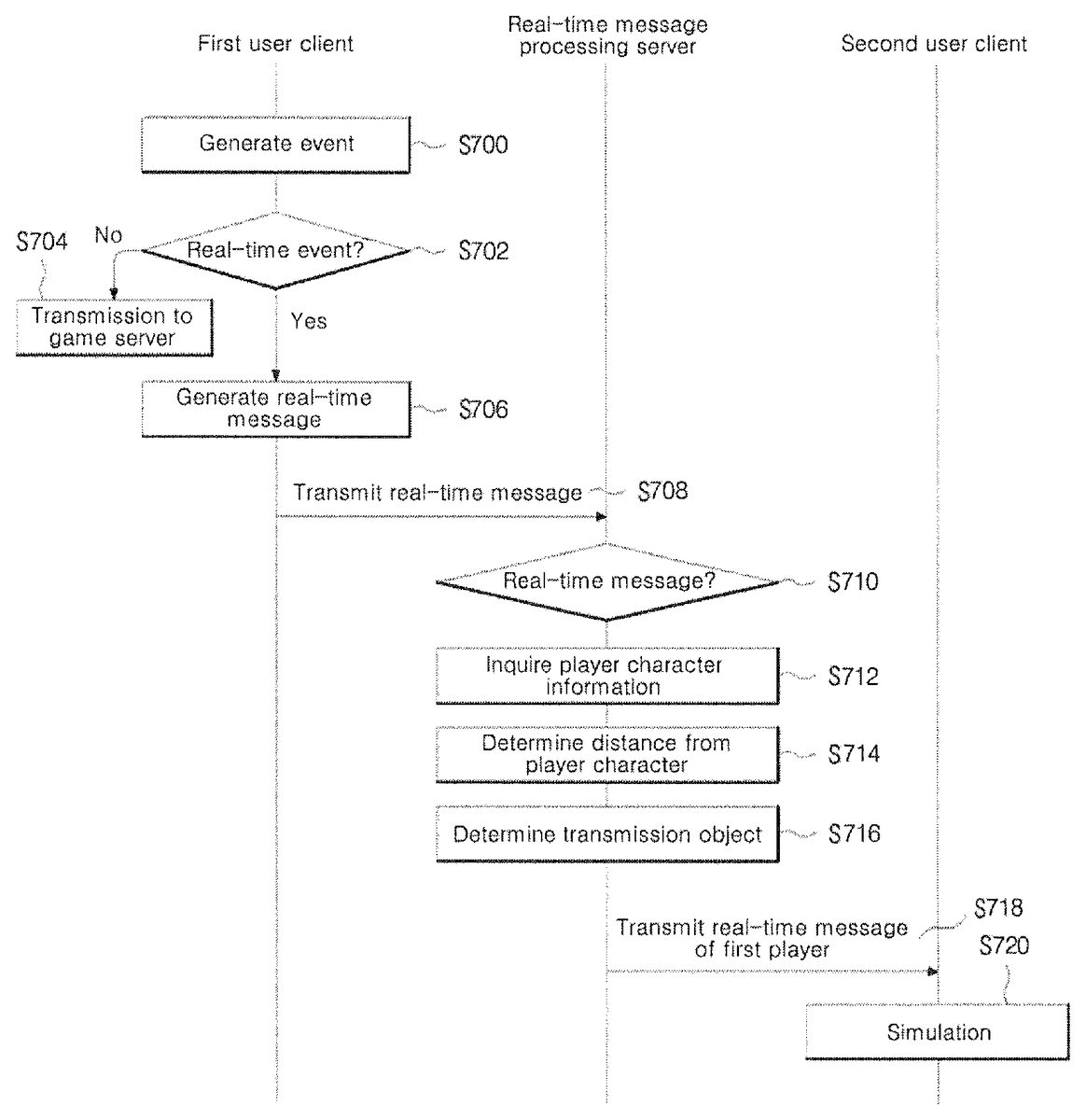
FIG. 7is a flow chart illustrating a method for processing the real-time message according to one embodiment.
Referring toFIG. 7, if the event is generated by the user command at step S700, the game application110installed into the user client108determines whether the corresponding event is the real-time event or not at step S702.
If the corresponding event is not the real-time event at step S702, the message corresponding to the corresponding event is transmitted to the game server102at step S704. Otherwise, if the corresponding event is the real-time event at step S702, the game application110generates the real-time message at step S706.
The generated real-time message is transmitted to the real-time message processing server106at step S708.
The real-time message processing server106determines whether the transmitted message is the real-time message at step S710, so that it can be recognized that the transmitted message is controlled by only the real-time message processing server106. If necessary, the determining step S710may be omitted.
If it is determined that the transmitted message is the real-time message at step S710, the real-time message processing server106inquires about information of online-mode player characters at step S712.
In one embodiment, the real-time message processing server106may inquire about location information of individual player characters existing in the same channel or world.
Thereafter, the real-time message processing server106determines the distance between the player character, who has transmitted the real-time message, and the other player character, who has inquired at step S712, at step S714, and determines the transmission object of the message on the basis of the determined distance at step S716.
As described above, the transmission object may be determined to be a specific player character existing within a predetermined area from among several player characters according to the location information of the player character who has transmitted the message and other player characters.
The real-time message processing server106transmits the real-time message of the first player character to the user client acting as the transmission object at step S718.
Thereafter, if the real-time message is the moving message, the game application110installed into the user client receiving the real-time message of the first player character performs the simulation associated with the first player character, and displays the simulation result on the screen at step S720.
FIG. 8is a flow chart illustrating a method for transmitting moving messages according to one embodiment.
In more detail,FIG. 8shows a method for transmitting the moving messages of other player characters from among real-time messages in the player object contained in the real-time message processing server106.
Referring toFIG. 8, the buffering unit400of the player object receives the moving messages associated with the specific player character from the message controller304, and performs buffering of the received moving messages at step S800.
If the moving messages are completely buffered at step S800, the timer402determines whether a predetermined time expires at step S802. If the predetermined time has expired at step S802, non-transmission moving messages are discarded at step S804.
The non-transmission moving messages may be discarded on the condition that the message is not transmitted to a destination in real time due to the problems of network environments.
In the meantime, upon receiving the next moving message of the aforementioned player character before the predetermined time expires at step S806, the latest-message monitoring unit404determines the presence or absence of the previous moving message, and overwrites the previous moving message with the next moving message if the presence of the previous moving message is determined at step S808.
The next moving message overwritten is transmitted as the latest moving message to the user client108at step S810.
It should be noted that most terminology disclosed herein is defined in consideration of functions of the embodiments exemplarily described herein, and can be differently determined according to intention of those skilled in the art or usual practices. Therefore, the above-mentioned terminology should be understood on the basis of all the content disclosed herein.
It will be apparent to those skilled in the art that various modifications and variations can be made in the embodiments exemplarily described herein without departing from the spirit or scope of the inventions as claimed. Thus, it is intended that modifications and variations of the embodiments exemplarily described herein are covered, provided they come within the scope of the appended claims and their equivalents.
As apparent from the above description, the multi-access online game system and the game control method for use in the same allow a distributed server to control messages (i.e., real-time messages) needed to be processed in real time, so that an amount of server load can be reduced.
The multi-access online game system exemplarily described above selectively transmits the real-time message to only some players from among online players by the multi-access online game system, so that an amount of transmission load of the server can be reduced.
The multi-access online game system exemplarily described above allows the user to determine whether the message is the real-time message, and transmits the real-time message to a server different from the game server, so that the amount of load of the game server can be reduced.
Claims
- A computer-implemented game control method to manage a multi-access online game system for a multi-access online game, which comprises at least one user client, a first server, and at least one second server, the method comprising: the first user client comprising a processor configured for: receiving a game-associated event message during play of the multi-access online game on the first user client;determining whether the game-associated event message is a real-time message that requires immediate transmission to a second user client based on an event category of the game-associated event message;sending the game-associated event message to the first server when the game-associated event message is determined not to be the real-time message;and sending the game-associated event message directly to the at least one second server when the game-associated event message is determined to be the real-time message;and the at least one second server comprising a processor configured for selectively transmitting the real-time message to only some players from among online players of the multi-access online game by: determining the second user client where the real-time message is to be received;and transmitting the real-time message to the second user client, wherein the determining of the second user client comprises: recognizing location information, on the multi-access online game, of a first player character corresponding to the first user client;and upon recognizing the location information of the first player character, determining a user client corresponding to a second player character, existing within a predetermined distance from the first player character, to be the second user client.
- The method according to claim 1 , wherein the determining whether the game-associated event message is the real-time message is decided by a game application of the multi-access online game installed into the first user client.
- The method according to claim 1 , wherein the real-time message comprises at least one of a moving message of a player character, a collision message, and a chatting message for another user adjacent to the player character.
- The method according to claim 1 , further comprising: before transmitting the real-time message to the second user client, buffering the real-time message;determining whether a predetermined time expires after the buffering the real-time message;and when the predetermined time expires, discarding the buffered real-time message.
- The method according to claim 4 , further comprising: upon receiving a next real-time message from the first user client, overwriting the buffered real-time message with the next real-time message.
- The method according to claim 1 , wherein a number of the at least one second server is equal to a number of divided areas of a game space.
- A non-transitory computer-readable storage medium comprising an executable program, which when executed, causes performance of the following steps: receiving a game-associated event message generated during play of a multi-access online game on a first user client as a real-time message based on an event category of the game-associated event message;and selectively transmitting the real-time message to only some players from among online players of the multi-access online game by: determining a second user client where the real-time message is to be received;and transmitting the real-time message to the second user client, wherein the determining of the second user client comprises: recognizing location information, on the multi-access online game, of a first player character corresponding to the first user client;and upon recognizing the location information of the first player character, determining a user client corresponding to a second player character, existing within a predetermined distance from the first player character, to be the second user client.
- A game control method that employs a game application installed into at least one user client which gains access to a multi-access online game system including a first server and at least one second server to play a game, the method comprising: a first user client comprising a processor configured for: receiving game command information during play of the game;determining whether an event created by the received game command is a real-time event that requires immediate notice based on an event category of the game-associated event message;generating a real-time message with respect to the real-time event, and transmitting the generated real-time message directly to any one of the at least one second server when the event is determined to be the real-time event;and alternatively transmitting a message associated with the event to the first server when the event is determined not to be the real-time event;and the at least one second server comprising a processor configured for selectively transmitting the real-time message to only some players from among online players of the multi-access online game by: determining a second user client where the real-time message is to be transmitted;and transmitting the real-time message to a game application to the second user client, wherein the determining of the second user client comprises: recognizing location information, on the game, of a first player character corresponding to the first user client;and upon recognizing the location information of the first player character, determining a user client corresponding to a second player character, existing within a predetermined distance from the first player character, to be the second user client.
- The method according to claim 8 , wherein a number of the at least one second server is equal to a number of divided areas of a game space, and the game application of the first user client transmits real-time messages to the second server controlling an area including a player character running on the first user client.
- A multi-access online game system for controlling a game of player characters corresponding to a plurality of user clients comprising: a first user client comprising a processor configured to receive a game-associated event message during play of a multi-access online game, determine whether the game-associated event message is a real-time message that requires immediate notice to a second user client based on an event category of the game-associated event message, sending the game-associated event message to the one of a game server and at least one distributed server according to a game logic;the game server configured to receive event messages associated with a game from a first user client, and configured to process the received game-associated event messages according to the game logic;a database server configured to receive status change information comprising status change information of each player character from the game server, and configured to store the received status change information in a database;and the at least one distributed server configured to receive a real-time message among the game-associated event messages from the first user client, configured to selectively transmit the real-time message to only some players from among online players of the multi-access online, configured to determine the second user client where the real-time message is to be received, and configured to transmit the real-time message to the second user client, wherein it is determined whether a message from the first user client is the real-time message that requires immediate transmission to the second user client, and the message is sent to the game server when the message is determined not to be the real-time message, or is alternatively sent directly to the at least one distributed server when the message is determined to be the real-time message, and wherein the determining of the second user client, by the at least one distributed server, comprises recognizing location information, on the game, of a first player character corresponding to the first user client, and upon recognizing the location information of the first player character, determining a user client corresponding to a second player character, existing within a predetermined distance from the first player character, to be the second user client.
- The system according to claim 10 , wherein whether the message is the real-time message is decided by a game application installed at the first user client.
- The system according to claim 10 , wherein: when the game is a multi-access online game, the real-time message comprises at least one of a moving message of a player character, a collision message, and a chatting message for another user adjacent to the player character.
- The system according to claim 10 , wherein the at least one distributed server is configured to render a player object which appears or disappears for each accessing user client, and to transmit/receive the real-time message to/from the accessing user client, wherein the at least one distributed server comprises;a transmission-object decision unit configured to determine the second user client where the real-time message is to be transmitted;and an online-player character information manager configured to manage location information of player characters, that exist in an online status, to determine a transmission object.
- The system according to claim 13 , wherein the transmission-object decision unit receives the location information from the online-player character information manager, and determines a user client corresponding to a player character existing within a predetermined distance from a player character corresponding to the first user client to be the second user client on the basis of the received location information.
- The system according to claim 13 , wherein the player object buffers the real-time message to be transmitted to the second user client, receives a next real-time message from the first user client, and overwrites the buffered real-time message with the next real-time message.
Disclaimer: Data collected from the USPTO and may be malformed, incomplete, and/or otherwise inaccurate.