DETAILED DESCRIPTION FIG. 1illustrates a system in accordance with aspects of the invention. A game console113, with associated monitor and game controller, is configured for play of a video game. The game console may be considered a compute device. During game play the game console, which includes at least one processor, computer memory, communication circuitry, and associated other hardware, executes program instructions to provide for play of the video game, with a video game player providing game play inputs using the game controller and the monitor associated with the game console displaying game play events. In various embodiments the video game may be an action game, for example a fighting game or a first-person shooter game, a role playing game, or a vehicle simulator game. The video game includes a character, who has various skills and capabilities and is equipped with equipment for use and/or display in the video game. The equipment in various embodiments may be items of clothing, weapons or other gear, vehicles or vehicular components, or other items. The game console is coupled to a network115. The network may be a broad area network, for example the Internet. Also coupled to the network is a server111, a mobile compute device, shown as a smartphone117, and a personal computer, shown in the fowl a laptop computer119. The server may be for example be part of a server farm, including multiple servers, some of which may provide similar functions, and the server farm may be located at a co-location facility or other facility providing security, environmental conditioning, and wired Internet connections. The laptop may have a wired or wireless connection to the Internet. In some embodiments the laptop may be located approximate the game console, at least at some times, but in many embodiments the laptop is located at ...
DETAILED DESCRIPTION
FIG. 1illustrates a system in accordance with aspects of the invention. A game console113, with associated monitor and game controller, is configured for play of a video game. The game console may be considered a compute device. During game play the game console, which includes at least one processor, computer memory, communication circuitry, and associated other hardware, executes program instructions to provide for play of the video game, with a video game player providing game play inputs using the game controller and the monitor associated with the game console displaying game play events. In various embodiments the video game may be an action game, for example a fighting game or a first-person shooter game, a role playing game, or a vehicle simulator game. The video game includes a character, who has various skills and capabilities and is equipped with equipment for use and/or display in the video game. The equipment in various embodiments may be items of clothing, weapons or other gear, vehicles or vehicular components, or other items.
The game console is coupled to a network115. The network may be a broad area network, for example the Internet. Also coupled to the network is a server111, a mobile compute device, shown as a smartphone117, and a personal computer, shown in the fowl a laptop computer119. The server may be for example be part of a server farm, including multiple servers, some of which may provide similar functions, and the server farm may be located at a co-location facility or other facility providing security, environmental conditioning, and wired Internet connections. The laptop may have a wired or wireless connection to the Internet. In some embodiments the laptop may be located approximate the game console, at least at some times, but in many embodiments the laptop is located at locations different than the game console. The smartphone is generally coupled to the Internet by way of a wireless cellular communications system, which may include wired communications links in addition to wireless communication channels. The server, laptop, and smartphone, of course, each have one or more processors, memory, communication circuitry. and associated hardware.
Skills, capabilities, and/or equipment associated with a game character may be modified through use of the smartphone or laptop, both of which may be considered compute devices, with one or neither in various embodiments configured to provide for game play of the video game. In some embodiments, for example a smartphone, laptop, or other personal computer may be a compute device configured for game play, while in various embodiments some or all of them may not. In some embodiments, using the smartphone and personalization of game character equipment as an example, the smartphone executes an application displaying options for equipping a game character. receives equipment selections, and transmits the equipment selections to the server. The server transmits the equipment selections to the game console, for use during game play, with the game console providing for game play with the game character equipped as indicted by the equipment selections. In some embodiments the server may validate the availability of the equipment selections for the game character, and/or provide additional information regarding equipment to the smartphone, for example to allow a user to investigate properties associated with various items or equipment or otherwise perform research related to selection of equipment.
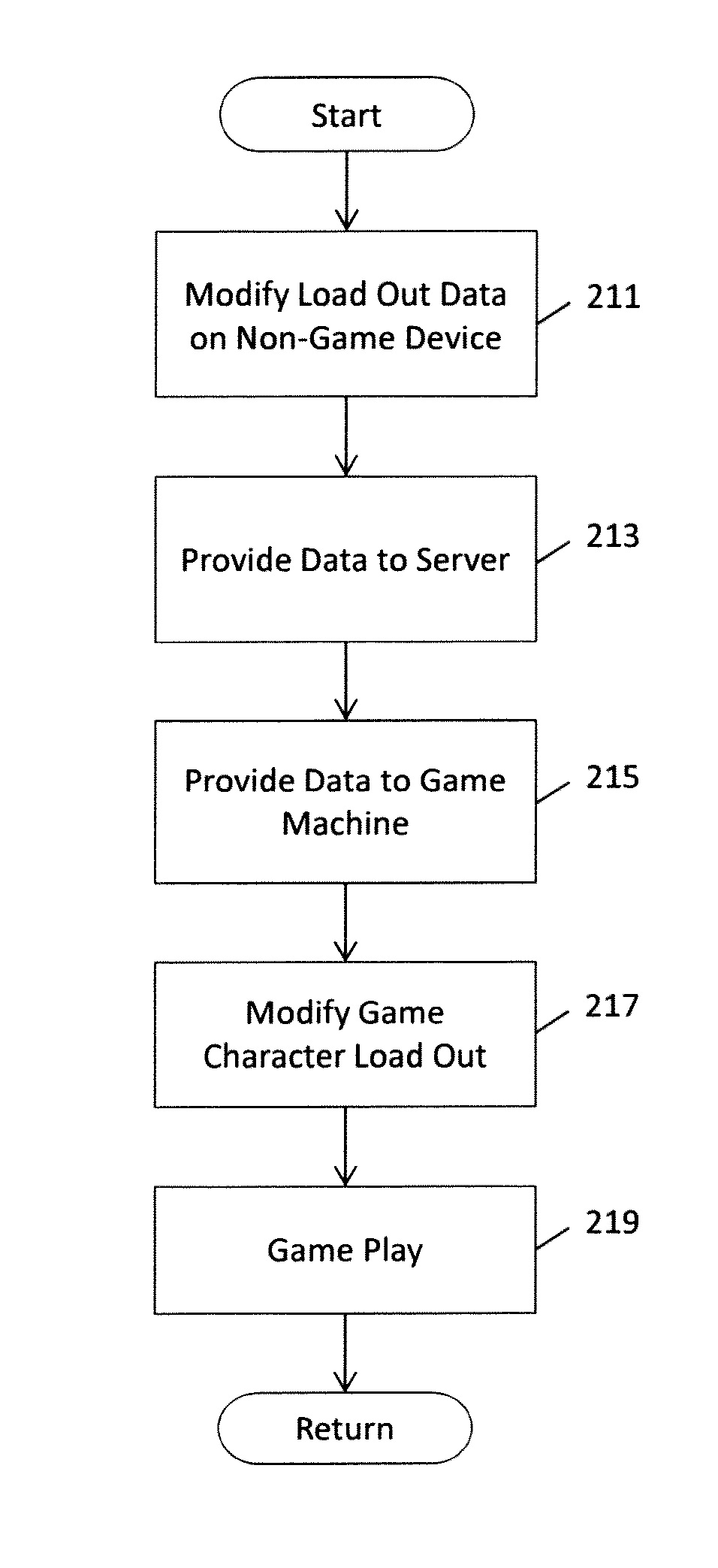
FIG. 2is a flow diagram of a process for modifying video game character personalization in accordance with aspects of the invention. In various embodiments the process ofFIG. 2may be performed by the system ofFIG. 1, or elements of the system ofFIG. 1. In some embodiments the process ofFIG. 2may be performed and/or have performance commanded by processors of elements of the system ofFIG. 1.
In block211of the process. personalization information for a video game character of a video game is set or modified on a compute device which is not configured for providing game play. The personalization information may be termed character load out information or simply load out information. In some embodiments the personalization information is limited to particular categories of information, with only a limited predefined number of selections possible within each category. In some embodiments the personalization information comprises equipment associated with a game character. and in some embodiments the personalization information is limited to equipment associated with the game character or such equipment and capabilities related to use of such equipment and/or, in various embodiments, capabilities related to ability to use or call upon use of similar or related equipment.
The compute device which is not configured for game play may. in various embodiments, be a compute device which potentially may be able to execute game program instructions of the video game, but does not have associated hardware which would make the compute device suitable for play of the video game. For example, due to screen display limitations or lack of interface ability with a particular game controller, a particular device, for example a smartphone, may not be suitable for play of the video game. Similarly, in various embodiments the compute device which is not configured for game play may be a compute device for which an operable version of the game program instructions is not available, as may be the case if game program instructions for the video game are only available for use with one, or several, game consoles, but not for smartphones or personal computers.
In some embodiments the personalization information is set or modified by a processor of the compute device commanding display of possible personalization selections, receiving a personalization selection or selections by way of user inputs to the compute device. and setting information reflecting the personalization selections, generally by storing the information in memory of the compute device in most embodiments. In some embodiments the compute device may allow for setting of different sets of personalization selections, with for example the different sets of personalization selections later being available as alternatives during game play on another compute device.
In block213the compute device provides the information reflecting the personalization selections to a server. In various embodiments the compute device provides. along with the personalization selections. identification of a game character to which the personalization selections apply, identification of a game player with whom the game character is associated, and/or identification of a game console or game to which the personalization selections apply.
In block215the server provides the personalization information to another compute device. The other compute device is configurable and configured to execute game program instructions for the video game. In some embodiments the other compute device is a game console.
In block217the other compute device modifies the game character information to reflect the personalization selections indicated by the personalization information. In some embodiments a game player is presented an option to accept the personalization selections prior to modification of the game character information. In some embodiments the game player has an option, prior to or in some embodiments during game play, to accept the personalization selections for use with the game character.
In block219the other compute device provides for game play.
The process thereafter returns.
FIG. 3is a flow diagram of a process, for example performed by a mobile compute device, useful in modifying video game character equipment in accordance with aspects of the invention. In various embodiments the process ofFIG. 3may be performed by a compute device such as the smartphone or the laptop ofFIG. 1, or elements of smartphone or laptop ofFIG. 1. In some embodiments the process ofFIG. 3may be performed and/or have performance commanded by processors of the smartphone or laptop of the system ofFIG. 1.
In block311the process requests information regarding possible personalization selections. In some embodiments the request for information is by way of transmission of the request to a server having access to memory storing such information.
In block313the process receives information regarding possible personalization selections. In some embodiments the information regarding the possible personalization selections comprises current personal selections for a game character and/or a range of possible personalization selections.
In block315the process makes or modifies personalization selections. The personalization selections may be made or modified, for example, based on user inputs to the compute device.
In block317the process transmits the personalization selections to the server.
The process thereafter returns.
FIG. 4is a flow diagram of a process, for example performed by the server ofFIG. 1. useful in modifying video game character equipment in accordance with aspects of the invention.
In block411the process receives a request over a network for information regarding personalization of a video game character from a compute device.
In block413the process transmits over the network information regarding personalization options for the video game character to the other compute device.
In block415the process receives modified personalization selections for the video game character from the compute device. In some embodiments the process additionally compares the personalization selections against information stored in memory reflecting allowable personalization selections for the character, with the allowable personalization selections in some embodiments additionally based on rule sets utilizing the information stored in memory. In some embodiments the process does not allow for the personalization selections if the personalization selections are not allowed.
In block417the process transmits the personalization selections to a compute device configured to execute game program instructions.
FIG. 5is a flow diagram of a process, for example performed by the game console ofFIG. 1, useful in modifying video game character equipment in accordance with aspects of the invention.
In block511the process receives personalization selections from a server.
In block513the process modifies game character information to reflect the personalization selections.
In block515the process provides for game play.
The process thereafter returns.
FIG. 6is a screen shot of a mobile compute device showing selected equipment for a video game character in accordance with aspects of the invention, along with an option to update the selected equipment by transmitting the selection to a server.
In the screen shot ofFIG. 6, three different alternative sets, or classes, of personalizations for the video game character are available, each with a larger piece of equipment and a smaller piece of equipment. A Class1indicates personalization selections of equipment of a MK14 and a USP 45 caliber. A Class2indicates personalization selections of equipment of an M16 and a G17 handgun. A Class3indicates personalization selections of an XM29 and a M1911 handgun. Upon selection of the Update Selection option, the device showing the displayed information transmits the personalization selections to a server for further processing.