U.S. Pat. No. 9,492,739
VIRTUAL WORLD PROCESSING APPARATUS
AssigneeElectronics and Telecommunications Research Institute ETRI
Issue DateOctober 18, 2013
Illustrative Figure
Abstract
Disclosed herein is a virtual world processing apparatus. The virtual world processing apparatus includes a gas sensor unit and an engine. The gas sensor unit obtains scent information in the real world. The engine receives information about the capabilities of the gas sensor unit from the gas sensor unit, and transmits the scent information obtained by the sensor unit to a virtual world or the real world.
Description
DESCRIPTION OF THE PREFERRED EMBODIMENTS The present invention will be described in detail with reference to the accompanying drawings. In the following description, repetitive descriptions and detailed descriptions of well-known functions and configurations that may make the gist of the present invention unnecessarily obscure will be omitted. A virtual world processing apparatus for controlling information exchange between the real world and a virtual world according to an embodiment of the present invention will be described below. FIG. 1is a diagram illustrating the structure of MPEG-V. Referring toFIG. 1, in order to implement a virtual world processing apparatus according to an embodiment of the present invention, there are the real world100, an engine200, and a virtual world300. In this case, the real world100refers to actual space, whereas the virtual world300is a virtual space other than actual space and refers to virtual reality, such as a computer, a server or the like. The real world100includes a gas sensor unit110configured to detect scent information about the real world100and a scent emission device120configured to emit a scent to the real world100based on scent information obtained in the virtual world300or the scent information detected by the gas sensor unit110. Furthermore, the virtual world300may include a scent emission media player that plays the virtual world300implemented by a program itself or content including scent emission information that may be implemented in the real world100. The gas sensor unit110according to an embodiment of the present invention may transmit information about the capabilities of the gas sensor unit110and information about a scent detected in the real world100to the engine200(10and12). In this case, the capabilities of the gas sensor unit110refer to the types of scents and the intensities of scents that can be detected by the gas sensor unit110. Furthermore, the engine200may transmit (51) scent information received from the gas ...
DESCRIPTION OF THE PREFERRED EMBODIMENTS
The present invention will be described in detail with reference to the accompanying drawings. In the following description, repetitive descriptions and detailed descriptions of well-known functions and configurations that may make the gist of the present invention unnecessarily obscure will be omitted.
A virtual world processing apparatus for controlling information exchange between the real world and a virtual world according to an embodiment of the present invention will be described below.
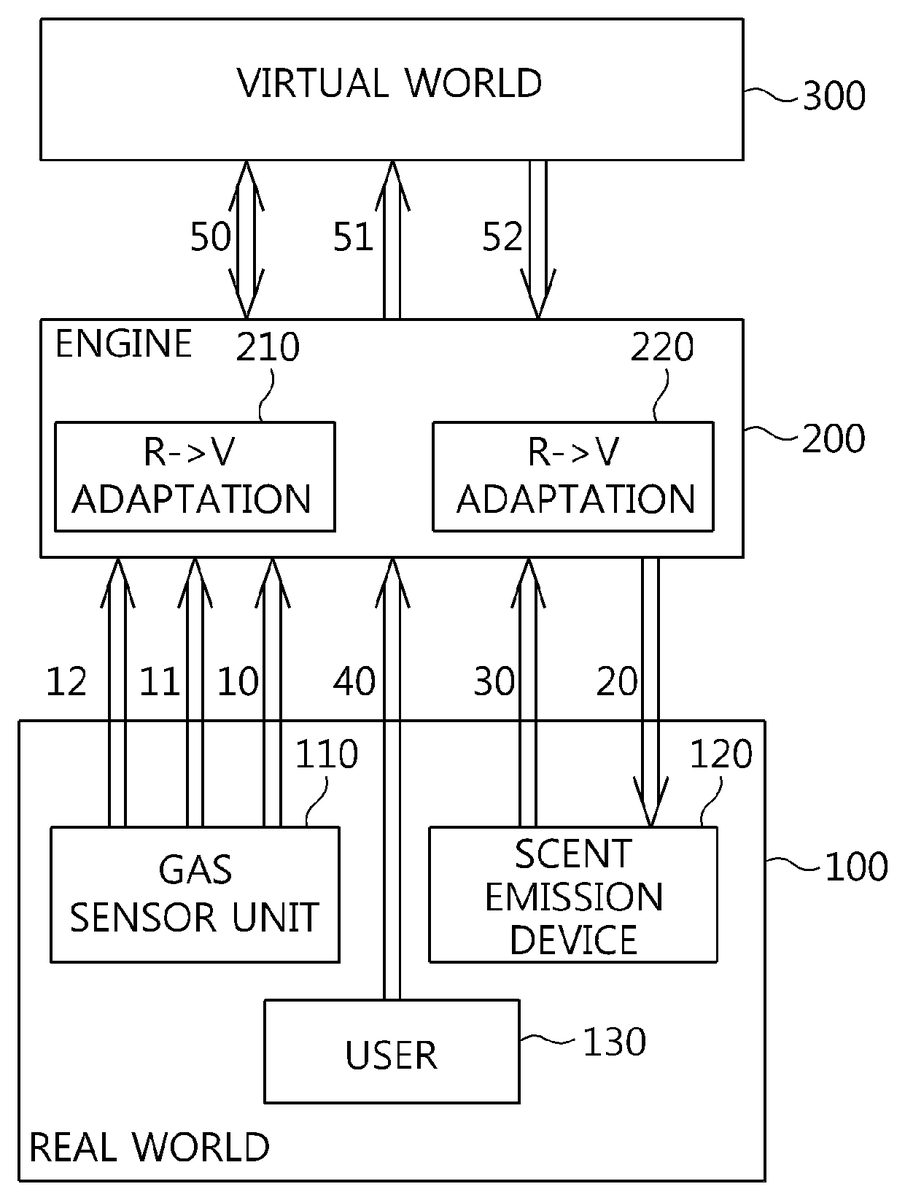
FIG. 1is a diagram illustrating the structure of MPEG-V.
Referring toFIG. 1, in order to implement a virtual world processing apparatus according to an embodiment of the present invention, there are the real world100, an engine200, and a virtual world300.
In this case, the real world100refers to actual space, whereas the virtual world300is a virtual space other than actual space and refers to virtual reality, such as a computer, a server or the like.
The real world100includes a gas sensor unit110configured to detect scent information about the real world100and a scent emission device120configured to emit a scent to the real world100based on scent information obtained in the virtual world300or the scent information detected by the gas sensor unit110.
Furthermore, the virtual world300may include a scent emission media player that plays the virtual world300implemented by a program itself or content including scent emission information that may be implemented in the real world100.
The gas sensor unit110according to an embodiment of the present invention may transmit information about the capabilities of the gas sensor unit110and information about a scent detected in the real world100to the engine200(10and12).
In this case, the capabilities of the gas sensor unit110refer to the types of scents and the intensities of scents that can be detected by the gas sensor unit110.
Furthermore, the engine200may transmit (51) scent information received from the gas sensor unit110to the virtual world300, and may receive (52) scent information provided by the virtual world300.
The scent emission device120may transmit (30) information about the capabilities of the scent emission device120to the engine200, and may perform a function of emitting a scent to the real world100in compliance with the scent emission command (20) of the engine200. In this case, the capabilities of the scent emission device120refer to the types of scents and the intensities of scents that can be emitted by the scent emission device120.
Furthermore, the engine200may receive (40) a preference for each scent emitted by the scent emission device from a user130who is present in the real world100.
The present invention addresses a technology for compatibility between the real world100and the virtual world300. In connection with this, the engine100transmits information between the real world100and the virtual world300.
In this case, a standard for forms of representation for the purpose of the transmission of information between the real world100and the virtual world300is required. The principal feature of the present invention is to provide the standard for forms of representation for the purpose of the transmission of information.
The gas sensor unit110will be described in greater detail below.
The gas sensor unit100can detect a scent that is present in the real world100. The gas sensor unit100may include various sensors in order to more accurately detect scents that are present in the real world100.
A representation method by which the gas sensor unit100transmits its capabilities to the engine200will now be described. In this case, a part in which the gas sensor unit100transmits its capabilities to the engine200is referred to as an e-nose capabilities type.
FromFIG. 2, the Extensible Markup Language (XML) representation syntax of the e-nose capabilities type can be seen. FromFIGS. 3a, 3band 3c, the binary representation syntax of the e-nose capabilities type can be seen. FromFIGS. 4a, 4band 4c, the semantics of the e-nose capabilities type can be seen.
Referring toFIGS. 4aand 4b, the e-nose capabilities type includes “each mono chemical sensor flag,” an “intensity unit flag,” a “temperature unit flag,” a “warm up time flag,” a “recognition time flag,” a “number of recognition odor flag,” a “maximum operating temperature flag,” a “minimum operating temperature flag,” a “maximum operating humid flag,” and a “recognition odors flag.”
In this case, it can be seen that the flags are defined as being used when they have a value of 1 in terms of binary representation and not being used when they have a value of 0.
For example, referring to gas type flag ofFIG. 4c, information about whether the gas detected by the gas sensor unit110is present is transmitted to the engine200using a 2-bit binary representation.
Referring toFIG. 3c, the gas sensor unit110may transmit information about a maximum value maxIntensity in parts per million (ppm) that can be detected by the gas sensor unit110to the engine200.
Furthermore, the gas sensor unit110may transmit information about a minimum value minIntensity in ppm that can be detected by the gas sensor unit110to the engine200.
FromFIG. 5, the details of the e-nose capabilities type based on the semantics can be seen. FromFIG. 6, the XML representation syntax of an odor sensor technology CS can be seen. In detail, in an embodiment for representing the capabilities of the gas sensor unit110, id may be “Enose_01,” the intensity unit may be “ppm,” the temperature unit may be “Celsius,” the warm-up time may be “600,” the recognition time may be “30,” the number of recognition odors may be “3,” the maximum operating temperature may be “60,” the minimum operating temperature may be “5,” and the maximum operating humidity may be “70.”
Furthermore, it can be seen that the maximum value maxIntensity in ppm that can be detected by the gas sensor unit100is “5000.0.”
Furthermore, it can be seen that the minimum value minIntensity in ppm that can be detected by the gas sensor unit100is “10.0.”
Moreover, the gas sensor unit110may transmit information about the type of gas detected by the gas sensor unit110to the engine using a binary representation.
An e-nose sensed info type is used to represent a scent that is detected by the gas sensor unit110.
FIG. 8is a diagram illustrating the XML representation syntax of an e-nose sensed info type.FIG. 9is a diagram illustrating the binary representation syntax of the e-nose sensed info type.FIG. 10is a diagram illustrating the semantics of the e-nose sensed info type.
In this case, each binary representation may be composed of 8 bits or 16 bits.
Referring toFIG. 14a, according to the scent CS type, the types of gases that are detected by the gas sensor unit110may be represented using binary representations.
For example, the scent of roses may be represented by “0000,” the scent of acacias may be represented by “0001,” the scent of chrysanthemums may be represented by “0010,” the scent of lilacs may be represented by “0011,” the scent of mint may be represented by “0100,” the scent of jasmine may be represented by “0101,” the scent of pine trees may be represented by “0110,” the scent of oranges may be represented by “0111,” the scent of grapes may be represented by “1000,” and “1001” to “1111” may be reserved for other use.
Furthermore, the types of sensors that are included in the gas sensor unit110may be determined. Information about the types of sensors may be transmitted to the engine200. A method of representing the types of sensors is referred to as odor sensor technology CS. Referring toFIG. 7, the binary representation syntax of odor sensor technology CS can be seen. In this case, the sensors of the odor sensor technology CS can be represented using four bits. “0000” represents a MOS sensor, “0001” represents a MOSFET sensor, “0010” represents a CP sensor, “0011” represents a SAW sensor, “0100” represents a QMB sensor, and the remaining 0101 and 1111 are not assigned and empty.
An operation in which the engine200receives scent information obtained from the gas sensor unit110and transmits the scent information to the virtual world300or real world100will be described below.
Furthermore, the scent emission device120that emits a scent to the real world100based on scent information will be described below.
The scent emission device120may transmit information about the capabilities of the scent emission device120to the engine200. This transmission method is referred to as a scent capabilities type.
In this case, the scent emission device120may transmit a list of scents that can be emitted by the scent emission device120to the engine200using a 4- or 8-bit binary representation.
In greater detail, referring toFIG. 14a, in the scent CS type, the scent of roses may be represented by “0000,” the scent of acacias may be represented by “0001,” the scent of chrysanthemums may be represented by “0010,” the scent of lilacs may be represented by “0011,” the scent of mint may be represented by “0100,” the scent of jasmine may be represented by “0101,” the scent of pine trees may be represented by “0110,” the scent of oranges may be represented by “0111,” the scent of grapes may be represented by “1000,” and “1001” to “1111” may be reserved for extra use.
Furthermore, the scent emission device120may transmit information about the maximum intensity of a scent in ml/h that can be emitted by the scent emission device120to the engine200.
Referring toFIG. 14c, a binary representation of the maximum intensity is defined as maxIntensity, and a binary representation of the maximum intensity is defined as maxIntensity.
In this case, “no scent” may be represented by “000,” “very light” may be represented by “001,” “light” may be represented by “010,” “moderate” may be represented by “011,” “strong” may be represented by “100,” and “very strong” may be represented by “101.”
More specifically, fromFIG. 11, the XML representation syntax of the scent capabilities type according to an embodiment of the present invention can be seen. FromFIGS. 12aand 12b, the binary representation syntax of the scent capabilities type according to an embodiment of the present invention can be seen. FromFIG. 13, the semantics of the scent capabilities type according to an embodiment of the present invention can be seen. FromFIGS. 14ato 14c, the semantics of a scent quality type according to an embodiment of the present invention can be seen.
FromFIG. 15, a detailed description of the capabilities of the scent emission device120according to an embodiment of the present invention can be seen. Referring to the detailed description ofFIG. 15, the scent emission device120may emit two types of scents. The scent emission device120emits the scents for a period from 0 milliseconds to 10 milliseconds. Furthermore, one of the two scents is the scent of roses. The maximum intensity maxintensity is 200 ppm, the maximum preference intensity maxHedonicintensity is 300 ppm, and the maximum intensity type is “strong.” Furthermore, the maximum hedonic tone has a value of 6, and the intensity control level has a value of 10. Furthermore, it can be seen that the second order delay time is 1000 milliseconds. The remaining scent is the scent of oranges. The maximum intensity maxintensity is 300 ppm, the maximum preference intensity maxHedonicintensity is 300 ppm, and the maximum intensity type is “moderate.” Furthermore, the maximum hedonic tone has a value of 5, and the intensity control level has a value of 10. Furthermore, it can be seen that the second order delay time is 1000 milliseconds.
Furthermore, the engine200may receive a preference for a scent transmitted by the scent emission device120from the user130.
FIG. 16is a diagram illustrating the XML representation syntax of a scent preference type according to an embodiment of the present invention.FIGS. 17aand 17bare drawings illustrating the binary representation syntax of the scent preference type according to an embodiment of the present invention.FIG. 18is a diagram illustrating the semantics of the scent preference type according to an embodiment of the present invention.FIGS. 19aand 19bare diagrams illustrating the semantics of a scent preference type according to an embodiment of the present invention.FIG. 20is a diagram illustrating a detailed description of a user preference according to an embodiment of the present invention.
In this case, a representation method that is used to transmit the preference is referred to as a scent preference type.
More specifically, the engine200may receive the preference for a scent that is transmitted by the scent emission device120via a list including “pleasant” or “unpleasant.”
The term “pleasant” refers to “preferring,” and the term “unpleasant” refers to “not preferring.”
When the engine200receives the preference for a scent transmitted by the scent emission device120as described above, the preference may be taken into account upon controlling the scent emission device120.
Furthermore, the engine200may receive a desired maximum intensity in milliliter/hour for the scent transmitted by the scent emission device120.
FromFIG. 20, a detailed description of a user preference according to an embodiment of the present invention can be seen. In the example ofFIG. 20, the scent emission device120emits two types of scents. In this case, if user Max Intensity=200 ppm when the user130smells a first scent, the user130determines the maximum intensity type to be “very strong” and the value of the maximum hedonic tone to be 7. Furthermore, if user max intensity=300 ppm when the user130smells a second scent, the user130determines the maximum intensity type to be “moderate” and the value of the maximum hedonic tone to be 6.
Furthermore, the engine200may specify and control the type of scent that should be emitted by the scent emission device120.
In greater detail, referring toFIG. 14a, according to the scent CS type, the scent of roses may be represented by “0000,” the scent of acacias may be represented by “0001,” the scent of chrysanthemums may be represented by “0010,” the scent of lilacs may be represented by “0011,” the scent of mint may be represented by “0100,” the scent of jasmine may be represented by “0101,” the scent of pine trees may be represented by “0110,” the scent of oranges may be represented by “0111,” the scent of grapes may be represented by “1000,” and “1001” to “1111” may be reserved for extra use.
A representation by which the engine200commands the scent emission device120will be described.
The representation by which the engine200commands the scent emission device120is referred to as a scent effect.
FIG. 21is a diagram illustrating the XML representation syntax of a scent effect according to an embodiment of the present invention.FIG. 22is a diagram illustrating the binary representation syntax of the scent effect according to an embodiment of the present invention.FIG. 23is a diagram illustrating the semantics of the scent effect according to an embodiment of the present invention.FIG. 24is a diagram illustrating a detailed description of a command that directs the scent emission device to emit a scent according to an embodiment of the present invention.
Furthermore, the engine200may specify the duration of scents that should be emitted by the scent emission device120, and may then control the scent emission device.
More specifically, referring toFIG. 23, a description of the “duration” is given, and the “duration” refers to the period for which the scent emission device120continuously emits a scent.
Furthermore, the engine200may specify the intensity of a scent that should be emitted by the scent emission device120, and may then control the scent emission device120.
More specifically, referring toFIG. 23, a description of “intensity” is given, and the “intensity” refers to the intensity of a scent that is emitted by the scent emission device120.
In greater detail, fromFIG. 24, a detailed description of a command that directs the scent emission device120according to an embodiment of the present invention to emit a scent can be seen. Referring to the example ofFIG. 24, the identifier of the corresponding command is “scent01,” and the identifier of the scent emission device120to which the command is issued is “scent device 001.” Furthermore, it can be seen that the intensity corresponds to 30% of the maximum value of “scentdevice001,” the scent is defined as the scent of acacias and the operating duration of the scent emission device120is five seconds.
Furthermore, the engine200may transmit scent information detected by the gas sensor unit110to the virtual world300. In this case, the virtual world300is applied to the scent information, and thus an effect corresponding to the e-nose sensed info type12corresponding to the scent of the real world100can be implemented in the virtual world300.
In accordance with an aspect of the present invention, scent information (an effect event) generated in the virtual world300is embodied by the scent emission device120in the real world100. This is achieved by transmitting the scent information (the effect event) generated in virtual world300to the engine200.
FIG. 25is a flowchart of a virtual world processing method according to an embodiment of the present invention.
Referring toFIG. 25, a virtual world processing method according to an embodiment of the present invention includes step S10of obtaining scent information from a virtual world, step S20of obtaining scent information from the real world, step S30of controlling the transmit of the acquired scent information to the real world or virtual world, and step S40of emitting one or more scents to the real world based on the scent information.
Although the preferred embodiments of the present invention have been disclosed for illustrative purposes, those skilled in the art will appreciate that various modifications, additions and substitutions are possible, without departing from the scope and spirit of the invention as disclosed in the accompanying claims.
Claims
- A virtual world processing apparatus, comprising: a gas sensor unit configured to obtain scent information in a real world;and an engine configured to receive information about capabilities of the gas sensor unit from the gas sensor unit, and to transmit the scent information obtained by the sensor unit to a virtual world or the real world, wherein the gas sensor unit transmits to the engine a maximum value of gas in parts per million (ppm) that can be detected by the gas sensor unit.
- The virtual world processing apparatus of claim 1 , wherein the gas sensor unit transmits to the engine a minimum value of gas in ppm that can be detected by the gas sensor unit.
- The virtual world processing apparatus of claim 2 , wherein the gas sensor unit transmits to the engine via a 2-bit binary representation information about whether gas that is detected by the gas sensor unit is present.
- The virtual world processing apparatus of claim 2 , wherein the gas sensor unit transmits to the engine via a 16-bit binary representation information about a type of gas that is detected by the gas sensor unit.
- A virtual world processing apparatus, comprising: a gas sensor unit;an engine configured to receive scent information obtained by the gas sensor unit, and to control transmission of the scent information to a virtual world or a real world;and a scent emission device configured to emit one or more scents to the real world based on the scent information, wherein the gas sensor unit transmits to the engine a maximum value of gas in parts per million (ppm) that can be detected by the gas sensor unit.
- The virtual world processing apparatus of claim 5 , wherein the scent emission device transmits information about capabilities of the scent emission device to the engine.
- The virtual world processing apparatus of claim 6 , wherein the scent emission device transmits to the engine via an 8-bit binary representation a list of scents that can be emitted by the scent emission device.
- The virtual world processing apparatus of claim 7 , wherein the list of scents that can be emitted by the scent emission device comprises at least one of a scent of roses, a scent of acacias, a scent of chrysanthemums, a scent of lilacs, a scent of mint, a scent of jasmine, a scent of pine trees, a scent of oranges and a scent of grapes.
- The virtual world processing apparatus of claim 5 , wherein the scent emission device transmits to the engine a maximum intensity of scent in ml/h that can be emitted by the scent emission device.
- The virtual world processing apparatus of claim 9 , wherein the scent emission device represents an intensity of scent that can be emitted by the scent emission device within a range from 0 to the maximum intensity, and transmits information about the intensity to the engine.
- The virtual world processing apparatus of claim 5 , wherein the engine receives from a user user preferences for the scents that are emitted by the scent emission device.
- The virtual world processing apparatus of claim 11 , wherein the engine receives from the user via a list including “pleasant” or “unpleasant” user preferences for the scents that are emitted by the scent emission device.
- The virtual world processing apparatus of claim 12 , wherein the engine receives from the user a desired maximum intensity of scent in milliliters/hours that is emitted by the scent emission device.
- The virtual world processing apparatus of claim 5 , wherein the engine specifies one or more types of scents to be emitted by the scent emission device, and then controls the scent emission device.
- The virtual world processing apparatus of claim 5 , wherein the engine specifies duration of scents to be emitted by the scent emission device, and then controls the scent emission device.
- The virtual world processing apparatus of claim 5 , wherein the engine specifies an intensity of each of the scents to be emitted by the scent emission device, and then controls the scent emission device.
Disclaimer: Data collected from the USPTO and may be malformed, incomplete, and/or otherwise inaccurate.