U.S. Pat. No. 9,390,586
VIDEO GAME APPARATUS, PROGRAM, AND CONTROL METHOD FOR VIDEO GAME APPARATUS
AssigneeKONAMI DIGITAL ENTERTAINMENT CO., LTD.
Issue DateAugust 29, 2013
Illustrative Figure
Abstract
In a video game apparatus, a game picture that shows conditions of plural token coins on a field and a pusher table, and a token coin array picture that shows in line plural token coins that are able to be fed to the field, are displayed in a viewing area. If a position of a touch operation detected by the detector lies on the token coin array picture, a processor in the video game apparatus determines a number of the token coins to be fed based on the position of the touch operation and feeds the number being determined of the token coins to the field.
Description
DESCRIPTION OF EMBODIMENTS Reference is made to the attached figures to illustrate embodiments of the present invention. 1. Embodiment FIG. 1is a perspective view that shows an appearance of a smartphone1according to the present invention. A viewing area D is provided on a front surface of the smartphone1. A touch panel70is adhered so that it entirely covers a surface of the viewing area D. For instance, a capacitance (projected capacitive type) touch panel can be adopted as the touch panel70. In this case, the touch panel70forms an electric field over its entire surface and detects a touch position by sensing a change of surface electric charge (capacitance) on a portion touched by a finger. FIG. 2is a block diagram that shows a hardware configuration of the smartphone1. For instance, the smartphone1includes a CPU10, a ROM20, a RAM30, a phone call processor40, a communication unit50, a display60, a touch panel70, and a storage (also mentioned as an auxiliary storage device)80. CPU10executes various programs stored in the ROM20and the storage80to control each element in the smartphone1. The ROM20stores a boot program etc. The RAM30is utilized as a work area of the CPU10. The phone call processor40is provided with a microphone, a speaker, a voice processor, etc., and executes processing for a phone call. The communication unit50communicates with servers and other mobile phones over a cellular communication network, a wireless LAN network, etc. For instance, the display60includes a liquid-crystal display panel and a drive circuit that executes display control thereof. For instance, the touch panel70includes an insulation layer formed in an insulator such as a glass or a plastic, an electrode layer in which plural transparent electrode patterns arranged in an X-direction and plural transparent electrode patterns arranged in a Y-direction are formed, and a substrate layer provided with an IC for arithmetic ...
DESCRIPTION OF EMBODIMENTS
Reference is made to the attached figures to illustrate embodiments of the present invention.
1. Embodiment
FIG. 1is a perspective view that shows an appearance of a smartphone1according to the present invention. A viewing area D is provided on a front surface of the smartphone1. A touch panel70is adhered so that it entirely covers a surface of the viewing area D. For instance, a capacitance (projected capacitive type) touch panel can be adopted as the touch panel70. In this case, the touch panel70forms an electric field over its entire surface and detects a touch position by sensing a change of surface electric charge (capacitance) on a portion touched by a finger.
FIG. 2is a block diagram that shows a hardware configuration of the smartphone1. For instance, the smartphone1includes a CPU10, a ROM20, a RAM30, a phone call processor40, a communication unit50, a display60, a touch panel70, and a storage (also mentioned as an auxiliary storage device)80. CPU10executes various programs stored in the ROM20and the storage80to control each element in the smartphone1. The ROM20stores a boot program etc. The RAM30is utilized as a work area of the CPU10. The phone call processor40is provided with a microphone, a speaker, a voice processor, etc., and executes processing for a phone call. The communication unit50communicates with servers and other mobile phones over a cellular communication network, a wireless LAN network, etc. For instance, the display60includes a liquid-crystal display panel and a drive circuit that executes display control thereof.
For instance, the touch panel70includes an insulation layer formed in an insulator such as a glass or a plastic, an electrode layer in which plural transparent electrode patterns arranged in an X-direction and plural transparent electrode patterns arranged in a Y-direction are formed, and a substrate layer provided with an IC for arithmetic processing. The touch panel70detects a touch position on the viewing area D and outputs position information (an X-Y coordinate value) that shows the detected touch position. The CPU10detects a movement direction of the touch position, a type of the touch operation, etc. based on the position information output from the touch panel70. Detectable types of touch operations include, for instance, a tap, a flick, a drag, a pinch, etc. The tap is an operation of lightly striking the viewing area D once with a fingertip. The flick is an operation of lightly sweeping the viewing area D with a fingertip. The drag is an operation of moving a fingertip with contacting on the viewing area D. The pinch is an operation of spreading or gathering two fingertips with contacting on the viewing area D.
The storage80is, for instance, a flash memory and stores a game software90for executing a pusher game as a video game. The game software90is equipped with a physics calculation engine95. The game software90may be downloaded from a server through a cellular communication network, a wireless LAN network, etc., and may be installed in the storage80. Alternatively, the game software90may have been stored in a memory card or the like and may be installed in the storage80through a slot (not shown) of the smartphone1. The game software90may be preinstalled in the storage80.
FIG. 3illustrates a general outline of a pusher game.
Explanation will be provided taking as an example a real pusher game machine located in a game arcade or the like. A main table110′ is a plate-like member that is substantially horizontally fixed. A pusher table120′ is a pedestal-like member that is arranged on the main table110′ and gives reciprocal movement in front-back direction from a standpoint of a player placed on the near side of the figure. For example, the pusher table120′ may give the reciprocal movement repeatedly at a constant moving speed.
An inclined plane is formed on a forefront (near side in the figure) of the pusher table120′. Three token coin checkers125′ that detect a token coin M′ are provided on the inclined plane. Each token coin checker125′ is equipped with a circular detection window that is slightly smaller than an external form of the token coin M′, and outputs a token coin detection signal when the token coin M′ slides down the inclined plane and covers the entire detection window. When any token coin checker125′ outputs the token coin detection signal, a lottery game is executed. The lottery game is a slot game in which one competes for whether or not a combination of three figures matches a predetermined winning combination. Images concerning the slot game are displayed in a lottery figure viewing unit130′. Specifically, each of the three figures is decoratively displayed in sequence from a beginning of variable showing of the figures to an end in the lottery figure viewing unit130′.
If one wins the lottery game with any predetermined winning combination (e.g., if a combination of the three figures after the end of the variable showing in the lottery figure viewing unit130′ matches “777”), the predetermined number of the token coins M′ are supplied onto a field F′ from a token coin supplier140′. The field F′ includes the top surface (i.e., the level plane and the inclined plane) of the pusher table120′ and the top surface of the main table110′. Plural token coins M′ are randomly laid on the field F′. Token coins M′ that are supplied from the token coin supplier40′ or that a player feeds using a token coin feeder, which is called the “token coin chute”, are supplied onto the field M′. The player is able to adjust a tip position of a token coin feed rail150′ by operating the token coin feeder. The token coin M′ is led to a position designated by the player using the token coin feed rail150′ and drops from the tip of the token coin feed rail150′ onto the field F′.
The pusher table120′ is surrounded on the three sides except for the near side of the figure by a wall surface160′. There is a concave portion (a rectangular parallelepiped depression) on the bottom of the far side of the wall surface160′. A large portion of the pusher table120′ except for its forefront (the inclined plane) is housed in the concave portion when the pusher table120′ moves to the far side of the figure. As a result, out of the token coins M′ that are fed by the player and that are supplied from the token coin supplier40′, the token coins M′ which are supplied onto the top surface (the level plane) slide down the inclined plane of the pusher table120′ onto the main table110′ when the pusher table120′ moves to the far side of the figure. At that time, if any token coin checker125′ detects the token coin detection signal, the lottery game is initiated.
Out of the token coins M′ that are fed by the player and that are supplied from the token coin supplier40′, the token coins M′ which are supplied to the far side of the main table (i.e., within a range of movement of the pusher table120′) and which slide down from the top surface of the pusher table120′ are pushed out by the pusher table120′ when it moves to the near side of the figure. As a result, multiple token coins M′ on the main table110′ are pushed one after another, so that token coins M′ which are located around the outer edges of the main table110′ drop from the main table110′. Sides of the main table110′ from which the token coins M′ can drop are classified into invalid sides EB′ which are located at either side of the figure and a valid side EA′ which is located at the near side of the figure. Whereas the token coins M′ which drop from the valid side EA′ are paid out to the player, the token coins M′ which drop from an invalid side EB′ are not paid out to the player.
When a large number of token coins M′ are supplied from the token coin supplier40′, for instance, when one wins the lottery game with a predetermined winning combination, wall surfaces advance onto the two invalid sides EB′ so that the token coins M′ do not drop from the invalid sides EB′. A special token coin, different from the normal token coin M′, or an item such as a ball, may be supplied onto the field F′. The special token coin has a different appearance or a different color from the normal token coin M′. When the special token coin drops from the valid side EA′, a predetermined number of the token coins M′ may be paid out for the player. When an item different from the token coin, for instance, the ball drops from the valid side EA′, a lottery game different from the slot game (e.g., a lottery game using the ball such as a roulette game or a bingo game) is executed.
The previously-noted game software90is to execute the above-described pusher game as a video game in the smartphone1. The physics calculation engine95equipped in the game software90simulates movement of the pusher table, respective locations of the token coins on the field, a drop position of the token coin fed onto the field, etc., by executing physics calculations using the following elements as parameters. As a result, the smartphone1can generate a realistic game picture and display it on the viewing area D.(1) Size, shape, thickness, weight, and coefficient of friction of the token coin,(2) Size, shape, thickness, weight, coefficient of friction of the pusher table,(3) Size, shape, and coefficient friction of the main table,(4) A tip position of the token coin feed rail, and(5) Gravity.
FIG. 4is a figure that shows a display example of a pusher game executed by the smartphone1.
The CPU10displays a game picture GP on top of the viewing area D and displays a token coin array picture MP on bottom of the viewing area D. The game picture GP shows conditions of plural token coins M on a field F, a pusher table120, and so on. More specifically, images of a main table110, the pusher table120, three token coin checkers125, the plural token coins M on the field F, a lottery figure viewing area130, two token coin feed rails150R,150L (on each side), a wall surface160, etc., are displayed as the game picture GP. Although an image of the token coin supplier40′ is not displayed in the game picture GP, a large number of token coins M are supplied onto the field F if one wins the lottery game with a predetermined winning combination. A player can feed a token coin M onto the field F using any of the two token coin feed rails150R,150L on each side.
The token coin array picture MP shows in line the token coins M which are able to be fed onto the field F. For instance, at most six token coins M are arranged in a transverse direction as shown inFIG. 4. If the player has six or more token coins, the token coin array picture MP with six token coins M in a row is displayed. If the player has 5 or fewer token coins, the token coin array picture MP with remaining token coins M in a row is displayed. As a result, the player can understand that the player has few token coins based on the token coin array picture MP.
The CPU10executes game processes regarding the pusher game and generates the game picture GP according to a processing result to display in the viewing area D. The game processes regarding the pusher game include processes as follows:(1) A process of calculating a position of the pusher table120and respective positions of the token coins M on the field F using the physics calculation engine95, the positions varying from moment to moment,(2) A process of deciding the number of the token coins M to be fed and the token coin feed rail to be used based on a touch operation to the token coin array picture MP,(3) A process of changing a position of the token coin feed rail150R,150L based on a touch operation, and(4) A process regarding the lottery game.
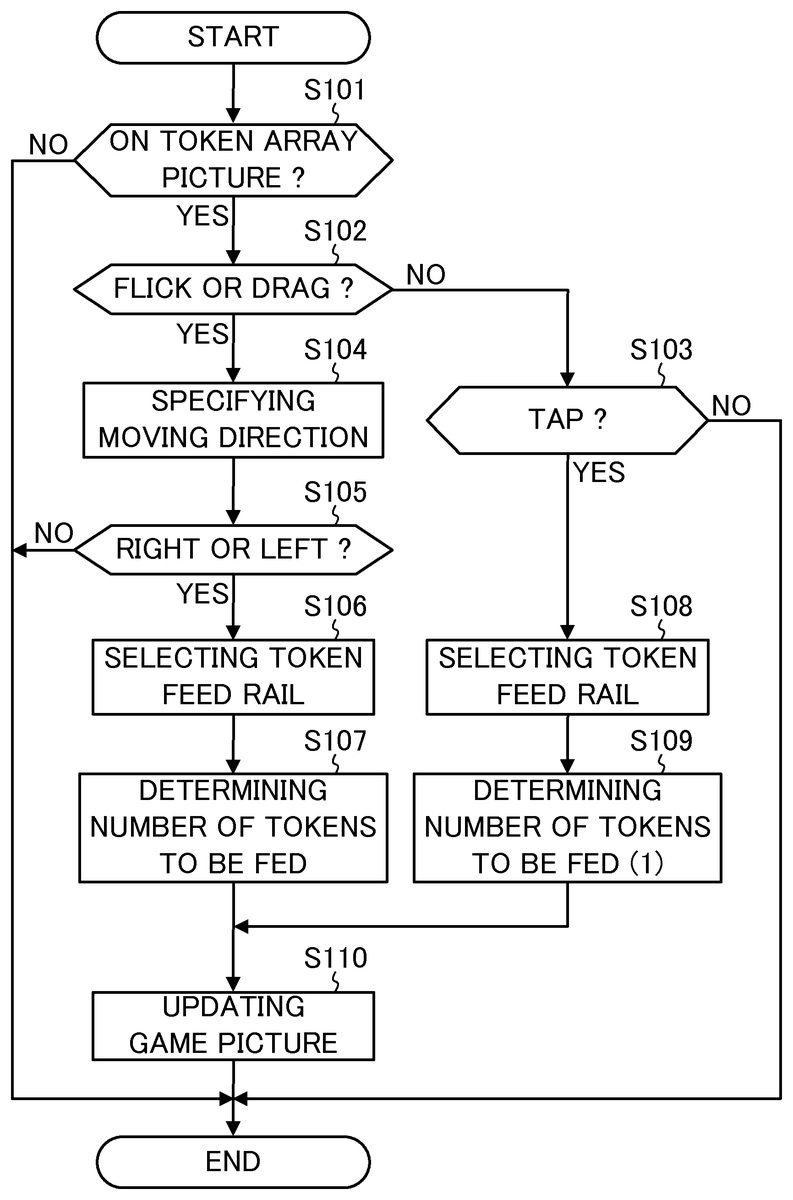
FIG. 5is a flowchart that shows a flow of a token coin feed process.
When the player initiates the game software90to begin the pusher game, the touch panel70begins a process to detect a touch position under control of the CPU10. If position information (an X-Y coordinate value) of a touch position is input from the touch panel70, the CPU10begins a process shown inFIG. 5.
When the token coin feed process begins, the CPU10determines whether or not the touch position lies on the token coin array picture MP (step S101). The storage80stores range information that represents a display area of the token coin array picture MP, such as diagonal coordinate values (i.e., an X-Y coordinate value of an upper left vertex and an X-Y coordinate value of a lower right vertex) demarcates a display area of the token coin array picture MP. The CPU10determines whether or not the touch position lies on the token coin array picture MP by examining whether or not the X-Y coordinate value of the touch position is included in a rectangular area represented by the range information. If the determination result in the step S101is NO, the CPU10ends the token coin feed process.
On the other hand, if the determination result in the step S101is YES, the CPU10determines the type of the touch operation (steps S102, S103). The touch panel is successively detecting the touch position to output position information to the CPU10. As a result, the CPU10can recognize a trace of the touch position based on the position information that is successively input from the touch panel70. Furthermore, based on the trace of the touch position, the CPU10can determine the type of the touch operation, such as a flick, a drag, and a tap. If the type of the touch operation is a flick or a drag (step S102: YES), the CPU10proceeds to a step S104. If the type of the touch operation is a tap (step S103: YES), the CPU10proceeds to a step S108. If the type of the touch operation is not a flick, a drag, or a tap (step S103: NO), the CPU10ends the token coin feed process.
If the type of the touch operation is a flick or a drag, the CPU10specifies a moving direction of the touch position (step S104). For instance, if the player carries out a drag operation shown inFIG. 6A, the CPU10specifies that the moving direction of the touch position is to the right. If the player carries out a flick operation shown inFIG. 6B, the CPU10specifies that the moving direction of the touch position is to the left. Hatched portions inFIGS. 6A to 6Ccorrespond to the traces of the touch position. In the step S104, the moving direction is classified as right or left unless the moving direction of the touch position is just top or just bottom.
Subsequently, the CPU10determines whether or not the specified direction of the touch position is either right or left (step S105). If the direction of the touch position is neither right nor left (step S105: NO), that is, if the direction of the touch position is only top or only bottom, the CPU10regards the operation as invalid and ends the token coin feed process. On the other hand, if the direction of the touch position is right or left (step S105: YES), the CPU10selects a token coin feed rail to be used for feeding the token coin M based on the direction of the touch position (step S106). In this case, the right token coin feed rail150R is selected if the direction of the touch position is right, whereas the left token coin feed rail150L is selected if the direction of the touch position is left.
Subsequently, the CPU10determines the number of the token coins M to be fed based on the touch position (step S107). Specifically, in the token coin array picture MP, the CPU10determines all token coins M which are located on the moving-direction side of a starting point of the touch position as token coins M to be fed onto the field F. For instance, in a case ofFIG. 6A, it is determined that the four token coins M are to be fed. In a case ofFIG. 6B, it is determined that the two token coins M are to be fed.
In other words, if the player carries out the drag operation shown inFIG. 6A, the CPU10determines to feed the four token coins M using the right token coin feed rail150R. If the player carries out the flick operation shown inFIG. 6B, the CPU10determines to feed the two token coins M using the left token coin feed rail150L.
If the total number of the token coins that the player has is two, for example, the token coin array picture MP in which the two token coins M are arranged on both ends is displayed as shown inFIG. 6C. In this case, the CPU10also selects a token coin feed rail based on the direction of the touch position, and determines all token coins M which are located on the moving-direction side of a starting point of the touch position as token coins M to be fed onto the field F. Therefore, if the player carries out the drag operation shown inFIG. 6C, the CPU10determines to feed the two token coins M using the right token coin feed rail150R.
InFIGS. 6A to 6C, the token coin M which is located at a starting point of the touch position may be excluded from the token coins M to be fed. In this case, the number of the token coins to be fed is determined to be three according to the operation ofFIG. 6A, and the number of the token coins to be fed is determined to be one according to the operations ofFIGS. 6B and 6C. In the above explanation, the number of the token coins M to be fed is determined taking the starting point of the touch operation as the origin. Alternatively, a middle point or the like of the touch operation may be used as a substitute of the starting point of the touch operation.
On the other hand, if the type of the touch operation is a tap (step S103: YES), the CPU10selects a token coin feed rail to be used for feeding the token coin M based on the touch position (step S108). For instance, as shown inFIG. 7A, if one taps on the right side of the center line of the token coin array picture MP, the CPU10selects the right token coin feed rain150R. As shown inFIG. 7B, if one taps on the left side of the center line of the token coin array picture MP, the CPU10selects the left token coin feed rain150L. In the case of the tap operation, the CPU10determines the number of the token coins to be fed to be one regardless of the touch position (step S109).
In other words, if the player carries out the tap operation shown inFIG. 7A, the CPU10determines to feed a single token coin M using the right token coin feed rail150R. If the player carries out the tap operation shown inFIG. 7B, the CPU10determines to feed a single token coin M using the left token coin feed rail150L.
After the step S107or the step S109, the CPU10executes an update process of the game picture GP with respect to feeding the token coins M (step S110). For instance, if the player carries out the drag operation shown inFIG. 6A, the CPU10generates the game picture GP in which the four token coins M are fed to the field F by the use of the right token coin feed rail150R to display in the viewing area D. If the player carries out the tap operation shown inFIG. 7B, the CPU10generates the game picture GP in which the single token coin M is fed to the field F by the use of the left token coin feed rail150L to display in the viewing area D. In those cases, the CPU10calculates respective drop positions of the token coins M fed onto the field F using the calculation engine95.
As described above, if the position of the touch operation that is detected by the touch panel70is located on the token coin array picture MP, the CPU10determines the number of the token coins M to be fed and the token coin feed rail to be used, and after that the CPU10immediately executes a process to feed the token coin M onto the field F. Therefore, a time point of feeding the token coin M is also determined according to the touch operation on the token coin array picture MP.
FIG. 8is a flowchart that shows a process to change a feeding position of the token coin.
Similar to the above-described token coin feed process, the process shown in the figure is executed by the CPU10when the position information is input from the touch panel70during execution of the pusher game. The CPU10determines whether or not the touch position lies on images of the token coin feed rails150R,150L (step S201). The storage80stores range information that represents a display area of the right token coin feed rail150R and range information that represents a display area of the left token coin feed rail150L. The CPU10determines whether or not the touch position lies on the images of the token coin feed rails150R,150L by comparing an X-Y coordinate value of the touch position with those two types of the range information. If the determination result of the step S201is NO, the CPU10ends the process to change the feeding position of the token coin.
On the other hand, if the determination result of the step S201is YES, the CPU10changes a display position of a token coin feed rail150R,150L according to the touch operation (step S202). In this case, if the touch position lies on the image of the right token coin feed rail150R, the display position of the right feed rail150R is changed according to the touch position. If the touch position lies on the image of the left token coin feed rail150L, the display position of the left feed rail150L is changed according to the touch position. For instance, as shown inFIG. 9, if the player touches the tip of the left token coin feed rail150L as indicated by a dashed line in the figure and carries out a drag operation in a lower right direction, the display position of the left token coin feed rail150L is changed to a position as indicated by a solid line. In the case in which the display position of the left token coin feed rail150L is changed, the CPU10updates the range information of the left token coin feed rail150L stored in the storage80.
The change of the display position of the token coin feed rails150R,150L does not depend on the drag operation alone. For instance, if the player taps the tip of the left token coin feed rail150L, the CPU10selects the left token coin feed rail150L as an object for changing a display position, and changes the display position of the left token coin feed rail150L so that the tip will be located at a position that the player taps next. By touching not only the tip of the token coin feed rail150R,150L but any point on the image of the token coin feed rail150R,150L, the display position can be changed.
Subsequently, the CPU10updates information of the tip position of the token coin feed rail whose display position is changed, that is, the feeding position in which the token coin M is fed onto the field F (step S203). The storage80stores feeding position information (right side) that represents the tip position of the right token coin feed rail150R and feeding position information (left side) that represents the tip position of the left token coin feed rail150L. For instance, if the display position of the left token coin feed rail150L is changed, the CPU10updates the feeding position information (left side) stored in the storage80based on the changed display position of the left token coin feed rail150L. As described above, the tip position of the token coin feed rail150R,150L (i.e., the feeding position) is utilized as a parameter when the drop position of the token coin M fed onto field F is calculated using the physics calculation engine95.
According to the above-described embodiment, the token coin array picture MP that shows in line the plural token coins M which are able to be fed onto the field F as well as the game picture GP that shows the conditions of the plural token coins M on the field F and the pusher table120are displayed in the viewing area D. If the position of the touch operation that is detected by the touch panel70is located on the token coin array picture MP, the CPU10determines the number of the token coins M to be fed and the token coin feed rail to be used based on the touch position, the moving direction of the touch position, and the type of the touch operation. Subsequently, the CPU10executes the process to feed the token coin M onto the field F.
As a result, the player can indicate the number of the token coins M to be fed, the token coin feed rail to be used, and the time point to feed the token coin M by carrying out the touch operation (flick, drag, tap) to the token coin array picture MP that is displayed on the viewing area D. In other words, the number of the token coins M to be fed, the token coin feed rail to be used, and the time point to feed the token coins M can be indicated by a single touch operation on the token coin array picture MP at the same time. Accordingly, the indication relevant to feeding token coins can be appropriately carried out with a small number of touch operations, which improves operability of the video pusher game. Furthermore, the plural token coins M can be fed without missing an intended time point of feeding.
According to this embodiment, the player can change the position of the token coin feed rail150R,150L to adjust the drop position of the token coin M to be fed onto the field F by carrying out the touch operation on the image of the token coin feed rail150R,150L displayed in the viewing area D.
2. Modifications
This invention is not limited to the above-described embodiment, and it can be modified as follows. Two or more modifications below can be combined if appropriate.
Modification 1
As shown inFIG. 10, the token coin array picture MP may have a central area CF in the middle of the token coin array picture MP. The CPU10may determine to feed each single token coin M using each of the token coin feed rails150R,150L on both sides if one taps on the inside of the central area CF. The CPU10may determine to feed a single token coin M using the right token coin feed rail150R if one taps on the right side of the central area CF of the token coin array picture MP. The CPU10may determine to feed a single token coin M using the left token coin feed rail150L if one taps on the left side of the central area CF of the token coin array picture MP. In this case, tapping on the inside of the central area F can indicate simultaneous feeding of the two token coins M using both of the token coin feed rails150R,150L on both sides. Although a single-tap operation is preferable for the tap operation, a double-tap operation may be adopted.
Modification 2
A pinch out may indicate to feed the token coin M. As shown inFIG. 11, the pinch out is an operation of spreading two fingers with contacting on the viewing area D. In this case, the CPU10determines that the type of the touch operation is the pinch out if conditions in which two points on the token coin array picture MP are touched at the same time and in which directions of the touch positions are opposite each other and the touch positions increasingly separate from each other are fulfilled. The CPU10determines that the operation is valid when the directions of the touch positions are both right and left. Subsequently, based on the pinch out operation determined as valid, the CPU10determines the number of the token coins M to be fed using the right token coin feed rail150R and the number of the token coins M to be fed using the left token coin feed rail150L. For instance, in a case ofFIG. 11, the CPU10determines to feed the 4 token coins M using the right token coin feed rail150R based on the touch operation with one finger in a right direction shown in the figure, and determines to feed the two token coins M using the left token coin feed rail150L based on the touch operation with another finger in a left direction shown in the figure.
In this case, the player can indicate simultaneous feeding of the plural token coins M using both of the token coin feed rails150R,150L on both sides by carrying out the pinch out operation. With respect to the pinch out operation, not only a starting position of the touch position, but also a middle position of the touch position or the like, may be a touch position as an origin to determine the number of the token coins M to be fed. The token coin M which is located on the starting point of the touch position may be excluded from the token coins M to be fed.
Modification 3
The CPU10may measure moving speed of the touch position and may determine feed speed of the token coin M to be fed onto the field F based on the measured moving speed. Since the touch panel successively outputs an X-Y coordinate value of the touch position, the CPU10can determine the moving speed on the touch position by calculating a moving distance of the touch position per unit time. The CPU10may determine that the higher value the feed speed of the token coin M is, the faster the moving speed of the touch position is. The feed speed of the token coin M may be used as one of parameters together with the tip position of the token coin feed rail150R,150L when the drop position of the token coin M is calculated using the physics calculation engine95.
Even if the position of the token coin feed rail150R,150L is fixed, the drop position of the token coin M to be fed onto the field M may vary according to the feed speed of the token coin M. For instance, if the feed speed of the token coin M is high, the token coin M drops at a position distant from the tip position of the token coin feed rail150R,150L. If the feed speed of the token coin M is low, the token coin M drops at a position close to the tip position of the token coin feed rail150R,150L. As a result, the player can indicate the feed speed of the token coin M to adjust the drop position of the token coin M on the field F by changing fingering speed of the touch operation (flick, drag, pinch out) on the token coin array picture MP.
Modification 4
As shown inFIG. 12A, only a single token coin feed rail150may exist. In this case, the number of the token coins M that are determined according to the flick operation or the drag operation in the right direction on the token coin array picture MP and the number of the token coins M that are determined according to the flick operation or the drag operation in the left direction on the token coin array picture MP may be fed to the field F using the token coin feed rail150. In the case of the pinch out operation, the total number of the token coins M that are determined by the touch operation in the right direction with one finger and that are determined by the touch operation in the left direction with another finger may be fed to the field F using the token coin feed rail150. If the tap operation is carried out somewhere on the token coin array picture shown inFIG. 12A, a single token coin M may be fed to the field F using the token coin feed rail150.
As described above, in the case in which only a single token coin feed rail150exists, the CPU10determines the number of the token coins M to be fed based on the touch position, the moving direction of the touch position, and the type of the touch operation and feeds the token coins M to the field F, if the position of the touch operation detected by the touch panel70lies on the token coin array picture MP. As a result, the player can indicate the number of the token coins M and the time point of feeding at the same time by a single touch operation (flick, drag, pinch out, tap) on the token coin array picture MP.
Alternatively, as shown inFIG. 12B, out of the flick operation and the drag operation on a token coin array picture MP1, the CPU10may accept the flick operation and the drag operation in a right direction shown in the figure as a valid operation, and may reject the flick operation and the drag operation in a left direction shown in the figure as an invalid operation. In other words, the flick operation and the drag operation in which the touch position moves in a predetermined one direction of array directions of the token coins in the token coin array picture may be accepted. In this case, the player can indicate the number of the token coins M and the time point of feeding at the same time by a single touch operation (flick, drag) on the token coin array picture MP1.
If the tap operation is carried out somewhere on the token coin array picture MP1shown inFIG. 12B, the CPU10may determine to feed a single token coin M using the token coin feed rail150. As a result, the player may also indicate the number of the token coins M to be fed (one) and the time point of feeding at the same time by a single tap operation on the token coin array picture MP1.
In the case ofFIG. 12B, the tap operation can indicate to feed two or more of the token coins M. For instance, if the third token coin M from the right is tapped in the token coin array picture MP1shown inFIG. 12B, the CPU10may determine the three token coins M to be fed using the token coin feed rail150. If the leftmost token coin M is tapped in the token coin array picture MP1, the CPU10may determine the six token coins M to be fed using the token coin feed rail150. RegardingFIG. 12B, not only in a case of a tap, but in a case of a flick or a drag, if the position of the touch operation detected by the touch panel70lies on the token coin array picture MP1, the CPU10can determine the number of the token coins M to be fed to the field F based on the position of the touch operation (e.g., the starting point of the touch position) and feed the determined number of the token coins M to the field F, without specifying the type of the touch operation and the moving direction of the touch position.
As described above regardingFIG. 12B, if the position of the touch operation detected by the touch panel70lies on the token coin array picture MP1, the CPU10can determine the number of the token coins M to be fed to the field F based on the touch position and feed the determined number of the token coins M, without specifying the type of the touch operation and the moving direction of the touch position. As a result, the player can indicate the number of the token coins M to be fed and the time point to feed the token coins M by touching a position corresponding to the desired number of the token coins M to be fed on the token coin array picture MP1displayed in the viewing area D. The player can indicate the number of the token coins M to be fed and the time point to feed the token coins M at the same time by a single touch operation on the token coin array picture MP1.
Modification 5
In the viewing area D, the token coin array picture MP, MP1may be displayed on the top side and the game picture GP may be displayed on the bottom side. Alternatively, as shown inFIG. 13, the token coin array pictures MP1may be displayed in both of the right side and the left side of the viewing area D. In this case, the number of the token coins M determined by the touch operation on the right token coin array picture MP1are fed to the field F using the right token coin feed rail150R. The number of the token coins M determined by the touch operation on the left token coin array picture MP1are fed to the field F using the left token coin feed rail150L. In the case ofFIG. 13, the CPU10accepts the flick operation or the drag operation in a downward direction shown in the figure as a valid operation out of the flick operation and the drag operations on each token coin array picture MP1.
For instance, if the drag operation on the right token coin array picture MP1shown inFIG. 13is carried out in a downward direction from the fourth token coin M from the bottom as a starting point, the CPU10determines to feed the four token coins M using the right token coin feed rail150R. If the tap operation is carried out somewhere on the left token coin array picture MP1inFIG. 13, the CPU10determines to feed a single token coin M using the left token coin feed rail150L. In the case ofFIG. 13, similar to the above-described Modification 4, the tap operation can indicate to feed two or more of the token coins M. InFIG. 13, the right token coin array picture MP1may be slantwise displayed in parallel with the token coin feed rail150R and the left token coin array picture MP1may be slantwise displayed in parallel with the token coin feed rail150L. As described above, each token coin array picture MP1is displayed in parallel with and close to the corresponding token coin feed rail and the flick operation or the drag operation in the direction to the apical end of each token coin feed rail is accepted out of the flick operation and the drag operation on each token coin array picture MP1. As a result, one can indicate to feed the token coins M by running a fingertip along the token coin feed rail.
Modification 6
As shown inFIG. 14, token coin feed slots170R,170L may be displayed as a substitute for the token coin feed rails150R,150L. In this case, for instance, if the flick operation or the drag operation is carried out in a right direction on the token coin array picture MP, the number of the token coins M determined by the operation are fed from the right token coin feed slot170R onto the field F. If the flick operation or the drag operation is carried out in a left direction on the token coin array picture MP, the number of the token coins M determined by the operation are fed from the left token coin feed slot170L onto the field F. Similar to the token coin feed rails150R,150L, the positions of the token coin feed slots170R,170L may be adjusted right and left or up and down. The number of the token coin feed slots170R,170L may be one rather than two.
The token coin feed rails150R,150L or the token coin feed slots170R,170L are not necessarily displayed. Even if the token coin feed rails150R,150L or the token coin feed slots170R,170L are not displayed, the number of the token coins M indicated by the touch operation can be fed onto the field F from positions corresponding to the token coin feed rails150R,150L or the token coin feed slots170R,170L.
Modification 7
The smartphone1may detect a tilt of the body (the smartphone1) by a built-in acceleration sensor (not shown) if an auto-rotation function is turned on. If the body turns sideways, display data displayed in the viewing area D automatically turns sideways. If the body turns upright, the display data displayed in the viewing area D automatically turns upright. For instance, when being upright, similar toFIG. 4, the game picture GP is displayed on top of the viewing area D and the token coin array picture MP is displayed at the bottom of the viewing area D. In contrast, when sideways, both of the game picture GP and the token coin array picture MP may be displayed with 90-degree rotation. Alternatively, for instance, as shown inFIG. 15, only the game picture GP may be displayed with 90-degree rotation and the token coin array picture MP may be displayed in the same way as when being upright.
In the case ofFIG. 15, for instance, the number of the token coins M determined by the flick operation or the drag operation in an upward direction on the token coin array picture MP are fed to the field F using the left token coin feed rail150L. The number of the token coins M determined by the flick operation or the drag operation in a downward direction on the token coin array picture MP are fed to the field F using the right token coin feed rail150R. In the case of the pinch out operation, the number of the token coins M determined by the touch operation in the upward direction with one finger are fed using the left token coin feed rail150L, and the number of the token coins M determined by the touch operation in the downward direction with another finger are fed using the right token coin feed rail150R. When being sideways, if the token coin array picture MP is also displayed with 90-degree rotation, the maximum number of token coin array members of the token coin array picture MP becomes greater than that when being upright.
Modification 8
The token coin array picture MP, MP1may show the token coins M which are able to be fed to the field F in plural lines, rather than in a single line. For instance, the token coin array picture MP2that shows the token coins M which are able to be fed to the field F in two lines is shown inFIG. 16. For instance, if the drag operation on the token coin array picture MP2shown in the picture is carried out in a right direction from the second token coin M from the right side of the upper array in the figure, the CPU10determines to feed the eight token coins M using the right token coin feed rail150R. If the flick operation on the token coin array picture MP2is carried out in a left direction from the third token coin M from the right side of the lower array in the figure, the CPU10determines to feed the ten token coins M using the left token coin feed rail150L. If the tap is carried out somewhere on the upper array in the token coin array picture MP2, the CPU10determines to feed a single token coin M using the left token coin feed rail150L. In contrast, if the tap is carried out somewhere on the lower array in the token coin array picture MP2, the CPU10determines to feed a single token coin M using the right token coin feed rail150R. In the case of the pinch out operation, for instance, in a case in which the touch operation on the token coin array picture MP2is carried out in a left direction from the third token coin M from the right side of the upper array with one finger, and in which the touch operation is carried out in a right direction from the second token coin M from the right side of the upper array with another finger, the CPU10determines to feed the four token coins M using the left token coin feed rail150L and to feed the eight token coins M using the right token coin feed rail150R.
Modification 9
In each token coin array picture MP, MP1, MP2, a maximum number of token coin array members is not limited to six or twelve and may be equal to or greater than two. The shape of the token coin M is not limited to be circular, and it may be ellipsoidal, polygonal, etc. The pusher table120is not limited to giving reciprocal movement repeatedly at a constant moving speed, and may give reciprocal movement while changing its moving speed. The pusher table120may have a top surface in which the token coins M cannot be fed thereon. In this case, the field F consists of the top surface of the main table110.
Modification 10
The video game apparatus according to the present invention may be an electronic device with a touch input function, for instance, a tablet computer, a notebook personal computer, a PDA, a handheld gaming device, etc. Alternatively, the video game apparatus according to the present invention may be constructed with a main unit of a personal computer and a display with a touch panel, or be constructed with a main unit of a home-use game console and a display with a touch panel. The touch panel70may be a resistance film type, a capacitive type (surface capacitive type), an electromagnetic induction type, a surface acoustic wave type, an infrared type, and so on. The touch operation may be carried out using a dedicated touch pen or the like.
DESCRIPTION OF REFERENCE NUMERALS
1. . . smartphone, D . . . viewing area,10. . . CPU,20. . . ROM,30. . . RAM,40. . . phone call processor,50. . . communication unit,60. . . display,70. . . touch panel,80. . . storage,90. . . game software,95. . . physics calculation engine, M (M′) . . . token coin, F (F′) . . . field,110(110′) . . . main table, EA (EA′) . . . valid side, EB (EB′) . . . invalid side,120(120′) . . . pusher table,125(125′) . . . token coin checker,130′ . . . lottery figure viewing unit,130. . . lottery figure viewing area,140′ . . . token coin supplier,150(150′,150L,150R) . . . token coin feed rail,160(160′) . . . wall surface, GP . . . game picture, MP (MP1, MP2) . . . token coin array picture, CF . . . central area,170L,170R . . . token coin feed slot.
Claims
- A video game apparatus for determining a number of feeding token coin to be applied in a pusher game by a video game apparatus, the pusher game played by feeding a token coin to a field provided with a pusher table on which plural token coins are placed and that gives reciprocal movement, comprising: a touch screen display;a computer processor at the video game apparatus, the computer processor coupled to a computer storage and programmed to: generate game picture display data for displaying a game picture that shows conditions of the plural token coins on the field and the pusher table in a viewing area of the touch screen display;generate token coin array display data for displaying a token coin array picture that shows in line plural token coins which are able to be fed to the field in the viewing area of the touch screen display;and detect one or more positions of one or more touch operations on the viewing area of the touch screen display;calculate a number of token coins to be fed to the field out of the plural token coins which are able to be fed based on the one or more positions of the one or more touch operations on the token coin array picture;and execute a game operation of the pusher game by feeing the calculated number of token coins, wherein the computer processor is further configured to determine a selection type based on the manner of the one or more touch operations on the touch screen display, wherein, when the one or more positions of the one or more touch operations lies on the token coin array picture and when the selection type of the touch operation is a flick or a drag in which a touch position moves toward a predetermined one direction of array directions of the plural token coins in the token coin array picture, the computer processor executes the pusher game by feeding all token coins that are located on a side toward the predetermined one direction from the one or more positions of the one or more touch operations on the token coin array picture, and wherein, when the one or more positions of the one or more touch operations detected by the detector lies on the token coin array picture and when the selection type of the one or more touch operations is a tap, the computer processor executes the pusher game by feeding one token coin to the field.
- The video game apparatus according to claim 1 , wherein the computer processor is further configured to determine a selection type based on the manner of the one or more touch operations on the touch screen display, and wherein, when two positions of two touch operations, among the one or more positions of the one or more touch operations, lie on the token coin array picture and when the selection type of the two touch operations is a pinch out in which touch positions move toward both of array directions of the plural token coins in the token coin array picture, one of the two touch operations on the two positions being a first touch operation and the other of the two touch operations being a second touch operation, the computer processor executes the pusher game by feeding on the field all token coins that are located on a side toward a moving direction of the touch position of the first touch operation from the position of the first touch operation on the token coin array picture and all token coins that are located on a side toward a moving direction of the touch position of the second touch operation from the position of the second touch operation on the token coin array picture.
- The video game apparatus according to claim 1 , wherein the computer processor further measures moving speed of the touch position and determines feed speed of a token coin to be fed to the field based on the moving speed being measured.
- The video game apparatus according to claim 3 , wherein the computer processor is further configured to calculate respective positions of the plural token coins on the field by executing a simulation based on physics calculations, and calculate a position of the token coin to be fed on the field using the feed speed as one of parameters.
- The video game apparatus according to claim 1 , the computer processor is further configured to generate a feeding position picture data for displaying a feeding position picture that shows a feeding position from which a token coin is fed to the field in the viewing area of the touch screen display, wherein, when the one or more positions of the one or more touch operations lies on the feeding position picture, the computer processor changes a display position of the feeding position picture and the feeding position based on the touch operation.
- A video game apparatus for determining a number of feeding token coin to be applied in a pusher game by a video game apparatus, the pusher game played by feeding a token coin to a field provided with a pusher table on which plural token coins are placed and that gives reciprocal movement, comprising: a touch screen display;a computer processor at the video game apparatus, the computer processor coupled to a computer storage and programmed to: generate game picture display data for displaying a game picture that shows conditions of the plural token coins on the field and the pusher table in a viewing area of the touch screen display;generate token coin array display data for displaying a token coin array picture that shows in line plural token coins which are able to be fed to the field in the viewing area of the touch screen display;and detect one or more positions of one or more touch operations on the viewing area of the touch screen display;calculate a number of token coins to be fed to the field out of the plural token coins which are able to be fed based on the one or more positions of the one or more touch operations on the token coin array picture;and execute a game operation of the pusher game by feeing the calculated number of token coins, wherein the computer processor is further configured to determine a selection type based on the manner of the one or more touch operations on the touch screen display, wherein, when the one or more positions of the one or more touch operations lies on the token coin array picture and when the selection type of the touch operation is a flick or a drag in which a touch position moves toward either one of array directions of the plural token coins in the token coin array picture, the computer processor executes the pusher game by feeding all token coins that are located on a side toward a moving direction of the touch position from the one or more positions of the one or more touch operations on the token coin array picture, wherein the pusher game is executed to include two feeding positions from which a token coin is fed to the field, and wherein, when the one or more positions of the one or more touch operations lies on the token coin array picture and when the selection type of the touch operation is a tap, the computer processor selects at least one of the feeding positions based on the one or more positions of the one or more touch operations and feeds one token coin from each of the at least one of the feeding positions being selected.
- The video game apparatus according to claim 6 , wherein a feeding position from which a token coin is fed to the field differs depending on whether the moving direction of the touch position is one of the array directions or the other of the array directions.
Disclaimer: Data collected from the USPTO and may be malformed, incomplete, and/or otherwise inaccurate.