U.S. Pat. No. 8,990,119
VIDEO GAMES ON DEMAND WITH ANTI-PIRACY SECURITY
AssigneeAT&T Intellectual Property I, L.P.
Issue DateJuly 30, 2010
Illustrative Figure
Abstract
Systems, methods, and computer-readable media are described for the automated payment, download over a network, installation on a set-top box, and play of console and online video games by user interaction with a controller-adapted set-top box. Security measures inhibit video game piracy.
Description
DETAILED DESCRIPTION The present disclosure describes systems, methods and computer-readable media for the automated payment, download over a network, installation on a set-top box, and play of console and online video games by user interaction with a controller-adapted set-top box. The present disclosure further addresses security measures to inhibit video game piracy. In view of the foregoing, the present disclosure, through one or more various aspects, embodiments and/or specific features or sub-components described herein, is thus intended to bring out one or more of the advantages that will be evident from the description. The present disclosure makes frequent reference to a television set-top box (STB). It is understood, however, that an STB is merely an example of a specific exemplary illustrative embodiment, and that the terminology, examples, drawings and embodiments, therefore, are illustrative rather than limiting and are not intended to limit the scope of the disclosure. In a particular embodiment an STB device includes a network interface, a processor, and memory. The memory includes instructions executable by the processor to receive a request to execute a video game stored at the STB device and to send an authorization request to a server via the network interface. The instructions are also executable by the processor to receive an indication of whether the STB device is authorized to access an account associated with a subscriber and to selectively execute the video game based on the indication. In another particular embodiment, a game-on-demand server includes a processor and a memory. The memory includes instructions executable by the processor to receive, from an STB device, an authorization request to execute a game stored at the STB device. The instructions are also executable by the processor to determine whether the STB device is authorized to access an account associated with a subscriber, where the ...
DETAILED DESCRIPTION
The present disclosure describes systems, methods and computer-readable media for the automated payment, download over a network, installation on a set-top box, and play of console and online video games by user interaction with a controller-adapted set-top box. The present disclosure further addresses security measures to inhibit video game piracy.
In view of the foregoing, the present disclosure, through one or more various aspects, embodiments and/or specific features or sub-components described herein, is thus intended to bring out one or more of the advantages that will be evident from the description. The present disclosure makes frequent reference to a television set-top box (STB). It is understood, however, that an STB is merely an example of a specific exemplary illustrative embodiment, and that the terminology, examples, drawings and embodiments, therefore, are illustrative rather than limiting and are not intended to limit the scope of the disclosure.
In a particular embodiment an STB device includes a network interface, a processor, and memory. The memory includes instructions executable by the processor to receive a request to execute a video game stored at the STB device and to send an authorization request to a server via the network interface. The instructions are also executable by the processor to receive an indication of whether the STB device is authorized to access an account associated with a subscriber and to selectively execute the video game based on the indication.
In another particular embodiment, a game-on-demand server includes a processor and a memory. The memory includes instructions executable by the processor to receive, from an STB device, an authorization request to execute a game stored at the STB device. The instructions are also executable by the processor to determine whether the STB device is authorized to access an account associated with a subscriber, where the video game is selectively executable at the STB device based on the determination. The instructions are further executable to transmit the determination to the STB device.
In another particular embodiment, a system includes a STB device and a controller device configured to transmit input commands to the STB device. The STB device is configured to receive a request to execute a video game stored at the STB device and to send an authorization request to a server via the network interface. The STB device is also configured to receive an indication of whether the STB device is authorized to access an account associated with a subscriber and to selectively execute the video game based on the indication.
In a fiber optic network, where the bandwidth available to a network user has increased to tens of Mbps, new services are made possible. These services include Internet Protocol (IP)-based broadcast TV and Video-on-Demand (VOD). Video-on-Demand for example, to take one convenient example of broadband capabilities, allows the end user to select and view movies and television shows, and the content is transferred to the user through a broadband network and set-top box for viewing when they want it. VOD is different from the traditional content delivery mode, where the content is transferred to the user on a disc—a DVD—where the user must travel to the video store or wait for the disc in the mail.
Along with video rental, some retail outlets provide video game rentals for games that are generally sold for specific gaming platforms. Just as a broadband fiber optic network competes with traditional movie rentals, broadband may similarly replace store-front video game rentals.
The Gaming-on-Demand service may include, in addition to game sales, a subscription model, a game rental model, and a pay-per-play model. Subscription may include, for example, the right to rent or purchase a predetermined number of games each month for an agreed price. A rental model may be similar to an a la carte system where one or more games are selected with each access of the service with the right to unlimited game play for a predetermined amount of time, such as, for example, a week. Pay-per-play may allow a single play session for a comparatively low price.
Using a set-top-box/gaming console and a remote control, the customer scrolls through a series of menus to select the game they would like to play—most recently played games, newest releases, most popular games, action games, role-play games, and networked multiplayer games.
When the customer makes a selection, the Gaming-on-Demand server authenticates the customer's set-top-box from the customer's account information. Based on the customer's subscription status, the server informs the customer of the charges if the selection is a “pay-per-play,” where play permission expires upon termination of a session of play (i.e. the customer does not have a Gaming-on-Demand subscription). At this point the customer acknowledges the charges. The charges are automatically debited to their monthly bill as an added charge based on the STB authentication. Alternative embodiments further provide that the user may purchase the game outright and have permission for unlimited play for a quoted price; and to rent the game so that play permission expires after a pre-designated period of time. After user acceptance of the debit amount to the user's account, the game is downloaded to, and installed on, their STB.
Games that are on the “Most Recently Played” list in the menu may be stored locally on the STB or on a memory card, for example in the memory of a machine-readable medium, that may be optionally detachable from the STB. The customer's gaming may begin quickly and some of the load on the service provider's network may be reduced. Even for the “Most Recently Played” games which are stored locally, however, the STB may authenticate with the Gaming-on-Demand server and verify account information as described above.
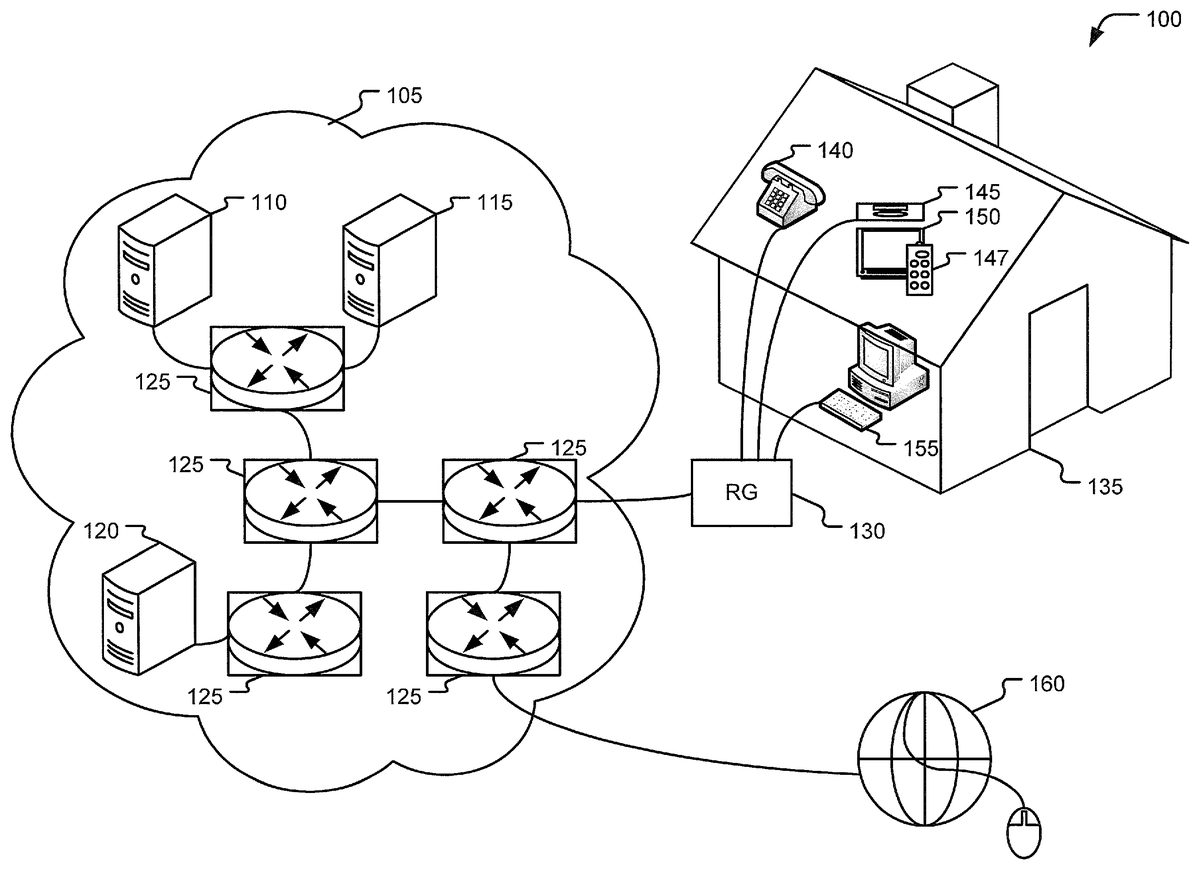
FIG. 1is a high level diagrammatic representation of a specific exemplary embodiment of a video game on demand system100of the present disclosure. Service provider network105provides at least one broadband telecommunications medium to transmit information. Broadband media include, but are not necessarily limited to, fiber optic media and coaxial cable. Network105may include, but is not necessarily limited to video on demand server110, Voice over Internet Protocol (VOIP) server115and game on demand server120. Server120, or elsewhere in the network, may house an authenticator (not shown) to receive and authenticate subscriber and STB identity. Routers125connect servers110,115and120through gateway130to household135, which includes networked devices telephone140, STB145connected to television150, and computer155. STB145may house a machine-readable medium such as a microprocessor and digital memory for execution of one or more of the methodologies described herein. Additionally, controller147provides an interactive interface with STB145, including game controller functions for playing a game on television150via STB145. A system of the present disclosure enables controller commands to be executed substantially locally by the set-top box because the game software is installed on the STB, as opposed to having commands transmitted to the game server over the network for processing and back to the set-top box to update the screen display. Accordingly, a set-top box of the present disclosure functions very much like a familiar video game console platform; a difference being, of course, that the game software is obtained over a network rather than from a tangible medium such as disk.
A consideration for providing a service such as Gaming-on-Demand is digital rights management (DRM) and content security. That is, how does the service provider ensure the content owners that the content is used in accordance with the game publisher's End-User-License-Agreement (EULA)? Further, how can the service provider ensure that the content is not stolen and distributed or otherwise put in the public domain?
The present disclosure describes more than one mechanism to protect the content from piracy and provide DRM. For one, the content, the servers, and the network connections may be substantially contained in the service provider's network, as shown inFIG. 2.
Network105is segregated using VLANs, VPLS, MPLS, or some other network segregation technology, as shown inFIG. 2. Each different service is directed to the appropriate server. In such a configuration, the STB/gaming console only “sees” the video servers and Gaming-on-Demand server. Since the STB/gaming console cannot access or “see” the internet, the customer cannot push the content to the internet.
FIG. 2is a high level diagrammatic representation of a specific exemplary alternative embodiment of a video game on demand system200of the present disclosure. VoIP connection210to telephone140is indicated by solid thin line210. VOD connection220to STB145is indicated by dash-and-dot line220. Game on demand server120connection230to STB145is indicated by thin dashed line230. STB145may house a machine-readable medium such as a microprocessor and digital memory for execution of one or more of the methodologies described herein. Controller147provides an interactive interface with STB145, including game controller functions for playing a game on television150via STB145. Internet connection240to computer155is indicated by dotted line240.
Gateway130provides game on demand permission once Rights Granted criteria have been met as described herein. Note that Internet160and access to public domain World Wide Web content are essentially segregated or sequestered from game on demand network105to inhibit release of proprietary games into the public domain and to promote compliance with Digital Rights requirements.
An additional security mechanism, discussed above, is that the user authentication process is through the STB/console. Typically, for broadband service providers, the STB is owned by the service provider and provided to the end user/customer for the duration of their service contract. Such an arrangement allows the STB to be a security component for DRM. That is, the games are selected and played through the STB. Before a game can be played, even if it is stored locally, the STB authenticates access with the Gaming-on-Demand server. The server verifies the rights of the user to play the game, identifies the STB to access the customer's account, and determines the gaming subscription selection or request authorization to charge the account for pay-per-play.
In either case, the game cannot be played without authorization from the gaming-on-demand server. The digital rights are not stored in the gaming file. Rather, the digital rights are tied to the STB and the customer's account, and are verified by the gaming-on-demand server each time the game is started. Advantageously, if the STB is disconnected from the network, the customer cannot authenticate and thus cannot play a game.
Additionally, the customer does not benefit from transferring a game file from one STB to a second STB. Generally, such transfer would not be possible, but which, nevertheless might occur if the customer found a software-hacking back door to accomplish the transfer. When the customer tries to play the game on the second STB, however, the second STB requests authentication from the gaming-on-demand server and such authorization is denied due to failure of STB authentication.
Alternative embodiments provide kits that include, but are not necessarily limited to, a controller-adapted STB to receive and process commands from a game controller, a controller adapted to send and receive (for example, to provide vibration function for vibration-enabled games) commands from the STB, one or more STB adapters to convert a substantially standard STB to a controller-adapted STB, and a machine-readable media, such as a compact disk (CD), containing the requisite software for the system to work.
FIG. 3is a diagrammatic representation of a high level process flow of a specific exemplary embodiment of the present disclosure. Process steps may include processing the game order310and debiting the subscriber's account315accordingly; authenticating the user's identity320; authenticating the identity of the set-top box330; delivering and installing the game on the set-top box340and executing controller instructions or commands350for game play. For purposes of the present disclosure, the term “deliver” contemplates, in addition to the transmission or download of game software, but also the installation and loading the game software.
In the case where the payment option selected by the subscriber is pay-per-play, subscription or rental345, the game download may include, for example, code to automatically disable the game345upon the occurrence of a suitable predetermined contingency such as the expiration of a predetermined amount of time or after a predetermined number of playing sessions.
The game software installed locally on the subscriber's set-top box enhances the game play experience by reducing hesitation, stutters, update delays or other artifacts that network traffic, server glitches or other anomalies Game on Demand servers in a network might introduce into the responsiveness of the game.
Additional functions may include saving360to save a game in progress, for example, to database362, which is maintained in the memory of a machine-readable medium of the set-top box, for example. A saved game may be loaded364from memory for continued play350. A new game or a loaded saved game may further be played online with other remote players upon connection370of the set-top box to a network for network play.
The present disclosure contemplates that the STB is adapted to operate with a game controller. In the case where the STB is a gaming console, the STB is already adapted for the controller. In the case where the STB is also a cable or satellite television set-top box, however, the STB may need to be adapted to work with a game controller, particularly where the game controller is a device other than the STB remote control. Such adaptation may be accomplished, for example, by an adapter that connects to a STB to make the STB game-ready and able to receive and process controller commands, or by virtue of integrated controller communication and processing devices such as are known with traditional game consoles.
FIG. 4is a diagrammatic representation of alternative specific exemplary embodiments of a gaming system as described herein in the case (A) where a controller-adapted set-top box is controller-ready and in the case (B) where an adapter is used to render the STB controller-adapted. In case A, controller410communicates with set-top box420, either with a wireline connection412or wirelessly414. The game software is installed on STB420. STB420in turn communicates with display430, such as a television set, to display the game images. STB420may communicate with display430either by wireline422or wirelessly424.
In case B, controller410communicates with adapter440either by wireline connection416or wirelessly418. Adapter440receives controller commands and transmits the commands to set-top box420, which presumably, is otherwise unable to receive controller commands because it lacks a suitable controller port or other signal receiver/transmitter. Adapter440also transmits information, such as controller vibration functions, from the game software on STB420to controller410. Alternative embodiments contemplate that adapter440translates information between controller410and STB420in cases where information exchange between them is facilitated by software translation. Adapter440may be, in a specific alternative embodiment, a connector between a familiar video game console platform and a set-top box having a game installed on it, so that the console “reads” the game from the set-top box instead of from a disk or other medium that it would usually use, and the player uses the console controller connected to the console just as he or she normally would.
The methods described herein are intended for operation as software programs running on a programmable machine such as a computer processor.FIG. 5is a diagrammatic representation of a programmable machine in the form of a computer system500within which a set of instructions, when executed, may cause the machine to perform any one or more of the methodologies discussed herein. In some embodiments, the machine operates as a standalone device. In some embodiments, the machine may be connected (e.g., using a network) to other machines. In a networked deployment, the machine may operate in the capacity of a server or a client user machine in server-client user network environment, or as a peer machine in a peer-to-peer (or distributed) network environment. The machine may comprise a server computer, a client user computer, a personal computer (PC), a tablet PC, a set-top box (STB), a Personal Digital Assistant (PDA), a cellular telephone, a mobile device, a palmtop computer, a laptop computer, a desktop computer, a personal digital assistant, a communications device, a wireless telephone, a land-line telephone, a control system, a camera, a scanner, a facsimile machine, a printer, a pager, a personal trusted device, a web appliance, a network router, switch or bridge, or any machine capable of executing a set of instructions (sequential or otherwise) that specify actions to be taken by that machine. It will be understood that a device of the present disclosure includes broadly any electronic device that provides voice, video or data communication. Further, while a single machine is illustrated, the term “machine” shall also be taken to include any collection of machines that individually or jointly execute a set (or multiple sets) of instructions to perform any one or more of the methodologies discussed herein.
The computer system500may include a processor502(e.g., a central processing unit (CPU), a graphics processing unit (GPU), or both), a main memory504and a static memory506, which communicate with each other via a bus508. The computer system500may further include a video display unit510(e.g., a liquid crystal display (LCD), a flat panel, a solid state display, or a cathode ray tube (CRT)). The computer system500may include an input device512(e.g., a keyboard), a cursor control device514(e.g., a mouse), a disk drive unit516, a signal generation device518(e.g., a speaker or remote control) and a network interface device520.
The disk drive unit516may include a machine-readable medium522on which is stored one or more sets of instructions (e.g., software524) embodying any one or more of the methodologies or functions described herein, including those methods illustrated in herein above. The instructions524may also reside, completely or at least partially, within the main memory504, the static memory506, and/or within the processor502during execution thereof by the computer system500. The main memory504and the processor502also may constitute machine-readable media. Dedicated hardware implementations including, but not limited to, application specific integrated circuits, programmable logic arrays and other hardware devices can likewise be constructed to implement the methods described herein. Applications that may include the apparatus and systems of various embodiments broadly include a variety of electronic and computer systems. Some embodiments implement functions in two or more specific interconnected hardware modules or devices with related control and data signals communicated between and through the modules, or as portions of an application-specific integrated circuit. Thus, the example system is applicable to software, firmware, and hardware implementations.
Software implementations may include, but not be limited to, distributed processing or component/object distributed processing, parallel processing, or virtual machine processing can also be constructed to implement the methods described herein.
The present disclosure contemplates a machine readable medium containing instructions524, or that which receives and executes instructions524from a propagated signal so that a device connected to a network environment526can send or receive voice, video or data, and to communicate over the network526using the instructions524. The instructions524may further be transmitted or received over a network526via the network interface device520.
While the machine-readable medium522is shown in an example embodiment to be a single medium, the term “machine-readable medium” should be taken to include a single medium or multiple media (e.g., a centralized or distributed database, and/or associated caches and servers) that store the one or more sets of instructions. The term “machine-readable medium” shall also be taken to include any medium that is capable of storing, encoding or carrying a set of instructions for execution by the machine and that cause the machine to perform any one or more of the methodologies of the present disclosure. The term “machine-readable medium” shall accordingly be taken to include, but not be limited to: solid-state memories such as a memory card or other package that houses one or more read-only (non-volatile) memories, random access memories, or other re-writable (volatile) memories; magneto-optical or optical medium such as a disk or tape; and carrier wave signals such as a signal embodying computer instructions in a transmission medium; and/or a digital file attachment to e-mail or other self-contained information archive or set of archives is considered a distribution medium equivalent to a tangible storage medium. Accordingly, the disclosure is considered to include any one or more of a machine-readable medium or a distribution medium, as listed herein and including art-recognized equivalents and successor media, in which the software implementations herein are stored.
Although the present specification describes components and functions implemented in the embodiments with reference to particular standards and protocols, the disclosure is not limited to such standards and protocols. Each of the standards for Internet and other packet switched network transmission (e.g., TCP/IP, UDP/IP, HTML, HTTP) represent examples of the state of the art. Such standards are periodically superseded by faster or more efficient equivalents having essentially the same functions. Accordingly, replacement standards and protocols having the same functions are considered equivalents.
The illustrations of embodiments described herein are intended to provide a general understanding of the structure of various embodiments, and they are not intended to serve as a complete description of all the elements and features of apparatus and systems that might make use of the structures described herein. Many other embodiments will be apparent to those of skill in the art upon reviewing the above description. Other embodiments may be utilized and derived therefrom, such that structural and logical substitutions and changes may be made without departing from the scope of this disclosure. Figures are merely representational and may not be drawn to scale. Certain proportions thereof may be exaggerated, while others may be minimized. Accordingly, the specification and drawings are to be regarded in an illustrative rather than a restrictive sense.
Although specific embodiments have been illustrated and described herein, it should be appreciated that any arrangement calculated to achieve the same purpose may be substituted for the specific embodiments shown. This disclosure is intended to cover any and all adaptations or variations of various embodiments. Combinations of the above embodiments, and other embodiments not specifically described herein, will be apparent to those of skill in the art upon reviewing the above description.
The Abstract of the Disclosure is provided with the understanding that it will not be used to interpret or limit the scope or meaning of the claims. In addition, in the foregoing Detailed Description, it can be seen that various features are grouped together in a single embodiment for the purpose of streamlining the disclosure. This method of disclosure is not to be interpreted as reflecting an intention that the claimed embodiments require more features than are expressly recited in each claim. Rather, as the following claims reflect, inventive subject matter lies in less than all features of a single disclosed embodiment. Thus the following claims are hereby incorporated into the Detailed Description, with each claim standing on its own as a separate embodiment.
Dedicated hardware implementations including, but not limited to, application specific integrated circuits, programmable logic arrays and other hardware devices can likewise be constructed to implement the methods described herein. Furthermore, alternative software implementations including, but not limited to, distributed processing or component/object distributed processing, parallel processing, or virtual machine processing can also be constructed to implement the methods described herein.
It should also be noted that the software implementations described herein may be optionally stored on a tangible storage medium, such as: a magnetic medium such as a disk or tape; a magneto-optical or optical medium such as a disk; or a solid state medium such as a memory card or other package that houses one or more read-only (non-volatile) memories, random access memories, or other re-writable (volatile) memories. A digital file attachment to e-mail or other self-contained information archive or set of archives is considered a distribution medium equivalent to a tangible storage medium. The disclosure is considered to include a tangible storage medium or distribution medium, as listed herein and including art-recognized equivalents and successor media, in which the software implementations herein are stored.
Accordingly, those skilled in the art will recognize that the present disclosure extends to machine-readable media (“MRM”) contain instructions for execution by a computer. MRM is broadly defined to include any kind of electronic memory such as floppy disks, conventional hard disks, CD-ROMs, Flash ROMS, nonvolatile ROM, RAM, storage Media, email attachments, solid state media, magnetic media, and signals containing instructions, together with processors to execute the instructions.
It is understood that the words that have been used herein are words of description and illustration, rather than words of limitation. Changes may be made within the purview of the appended claims, as presently stated and as amended, without departing from the scope of the disclosure in all its aspects. Although the description has made reference to particular means, materials and embodiments, the disclosure is not intended to be limited to the particulars disclosed; rather, the disclosure extends to all functionally equivalent technologies, structures, methods and uses such as are within the scope of the appended claims.
Claims
- A media playback device comprising: a network interface;a processor;and a memory comprising instructions that, when executed by the processor, cause the processor to perform operations including: receiving a selection that indicates a video game;sending a video game order to a server via the network interface in response to receiving the selection;receiving the video game from the server responsive to the video game order;storing the video game at a storage device accessible to the processor;receiving a request for the processor to execute the video game stored at the storage device;and in response to the request: sending an authorization request to the server via the network interface;receiving an indication of authorization to execute the video game, wherein the authorization is based on the server verifying an identity of the media playback device and verifying subscriber rights;and in response to receiving the indication of authorization, executing, by the processor, the video game stored at the storage device.
- The media playback device of claim 1 , further comprising a portable memory reader, wherein the storage device is coupled to the portable memory reader.
- The media playback device of claim 1 , wherein the selection is associated with a purchase request for the video game, wherein the game order comprises a purchase order for the video game, and wherein the operations further include executing the video game after the server determines that a subscriber is associated with the purchase order.
- The media playback device of claim 1 , wherein the operations further include, after completion of execution of the video game based on the request: receiving a second request for the processor to execute the video game stored at the storage device;in response to the second request, sending a second authorization request to the server via the network interface;and receiving a charge request to apply a charge amount to an account to authorize the video game to be played, wherein the charge request is received from the server responsive to the server determining that the account associated with the media playback device does not have a subscription to play the video game.
- The media playback device of claim 1 , wherein the operations further include: receiving a second request for the processor to execute a second video game stored at the storage device;and in response to the second request, sending a second authorization request to the server via the network interface, wherein the processor is denied authorization to execute the second video game stored at the storage device responsive to the server failing to verify the identity of the media playback device, responsive to the server failing to authenticate the media playback device.
- The media playback device of claim 1 , wherein the server is a game-on-demand server that provides a video gaming service, wherein the network interface is coupled via a secure network to the game-on-demand server.
- The media playback device of claim 1 , wherein a stored state of the video game is stored at the storage device, and wherein the stored state is a single player game state or a multiplayer game state associated with a play session of the video game.
- The media playback device of claim 1 , wherein the operations further include conducting a multiplayer session of the video game with a second device.
- The media playback device of claim 1 , wherein the operations further include transmitting a message to the server to debit an amount from an account, and wherein the amount comprises a sale amount, a rental amount, or a pay-per-play amount.
- The media playback device of claim 1 , wherein the operations further include: after sending the game order to the server, receiving information that identifies a charge amount for completing the game order;and sending an acknowledgment to the server to authorize the server to apply the charge amount to an account, wherein the video game is received from the server after the acknowledgment is sent, wherein digital rights of the video game are not provided to the media playback device, and wherein the server verifies the digital rights of the video game based on the media playback device and a user account.
- The media playback device of claim 1 , wherein the network interface, during operation, accesses the server via a segregated network, wherein the segregated network restricts the network interface from accessing the internet.
- The media playback device of claim 1 , wherein the selection is associated with a rental request for the video game, and wherein, when the video game is rented, the video game stored at the storage device includes code to disable the video game after an amount of time or after a number of play sessions.
- The media playback device of claim 1 , wherein, each time the video game stored at the storage device is requested to be executed by the processor, a corresponding authorization request is sent to the server.
- The media playback device of claim 6 , wherein the network interface is prohibited from accessing the Internet via the secure network.
- A game-on-demand server comprising: a processor;and a memory comprising instructions that, when executed by the processor, cause the processor to perform operations including: receiving a video game order from a media playback device;in response to receiving the video game order, sending a video game to the media playback device;receiving, from the media playback device, an authorization request to execute the video game;and in response to the request: determining whether the media playback device is authorized to execute the video game, wherein determining whether the media playback device is authorized includes: verifying user rights to play the video game;identifying the media playback device;based on the identified media playback device, accessing an account associated with the media playback device, and determining a subscription status based on the account;and when a determination is made that the media playback device is authorized to access the account, transmitting an indication to the media playback device to enable the media playback device to execute the video game from a storage device.
- The server of claim 15 , wherein the media playback device is a set-top box device, wherein the operations further include executing code to disable execution of the video game at the media playback device in response to detecting an occurrence of an event, and wherein the event is associated with an amount of play time corresponding to the video game or a number of authorized play sessions of the video game.
- The server of claim 15 , wherein the operations further include: in response to the request, determining whether the request satisfies a gaming subscription associated with the account or whether the request is a pay-per-play request;and when the request is the pay-per-play request, requesting authorization to charge the account based on the pay-per-play request prior to transmitting the indication.
- A system comprising: a media playback device that, during operation: receives a selection of a video game;sends a video game order to a server via a network interface in response to receiving the selection;receives the video game at the media playback device from server responsive to the video game order;stores the video game at a storage device of the media playback device;receives a request to execute the video game that is stored at the storage device of the media playback device;and in response to the request: sends an authorization request to the server;receives an indication that the media playback device is authorized to execute the video game in response to the authorization request;and in response to the indication, accesses the video game from the storage device to execute the video game using a processor;and a controller device that, during operation, transmits video game input commands to the media playback device.
- The system of claim 18 , wherein the controller device comprises a video game console controller device or a remote controller device, wherein the controller device transmits the video game input commands to the media playback device via a wireline connection, a wireless connection, an adapter communicatively disposed between the controller device and the media playback device, or any combination thereof, and wherein the video game input commands received from the controller device are executed locally at the media playback device during execution of the video game by the processor of the media playback device to control game play associated with the video game.
- The system of claim 19 , wherein the input commands include a horizontal movement command, a vertical movement command, a shooting command, a fighting command, a picking up command, a throwing command, a speaking command, an access game inventory items menu command, access a map command, a pause game command, a save game command, a load game command, or a combination thereof.
Disclaimer: Data collected from the USPTO and may be malformed, incomplete, and/or otherwise inaccurate.