U.S. Pat. No. 7,435,170
GAME PROCESSING METHOD, GAME APPARATUS, GAME PROGRAM, AND STORAGE MEDIA FOR SAME
AssigneeSega Corporation
Issue DateSeptember 21, 2004
Illustrative Figure
Abstract
Game processing apparatus executes a game in which a player character in a virtual space defeats an enemy through operation of a controller by the player. Through operation of an attack button of a controller, branch technique of a ninja is employed to display branch of the player character as afterimages, with attack capabilities imparted to branch. Consequently the attack potential is enhanced, the action of the action game can be made more diverse, the interest of the player in the game is increased, and the game is made more stimulating.
Description
DESCRIPTION OF THE PREFERRED EMBODIMENTS Below, embodiments of the invention are explained in the order of a computer game apparatus, branch attack method, branch attack processing method of a first embodiment, branch attack processing method of a second embodiment, and other embodiments, referring to the drawings. Computer Game Apparatus FIG. 1is a block diagram of a computer game apparatus of one embodiment of the invention,FIG. 2shows the configuration of the controller ofFIG. 1, andFIG. 3explains the game program ofFIG. 1. As shown inFIG. 1, the main unit10of the game apparatus is connected to a controller3having levers and buttons, as well as to a speaker113and a display monitor2. The player operates the controller3and, in response to this operation, the game apparatus10executes the game program, displays screens on the display monitor2according to the operation, and emits sounds (sound effects) from the speaker113. The controller3is explained usingFIG. 2below. The game program is stored on a DVD or other disk media4, and is provided to the player. The game apparatus10has a disk drive114which reads the game program from the disk media4; an I/O processing portion110which performs input/output of operation instructions of the controller3; a CPU101which executes the game program; ROM102which stores the OS and other programs and parameters; and RAM103which is used by the CPU101to execute the game program. The main unit10of the game apparatus further has sound memory112which stores, in the form of data, various sounds to be generated, and a sound processing portion111which selects sound data in the sound memory112and generates desired sound signals-according to instructions from the CPU101. The sound signals are output to the speaker113. The main unit10of the game apparatus further has image processing portions104to108to generate three-dimensional images. These are a geometry processing portion104which converts three-dimensional coordinates into world coordinates, a texture buffer106which stores texture data, a Z buffer107which ...
DESCRIPTION OF THE PREFERRED EMBODIMENTS
Below, embodiments of the invention are explained in the order of a computer game apparatus, branch attack method, branch attack processing method of a first embodiment, branch attack processing method of a second embodiment, and other embodiments, referring to the drawings.
Computer Game Apparatus
FIG. 1is a block diagram of a computer game apparatus of one embodiment of the invention,FIG. 2shows the configuration of the controller ofFIG. 1, andFIG. 3explains the game program ofFIG. 1.
As shown inFIG. 1, the main unit10of the game apparatus is connected to a controller3having levers and buttons, as well as to a speaker113and a display monitor2. The player operates the controller3and, in response to this operation, the game apparatus10executes the game program, displays screens on the display monitor2according to the operation, and emits sounds (sound effects) from the speaker113.
The controller3is explained usingFIG. 2below. The game program is stored on a DVD or other disk media4, and is provided to the player. The game apparatus10has a disk drive114which reads the game program from the disk media4; an I/O processing portion110which performs input/output of operation instructions of the controller3; a CPU101which executes the game program; ROM102which stores the OS and other programs and parameters; and RAM103which is used by the CPU101to execute the game program.
The main unit10of the game apparatus further has sound memory112which stores, in the form of data, various sounds to be generated, and a sound processing portion111which selects sound data in the sound memory112and generates desired sound signals-according to instructions from the CPU101. The sound signals are output to the speaker113.
The main unit10of the game apparatus further has image processing portions104to108to generate three-dimensional images. These are a geometry processing portion104which converts three-dimensional coordinates into world coordinates, a texture buffer106which stores texture data, a Z buffer107which stores data in the Z or depth direction to perform shading processing and similar, and a rendering processing portion105which uses both the buffers106and107to draw in a frame buffer108. The drawing data in the frame buffer108is converted into video signals appropriate for the monitor2by the video processing portion109, which are output to the monitor2.
As shown inFIG. 2, the controller3has a group of game operation keys; on the left side are positioned a left-hand joystick30to move the player character, a direction key32to select a magical skill (a scroll, flames, thunder, or similar), and positioned on the left-side face44, an upper key44-1to command the throwing of a shuriken, and a lower key44-2to use magical skills (to consume a scroll); these keys are operated with the fingers of the left hand.
On the right side, operated with the fingers of the right hand, are positioned the keys34to42, with the player functions indicated. These function keys are defined by the game. This is explained for the ninja (“Kunoichi”) action game shown inFIG. 3. As shown inFIG. 3, in this ninja action game a ninja5using a sword and shuriken as weapons is a player character, and in this action game the aim is to avoid the attacks of an enemy character6which appears onscreen, while using weapons to defeat the enemy character6.
Ninja functions are provided to the ninja player character5, and the player can use a cutting-attack key36instructing a cutting attack with a sword, a “stealth dash” key38instructing high-speed ninja-like movement, a jump key40instructing jumping, and a kicking-attack key42instructing a ninja-kicking attack. There is also a right joystick34to move the camera position (position of the point of view) on the screen. Also, on the right-hand face46are a lock-on key46-1to lock on the enemy, and a target-switching key46-2to switch the lock-on target.
The player uses the movement keys of the controller3to move the ninja player character5, and uses the function keys to perform actions specific to a ninja, such as kicking, swordplay, shuriken attacks, “stealth dashes”, jumping, and similar.
Method of Attack by Branch
Next, a method of attack by branch (‘bunshin’) is explained, usingFIG. 4throughFIG. 6.FIG. 4explains a screen example of a ninja game,FIG. 5explains the attack by branch, andFIG. 6explains conditions enabling branch attacks.
FIG. 4illustrates circumstances in which a player character (here, a “Kunoichi” ninja)5fights with a plurality of enemy characters6. In the upper-left corner of the screen are displayed a physical strength gauge for the player character (which is lowered by attacks by an enemy)20, a chakura gauge (an energy gauge)22which imparts and increases damage to the enemy, the number of unused shuriken24, and a display26of the magical powers (for example, flames, thunder, wind, or similar) which can be used. In the upper-right of the screen is displayed the number of enemies currently onstage28.
First, attacks by branch are explained usingFIG. 5. An enemy character6which is a specific target for attack is locked-on by depressing the lock-on key46-1(specifying the character as the target for attack). At this time, in the example ofFIG. 4, a lock-on marker7is displayed encircling the locked-on enemy character6, and this is recognized by the player.
The player uses the controller3to issue branch attack instructions. That is, in the first embodiment, the cutting-attack key (button)36which is an attack button is pressed, and moreover the stealth dash function is used by employing the stealth dash key38, to perform an operation to generate a branch; and as shown inFIG. 5, the stealth dash function is used to move the player character5itself to surround the enemy. Branch characters (1), (2), (3), and (4) are generated according to this movement of the player character, and when the cutting-attack key36which is an action button is released (issuing a branch attack instruction), the player character5itself and branch characters (1), (2), (3), (4) simultaneously attack the locked-on enemy character6(for example, by cutting or thrusting with a sword).
Further, in a second embodiment, when the cutting-attack key (button)36which is an attack button is pressed (when branch generation operation is performed), branch characters (1), (2), (3), (4) are generated on the periphery of the player character5itself, in contrast withFIG. 5; and when the cutting-attack key36which is the attack button is released (when branch attack operation is performed), only branches (1), (2), (3), (4) of the player character5execute a simultaneous attack (for example, cutting or thrusting with swords) on the locked-on enemy character6.
Here, branch characters do not receive attacks from an enemy character, that is, they are characters for which hit judgments are not made, but imitate the shape of the player character. In order to distinguish branch characters from the player character, it is appropriate that effects such as particular colors, transparency, afterimages, smoke, flames, or similar also be imparted.
In order that such an optional attack function increases the player's interest in the game, it is preferable that the capability for branch attacks is given to the player when prescribed conditions to enable branch attacks are satisfied. As shown inFIG. 6, when an enemy character6is defeated (cut), the reading of the chakra gauge22inFIG. 4above increases. The chakra gauge22is a pointer indicating the attack potential of the player character5; when the chakra gauge reaches or exceeds a fixed value, branch attack option can be used.
In particular, as shown inFIG. 6, by accumulating gauge points in the chakra gauge in concert with combined attacks (called “combos”) using a sword, the mounting of branch attacks becomes possible, so that the player can be compelled to concentrate on the game and can be stimulated.
Thus by utilizing branch techniques of a ninja, and by displaying branch characters using afterimages and providing branch characters with attack capabilities, the attack potential can be enhanced, the action of an action game can be made more diverse, the player interest in the game can be increased, and the game can be made more stimulating. A branch character disappears a fixed amount of time after an attack.
Branch Attack Processing Method of the First Embodiment
FIG. 7explains the procedures of branch attack processing of one embodiment of the invention.FIG. 8is a flow diagram of processing of branch attack ofFIG. 7, andFIG. 9andFIG. 10explain branch attack preparations in the first embodiment of the invention.
The procedure for branch attacks is explained usingFIG. 7.
(S1) When damage is imparted to an enemy through an attack by the player character, points are accumulated in the chakra gauge22.
(S2) When a fixed number of points have accumulated in the chakra gauge22, a branch attack is possible. To perform a branch attack, locking-on of the enemy to be attacked is performed. That is, as shown in the screen at the top ofFIG. 9, the player character5is made to face to the enemy character6to be attacked, and the lock-on key46-1is pressed. As a result a lock-on marker7is displayed on the periphery of the enemy character6for attack, as shown inFIG. 4.
(S3) Next, the cutting-attack key (button)36is pressed and held, to enter branch attack preparations (1).
(S4) Then, in order to leave afterimages which are to become branches, the stealth dash key38is pressed, and as shown inFIG. 5, in the middle and bottom screens ofFIG. 9and in the upper screen inFIG. 10, the player character5makes a dash movement, and afterimages are displayed on the movement path. During this stealth dash also the cutting-attack key36must be held down, and while the cutting-attack key36is being pressed, a fixed number of afterimages (which is increased or decreased according to the points accumulated in the chakra gauge22) are displayed as branches5-1to5-3.
(S5) A decision is made as to whether at least one afterimage remains, that is, whether branch attack preparations are completed. If, prior to completion of preparations, the cutting-attack key36is released, or lock-on is canceled, or the player character5receives damage, then the branch attack preparation state is canceled. On the other hand, if in a branch attack preparation completed state, upon releasing the cutting-attack key (button)36, branch attack is initiated. That is, as shown inFIG. 5, the player character5and branch characters (1) through (4) simultaneously charge forward and attack the locked-on enemy character6.
Or, as shown in the screen at the bottom ofFIG. 10, only branch characters5-1through5-3which are the remaining afterimages, and not the player character5, can simultaneously charge and attack the locked-on enemy character6. In this case, the player character5does not itself receive any damage.
As shown inFIG. 11andFIG. 12, when other enemy characters6-1,6-2exist between the afterimages5-1,5-2and the locked-on enemy character6, these other enemy characters6-1,6-2also receive damage.
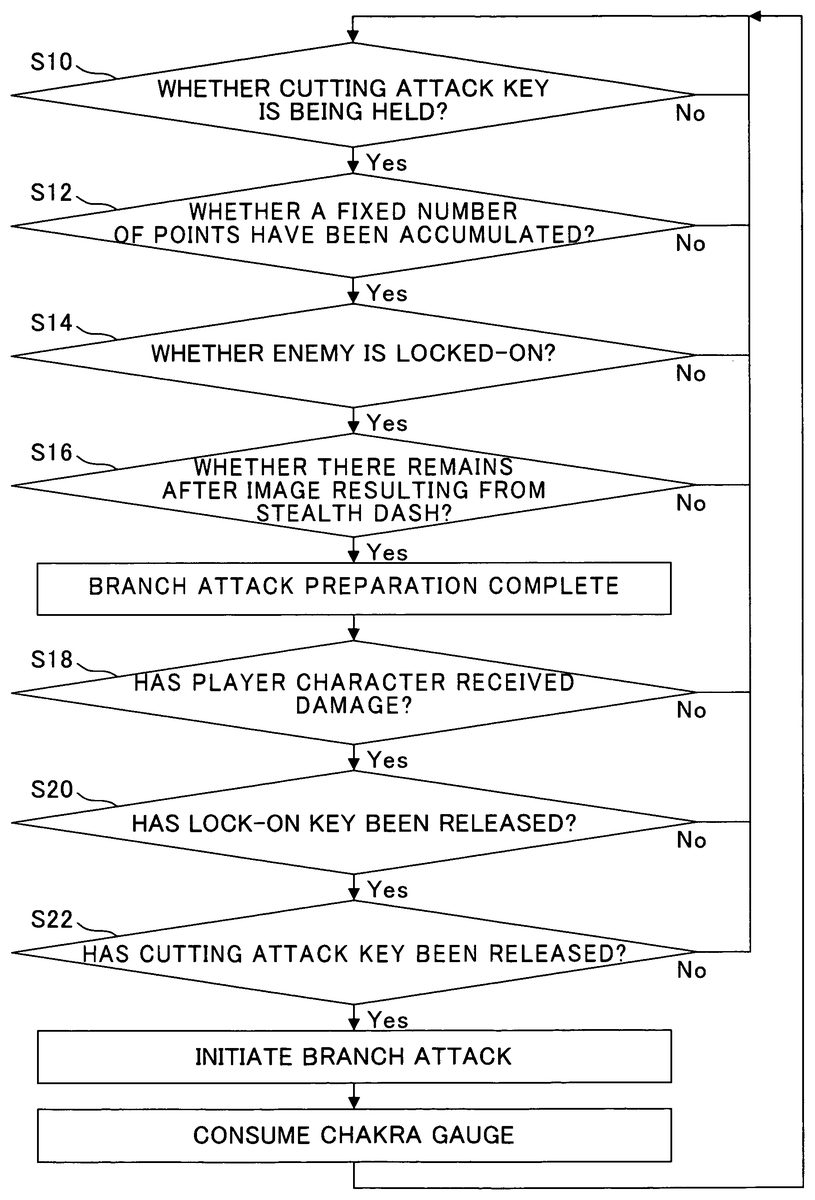
FIG. 8is a flow diagram of branch attack processing to realize branch attack ofFIG. 7,FIG. 9andFIG. 10.
(S10) The CPU101decides whether the cutting-attack key (button)36is being held down.
(S12) When the cutting-attack key36is being held down, a decision is made as to whether a fixed number of points have been accumulated in the chakra gauge. If the fixed number of points has not been accumulated, processing returns to step S10.
(S14) A decision is made as to whether an enemy is locked-on. If there is no lock-on, processing returns to step S10.
(S16) A decision is made as to whether there remains at least one afterimage resulting from a stealth dash. If no afterimage remains, processing returns to step S10. However, if an afterimage due to a stealth dash remains, branch attack preparations are judged to have been completed.
(S18) After completion of preparations, a decision is made as to whether the player character5has received damage. If damage has been received, the branch attack preparation state is canceled, and processing returns to step S10.
(S20) After completion of preparation, a decision is made as to whether the lock-on key46-1has been released and lock-on has been canceled. If lock-on has been canceled, the branch attack preparation state is canceled, and processing returns to step S10.
(S22) After the completion of preparations, a decision is made as to whether the cutting-attack key36has been released. If the attack state using the cutting-attack key36has been canceled, the branch attack preparation state is canceled, and processing returns to step S10. On the other hand, in the branch attack preparation completed state, if the cutting-attack key (button)36is released, a branch attack is initiated. That is, as shown inFIG. 5, the player character5and branch characters (1) through (4) simultaneously charge and attack the locked-on enemy character6.
Or, as shown in the screen at the bottom ofFIG. 10, only branch characters5-1through5-3which are remaining afterimages, and excluding the player character5, can simultaneously charge and attack the locked-on enemy character6. In this case the player character5receives no damage. The chakra gauge22is consumed in an amount equivalent to branch attack, and processing returns to step S10.
In this way, ninja branches can be utilized, and branches displayed as afterimages, imparting an attack capability to branches to increase the potential for attack, so that the action game is made more diverse, the player's interest in the game is increased, and the game is made more stimulating.
The stealth dash afterimages generated using the stealth dash key38are utilized for branches, so that the attacking branches can be positioned on the periphery of an enemy character6or at other desired positions, and a branch attack can be executed at optimal attack positions with respect to the enemy character6. Consequently there is greater freedom in designing a branch attack depending on the skill of the player, attack strategies become more diverse, and the player's interest is increased.
Branch Attack Processing Method of the Second Embodiment
FIG. 13is a flow diagram explaining branch attack procedures of a second embodiment of this invention,FIG. 14is a flow diagram of processing of the procedures ofFIG. 13, andFIG. 15andFIG. 16explain branch attacks in the second embodiment.
FIG. 13is used to explain the procedures in a branch attack.
(S30) When an attack by the player character5imparts damage to an enemy, points are accumulated in the chakra gauge22.
(S32) If a fixed number of points have accumulated in the chakra gauge, a branch attack is possible. In order to execute a branch attack, locking onto the enemy to be attacked is performed. That is, as shown in the upper screen inFIG. 15, the player character5is made to face the enemy character6to be attacked, and the lock-on key46-1is pressed. As a result a lock-on marker7is displayed on the periphery of the enemy character6for attack, as shown inFIG. 4.
(S34) Next, the cutting-attack key (button)36is pressed and held, to enter branch attack preparations. At this screen, as shown in the middle screen inFIG. 15, branch afterimages5-1,5-2are displayed on either side of the player character5.
(S36) Then, a decision is made as to whether branch attack preparations are completed. Prior to completion of preparations, if the cutting-attack key36is released, or the lock-on state is canceled, or if the player character5receives damage, then the branch attack preparation state is canceled. On the other hand, if in the branch attack preparation completed state the cutting-attack key (button)36is released, a branch attack is initiated. That is, as shown in the bottom screen inFIG. 15, only branch characters5-1and5-2which are afterimages, but not the player character5, simultaneously charge and attack the locked-on enemy character6. In this case, the player character5does not receive any damage.
As shown inFIG. 16, when another enemy character6-1exists between the afterimages5-1,5-2and the locked-on enemy character6, the other enemy character6-1also receives damage.
FIG. 14is a flow diagram of branch attack processing to realize branch attack ofFIG. 13andFIG. 15.
(S40) The CPU101decides whether the cutting-attack key (button)36is being pressed continuously.
(S42) If the cutting-attack key36is being pressed continuously, a decision is made as to whether a fixed number of points have accumulated in the chakra gauge22. If the fixed number of points have not accumulated, processing returns to step S40.
(S44) A decision is made as to whether an enemy character has been locked-on. If there has been no lock-on, processing returns to step S40. If an enemy has been locked-on, because an afterimage remains, it is decided that branch attack preparations have been completed.
(S46) After completion of preparations, a decision is made as to whether the player character5has received damage. If damage has been received, the branch attack preparation state is canceled, and processing returns to step S40.
(S48) After the completion of preparations, a decision is made as to whether the lock-on key46-1has been released and the lock-on state canceled. If the lock-on state has been canceled, the branch attack preparation state is canceled, and processing returns to step S40.
(S50) After the completion of preparations, a decision is made as to whether the cutting-attack key36has been released. If the attack state has been canceled using the cutting-attack key36, the branch attack preparation state is canceled, and processing returns to step S40. On the other hand, if in the branch attack preparation completed state the cutting-attack key (button)36is released, a branch attack is initiated. That is, as shown in the lower screen inFIG. 15, only branch characters5-1through5-3which are remaining afterimages, but not the player character5, simultaneously charge and attack the locked-on enemy character6. In this case, the player character5does not itself receive any damage. The chakra gauge22is consumed in an amount equivalent to the branch attack, and processing returns to step S40.
In this way, ninja branches (‘bunshin’) can be utilized, and branches displayed as afterimages, imparting an attack capability to branches to increase the potential for attack, so that the action of the action game is made more diverse, the player's interest in the game is increased, and the game is made more stimulating.
Also, a branch attack can be executed through operation of just the cutting-attack button36and lock-on key46-1, so that operation is simple, and a branch attack can be executed using rapid operation. Hence the speed of the game is not hindered by the skill of the player, and the player's interest can be increased.
Other Embodiments
A ninja action game using swords was described as the action game; but this invention can also be applied to shooting games, fight-action games, and other so-called action games in which a mobile object of the player's is moved in realtime through a game space while attacking other mobile objects, based on operations of the player. That is, in essence the invention can be applied to any game in which a player character confronts a plurality of target characters.
Also, the accumulation of points in the chakra gauge provides a player with the option of executing branch attacks; but the branch attack option may also be provided when a prescribed item has been acquired, or similar.
Further, an example was explained in which a cutting-attack button is used as the attack key; but application to other attack keys is possible, and for example a dedicated button may be pressed to call up a special attack menu, from which a branch attack can be selected.
Similarly, examples were explained in which by pressing an attack key for a long period of time branch characters are generated at prescribed positions on the periphery of the player character, or by performing a dash movement an afterimage branch is left at the position preceding the movement. However, instead of this branch characters may be generated at the current position of the player character or at positions in the game space specified arbitrarily by the player through such operations as pressing and holding an attack key for a fixed length of time or longer, and then releasing, or by pressing a branch generation button, or similar. For example, when a lock-on function is provided, a prescribed number of branches (for example, a number corresponding to the number of points accumulated in the chakra gauge) can be generated at prescribed locations on the periphery with reference to the position coordinates in the game space of a locked-on enemy character. That is, branch characters can be generated centered on the position of an enemy character, regardless of the position of the player character.
Further, when a branch is partly embedded in the terrain (interferes with a background object), the branch can be generated at a position which avoids such interference. In this case, it is desirable that the position of appearance be shifted in the direction approaching the character serving as reference (the player character or enemy character).
In the above, aspects of the invention have been explained, but various modifications are possible within the scope of this invention, and such modifications are not excluded from the scope of the invention.
As explained above, an action game can be provided with branch attack action, so that the action game can be made more diverse, contributing to the widespread adoption and use of the game, and serving to enhance the strategic properties of the game and the fight attributes of the game.
Claims
- A game processing method, for an action game in which a player character defeats an enemy character in a virtual space displayed by a display device through operation of a controller by a player, said method comprising the steps: executing an attack target decision process of deciding the enemy character according to a lock-on operation of the enemy character through said controller as an attack target;executing a branch attack preparation process, said branch attack preparation process comprising: moving said player character in said virtual space, generating a branch character that imitates a form of said player character and is not a function for judging hits by said enemy character on said moving start position of said player character in said virtual space, and displaying said player character, said enemy character and said branch character according to branch generation operations by said player using said controller;executing a branch attack processing comprising attacking said enemy character decided said attack target by, at least, said branch character to cause a damage to said enemy character during the displaying of said branch character, according to the branch attack operation by said player using said controller;and executing a branch disappear process comprising disappearing said branch character after attacking said enemy character by said branch character.
- A game apparatus, for a game in which a player character defeats an enemy character in a virtual space displayed by a display device through operation by a player, said apparatus comprising: a controller, operated by said player, to perform, at least, moving operation of said player character, attack operation to said enemy character, branch generation and branch attack operations;and a processing unit for executing an attack target decision process of deciding the enemy character according to a lock-on operation of the enemy character through said controller, as an attack target, executing a branch attack preparation process of moving said player character in said virtual space, generating a branch character that imitates a form of said player character and is not a function for judging hits by said enemy character on said moving start position of said player character in said virtual space, and displaying said player character, said enemy character and said branch character according to branch generation operations by said player using said controller, and executing a branch attack processing of attacking said enemy character decided said attack target by, at least, said branch character to cause a damage to said enemy character during displaying said branch character, according to branch attack operation by said player using said controller, wherein said processing unit executes a branch disappear process of disappearing said branch character after attacking said enemy character by said branch character.
- A computer-readable medium encoded with a game program to perform an action game in which a player character defeats an enemy character in a virtual space displayed by a display device through operation of a controller by the player, said game program causing a processor to perform the steps of: executing an attack target decision process of deciding the enemy character according to a lock-on operation of the enemy character through said controller, as an attack target;executing a branch attack preparation process of moving said player character in said virtual space, generating a branch character that imitates a form of said player character and is not a function for judging hits by said enemy character on said moving start position of said player character in said virtual space, and displaying said player character and said branch character, said enemy character and said branch character according to branch generation operations by said player using said controller;executing a branch attack processing of attacking said enemy character decided said attack target by, at least, said branch character to cause a damage to said enemy character during displaying said branch character according to branch attack operation by said player using said controller;and executing a branch disappear process of disappearing said branch character after attacking said enemy character by said branch character.
- The computer-readable medium according to claim 3 , wherein said branch attack preparation step comprises a step of displaying said player character and said branch character according to the depressing for a fixed length of time of an attack button of said controller.
- The computer-readable medium according to claim 4 , further comprising a step of for canceling said branch attack preparation state when the depression for a fixed length of time of said attack button is not detected.
- The computer-readable medium according to claim 3 , further comprising a step of canceling said branch attack preparation state and disappearing said branch character in response to cancellation of said lock-on operation of said controller during said attack target decision process and said branch attack preparation process.
- The computer-readable medium according to claim 3 , wherein said branch attack preparation step comprises a step of generating said branch character at a position of said moving locus of said player character according to movement operation of said player character in said virtual space by said player, according to branch generation operation using said controller, and of displaying said player character and said branch character.
- The computer-readable medium according to claim 3 , wherein said branch attack preparation step comprises a step of generating plural said branch characters at positions on the periphery of said player character in said virtual space according to branch generation operation using said controller, and of displaying said player character and said plural branch characters.
- The computer-readable medium according to claim 3 , further comprising a step of canceling said branch attack preparation state and disappearing said branch character when, during said attack target preparation process and said branch attack preparation process, detecting that said player character receives damage from said enemy character.
- The computer-readable medium according to claim 3 , further comprising: a step of accumulating points corresponding to damage imparted to said enemy through operations by said player;and a step of permitting said branch attack when the number of said points accumulated is equal to or greater than a fixed number, and wherein said branch attack preparation step comprises a step of generating a plurality of said branch characters, in a number corresponding to the number of said accumulated points, in relation to the position of said player character in said virtual space, according to branch generation operation using said controller, and of displaying said player character and said plurality of branch characters.
- The computer-readable medium according to claim 3 , further comprising: a step of judging whether or not a parameter for using a branch attack option of said player character is over a predetermined amount in accordance with said lock-on operation;and a step of permitting said branch attack preparation process when judging that said parameter is over said predetermined amount.
- A computer-readable medium encoded with a game program to cause a processor as a game device for playing an action game in which displays a screen that a player character and an enemy character attack each other in a virtual space through operation of a controller by a player, said game program causes a processor to perform the steps: executing an attack target decision process of deciding the enemy character according to lock-on operation of the enemy character through said controller as an attack target;executing a branch attack preparation process of generating a branch character that imitates a form of said player character and is not a function for judging hits by said enemy character, on a position on the peripheral of said player character in said virtual space, and of displaying said player character, said enemy character and said branch character, according to branch generation operations by said player using said controller;executing a branch attack processing of attacking said enemy character decided said attack target by, at least, said branch character to cause a damage to said enemy character during displaying said branch character, according to branch attack operation by said player using said controller;and executing a branch disappear process of disappearing said branch character after attacking said enemy character by said branch character.
- A game processing method for playing an action game in which displays a screen that a player character and an enemy character attack each other in a virtual space through operation of a controller by a player, comprising the steps: executing an attack target decision process of deciding the enemy character according to a lock-on operation of the enemy character through said controller as an attack target;executing a branch attack preparation process of generating a branch character that imitates a form of said player character and is not a function for judging hits by said enemy character, on a position on the peripheral of said player character in said virtual space, and of displaying said player character, said enemy character and said branch character, according to branch generation operations by said player using said controller;executing a branch attack processing of attacking said enemy character decided said attack target by, at least, said branch character to cause a damage to said enemy character during displaying said branch character, according to branch attack operation by said player using said controller;and executing a branch disappear process of disappearing said branch character after attacking said enemy character by said branch character.
- A game apparatus for playing an action game in which displays a screen that a player character and an enemy character attack each other in a virtual space through operation by a player, comprising: a controller, operated by said player, to perform, at least, moving operation of said player character, attack operation to said enemy character, branch generation and branch attack operations;and a processing unit for executing an attack target decision process of deciding the enemy character according to a lock-on operation of the enemy character through said controller, as an attack target, executing a branch attack preparation process of generating a branch character that imitates a form of said player character and is not a function for judging hits by said enemy character, on a position on the peripheral of said player character in said virtual space, and of displaying said player character, said enemy character and said branch character, according to branch generation operations by said player using said controller, and executing a branch attack processing of attacking said enemy character decided said attack target by, at least, said branch character to cause a damage to said enemy character during displaying said branch character, according to branch attack operation by said player using said controller, wherein said processing unit executes a branch disappear process of disappearing said branch character after attacking said enemy character by said branch character.
Disclaimer: Data collected from the USPTO and may be malformed, incomplete, and/or otherwise inaccurate.