U.S. Pat. No. 6,918,769
VIDEO GAME FOR ASSISTING HEALING OF THE HUMAN BODY
AssigneeCAMANO ISLAND
Issue DateSeptember 27, 2002
U.S. Patent No. 6,918,769: Video game for assisting healing of the human body

Summary:
The ‘769 patent seeks to help assist healing of the human body after an injury. Each medical condition is stored in the program and will include a work out which will assist healing. Whenever a person selects the ailment affect their body the video game screen will produce information about the illness as well as recommended exercises and activities to assist the body. This invention is intended to facilitate treatment of disease in the person’s body, but it should not be used as a substitute for seeking medical attention.
Abstract:
The video game includes a monitor for visual representation of a selected portion of a player’s body affected by a medical condition. The information concerning the medical condition, including both its cause and effects on the body, is stored, as is a set of treatment actions for combating said medical condition, including medical treatment actions, immune system responses and spiritual actions. Also stored is the known effect of the treatment actions on the medical condition. A computer program permits the player to select and use the available treatment actions against the disease, all of which are visually produced by the program
Illustrative Claim:
1. A video game system for treatment of medical conditions of a human player’s body, comprising: a first memory section for storing or receiving information concerning a medical condition to be treated, including the effect of the medical condition on a portion of the player’s body affected by the medical condition; a second memory section for storing or receiving a set of treatment actions for combating said medical condition, to bring healing action to the player’s body; a third memory section for storing or receiving known result/information of the treatment actions on the medical condition; and a stored video program and controller operating with said first, second and third memory sections, for providing a visual representation of the player’s body, including said portion of the player’s body affected by the medical condition; wherein the stored video program and controller permits a player to select one or more treatment actions and provides a visual representation of the effects of the selected treatment actions on the medical condition, in accordance with the known result information, to provide reinforcement of the effect of said selected treatment actions on the medical condition of the player.
Illustrative Figure
Abstract
The video game includes a monitor for visual representation of a selected portion of a player's body affected by a medical condition. The information concerning the medical condition, including both its cause and effects on the body, is stored, as is a set of treatment actions for combating said medical condition, including medical treatment actions, immune system responses and spiritual actions. Also stored is the known effect of the treatment actions on the medical condition. A computer program permits the player to select and use the available treatment actions against the disease, all of which are visually produced by the program.
Description
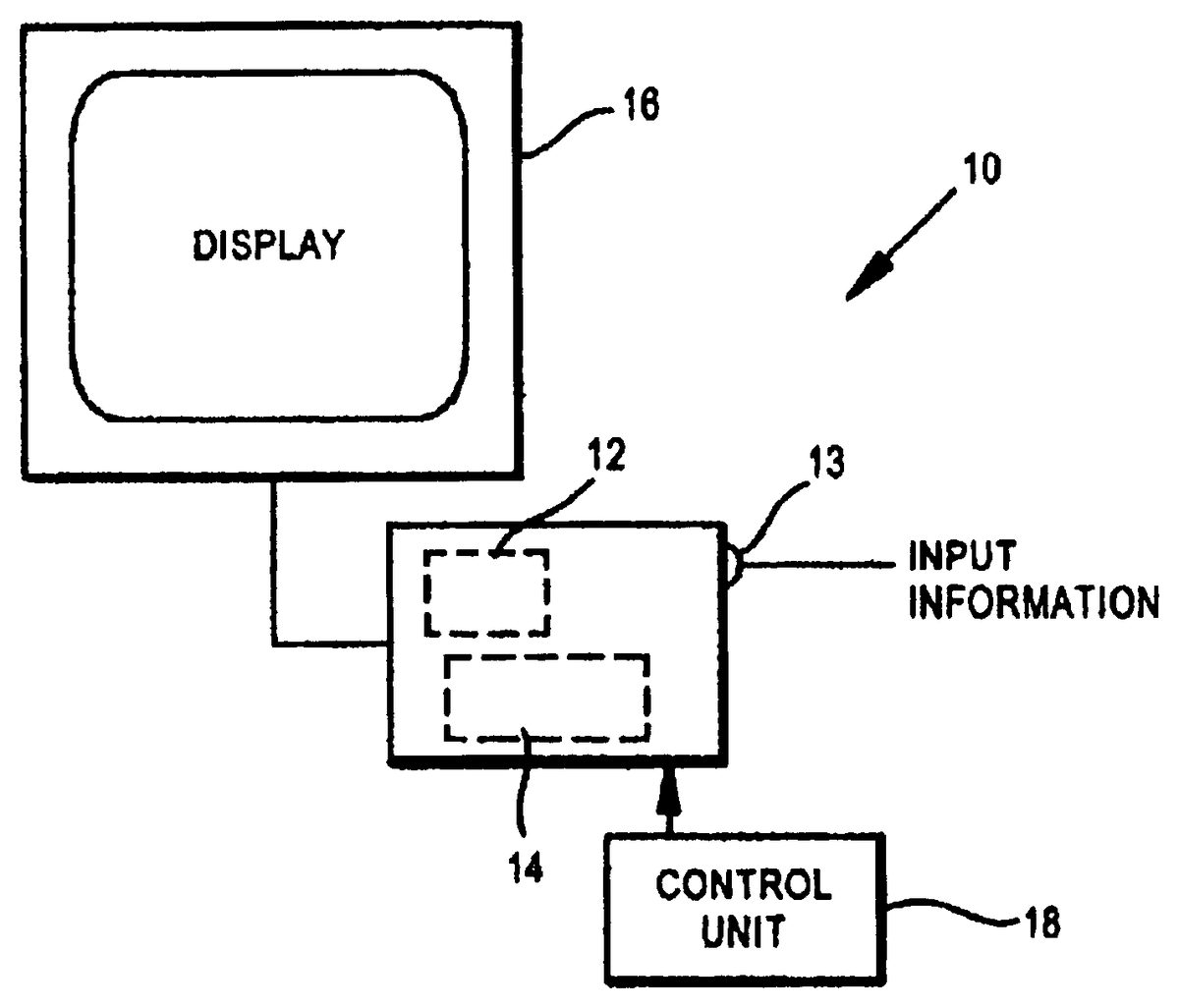
BEST MODE FOR CARRYING OUT THE INVENTION The present invention is a video game which enhances or facilitates the healing of various medical conditions, both disease and injury, which may be present in the body of the player. Referring toFIG. 1, the video game system, shown generally at10, includes a system memory12, which stores physiological and other information regarding specific disease(s) and their effect on the body, referred to as a first group of information. This information will typically include actual physiological causes and effects of the disease or injury, including specifically what happens in the various physical parts of the body affected by the disease. This can include, for example, effects on tissue, blood, the various organs of the body; indeed, every physical aspect of the body known to be affected by the disease. The specific known causes of the disease and/or specific effects thereof, such as virus infections, bacteria, tumors, blood conditions, are also included in the memory12. All of this information concerning a particular disease or injury is available from known medical sources, such as text books, etc. Memory12will have such information already stored therein for selected, common diseases. For other diseases, including rarer diseases, such as for example, meningitis, certain forms of cancer and other less common, but still treatable diseases, access to memory12is provided at an input port13, so that appropriate medical information concerning such disease can be provided to memory12. This could be done in various ways, including providing the information directly into memory, scanning the information from textbooks, or even reading the information into memory. The important criteria is that the information be as complete as possible with respect to the specific physiological causes of the disease (virus, bacteria, etc.) and the effect(s) of the disease on particular physical areas of the body. ...
BEST MODE FOR CARRYING OUT THE INVENTION
The present invention is a video game which enhances or facilitates the healing of various medical conditions, both disease and injury, which may be present in the body of the player. Referring toFIG. 1, the video game system, shown generally at10, includes a system memory12, which stores physiological and other information regarding specific disease(s) and their effect on the body, referred to as a first group of information. This information will typically include actual physiological causes and effects of the disease or injury, including specifically what happens in the various physical parts of the body affected by the disease. This can include, for example, effects on tissue, blood, the various organs of the body; indeed, every physical aspect of the body known to be affected by the disease. The specific known causes of the disease and/or specific effects thereof, such as virus infections, bacteria, tumors, blood conditions, are also included in the memory12.
All of this information concerning a particular disease or injury is available from known medical sources, such as text books, etc. Memory12will have such information already stored therein for selected, common diseases. For other diseases, including rarer diseases, such as for example, meningitis, certain forms of cancer and other less common, but still treatable diseases, access to memory12is provided at an input port13, so that appropriate medical information concerning such disease can be provided to memory12. This could be done in various ways, including providing the information directly into memory, scanning the information from textbooks, or even reading the information into memory. The important criteria is that the information be as complete as possible with respect to the specific physiological causes of the disease (virus, bacteria, etc.) and the effect(s) of the disease on particular physical areas of the body.
A second group of information, which is also stored in memory12, concerns the known or conventional treatment for each disease. This treatment information includes medications which are to be taken by the patient and perhaps other specific treatment which require trained medical effort, such as surgery, chemotherapy or physical therapy. This information includes all medical treatments which are carried out by a physician or other medical personnel.
Still other treatment actions could include special dietary programs, exercise and other actions to be performed by the patient as part of a comprehensive treatment program. Other information/guidelines in the treatment program will include additional specific actions or things to avoid. The avoidance guidelines could include, for example, alcohol, incorrect drugs, too strenuous exercise or other specific actions which the patient is to avoid.
A particular patient may also have some specialized or custom treatment for his/her particular disease, in addition to more general or orthodox treatment. This would be treatment actions which are specific to a particular patient. This additional treatment information can also be stored in memory12for the particular disease affecting the player of the game. The ability to store custom information for a particular player is an important aspect of the present system, although the fundamental requirement is storage/access to conventional, orthodox treatment information either in memory12or from another source, such as an internet source. The treatment information thus could be in memory in the apparatus, or the information could be entered when needed from disk or other storage media available to the system. Typically, the system will include the ability to either update or add to conventional medical treatment information and/or receive custom information for a particular player.
In addition to the medical condition information and the medical treatment information, memory12will have stored therein further information, including the human body's own innate capability of combating the disease or injury. This may include information concerning the immune system response as well as other subconscious responses of the human body against the disease. Such information is well known relative to selected diseases, but will vary from condition to condition. Still further, memory12will have the capability of receiving and storing information concerning the effect on the cause of the disease or other medical condition of spiritual or other non-medical actions. This will include conscious activities as prayer and/or meditation. The stored information will also include particular effects that have been observed or/are generally ascribed to the selected activity, so that the program control can produce a realistic effect on the medical condition in response to the activity. This information will be varied, but will include effects which have been in fact documented, such as the known effect of meditation and biofeedback techniques for lowering blood pressure. Typically, this information will not include wholly fanciful or undocumented effects.
The information in memory12concerning the treatment regimen for a selected disease/condition thus includes conventional (and perhaps non-conventional) medical treatment, the body's own response from its immune system, as well as other basically subconscious responses, and spiritual responses based on knowledge and/or information of actual, proven effectiveness. The video game is thus generally reality-based relative to treatment and its effect on a particular disease.
The video system10also includes a stored program control which is represented at14in FIG.1. It will typically take the form of a microprocessor operating in accordance with a computer program. The controller14correlates the treatment information in memory12relative to the disease/injury or other condition which is described and detailed in memory12, in accordance with known effects, and will produce a visual representation thereof on monitor16′. The program controller14will, for instance, produce a display of any selected portion of the human body which is affected by a particular disease, typically including the display of blood vessels, tissue, organs and other physiological aspects in a selected region, and to visually portray the effect of the disease on those physical aspects of the body. The display may include a representation of the particular genesis or cause of the various effect of the disease, such as bacteria, cancer cells, viruses, etc. The representation of the body and the effects of the disease or other condition are all displayed in graphic, but generally realistic, visual form.
For instance, tumor cells and bacteria causing certain disease can be shown graphically, in some cases quite similar to how they look in reality, so as to provide a realistic portrayal of the status of the disease in the player's body. The actual physical location of the disease will also be shown. The disease can also be shown representationally, in a cartoon-like form. The program control is thus capable, with stored information from memory12, of visually portraying the disease, typically as “the enemy”, a condition to be “vanquished”, similar to conventional video game action.
This program control is adapted to specifically and visually portray the disease as something that can be specifically attacked and overcome, again, similar to cartoon-like villains in a conventional video game. The program control, besides being able to display the cause and effect of a particular disease in various physical regions of the body in a dramatic visual way, also has the capability of correlating and visually showing the effect on the disease of conventional medical treatment, the body's own responses (e.g. immune response) and other treatment possibilities, such as spiritual actions. The program control14processes all of the stored treatment information and has the capability of appropriately visually representing the effect of each treatment aspect, relative to the specific particular disease being “attacked”, i.e. the disease affecting the player of the game.
The present embodiment of the video game begins with a display of the body of the user, i.e. the player. In the embodiment shown, this initial generalized image of the body can be altered to some extent to account for age, gender and race/ethnicity of the player. It should be understood, further, that other variables concerning the image can be changed to some extent so as to more accurately and faithfully represent the actual image of the player.
At this point in the game, the player enters into the action of the video game, via a video game control unit18, relative to a particular disease or other condition the player wishes to treat. The player can, if desired, enter information concerning the disease. Full information can be provided if it is not already in memory12; the player can also provide additional, i.e. custom, information concerning the disease, including particular information specialized to the player. The same is true for treatment information. Full treatment information can be entered, such as from a stored source thereof, such as a disk, if that information is not already stored in memory12. Further, additional information can be entered by the player through port13concerning a particular treatment/regimen relative to the particular player, if desired. The treatment information can include conventional medical treatment, immune system information and other subconscious information, as well as spiritual and other internal treatment information.
Although, typically, the video game will be played with a representation of the human body, with various treatment resources, the game can use a representation of the player himself/herself as an active agent (hero) in the game, to carry out a particular treatment task, with a particular treatment tool. This could include, for instance, representations of activity of the player (agent) internally of the body, such as in the use of a decongestant spray, for instance. More typically, however, the “player” will be outside of the body, directing (choosing) the various treatment regimens and tools against the disease.
By observing the effect of the various treatment tools on the disease, particularly those which are actually being used/followed by the player on his/her own body, the player is reinforced as to the effect of the treatment, i.e. the effect of the treatment on the player's own body is reinforced and strengthened by observing visually the realistic effect of the treatment on the video game virtual body. The player is thus engaged actively in training of his/her body relative to the effect of the treatment by means of the video game. This coincides with the positive effects of visualization in other areas, such as athletic achievement. The player thus aids or enhances the effect of his/her own treatment through visualizing its effect on the body image on the monitor.
The video game control panel has a map of the body, which shows the various trouble spots in the body for the particular disease, which is based on actual information obtained from the player, in addition to conventional information. Certain conditions concerning the body can be provided by the player, such as the present level of relevant chemicals and treatment agents already present in the body. With the control panel, the player can select a particular area of the body, which will then result in the program control focusing on that portion of the body. The monitor will then show that particular portion, such as a particular blood vessel, such as a cardiac vessel, organ tissue or some other part of the body. The effect of the various treatment regimens is then visually demonstrated on that portion of the body, such as the effect of particular medications/chemicals, as well as immune system responses and spiritual actions.
The player has the opportunity to select particular treatment agents according to his/her overall actual treatment plan, so that the treatment agents in the game basically mimic the actual treatment on the player's body. This will include, as indicated above, conventional medical treatment, as well as immune system responses and selected spiritual actions, such as prayer and meditation. As the player selects the treatment tools and uses them in the game, like various tools or weapons in a conventional action video game, the effects of such treatment tools on a particular disease is presented visually on the monitor, by the program control, and is thus seen by the player. This visualization of the effects of the treatment tools on the disease provides the desired “training effect” in the player's body, i.e. it enhances or strengthens the effect of the treatments.
For instance, treatment of a disease may require the use of certain prescribed medications, a particular diet, bed rest, etc. Certain immune responses to the disease will also occur naturally, and will be taken into account. Further, the player may elect to use certain spiritual actions. The player will actually carry out the conscious treatment actions for his/her disease, such as taking prescribed medications. The video game, showing the same disease and treatment, will show the positive effects of the treatment on the disease. This aids the player in visualizing a positive effect of the treatment, providing the desired training effect on the player's body. The video game will provide an accurate visual representation of selected treatments on the disease and will conclude with a successful resolution of the condition; the video game then ends.
FIG. 2is a flow chart for the control program of the present invention in accordance with the above description. The flow chart is not specific to any particular disease or treatment, but is used generically. Initially, as shown in block20, the player and/or the doctor first specifies the particular disease or condition affecting the player to be the subject of the game. In block22, information concerning the particular disease is either retrieved from existing memory in the apparatus or from other sources. In block24, the initial treatment variables, both from the user's standpoint and for the particular disease is selected by the user. The treatment may be variable in terms of different levels of, for instance, medications, which the program itself can either specify or which can be selected by the user. At this point, the player can quit the game at25or the game can be paused at26. Additional information concerning either the disease or the treatment can then be added, at block28.
The program, at block30, then selects the particular desired reaction of the characteristics or causes of the disease, such as bacteria, cancer cells or other causes of the disease or condition, to the treatment and/or the variable levels within the treatment. For instance, the disease may react differently to different levels of medication.
The effects selected by the program from memory12or other sources (at input13) then are presented in a visual (display16) representation to the user on the monitor. This is represented at block32. As indicated above, the visual representation can be in various forms. The results can be medically realistic, or somewhat fanciful and cartoonish in nature, or some combination thereof. The important aspect, however, is to provide a clear visual, understandable representation of the effect of the various treatments on the disease. The visual effect will enhance the actual effect of the treatment on the body of the player as the visual representation makes a specific impact on the user.
In the next block34, information is entered by the user or the doctor or other health professional concerning the continued existence of the disease. This can be accomplished through testing or other diagnostic procedures, similar to those which indicated the condition in the first place. If the condition still exists, shown at line36, the program loops back to the treatment block27, which then may be changed in accordance with actual changes in the treatment for the player. Alternatively, if the condition no longer exists, the program terminates at block38, with a “win” condition, the condition or disease affecting the player being cured.
FIG. 3is a table showing a first specific example relative to the video game of the present invention. This concerns a cancer condition. This example, as well as other examples described hereinafter, is for illustration and not exclusive to the video game of the present invention.FIG. 3shows four columns: the general type of identity/activity in column1, referred to at42; the specific type of identity/activity in column2, referred to at44; the specific type of treatment action in each category of column1, in column3, referred to at46; and in column4, referred to at48, the desired response of the body of the player to the treatment selected by the user. It should be understood that each of the columns for a particular disease, including the example ofFIG. 3, are by way of illustration and are not considered to be complete for a particular disease.
In the first column ofFIG. 3, the user is identified, as well as the particular disease. This includes, in column46, the age, sex (gender) and race of the player. This will result in a change in the particular image of the player on the monitor. Column44includes a reading of basic or gross symptoms of the disease. The action by the user includes the specific choices concerning the variables in column44. The results from the action in column48will produce particular changes in the body, as indicated above, as well as changes in the representation of the tumor.
Under the “conscious activity” heading of columns42and44, specific treatments include medications, radiation, chemotherapy, surgery and diet, as examples. Columns44and46identify the general and specific actions actually taken by the user. The results of the various actions, as represented on the monitor, are set out in column48. The subconscious activities and responses relative to the treatment of cancer include stress actions and rest, while immune system activities and responses include use/stimulation of the various appropriate immune glands and other immune system actions related to the disease. Spiritual activities for cancer treatment include prayer and meditation relative to the disease itself and the player's attitude toward the disease. The ultimate goal is to kill the tumor, while an intermediate goal may, for instance, to be able to go on a vacation.
Again, for each specific activity listed in column44, there is an associated treatment/action in column46and a result in column48. The information in all ofFIG. 3is for example only. Additional, perhaps more comprehensive, information is possible, particularly for complex, different diseases such as cancer. Such information can be provided at input13.
Relating now the material of Table 1 and the above description ofFIG. 2, the user first will provide age, gender, race and other information, including the symptoms and the location and type of tumor (column46). The program will then load the details of the causes, manifestations and the treatments for the cancer (conscious activities in column46), and the reaction of the cancer or symptoms to various treatments and actions (conscious activities in column48). The program will also load how the various cancer conditions are presented visually to the user. Program variables and treatment variables are presented to the user, including activities under the conscious category, subconscious category, immune system category and spiritual category. The player, for instance, can simulate the application of certain topical medicines or oral or injected medications, radiation and chemotherapy treatments, diet and rest under the conscious or subconscious categories.
The user also can vary particular immune system variables which are not consciously controllable, such as blood flow to the tumors, lymph flow information levels, internal hormone levels, immune, system responses, stress responses and organ reaction to the disease. The program can also retrieve additional information and, in accordance with scientific knowledge and evidence, the program will determine the body's response to the treatment variables indicated above and provide a corresponding visual representation to the user (block32in FIG.2).
Again, the visual representation may be either very close to a literal representation of the effect on the cancer, or it might be a more cartoonish version of the desired reaction to the treatment. Relative to blocks34and48, when the medical condition is successfully resolved, the program will move to the “win” portion of the game. There may be provided some clear indication thereof, such as flashing lights, music or other indications.
FIG. 4provides program information for the medical condition of skin acne, specifically column50, indicating the identity of the variable, column52which concerns treatment possibilities and other aspects of acne, and column54, which indicates the results of the treatment activities. CorrelatingFIG. 4withFIG. 2, the player will first enter information concerning the age, gender and race of the player as well as location and type of the acne. The computer program will obtain from memory or other source details of the acne condition, including the causes and manifestations of the acne, as well as prescribed treatments and the known reactions of the acne to the various treatments, as well as possible user actions. The presentation of that information to the user will also be determined by the program.
Relative to the specific variables (block24in FIG.2), the user can change or modify the program for conscious activities to simulate cleansing (washing actions), diet, the application of topical medicines, the use of selected oral medications, and specific patient actions, such as picking of the acne scabs and breaking of the acne pimples. The user can also choose to vary specific subconscious body variables, including hormone levels, stress levels, immune system variables and immune system responses. From block30and column54inFIG. 4, the program determines the response of the body to variations of the selected treatments and actions discussed above and shown in FIG.4. The program will then present a visual simulation (block32inFIG. 2) to the user showing the effects of the treatments and actions, including perhaps a literal view of the acne pimples growing or shrinking or a cartoonish representation thereof, as well as perhaps both microscopic and macroscopic views of the user's skin. As the condition is significantly reduced or eliminated in accordance with preselected criteria, the program will move to the “win” conclusion (block38inFIG. 2) with even a somewhat fanciful or humorous desired result, such as selection for prom queen or king (as an example).
A flu condition is shown inFIG. 5, with columns70,72and74identifying treatment and results. After inputting just the age of the player, the program will first load information about the disease (block22inFIG. 2) and then the known treatments, provided at column72, referring to block24of FIG.2. Examples of some treatments, in the conscious, subconscious, immune system and spiritual levels, are shown inFIG. 5, correlating to block24in the program. Again, these are illustrative examples and are not necessarily complete. The program will also load the specific reactions of the body to the selected treatments and the representation thereof will be presented to the user.
In column72, note that the player can change or modify the treatment protocol in the program, including specific levels of washing, application of topical medicines, various oral or injected medications, diet and use of a vaporizer, as examples.
The player will also be able to select and vary certain immune system conditions, such as an increase in mucous production, reduction of inflammation levels and matching immune agents with viruses, among others. The program will control the times of application of the medications, as well as taking into account the normal ebb and flow of body chemicals and conditions. In block30, the program will determine and select the body's responses to the treatment programs and the player's actions as shown in column74of FIG.5. The program will prepare and present a specific visual representation (block32of the program) to the user showing the effects of the variations of the treatments on the flu condition. The representation could include a macroscopic as well as a microscopic view of the specific treatment actions and the body's response. A cessation of the flu will result in a “win” result (block38).
FIG. 6shows the use of the video game of the present invention for another example of a medical condition, specifically, an ankle injury. Relative toFIGS. 6 and 2, the player can input the age, race and gender into the program, as well as other information concerning injury (block20in FIG.2), including body type, location and type of specific characteristics of the ankle injury. Relative to block24in FIG.2and columns80and82, the program will then load the details of the specific treatments and actions which are known relative to healing the ankle injury, and will also load the known information concerning how the injury typically responds to the specific treatments (block30in FIG.2and column84in FIG.6).
With respect to treatments inFIG. 6(block24in FIG.2), the user has the opportunity to select and change certain specific treatment, such as the use of topical medicines, oral or injected medications, exercise, physical therapy, diet and rest. Other treatment possibilities not shown inFIG. 6can include surgical procedures, procedures to strengthen the joint, ligament and tendons, and antiinflammatory medications. The player can also choose certain immune system responses, such as blood flow to and from the injury site, immunity levels, general immune system response, internal steroid action to the injury site, among others. Spiritual activities can also be selected.
The known effects of the various treatments are shown realistically to the user (block36in FIG.2). The visual presentation might include an accurate representation of the actual symptoms of the specific injury, i.e. the ankle injury, and how it changes relative to treatment, or it might include a cartoonish version thereof. These representations could include the macroscopic and microscopic actions which occur at the injury site. Lastly, at block30, as the injury heals, the program will exit as a win.
The above illustrations are by way of examples only, showing the principles of the present invention, namely, the identification and treatment of actual physiological conditions of the body including disease and injury. Such a medical condition can be identified by conventional stored information which may also include specialized information relative to a specific disease or injury for a particular patient. In the videogame, the player has the ability to select and introduce particular treatment actions in response to the disease. The treatments can be stored or can be provided from an outside source. Additional treatment information can be entered into memory.
The disease and treatment information includes conventional information stored in the system, or it can be provided or supplemented from other sources, including internet sources of such information. The game can include a library of information on a wide variety of medication conditions, i.e. disease and/or injury. Negative actions, i.e. those activities to be avoided for a particular disease/injury, can also be included in the game.
The game has the result of reinforcing through visualization for the player the desired effect of various known treatments on a particular disease affecting the player. Further, it is a specific encouragement for the player to actually carry out the conscious treatment actions. The player also becomes well informed on his/her disease/injury.
Although a preferred embodiment of the invention has been disclosed here for purposes of illustration, it should be understood that various changes, modifications and substitutions may be incorporated without departing from the spirit of the invention, which is defined by the claims which follow.
Claims
- A video game system for treatment of medical conditions of a human player's body, comprising: a first memory section for storing or receiving information concerning a medical condition to be treated, including the effect of the medical condition on a portion of the player's body affected by the medical condition;a second memory section for storing or receiving a set of treatment actions for combating said medical condition, to bring healing action to the player's body;a third memory section for storing or receiving known result/information of the treatment actions on the medical condition;and a stored video program and controller operating with said first, second and third memory sections, for providing a visual representation of the player's body, including said portion of the player's body affected by the medical condition;wherein the stored video program and controller permits a player to select one or more treatment actions and provides a visual representation of the effects of the selected treatment actions on the medical condition, in accordance with the known result information, to provide reinforcement of the effect of said selected treatment actions on the medical condition of the player.
- A video game of claim 1 , including means for adding additional medical condition information to the previously stored medical condition information, and for modifying the previously stored medical condition information.
- A video game of claim 1 , wherein the visual representation of the player's body includes a visual representation of the medical condition.
- A video game of claim 3 , wherein the medical condition is caused by a virus.
- A video game of claim 3 , wherein the medical condition is caused by bacteria.
- A video game of claim 3 , wherein the medical condition is cancer.
- A video game of claim 3 , wherein the medical condition is an injury.
- A video game of claim 3 , wherein the medical condition is a disease.
- A video game of claim 1 , wherein treatment action information specific to the player can be added to the stored treatment information.
- A video game of claim 1 , wherein a plurality of portions of the human body which are affected by said medical condition are represented.
- A video game of claim 1 , wherein said portion of the body includes a specific body organ.
- A video game of claim 1 , wherein said portion of the body includes a selected part of the blood circulation system.
- A video game of claim 1 , wherein said portion of the body includes a selected part of the oxygen circulation and recovery system.
- A video game of claim 1 , wherein the stored treatment actions include conventional medical treatment actions and selected medications known to be effective for said medical condition.
- A video game of claim 1 , wherein the treatment actions include immune system responses of the human body to said medical condition.
- A video game of claim 1 , wherein the treatment actions include spiritual activity.
- A video game of claim 1 , wherein the stored program permits the player to change selected physical characteristics of the visual representation to more closely match the player.
- A video game of claim 1 , wherein the medical condition information, the treatment actions therefor and the known results thereof are stored external to the video game apparatus and are available to the stored program upon request.
- A video game of claim 1 , wherein the stored program permits the player to select the portion of the player's body to be represented.
- A video game of claim 1 , wherein the visual representation is provided by a video monitor.
Disclaimer: Data collected from the USPTO and may be malformed, incomplete, and/or otherwise inaccurate.