U.S. Pat. No. 12,403,401
GAME PLATFORM FOR UPDATING GAME NFTS BASED ON AUTHENTICATED GAME PLAY
AssigneeGaliant Arts, LLC
Issue DateOctober 18, 2024
Illustrative Figure
Abstract
An NFT game platform operates by: generating display data associated with a customized collection display that contains the plurality of game NFT; sending the display data associated with a customized collection display to the client device for display via a graphical user interface associated with the client device; receiving a selection of one the plurality of game NFTs for play of the associated game, wherein the one of the plurality of game NFTs includes a playable instance of the associated game; facilitating play of the associated game via the client device when ownership of the game NFT is authenticated; and updating the game NET associated with the associated game based on the play of the associated game by the user.
Description
DETAILED DESCRIPTION FIG.1Apresents a block diagram representation of an example system in accordance with various examples. In particular, a system850is presented that includes an NFT collection platform800that communicates with client devices825via a network115. The network115can be the Internet or other wide area or local area network, either public or private. The client devices825can be computing devices such as laptops, smartphones, smart watches, tablets, desktops, or other computing devices associated with users, for example, buyers, sellers, collectors and or users of NFTs. NFT creation and ownership is growing worldwide. Existing platforms provide tools to create NFTs, marketplaces for buying and selling NFTs and wallets to securely hold them. Many NFT purchasers, however, view NFTs similarly to cryptocurrency, purely as financial investments to be collected and later sold. Unlike cryptocurrencies which are fungible tokens, NFTs have a non-fungible (e.g. unique or limited) component that can correspond to photographs, graphics, art, or other media or imagery that can be displayed. In the example shown, the NFT collection platform800includes a client device interface802for interacting with the client devices825, NFT marketplace tools804, NFT wallet tools806, NFT generation tools808, NFT collection display tools810, one or more games812that can be played using NFTs that have been collected including game NFTs that including playable game content, and a database814for storing user and account information, preferences, display settings and other data associated with users of the NFT collection platform800. The NFT collection platform800can include or be implemented via a cloud computing system. InterPlanetary File System (IPFS) or other decentralized or distributed computer system of individual computers and/or nodes and/or a centralized computing system. For example, the client device interface802can operate in conjunction with each client device825and via network115to generate a graphical user interface. This graphical user interface is based on display data generated by the NFT collection platform800in a ...
DETAILED DESCRIPTION
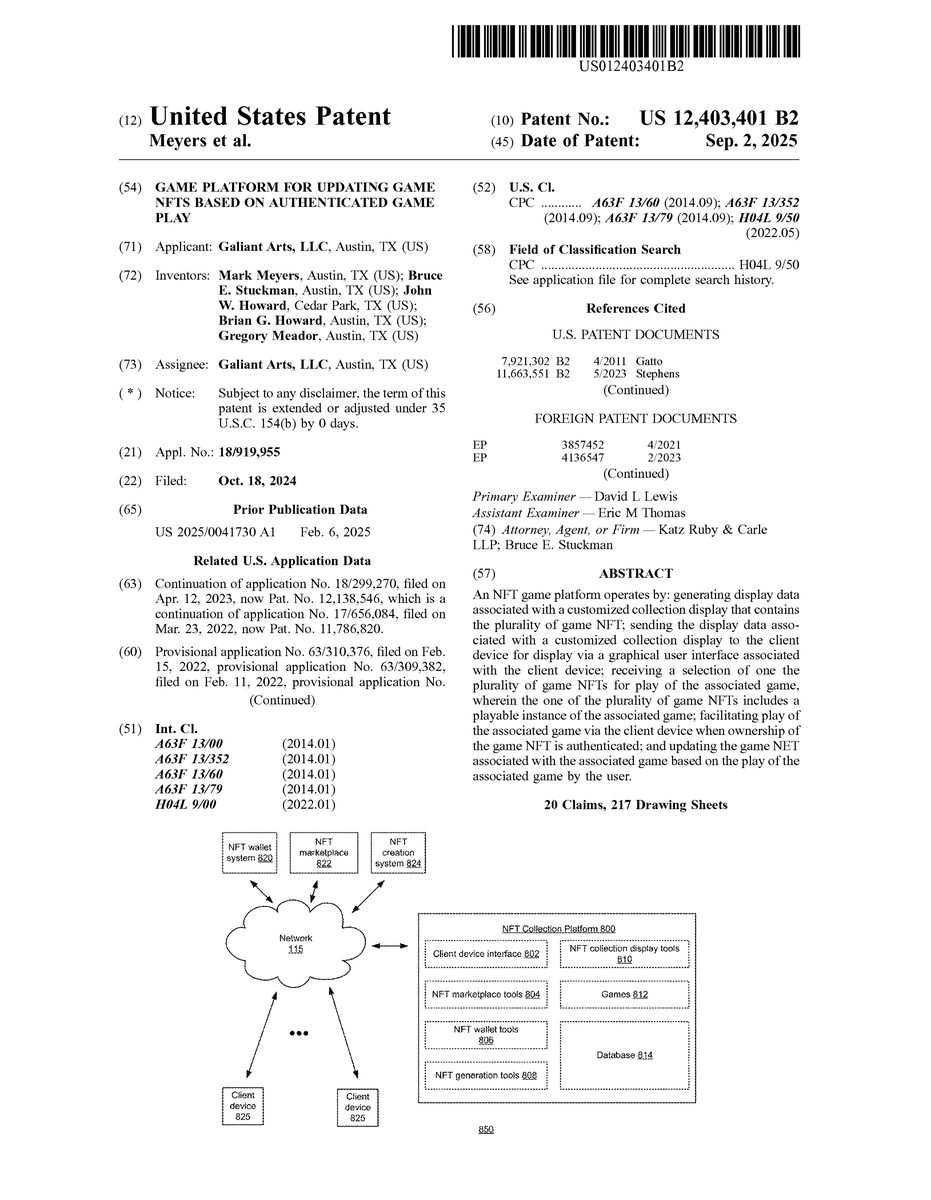
FIG.1Apresents a block diagram representation of an example system in accordance with various examples. In particular, a system850is presented that includes an NFT collection platform800that communicates with client devices825via a network115. The network115can be the Internet or other wide area or local area network, either public or private. The client devices825can be computing devices such as laptops, smartphones, smart watches, tablets, desktops, or other computing devices associated with users, for example, buyers, sellers, collectors and or users of NFTs.
NFT creation and ownership is growing worldwide. Existing platforms provide tools to create NFTs, marketplaces for buying and selling NFTs and wallets to securely hold them. Many NFT purchasers, however, view NFTs similarly to cryptocurrency, purely as financial investments to be collected and later sold. Unlike cryptocurrencies which are fungible tokens, NFTs have a non-fungible (e.g. unique or limited) component that can correspond to photographs, graphics, art, or other media or imagery that can be displayed.
In the example shown, the NFT collection platform800includes a client device interface802for interacting with the client devices825, NFT marketplace tools804, NFT wallet tools806, NFT generation tools808, NFT collection display tools810, one or more games812that can be played using NFTs that have been collected including game NFTs that including playable game content, and a database814for storing user and account information, preferences, display settings and other data associated with users of the NFT collection platform800. The NFT collection platform800can include or be implemented via a cloud computing system. InterPlanetary File System (IPFS) or other decentralized or distributed computer system of individual computers and/or nodes and/or a centralized computing system.
For example, the client device interface802can operate in conjunction with each client device825and via network115to generate a graphical user interface. This graphical user interface is based on display data generated by the NFT collection platform800in a format for display on a display device associated with the client devices825. This graphical user interface generates input data that is received by the NFT collection platform800from the client devices825in response to user interaction with the graphical user interface.
In various examples, the NFT collection platform800can serve the needs of a collector of NFTs by providing a system that offers new experiences that support various collector behaviors in the NFT world and metaverse. The NFT collection display tools810can include a high-fidelity customizable page builder so each collector can personalize and display their NFTs in an environment. The NFT collection platform800can provide and support a collection social media site that, for example, is similar to MySpace, Facebook, or OnlyFans, but specifically directed to the arrangement, posting, sharing and/or display of collections of NFTs.
In the most basic mode of operation, the NFT collection platform800improves the technology of NFT systems by allowing the user to collect, arrange and display NFTs they have purchased so that the user, and other users, can enjoy and admire the NFTs they have collected. The NFT collection platform800not only allows users to curate, display and use their collections, but also allows uses to create a social professional profile of their NFT property—enabling users to get creative with how their collections are presented, used and displayed. In addition, when a group of NFTs is collected and/or when a personalized curated collection page, set and or collection display is built, the NFT collection platform800improves the technology of NFT systems by allowing the user to mint a new “collection NFT” using blockchain-based, distributed computer network, and or other crypto-based NFT creation techniques, for example and authenticated based on the user's ownership of the underlying NFTs.
Furthermore, the NFT collection platform800allows users to buy, sell, loan, borrow and trade NFTs with other users, including their own collection NFTs created based on their own collections. In various examples, the NFT collection platform800may not include a NFT creator, marketplace or wallet itself. The NFT generation tools808, NFT wallet tools806and NFT marketplace tools804can reside on the NFT collection platform800and interface with one or more NFT wallet systems820, NFT marketplaces822and or NFT creation systems824to enable transactions interactions/abilities at a metaverse level, offering collectors new and unique experiences, pre and post purchase, across all different NFT's and blockchains in one place. The NFT collection platform800improves the technology of NFT systems by allowing the user to perform the functions above in a fashion, that can be blockchain, wallet, and marketplace agnostic.
It should be noted that the system850can operate via blockchain-based technologies. In blockchain, a growing list of records, called “blocks”, are linked together using cryptography and spread over a decentralized computer system network or other distributed network of participants. Each block contains a cryptographic hash of the previous block, a timestamp, and transaction data (generally represented as a Merkle tree). The timestamp proves that the transaction data existed when the block was published in order to get into its hash. As blocks each contain information about the block previous to it, they form a chain, with each additional block reinforcing the ones before it. Therefore, blockchains are resistant to modification of their data because once recorded, the data in any given block cannot be altered retroactively without altering all subsequent blocks. The distributed nature of this process over different nodes, the contemporaneous nature of geographically distinct calculations, coupled with the extreme computational complexity of the required calculations means that these blockchain-based technologies cannot practically be performed by the human mind.
It should be noted, that while the NFT wallet system820, NFT marketplace822and NFT creation system824are shown as separate entities and as being external to the NFT collection platform800, other configurations are possible where two or more of these entities share a common platform and/or the functions and features of one or more of these entities can be incorporated within the NFT collection platform800itself.
It should also be noted that while client device interface802, NFT marketplace tools804, NFT wallet tools806, NFT generation tools808, NFT collection display tools810, games812and database814are shown as being internal to the NFT collection platform800, in other examples, any subset of the various elements of the NFT collection platform800can be implemented external to the NFT collection platform800and coupled to the other components via the network115. Furthermore, the NFT collection platform800can be implemented in a cloud computing configuration with any or all of the various elements of the NFT collection platform800implemented within the cloud.
The further operation of this system will be described in greater detail in conjunction with the figures that follow, including several optional functions and features and examples thereof.
FIG.1Bpresents a block diagram representation of an NFT collection platform800in accordance with various examples. In particular, the NFT collection platform800includes a network interface820such as a 3G, 4G, 5G or other cellular wireless transceiver, a Bluetooth transceiver, a WiFi transceiver, Ultra WideBand transceiver, WIMAX transceiver, ZigBee transceiver or other wireless interface, a Universal Serial Bus (USB) interface, an IEEE 1394 Firewire interface, an Ethernet interface or other wired interface and/or other network card or modem for communicating for communicating via the network115.
The NFT collection platform800also includes a processing module830and memory module840that stores an operating system (O/S)844such as an Apple, Unix, Linux or Microsoft operating system or other operating system, client device interface802, NFT marketplace tools804, NFT wallet tools806, NFT generation tools808, NFT collection display tools810, games812and database814. In particular, the O/S844, the client device interface802, NFT marketplace tools804, NFT wallet tools806, NFT generation tools808, NFT collection display tools810, and games812each include operational instructions that, when executed by the processing module830, cooperate to configure the processing module830into a special purpose device to perform the particular functions of the NFT collection platform800described herein.
The NFT collection platform800may include a user interface (I/F)862such as a display device, touch screen, key pad, touch pad, joy stick, thumb wheel, a mouse, one or more buttons, a speaker, a microphone, an accelerometer, gyroscope or other motion or position sensor, video camera or other interface devices that provide information to an administrator of the NFT collection platform800and that generate data in response to the administrator's interaction with NFT collection platform800.
The processing module830can be implemented via a single processing device or a plurality of processing devices. Such processing devices can include a microprocessor, micro-controller, digital signal processor, microcomputer, central processing unit, quantum computing device, field programmable gate array, programmable logic device, state machine, logic circuitry, analog circuitry, digital circuitry, and/or any device that manipulates signals (analog and/or digital) based on operational instructions that are stored in a memory, such as memory840. The memory module840can include a hard disc drive or other disc drive, read-only memory, random access memory, volatile memory, non-volatile memory, static memory, dynamic memory, flash memory, cache memory, and/or any device that stores digital information. Note that when the processing device implements one or more of its functions via a state machine, analog circuitry, digital circuitry, and or logic circuitry, the memory storing the corresponding operational instructions may be embedded within, or external to, the circuitry comprising the state machine, analog circuitry, digital circuitry, and or logic circuitry. While a particular bus architecture is presented that includes a single bus860, other architectures are possible including additional data buses and/or direct connectivity between one or more elements. Further, the NFT collection platform800can include one or more additional elements that are not specifically shown.
FIG.2presents a block diagram representation of an example client device in accordance with various examples. In particular, a client device825is presented that includes a network interface220such as a 3G, 4G, 5G or other cellular wireless transceiver, a Bluetooth transceiver, a WiFi transceiver. Ultra WideBand transceiver, WIMAX transceiver, ZigBee transceiver or other wireless interface, a Universal Serial Bus (USB) interface, an IEEE 1394 Firewire interface, an Ethernet interface or other wired interface and/or other network card or modem for communicating for communicating via network115.
The client device825also includes a processing module230and memory module240that stores an operating system (O/S)244such as an Apple, Unix, Linux or Microsoft operating system or other operating system, NFT data246associated with one or more NFTs owned by the user, and/or a collection application248. In particular, the O/S244and collection application248each include operational instructions that, when executed by the processing module230, cooperate to configure the processing module into a special purpose device to perform the particular functions of the client device825described herein.
The client device825also includes a user interface (I/F)262such as a display device, touch screen, key pad, touch pad, joy stick, thumb wheel, a mouse, one or more buttons, a speaker, a microphone, an accelerometer, gyroscope or other motion or position sensor, video camera or other interface devices that provide information to a user of the client device825and that generate data in response to the user's interaction with the client device825.
The processing module230can be implemented via a single processing device or a plurality of processing devices. Such processing devices can include a microprocessor, micro-controller, digital signal processor, microcomputer, central processing unit, quantum computing device, field programmable gate array, programmable logic device, state machine, logic circuitry, analog circuitry, digital circuitry, and or any device that manipulates signals (analog and/or digital) based on operational instructions that are stored in a memory, such as memory240. The memory module240can include a hard disc drive or other disc drive, read-only memory, random access memory, volatile memory, non-volatile memory, static memory, dynamic memory, flash memory, cache memory, and/or any device that stores digital information. Note that when the processing device implements one or more of its functions via a state machine, analog circuitry, digital circuitry, and or logic circuitry, the memory storing the corresponding operational instructions may be embedded within, or external to, the circuitry comprising the state machine, analog circuitry, digital circuitry, and/or logic circuitry. While a particular bus architecture is presented that includes a single bus260, other architectures are possible including additional data buses and/or direct connectivity between one or more elements. Further, the client device825can include one or more additional elements that are not specifically shown.
The client device825operates, via network interface220, network115and NFT collection platform800. In various examples, the client device825operates to display a graphical user interface generated based on display data from the NFT collection platform800, including corresponding screen displays. Furthermore, the graphical user interface can operate in response to interactions by a user to generate input data that is sent to the NFT collection platform800to control the operation of the NFT collection platform800and or to provide other input.
It should be noted that while the client devices825and NFT collection platform800are shown as separate devices that communicate via the network115, it should be noted that any and all of the functionality attributed to the NFT collection platform800, including the NFT marketplace tools804. NFT wallet tools806, NFT generation tools808, NFT collection display tools810, games812, and database814, etc. can likewise be incorporate directly into the client device825. In this fashion, a client device825through the application of its operating system244and one or more applications can provide a graphical user interface to operate via network115but independently from any NFT collection platform to perform any of the functions and features described herein. In particular, the client device825can perform the functions of both the client device and the NFT collection platform800without requiring communications to be sent to the client device825from a NFT collection platform and communications sent to a NFT collection platform from the client device825.
FIG.3Apresents a flowchart representation of an example method in accordance with various examples. In particular, a method300for use in conjunction with any of the functions and features previously described for generating a collection NFT based on NFTs in a user's collection.
Step302includes importing, via a network interface, a plurality of NFTs associated with the user of the client device. Step304includes generating, via a processor and in response to user interactions with the graphical user interface, display data associated with a customized collection display that contains the plurality of NFTs. Step306includes sending, via the network interface, the display data associated with the customized collection display via the client device of the user. Step308includes facilitating creation of a collection NFT corresponding to the customized collection display that contains the plurality of NFTs.1
FIGS.3B-3F and3Hpresent pictorial representations of example screen displays. In particular, screen displays of a graphical user interface generated based on display data from the NFT collection platform800are shown. In the example below, three NFTs are used to design and create a new collection NFT based on a common theme, the 1999 Chicago Bulls team in the National Basketball association.
InFIG.3B, the user “Bruce Stuckman” is logged into the NFT collection platform800. The user has interacted with NFT wallet tools, such as NFT wallet tools804, to import NFTs100and102from his wallet residing in NFT wallet system820. In this example, the NFTs100and102are blockchain authenticated original photographs depicting two different images of the 1999 Chicago Bulls.
InFIG.3C, the user has interacted with the NFT marketplace tools, such as NFT marketplace tools804, to select a new NFT104for purchase via an NFT marketplace such as NFT marketplace822. InFIG.3D, the wallet tools are used again, this time to export the NFT104to the user's wallet. InFIG.3E, the user has selected and used NFT collection display tools, such as NFT collection display tools810, to create a customized collection display110contain all three 1999 Chicago Bulls-related NFTs he now owns. In the example shown, the user has “dragged and dropped” NFTs he owns in a custom display window and has sized and arranged them into the particular collage that is shown. In other examples, the NFT collection display tools810can operate, based on metadata associated with the NFTs of a user indicating content, theme, color themes, subject matter, dates of creation, authorship, ownership, prior ownership, number of prior owners, size, resolution, and other NFT information and metadata, to automatically generate arrangements of custom collection display110that may be accepted by the user and or that may be further arranged by the user to create the final customized collection display110.
InFIG.3F, the user has selected NFT generation tools, such as NFT generation tools808, in order to facilitate, via NFT creation system824for example, the creation of a collection NFT from the customized collection display110.
FIG.3Gpresents a flow diagram representation of an example process. In the example shown, the collection NFT120is created from the customized collection display110. As previously discussed, the NFT generation tools can operate by, for example, first authenticating the user's rights in the three NFTs and then creating, via NFT creation system824, a new NFT of the unique customized image with its own blockchain authentication. In various examples, the collection NFT120can contain metadata indicating, for example attributions to the sources of the original NFTs in the collection, the creator of the collection NFT, a date of creation, promotion data and coupons related to offers, privileges and or discounts, title data with respect to title to tangible or intangible real or personal property, warrant data with respect to tangible or intangible real or personal property, transaction data regarding one or more transactions, and/or other metadata. This metadata can be protected via the blockchain and/or other crypto-based NFT creation technology that is employed to create and protect the collection NFT itself—with or without associated image data. InFIG.3H, the wallet tools are used again, this time to export the collection NFT120to the user's wallet.
FIG.3Ipresents a flowchart representation of an example method in accordance with various examples. In particular, a method310is presented for use in conjunction with any of the functions and features previously described for generating a collection NFT based on NFTs in a user's collection.
Step312includes importing, via a network interface, a plurality of NFTs associated with the user of the client device. Step314includes generating, via a processor and in response to metadata associated with the plurality of NFTs, display data associated with a customized collection display that contains the plurality of NFTs. Step316includes sending, via the network interface, the display data associated with the customized collection display via the client device of the user. Step318includes facilitating creation of a collection NFT corresponding to the customized collection display that contains the plurality of NFTs.
FIG.4Apresents a flowchart representation of an example method. In particular, a method400for use in conjunction with any of the functions and features previously described in generating a collection NFT based on at least one NFT accessed via a temporary micro-loan.
Step402includes facilitating, via a processor and in response to user interactions with the graphical user interface, a temporary micro-loan of at least one NFT. Step404includes generating, via the processor and in response to user interactions with the graphical user interface, display data associated with a customized collection display that contains a plurality of NFTs including the at least one NFT. Step406includes sending, via the network interface, the display data associated with the customized collection display via the client device of the user. Step408includes facilitating creation of a collection NFT corresponding to the customized collection display that contains the plurality of NFTs including the at least one NFT.
FIG.4Bpresents a pictorial representation of an example screen display. In particular, the user has used the marketplace tools to select NFTs100-1,102-1, and104-1. Instead of putting these NFTs up for purchase, the original owners have made them available for temporary micro-loan. This process allows the users can engage to, in exchange for a fee. “borrow” NFTs in order to create a collection NFT. After the Collection NFT is created, or upon the expiration of some predetermined time period (such as 15 minutes, 30 minutes, an hour, a day, etc.) the micro-loaned NFT(s) are returned, expire, deleted or destroyed. Transaction fees apply, a portion of which can be credited to the original NFT owner, the author, including an upfront cost, reward-based payment based on the use and or performance of the micro-loaned NFT etc. In the alternative, a fixed fee could be charged to the user and credited to the original NFT owner. In various examples, the NFT collection platform800may be configured to operate with a single user and/or within a single wallet, and/or to otherwise prohibit the sale or borrowing of micro-loaned NFTs to avoid dilution of the value of the original itself. Furthermore, original and/or derivative NFTs can include restrictions on the total number of micro-loan transactions, the number of simultaneous contemporaneous micro-loans, restrictions on types of microloan transactions such as normal use loans, staking loans, death match loans, loans less than a predetermined length of time, loans greater than a predetermined length of time, etc.
Consider the following example where an NFT is put up for loan. The proposed loan transaction can include restrictions including an expiration time and/or date, one or N time use in creating a collection NFT or in a game, tournament or challenge, etc. Once the loan is accepted by the borrower, an additional NFT, such as a derivative NFT of the original NFT being loaned, is created on a side chain, layer 1 or 2 blockchain (or “parachain”) that can be different from (and or independent from) the blockchain used to create the original NFT. This new NFT can be created and transferred to the wallet of the borrower via a smart contract that is based on the restrictions. A cryptocurrency market can be used to fund the transaction and/or to collateralize the micro-loan. The new NFT can then be set via the smart contract to automatically expire (e.g. be deleted from the wallet, destroyed or otherwise disabled), when the restrictions are met. In this fashion, if the purpose of the micro-loan is the creation of a collection NFT, the borrowed NFT can automatically expire once the collection NFT is created. It should be noted that the collection NFT can be created via the same blockchain platform (e.g. Ethereum) used to create the original NFT (e.g. not the parachain).
FIG.4Cpresents a flow diagram representation of an example process where a collection NFT120-1is generated based on a customized collection display110-1created by the user based on the borrowed NFTs100-1,102-1and104-1. In various examples, the collection NFT120-1metadata can also indicate the original sources of the micro-loans as well as the micro-loaned status of NFTs100-1,102-1and104-1. While not expressly shown, the collection NFTs based on one or more micro-loaned NFTs, can be created with a visual indication of the original vs, micro-loaned status of the NFTs as appropriate.
FIG.5Apresents a flowchart representation of an example method. In particular, a method500for use in conjunction with any of the functions and features previously described where a collection NFT is created based on at least one derivative NFT created from an original NFT.
Step502includes importing, via a network interface, a plurality of NFTs associated with the user of the client device, wherein at least one of the plurality of NFTs is a derivative NFT created from an original NFT. Step504includes generating, via a processor and in response to user interactions with the graphical user interface, display data associated with a customized collection display that contains the plurality of NFTs. Step506includes sending, via the network interface, the display data associated with the customized collection display via the client device of the user. Step508includes facilitating creation of a collection NFT corresponding to the customized collection display that contains the plurality of NFTs.
FIGS.5B and5Cpresent pictorial representations of an example screen displays. InFIG.5B, a user Mark Meyers is using the NFT generation tools to create a limited and numbered series of derivative NFTs based on an NFT104that is owned by the user. In accordance with the options selected.100new derivative NFTs are generated, each designed with a series number (e.g. 1/100, 2/100, 3/100 . . . 100/100) to differentiate the derivative NFTs from the original. In various examples, the NFT collection platform800may limit the creation of derivative NFTs to only original NFTs and prohibit the creation of derivative NFTs from other derivative NFTs to avoid dilution of the value of the original itself. Furthermore, derivative NFTs can be created to contain metadata indicating the status as a derivative (protected by the blockchain or other crypto-based NFT creation technique) as well as a visual indication of their status as a derivative. In the example shown, a label with a series number is used as such a visual indication but other visual indicators such as frames, badges, bars, etc. could likewise be employed.
InFIG.5C, a different user Bruce Stuckman is using the NFT marketplace tools to purchase the NFT104-2, which is a derivative NFT (number23in the limited series of 100).FIG.5Dpresents a flow diagram representation of an example process where a collection NFT120-2is generated based on a customized collection display110-2created by the user that includes the derivative NFT104-2. In various examples, the collection NFT120-2metadata can also indicate the original status of NFTs102and100, the original source of the derivative NFT104-2as well as the derivative status of NFT104-2. While not expressly shown, the collection NFTs based on one or more micro-loaned NFTs, can be created with a visual indication of the original vs, micro-loaned status of the NFTs as appropriate.
FIG.6Apresents a flowchart representation of an example method. In particular, a method600for use in conjunction with any of the functions and features previously described where a collection NFT is created based on at least one micro-loaned NFT along with one or more other NFTs of the user.
Step602includes importing, via a network interface, at least one NFT associated with the user of the client device. Step604includes facilitating, via a processor and in response to user interactions with the graphical user interface, a temporary micro-loan of at least one other NFT. Step606includes generating, via the processor and in response to user interactions with the graphical user interface, display data associated with a customized collection display that contains the at least one NFT and the at least one other NFT. Step608includes sending, via the network interface, the display data associated with the customized collection display via the client device of the user. Step610includes facilitating creation of a collection NFT corresponding to the customized collection display that contains the at least one NFT and the at least one other NFT.
FIG.6Bpresents a pictorial representation of an example screen display where the user is engaging in a temporary micro-loan of the NFT104-01.FIG.6Cpresents a flow diagram representation of an example process where a collection NFT120-3is generated based on a customized collection display110-3created by the user based on the borrowed NFT104-1and other NFTs100and102. In various examples, the collection NFT120-3metadata can also indicate the original status of NFTs102and100, the original source of the micro-loaned NFT104-1as well as the micro-loaned status of NFT104-1.
FIG.7Apresents a flowchart representation of an example method. In particular, a method700for use in conjunction with any of the functions and features previously described in generating a collection NFT based on at least one derivative NFT accessed via a temporary micro-loan. Step702includes facilitating, via a processor and in response to user interactions with the graphical user interface, a temporary micro-loan of at least one NFT that is a derivative NFT created from an original NFT. Step704includes generating, via the processor and in response to user interactions with the graphical user interface, display data associated with a customized collection display that contains a plurality of NFTs including the at least one NFT. Step706includes sending, via the network interface, the display data associated with the customized collection display via the client device of the user. Step708includes facilitating creation of a collection NFT corresponding to the customized collection display that contains the plurality of NFTs including the at least one NFT.
FIG.7Bpresents a pictorial representation of an example screen display where the user is engaging in a temporary micro-loan of the derivative NFT104-02.FIG.7Cpresents a flow diagram representation of an example process where a collection NFT120-4is generated based on a customized collection display110-4created by the user based on the borrowed derivative NFT104-2and other NFTs100and102. In various examples, the collection NFT120-4metadata can also indicate the original status of NFTs102and100, the original source of NFT104and the derivative NFT104-2as well as the derivative and micro-loaned status of NFT104-2. While not expressly shown, the collection NFTs based on one or more micro-loaned derivative NFTs, can be created with a visual indication of the micro-loaned and derivative status of the NFTs as appropriate.
FIG.8Apresents a flowchart representation of an example method. In particular, a method750for use in conjunction with any of the functions and features previously described where customized collection displays and any resulting collection NFTs are generated with visual indications that indicate the originality classification associated with each of the NFTs in the collection.
Step752includes generating, via a processor and in response to user interactions with the graphical user interface, display data associated with a customized collection display that contains a plurality of NFTs, wherein each of the NFTs has a corresponding one of a plurality originality classifications, wherein each of the plurality originality classifications has an associated visual indication, and wherein the display data includes, for each of the NFTs, the visual indication associated with the one of the plurality originality classifications. Step754includes sending, via the network interface, the display data associated with the customized collection display via the client device of the user. Step756includes facilitating creation of a collection NFT corresponding to the customized collection display that contains the plurality of NFTs.
In various examples, different original classifications can be applied for original NFTs, derivative NFTs, micro-loaned original NFTs, micro-loaned derivative NFTs, etc. In the example shown, the color of the bars above and below the image provide an indication of the originality classification however different badges, stars, scores or other indication could likewise be employed. Furthermore, collection NFTs could also include one or more attributions (an optionally with links to collections from) the original source or sources of the other collection NFTs, loaned NFTs, derivative NFTs, etc. that make up the collection NFT.
FIG.8Bpresents a flow diagram representation of an example process where a collection NFT120-5is generated based on a customized collection display110-5created by the user based on the borrowed derivative NFT102-2, owned derivative104-2and original NFT100. In addition to the visual indications, the originality classifications can be included in the collection NFT120-5metadata along with the corresponding attributions. It should be noted that collection NFTs generated using the NFT collection platform800can, for example, themselves be bought, sold, traded and micro-loaned, and used to create derivatives that also can be bought, sold, traded and micro-loaned.
FIG.9Apresents a flowchart representation of an example method. In particular, a method900for use in conjunction with any of the functions and features previously described involving derivative collection NFTs. Step902includes importing, via a network interface, a plurality of NFTs associated with the user of the client device, wherein at least one of the plurality of NFTs is a derivative collection NFT created from an original collection NFT.
Step904includes generating, via a processor and in response to user interactions with the graphical user interface, display data associated with a customized collection display that contains the plurality of NFTs. Step906includes sending, via the network interface, the display data associated with the customized collection display via the client device of the user. Step908includes facilitating creation of a collection NFT corresponding to the customized collection display that contains the plurality of NFTs.
FIG.9Bpresents a pictorial representation of an example screen display where a user created a derivative collection NFT120-6is put up for purchase. The example shown is one of a derivative series of 100 (2/100) created from the collection NFT120-5via NFT generation tools. In various examples, the collection NFT120-6metadata can also indicate the derivative status of this collection NFT as well as its associated attribution and the attributions associated with its elemental NFTs.
FIG.10Apresents a flowchart representation of an example method. In particular, a method1000for use in conjunction with any of the functions and features previously described involving micro-loans of collection NFTs.
Step1002includes importing, via a network interface, at least one NFT associated with the user of the client device. Step1004includes facilitating, via a processor and in response to user interactions with the graphical user interface, a temporary micro-loan of at least one other NFT, wherein the at least one other NFT is an original collection NFT. Step1006includes generating, via the processor and in response to user interactions with the graphical user interface, display data associated with a customized collection display that contains the at least one NFT and the at least one other NFT. Step1008includes sending, via the network interface, the display data associated with the customized collection display via the client device of the user. Step1010includes facilitating creation of a collection NFT corresponding to the customized collection display that contains the at least one NFT and the at least one other NFT.FIG.10Bpresents a pictorial representation of an example screen display where a user is engaged in a micro-loan of a collection NFT120-5. It should be noted that a new collection NFT can be created with other collection NFTs that have been created, borrowed, or purchased by the user.
FIG.11Apresents a flowchart representation of an example method. In particular, a method1100for use in conjunction with any of the functions and features previously described involving micro-loans of derivative collection NFTs. Step1102includes facilitating, via a processor and in response to user interactions with the graphical user interface, a temporary micro-loan of at least one NFT that is a derivative collection NFT created from an original collection NFT. Step1104includes generating, via the processor and in response to user interactions with the graphical user interface, display data associated with a customized collection display that contains a plurality of NFTs including the at least one NFT. Step1106includes sending, via the network interface, the display data associated with the customized collection display via the client device of the user. Step1108incudes facilitating creation of a collection NFT corresponding to the customized collection display that contains the plurality of NFTs including the at least one NFT.FIG.11Bpresents a pictorial representation of an example screen display where a user is engaged in a micro-loan of a derivative collection NFT120-6.
FIG.12Apresents a flowchart representation of an example method. In particular, a method1200for use in conjunction with any of the functions and features previously described to create collection NFTs with visual indications of their degree of originality.
Step1202includes generating, via a processor and in response to user interactions with the graphical user interface, display data associated with a customized collection display that contains a plurality of NFTs, wherein at least one of the plurality of NFTs is a collection NFT having a corresponding one of a plurality collection NFT originality classifications, and wherein the display data for the at least one of the plurality of NFTs includes a visual indication in accordance with the corresponding one of the plurality of collection NFT originality classifications. Step1204includes sending, via the network interface, the display data associated with the customized collection display via the client device of the user. Step1206includes facilitating creation of a collection NFT corresponding to the customized collection display that contains the plurality of NFTs.
FIG.12Bpresents a pictorial representations of an example collection NFTs. In the example shown three different collection NFT originality classifications are represented including a micro-loaned (e.g. borrowed) collection NFT1220, a purchased collection NFT1230and a purchased derivative collection NFT1240. An additional classification could apply to an original collection NFT that was created by the user-rather than being purchased. In the example shown, the color of the surrounding frame provides a visual indication of the originality classification however different badges, stars, scores or other indication could likewise be employed. In the purchase derivative collection NFT1240the colored bars of the underlying NFTs are removed in lieu of the demoted status originality classification of the collection NFT as merely a derivative.
FIG.13Apresents a flowchart representation of an example method. In particular, a method1300for use in conjunction with any of the functions and features previously described facilitates the collection of endorsements associated with an NFT. Step1302includes importing, via a network interface, an NFT associated with the user of the client device. Step1304includes collecting, via a processor and in response to user interactions with the graphical user interface, endorsement data associated with the NFT. Step1306includes generating, via the processor and in response to user interactions with the graphical user interface, display data associated with a customized collection display that contains the NFT and the endorsement data. Step1308includes sending, via the network interface, the display data associated with the customized collection display via the client device of the user. Step1310includes facilitating creation of a collection NFT corresponding to the customized collection display.
FIGS.13B-13Dpresent pictorial representations of example screen displays. InFIG.13B, the user is interacting with the graphical user interface to use the NFT marketplace tools to seek an endorsement for a selected NFT. InFIG.13C, an endorsement in the form of a signature has been received and appended to the customized collection display of the NFT. InFIG.13D, the user interacts with the NFT generation tools to generate a collection NFT that includes both the NFT and the signature. In various examples, this collection NFT120-6metadata can also indicate an attribution associated the endorsement itself. Furthermore, the endorsement itself can be an original NFT, a derivative NFT, a micro-loaned NFT or other NFT.
FIG.14Apresents a flowchart representation of an example method. In particular, a method1400for use in conjunction with any of the functions and features previously described facilitates the collection of endorsements associated with a collection NFT.
Step1402includes collecting, via a processor and in response to user interactions with the graphical user interface, endorsement data associated with a collection NFT. Step1404includes generating, via the processor and in response to user interactions with the graphical user interface, display data associated with a customized collection display that contains the collection NFT and the endorsement data. Step1406includes sending, via the network interface, the display data associated with the customized collection display via the client device of the user. Step1408includes facilitating creation of an endorsed collection NFT corresponding to the customized collection display.
InFIG.14D, the user has obtained an endorsement for a collection NFT120-5and interacts with the NFT generation tools to generate a new collection NFT that includes both the NFT and the endorsement with associated metadata.
FIG.15presents a block diagram flow representation of an example of NFT generation. In the example shown, NFT generation tools808operate to convert display data1502and other data1504into an NFT1506. The display data1502can correspond to an original NFT, borrowed (e.g. temporary micro-loaned) NFT, a derivative NFT, a customized collection display110, an original image, and/or other derivatives or micro-loans thereof or other display or image data. In various examples, the NFT generation tools808can operate to verify the credentials of any NFTs whose images are contained in the display data1502, prior to creating the NFT1506. In this fashion, derivative NFTs can only be created when the source NFT or NFTs are verified-preventing the creation of unauthorized or counterfeit NFTs.
The other data1504, can be image data including signatures and other endorsement images, visual indications of derivative series, originality classification, attributions, or other image data, metadata of all kinds including metadata indicating one or more originality classifications, attributions, endorsement data, other derivative data indicating the series number and total number in a derivative series, restrictions on micro-loans or other derivatives, restrictions on derivatives with artistic effects, restrictions that derivatives must include attributions to the original source, restrictions on numbers of derivatives or micro-loans or the sizes of derivative series, restrictions on the creation of collection NFTs, the number of collection NFTs, the creation of collection NFTs including NFTs from other sources, from prohibited sources or with prohibited content, geographical restrictions, time restrictions (e.g., can be used to create derivatives or collection NFTs or can be temporarily micro-loaned for 1 month, one year, etc., other restrictions and/or other data associated with, or to be associated with, the display data1502.
This other data1504can be used to generate an NFT and/or combined with the display data1502to create a dataset that includes both the display data1502and the other data1504. This other data1504or combined dataset can be protected via the blockchain and or other crypto-based NFT creation technology that is employed by the NFT generation tools808and via the NFT creation system824to create and protect the new NFT1506itself. It should be noted that the NFT1506can include a single derivative or a number of derivatives, including a limited series of derivatives. It should be noted further that some or all of the other data1504, including restriction data and/or attribution data, can be derived from one or more original NFTs whose images are associated with the display data1502. Furthermore, some or all of the other data1504can be generated in response to user interactions with a graphical user interface generated in conjunction with the NFT collection platform800.
FIG.16Apresents a block diagram/flow representation of an example of NFT generation. In the example shown, display data1502-1associated with an NFT (e.g. an original NFT or collection NFT owned by the user) is combined with other data1504-1that includes derivative data. The derivative data can include information about the derivative(s) including restrictions, information on a derivative series and visual indications to be associated with the derivative(s) along with attribution data associated with one or more attributions and used to create a derivative NFT1506-1that includes the attribution(s). For example, an original NFT can be used to create a derivative NFT that includes an attribution to the source of the original NFT. This attribution can be used, for example, to give credit to the original source, to provide financial remuneration to the source based on the display and or use of the derivative in collections, micro-loans, etc., to set an originality classification of the resulting derivative NFT and/or for other purposes.
FIG.16Bpresents a flowchart representation of an example method. In particular, a method1600is presented for use in conjunction with any of the functions and features previously described. Step1602includes importing, via a network interface, an NFT associated with the user of the client device. Step1604includes generating derivative data via the processor and in response to user interactions with the graphical user interface, wherein the derivative data includes attribution data associated with at least one source of the NFT. Step1606includes facilitating creation of at least one derivative NFT corresponding to the NFT that includes the attribution data.
FIG.17Apresents a block diagram/flow representation of an example of NFT generation. In the example shown, display data1502-2associated with an NFT (e.g. an original NFT or collection NFT borrowed by the user) is combined with other data1504-2that includes derivative data. The derivative data can include information about the derivative(s) including restrictions, information on a derivative series and visual indications to be associated with the derivative(s) along with attribution data associated with one or more attributions and used to create a derivative NFT1506-2that includes the attribution(s). For example, an original NFT temporarily micro-loaned to the user (borrowed) can be used to create a derivative NFT that includes an attribution to the source of the original NFT.
FIG.17Bpresents a flowchart representation of an example method. In particular, a method1700is presented for use in conjunction with any of the functions and features previously described. Step1702includes facilitating, via the processor and in response to user interactions with the graphical user interface, a temporary micro-loan of an NFT. Step1704includes generating derivative data via the processor and in response to user interactions with the graphical user interface, wherein the derivative data includes attribution data associated with at least one source of the NFT. Step1706includes facilitating creation of at least one derivative NFT corresponding to the NFT that includes the attribution data.
FIG.18Apresents a block diagram/flow representation of an example of NFT generation. In the example shown, display data1502-3corresponds to a customized collection display created by the user based on multiple NFTs (e.g. original NFTs, derivative NFTs, borrowed NFTs, collection NFTs, etc.) are combined with other data1504-3that includes attribution data associated with one or more attributions and used to create a collection NFT1506-3that includes the attributions to any original NFTs, derivative NFTs and their own original NFTs, borrowed NFTs, other collection NFTs and their original NFT sources, etc.
FIG.18Bpresents a flowchart representation of an example method. In particular, a method1800is presented for use in conjunction with any of the functions and features previously described. Step1802includes importing, via a network interface, a plurality of NFTs associated with the user of the client device. Step1804includes generating, via the processor and in response to user interactions with the graphical user interface, display data associated with a customized collection display that contains the plurality of NFTs.
Step1806includes sending, via the network interface, the display data associated with the customized collection display via the client device of the user. Step1808includes facilitating creation of a collection NFT corresponding to the customized collection display that contains the plurality of NFTs and attribution data indicating one or more sources associated with the plurality of NFTs.
FIG.19Apresents a block diagram flow representation of an example of NFT generation. In the example shown, display data1502-4is generated from a plurality of NFTs1510(including at least one borrowed NFT) based on user interactions1514with the NFT collection display tools810. In particular, display data1502-4corresponds to a customized collection display created by the user based on multiple NFTs (e.g. original NFTs, derivative NFTs, collection NFTs, and at least one borrowed NFT, etc.) that are combined with other data1504-4that includes attribution data associated with one or more attributions associated with the NFTs of the collection and used to create a collection NFT1506-4. In particular, the NFT1506-4includes the attributions to any original NFTs, derivative NFTs and their own original NFTs, the borrowed NFT(s), other collection NFTs and their original NFT sources, etc.
FIG.19Bpresents a flowchart representation of an example method. In particular, a method1900is presented for use in conjunction with any of the functions and features previously described. Step1902includes facilitating, via the processor and in response to user interactions with the graphical user interface, a temporary micro-loan of at least one NFT. Step1904includes generating, via the processor and in response to user interactions with the graphical user interface, display data associated with a customized collection display that contains a plurality of NFTs including the at least one NFT. Step1906includes sending, via the network interface, the display data associated with the customized collection display via the client device of the user. Step1908includes facilitating creation of a collection NFT corresponding to the customized collection display that contains the plurality of NFTs and attribution data indicating one or more sources associated with the plurality of NFTs.
FIG.20Apresents a block diagram/flow representation of an example of NFT generation. In the example shown, display data1502-5is generated from a plurality of NFTs1510(including at least one derivative NFT) based on user interactions1514with the NFT collection display tools810. In particular, display data1502-5corresponds to a customized collection display created by the user based on multiple NFTs (e.g. original NFTs, collection NFTs, borrowed NFT, at least one derivative NFT etc.) that are combined with other data1504-5that includes attribution data associated with one or more attributions associated with the NFTs of the collection and used to create a collection NFT1506-5. In particular, the NFT1506-5includes the attributions to any original NFTs, derivative NFTs and their own original NFTs, the borrowed NFT(s), other collection NFTs and their original NFT sources, etc.
FIG.20Bpresents a flowchart representation of an example method. In particular, a method2000is presented for use in conjunction with any of the functions and features previously described. Step2002includes importing, via a network interface, a plurality of NFTs associated with the user of the client device, wherein at least one of the plurality of NFTs is a derivative NFT created from an original NFT. Step2004includes generating, via the processor and in response to user interactions with the graphical user interface, display data associated with a customized collection display that contains the plurality of NFTs. Step2006includes sending, via the network interface, the display data associated with the customized collection display via the client device of the user. Step2008includes facilitating creation of a collection NFT corresponding to the customized collection display that contains the plurality of NFTs and attribution data indicating one or more sources associated with the plurality of NFTs including at least one source associated with the original NFT.
FIG.21Apresents a block diagram flow representation of an example of NFT generation. In the example shown, display data1502-6is an artistic derivative generated from an NFT1520and customization data applying one or more artistic effects1524generated based on user interactions with the NFT collection display tools810. In particular, display data1502-6corresponds to artistic customization of the NFT1520created by the user that is used to create an NFT1506-6that is a derivative NFT having the one or more artistic effects.
In various examples, the artistic effects include computerized, artistic techniques for special effects) that can be applied to an image or collection of images. The effects can be changes in contrast, brightness, shading, fill, background, borders, aspect ratio, rotations, cropping, color, and further include filters and other transformation functions that enable user to modify images that simulate artistic styles such as colored pencils, watercolors, chalk pastels, charcoal, pen and inks, crayons, line drawings, gray scale images, cartoons, caricatures, and other artistic effects.
FIG.21Bpresents a pictorial representation of example results of applying artistic effects. In the example shown, the NFT1520corresponds to an original image of Babe Ruth from1927. The user has applied one or more artistic effects to the image and generated NFT1506-6that includes those artistic effect(s).
FIG.21Cpresents a flowchart representation of an example method. In particular, a method2100is presented for use in conjunction with any of the functions and features previously described. Step2102includes importing, via a network interface, an NFT associated with the user of the client device. Step2104includes generating customization data via the processor and in response to user interactions with the graphical user interface, wherein the customization data applies one or more artistic effects to the NFT. Step2106includes facilitating creation of at least one derivative NFT corresponding to the NFT that includes the one or more artistic effects.
FIG.22Apresents a block diagram flow representation of an example of NFT generation. In the example shown, display data1502-7is an artistic derivative generated from a borrowed NFT1520-1and customization data applying one or more artistic effects1524generated based on user interactions with the NFT collection display tools810. In particular, display data1502-7corresponds to artistic customization of the NFT1520-1created by the user that is used to create an NFT1506-7that is a derivative NFT having the one or more artistic effects.
FIG.22Bpresents a flowchart representation of an example method. In particular, a method2200is presented for use in conjunction with any of the functions and features previously described. Step2202includes facilitating, via the processor and in response to user interactions with the graphical user interface, a temporary micro-loan of an NFT. Step2204includes generating customization data via the processor and in response to user interactions with the graphical user interface, wherein the customization data applies one or more artistic effects to the NFT. Step2206includes facilitating creation of at least one derivative NFT corresponding to the NFT that includes the one or more artistic effects.
FIG.23Apresents a block diagram flow representation of an example of NFT generation. In the example shown, display data1502-8is a customized collection display generated from NFTs1530and customization data applying one or more artistic effects1524generated based on user interactions with the NFT collection display tools810. In particular, display data1502-8corresponds to artistic arrangement and customization of the multiple NFTs1530(e.g., original NFTs, collection NFTs, borrowed NFT, and/or derivative NFT, etc.) created by the user that is used to create an NFT1506-8that is a collection NFT having the one or more artistic effects.
FIG.23Bpresents a pictorial representation of example results of applying artistic effects. In the example shown, the NFTs1530corresponds to three images of the 1999 Chicago Bulls, where NFTs1530-1and1530-3are owned originals and NFT1530-2is a borrowed derivative. The user has applied one or more artistic effects to the image in the form of an arrangement and a shaded color background and generated NFT1506-8that includes those artistic effects.
FIG.23Cpresents a flowchart representation of an example method. In particular, a method2300is presented for use in conjunction with any of the functions and features previously described. Step2302includes importing, via a network interface, a plurality of NFTs associated with the user of the client device. Step2304includes generating, via the processor and in response to user interactions with the graphical user interface, display data associated with a customized collection display that contains the plurality of NFTs and applies one or more artistic effects. Step2306includes sending, via the network interface, the display data associated with the customized collection display via the client device of the user. Step2308includes facilitating creation of a collection NFT corresponding to the customized collection display that contains the plurality of NFTs in accordance with the one or more artistic effects.
FIG.24Apresents a block diagram flow representation of an example of NFT generation. In the example shown, display data1502-9is associated with a borrowed NFT that includes restriction data that indicate one or more restrictions. The NFT generation tools receive other data1504-9that includes derivative data including its own proposed derivative information, for example, the size of the series, visualization of series numbers, restrictions. The NFT generation tools compare the restrictions data to the derivative data and only allow the creation of the NFT derivative(s)1506-9if all of the restrictions indicated by the restriction data of the borrowed NFT are met. This prohibits generation of one or more derivative NFTs in circumstances where, for example, no derivatives are allowed, or where the proposed derivatives lack the required attribution, include prohibited artistic effects, the size of the series is too large, or one or more other restrictions would be violated.
FIG.24Bpresents a flowchart representation of an example method. In particular, a method2400is presented for use in conjunction with any of the functions and features previously described. Step2402includes facilitating, via the processor and in response to user interactions with the graphical user interface, a temporary micro-loan of an NFT, wherein the NFT includes restriction data associated with one or more restrictions. Step2404includes generating derivative data via the processor and in response to user interactions with the graphical user interface. Step2406includes comparing the derivative data to the restriction data. Step2408includes facilitating creation of at least one derivative NFT corresponding to the NFT in accordance with the derivative data when the derivative data indicates no violation of any of the one or more restrictions. Step2410includes prohibiting creation of at least one derivative NFT corresponding to the NFT when the derivative data indicates a violation of any of the one or more restrictions.
FIG.25Apresents a block diagram/flow representation of an example of NFT generation. In the example shown, display data1502-10associated with an NFT (e.g. an original NFT or collection NFT owned by the user) is combined with other data1504-10that includes derivative data with one or more restrictions that is used to create a derivative NFT1506-10that includes the restrictions(s).
FIG.25Bpresents a flowchart representation of an example method. In particular, a method2500is presented for use in conjunction with any of the functions and features previously described. Step2502includes importing, via a network interface, an NFT associated with the user of the client device. In step2504includes generating derivative data via the processor and in response to user interactions with the graphical user interface, wherein the derivative data includes restriction data associated with one or more restrictions. Step2506includes facilitating creation of at least one derivative NFT corresponding to the NFT that includes the restriction data.
FIG.26Apresents a block diagram flow representation of an example of NFT generation. In the example shown, display data1502-11is associated with a customized collection display of NFTs1540generated in response to user interactions1514with the NFT collection display tools810. One or more of the NFTs1540include restriction data that indicate one or more restrictions. The NFT generation tools808only allow the creation of the collection NFT derivative1506-11if all of the restrictions indicated by the restriction data of the NFTs1540are met. This prohibits generation of one or more collection NFTs in circumstances where, for example, no collections are allowed, or where the proposed collection lacks the required attribution, includes prohibited artistic effects includes prohibited sources or content, is too large, includes other collections and or one or more other restrictions would be violated.
FIG.26Bpresents a flowchart representation of an example method. In particular, a method2600is presented for use in conjunction with any of the functions and features previously described. Step2602includes importing, via a network interface, a plurality of NFTs associated with the user of the client device, wherein at least one of the plurality of NFTs includes restriction data associated with one or more restrictions. Step2604includes generating, via the processor and in response to user interactions with the graphical user interface, display data associated with a customized collection display that contains the plurality of NFTs. Step2606includes sending, via the network interface, the display data associated with the customized collection display via the client device of the user. Step2608includes facilitating creation of a collection NFT corresponding to the customized collection display when the creation does not violate any of the one or more restrictions. Step2610includes prohibiting creation of the collection NFT corresponding to the customized collection display when the creation would violate any of the one or more restrictions.
FIG.27Apresents a block diagram/flow representation of an example of NFT generation. In the example shown, display data1502-12is associated with a customized collection display of NFTs1550generated in response to user interactions1514with the NFT collection display tools810. The NFTs1540include at least one image NFT and one data NFT (i.e., without a corresponding image). The NFT generation tools generate a collection NFT1506-12, not only with other data1504, but also with the data from the corresponding data NFT(s) of NFTs1550.
FIG.27Bpresents a flowchart representation of an example method. In particular, a method2700is presented for use in conjunction with any of the functions and features previously described. Step2702includes importing, via a network interface, a plurality of NFTs associated with the user of the client device, wherein the plurality of NFTs includes at least one image NFT and at least one data NFT. Step2704includes generating, via the processor and in response to user interactions with the graphical user interface, collection data containing the at least one image NFT and further containing data associated with the at least one data NFT. Step2706includes facilitating creation of a collection NFT corresponding to the collection data containing the at least one image NFT and further containing the data associated with the at least one data NFT.
FIG.28Apresents a block diagram representation of an example system. In particular, a system2850is presented that includes an NFT distribution platform2800that communicates with client devices825via a network115. The network115can be the Internet or other wide area or local area network, either public or private. The client devices825can be computing devices associated with users, for example, buyers, sellers, collectors and/or users of NFTs.
In the example shown, the NFT distribution platform2800includes a client device interface2802for interacting with the client devices825, NFTs2804to be distributed, and an operating system2844. One or more of the NFTs2804can have geographical restrictions as to distribution that are either part of the NFTs themselves or have restriction data that is stored separately.
The NFT distribution platform2800includes a network interface2820such as a 3G, 4G, 5G or another cellular wireless transceiver, a Bluetooth transceiver, a WiFi transceiver, Ultra WideBand transceiver, WIMAX transceiver, ZigBee transceiver or other wireless interface, a Universal Serial Bus (USB) interface, an IEEE 1394 Firewire interface, an Ethernet interface or other wired interface and/or other network card or modem for communicating for communicating via the network115.
The NFT distribution platform2800also includes a processing module2830and memory module2840that stores an operating system (O/S)2844such as an Apple, Unix, Linux or Microsoft operating system or another operating system, the client device interface2802, and the NFTs2804. The O/S2844and the client device interface802each include operational instructions that, when executed by the processing module830, cooperate to configure the processing module830into a special purpose device to perform the particular functions of the NFT distribution platform2800described herein.
The NFT distribution platform2800may include a user interface (I/F)2862such as a display device, touch screen, key pad, touch pad, joy stick, thumb wheel, a mouse, one or more buttons, a speaker, a microphone, an accelerometer, gyroscope or other motion or position sensor, video camera or other interface devices that provide information to an administrator of the NFT distribution platform2800and that generate data in response to the administrator's interaction with NFT distribution platform2800.
The processing module2830can be implemented via a single processing device or a plurality of processing devices. Such processing devices can include a microprocessor, micro-controller, digital signal processor, microcomputer, central processing unit, quantum computing device, field programmable gate array, programmable logic device, state machine, logic circuitry, analog circuitry, digital circuitry, and/or any device that manipulates signals (analog and or digital) based on operational instructions that are stored in a memory, such as memory2840. The memory module2840can include a hard disc drive or other disc drive, read-only memory, random access memory, volatile memory, non-volatile memory, static memory, dynamic memory, flash memory, cache memory, and/or any device that stores digital information. Note that when the processing device implements one or more of its functions via a state machine, analog circuitry, digital circuitry, and or logic circuitry, the memory storing the corresponding operational instructions may be embedded within, or external to, the circuitry comprising the state machine, analog circuitry, digital circuitry, and/or logic circuitry. While a particular bus architecture is presented that includes a single bus2860, other architectures are possible including additional data buses and/or direct connectivity between one or more elements. Further, the NFT distribution platform2800can include one or more additional elements that are not specifically shown.
For example, the client device interface2802can operate in conjunction with each client device825and via network115to generate a graphical user interface. This graphical user interface is based on display data generated by the NFT distribution platform2800in a format for display on a display device associated with the client devices825. This graphical user interface generates input data that is received by the NFT distribution platform2800from the client devices825in response to user interaction with the graphical user interface.
In various examples, the NFT distribution platform2800can operate to respond to input data from client devices in the form of read requests for NFTs and geolocation data such as GPS coordinates, connection to or proximity with a network element of network115or other location data indicating a location of the client device825. The NFT distribution platform2800sends the requested NFT(s) to the requesting client device—only when the geolocation data conforms with restriction data—for example, when the geolocation data indicates a position of the requesting client device within a limited area or proximity indicated by the restriction data.
FIG.28Bpresents a pictorial representation of an example jumbotron display. In particular, the jumbotron of a sports stadium is shown that displays a prompt to attendees of the event to download NFTs by scanning the QR code with their mobile phones (client devices825). When the QR code is scanned, the NFT distribution platform2800is automatically accessed by the client device825which receives geolocation data along with a request for an NFT. In this example, NFTs are restricted to attendees that are physically present at the event. This prevents an attendee from capturing and posting the QR code for use by others that are not present.
FIG.28Cpresents a pictorial representation of an example client device display. In this example, a screen display is shown of client device825where the NFT distribution platform2800has verified that the location of the client device is within the stadium and has allowed the download of an NFT.
FIG.28Dpresents a pictorial representation of an example client device display. In the prior example, the process began with the user of a client device scanning a displayed QR code. In this further example, the NFT distribution platform2800has automatically detected the presence of the user at the venue based on geolocation data received from the user's client device825and automatically prompted the user to click to send a read request. In this fashion, the user is geo-authorized, before the request.
FIG.28Epresents a flowchart representation of an example method. In particular, a method2800is presented for use in conjunction with any of the functions and features previously described. Step2802includes receiving from a client device, via a network interface, a read request associated with an NFT, the NFT including restriction data associated with one or more geographical restrictions. Step2804includes receiving, via the network interface, geolocation data associated with the client device. Step2806includes determining, via a processor, when the geolocation data associated with the client device conforms with the restriction data. Step2808includes sending the NFT to the client device via the network interface when the geolocation data associated with the client device conforms with the restriction data. As noted above, steps2802and2804can be performed in a different order.
FIG.29Apresents a block diagram representation of an example client device. In particular, a client device825-1is presented that functions similarly to client device825, and includes several elements of client device825that are referred to by common reference numerals. The client device815-1is capable of operating to client device825previously described.
In addition, the memory module240includes a wallet application (app)250that is capable of engaging in financial transactions including credit card transactions and traditional digital payments, is capable of holding crypto-currency and engaging in crypto-currency transactions and is further capable of storing one or more NFTs that are either original NFTs, derivative NFTs, borrowed (temporarily micro-loaned) NFTs, collection NFTs and/or combinations thereof. In various examples, the wallet app250is capable of operating in conjunction with the NFT collection platform800, the NFT distribution platform2800, the NFT wallet system820, the NFT marketplace822, and/or the NFT creation system824via network115.
Also, the memory module240includes one or more game apps252that represent either stand alone games of the client device825-1or that operate in conjunction with the games813of the NFT collection platform800and or interface with the NFT distribution platform2800. This allows, for example, a user of client device825-1to engage in games that involve the acquisition, collection, display, distribution, and or use of one or more NFTs that are either original NFTs, derivative NFTs, borrowed (temporarily micro-loaned) NFTs, collection NFTs and/or combinations thereof.
Furthermore, the network interface220includes one more geolocations elements222such as a GPS receiver, a ultra-wideband (UWB) transceiver, a Bluetooth transceiver and/or other component(s) that that facilitate the generation of geolocation data and/or facilitate other location-based services. Consider the case where the client device825is a smartphone or tablet and the wallet app250is an Apple or Android wallet or mobile wallet card that is in a Apple or Android wallet. Once the wallet app250is activated, NFTs can be easily added to the wallet. In addition, the wallet app250can access the location services of the device, and for example, generate push notifications regarding NFTs that are available near the current location.
In various examples, the geolocation data generating in such a fashion can facilitate the generation of geolocation data discussed in conjunction with the operation of NFT distribution platform2800. In particular, the NFT distribution platform2800can automatically detect the presence of the user at a venue based on geolocation data received from the user's client device825-1and automatically prompted the user to click to send a read request. In this fashion, the user can be geo-authorized, before the request.
Furthermore, while the client device825-1and NFT collection platform800are shown as separate devices that communicate via the network115, it should be noted that any and all of the functionality attributed to the NFT collection platform800, including the NFT marketplace tools804, NFT wallet tools806, NFT generation tools808, NFT collection display tools810, games812, and database814, etc. can likewise be incorporate directly into the client device825. In this fashion, a client device825through the application of its operating system244and one or more applications can provide a graphical user interface to operate via network115but independently from any NFT collection platform to perform any of the functions and features described herein. In particular, the client device825can perform the functions of both the client device and the NFT collection platform800without requiring communications to be sent to the client device825from a NFT collection platform and communications sent to a NFT collection platform from the client device825.
In addition, NFT generation tools808can be used to protect, encrypt and/or authenticate any digital information that could be stored in the wallet app250, including for example rewards cards, coupons, movie tickets, event tickets, boarding passes, public transit cards, student ID cards, credit cards, debit cards, prepaid cards, and loyalty cards. In addition, the functionality of the wallet app250can be further expanded to protect other information such as vehicle titles, warranty cards, driver's licenses and other IDs, vaccination records, prescriptions, and or other medical records, social security cards, financial records, authentication tokens, insurance cards, passwords, user IDs and/or other images and information of a personal and or sensitive nature. Any of these types of digital information can be protected via an NFT or other blockchain transaction in conjunction, with or without associated image or display data, and with or without metadata and/or “other data” as that term has been used herein in association with the NFT generation tools808.
FIG.29Bpresents a flowchart representation of an example method. In particular, a method2900is presented for use in conjunction with any of the functions and features previously described. Step2902includes sending to a NFT distribution platform and via a network interface, geolocation data associated with the client device. Step2904includes generating a prompt associated with an NFT, the NFT including restriction data associated with one or more geographical restrictions, wherein the prompt is triggered when the geolocation data associated with the client device conforms with the restriction data. Step2906includes sending the NFT distribution platform and via the network interface a read request for the NFT. Step2908includes receiving the NFT from the NFT distribution platform in response to the read request.
FIG.30Apresents a pictorial representation of an example screen display. In the example shown, a screen display of a client device825-1is shown corresponding to a game app252, or other game or procedure that operates in conjunction with NFT distribution platform2800. The object of the game is to visit each of the locations shown on the map of the national mall in Washington, DC. When geolocation data from the client device825-1indicates the user has visited each of these locations with the client device825-1, the NFT distribution platform2800unlocks access to a special (e.g., a commemorative derivative) NFT by the client device825-1that can be, for example, downloaded to the wallet app250.
FIGS.30B-30Dpresent pictorial representations of example client devices with screen displays. InFIG.30B, the game begins and the user is prompted to visit each of the indicated sites. InFIG.30C, the geolocation data from the client device has indicated with the user is within a predetermined geofence around the Jefferson Memorial. InFIG.30D, the screen display indicates that the visitor has completed the challenge and is prompted to request download of the NFT.
FIG.30Epresents a flowchart representation of an example method. In particular, a method3000is presented for use in conjunction with any of the functions and features previously described. Step3002includes sending to a NFT distribution platform and via a network interface, geolocation data associated with the client device, wherein the client device is relocated to a plurality of distinct positions and the geolocation data indicates the plurality of distinct positions. Step3004includes generating a prompt associated with an NFT, the NFT including restriction data including geographical restrictions that includes a plurality of regions, wherein the prompt is triggered when the geolocation data associated with the client device conforms with the restriction data. Step3006includes sending the NFT distribution platform and via the network interface a read request for the NFT. Step3008includes receiving the NFT from the NFT distribution platform in response to the read request.
FIGS.31A-31Cpresent pictorial representations of example screen displays. In particular, screen displays are shown in conjunction with user interaction with the NFT collection platform800. As previously discussed, NFT collection platform800supports game play by users of client devices825(including825-1) of one or more games813. These games813can include games around a gamified collection experience across the meta-verse that allow users to compete with and share their collection experiences with others.
InFIG.31A, the user has selected “collection games” and is offered a series of collection games associated with particular themes or categories. In the example shown, the user has elected to enter a collection competition for NFTs pertaining to the 1999 Chicago bulls. The user is prompted to build a collection display of NFTs associated with the chosen theme-however, a user with existing collection display can also participate. A predetermined time period, such as (e.g., one day, one week, etc.) may apply to the game. The user's customized collection display data are submitted to the NFT collection platform800(or a corresponding collection NFT can be temporarily micro-loaned) wherein the collection can be scored against other collections. The user that has created the best collection display involving the theme can win a prize, such as a special NFT, an amount of cryptocurrency, etc.
In various examples, the user's collections are scored via a plurality of scoring criteria that could include, for example:Breadth, size and/or scope of the collection (or Collection NFT) and relationship to the theme or category, (if there is a theme or category).The quality and originality of the arrangement and overall content of the NFTs in the displayOriginality scoring of the individual NFTs in the display that assigns different weights scores based on:Originality classifications that assign different scores for:a) Original NFTsb) Derivative NFTs and further the series number in derivative NFTs (#12 of 100, is better than #9 of 200, that is better than #37 of 100 and better than #123 of an unlimited series, etc.c) Borrowed NFTsd) Collection NFTse) Nested derivatives or loans of borrowed NFTs, derivative NFT and collection NFTs, etc.NFT-theme rarity (e.g., how many cyber punks exist, how many Michael Jordon cards exist, etc.)Endorsed NFTsSigned NFTsBonus for the number of times other users have included your collection NFT in their own collections.Etc.
Collections can be ranked via the scoring model and ranked results can be shown to collectors, providing an incentive to improve their collection.
InFIG.31B, the user has submitted their customized collection display for scoring and is determined to be currently in fourth place. InFIG.31C, the user has upgraded their customized collection display by obtaining a specific endorsement from Michael Jordon.
FIG.31Dpresents a flowchart representation of an example method. In particular, a method3100is presented for use in conjunction with any of the functions and features previously described. Step3102includes importing, via a network interface, customized collection display data associated with a collection of NFTs of the user of the client device. Step3104includes generating, via the processor and based on the customized collection display data, a score associated with a collection game, and wherein the score is generated in accordance with a plurality of scoring criteria associated with the collection game. Step3106includes sending, via the network interface, the score to the client device for display via the graphical user interface.
FIG.32Apresents a pictorial representation of an example screen display. As discussed above, instead of the user's customized collection display data being submitted to the NFT collection platform800for scoring, a corresponding collection NFT can be temporarily micro-loaned or otherwise submitted for evaluation and can be scored against other collections. In the example shown, the collection NFT1506-8has been submitted to the tourney/challenge collection game involving the 1999 Chicago Bulls.
FIG.32Bpresents a flowchart representation of an example method. In particular, a method3200is presented for use in conjunction with any of the functions and features previously described. Step3202includes generating, via the processor and based on a customized collection display of a collection NFT associated with a collection of NFTs of the user of the client device, a score associated with a collection game, wherein the score is generated in accordance with a plurality of scoring criteria associated with the collection game. Step3204includes sending, via the network interface, the score to the client device for display via the graphical user interface.
FIGS.33A-33Dpresent pictorial representations of example screen displays. While the prior examples have focused on collection games where collections are evaluated based on their content, the games813can also include collection games around fantasy leagues, such as fantasy sports.
InFIG.33A, the user of client device825or825-1has chosen to take part in a fantasy NFL football league. InFIG.33B, the user has been assigned, formed or chosen to participate in a particular league (designated #1102X) for an upcoming NFL season. In various examples, the NFT collection platform800has generated a set of NFTs for each league. In this fashion, league1102X has a set of derivative NFTs corresponding to the NFL players available for drafting collection by the participants in the league. Each participant builds his her team by drafting or otherwise purchasing, acquiring or collecting the NFTs associated with their own players from the NFL players that are currently available as part of a draft, an auction—or other more or less structured collection process.
In the example shown, the participant user is choosing a quarterback Russell Wilson from the currently available quarterbacks in league1102X. Once the selection is made, the participant receives the league1102X derivative NFT of Russell Wilson, and furthermore Russell Wilson is added to their team. Thereafter. Russell Wilson can be loaned, sold or traded with to other participants in League1102X by loaning, selling and/or trading the associated NFT. In various examples, the NFTs for league1102X have restrictions that only allow them to be loaned, sold or traded with to other participants in League1102X during the time period of the season, but these restrictions can expire when the season is over. Other sets of restrictions are likewise possible allowing a limited number of interleague transactions, but with discounted scoring for example for players that came for a different league.
Like other fantasy sports leagues, participants are scored based on the members on their team during each week of the season, and for example, whether they are active or benched. The active members of each team correspond to the player NFTs held by the participant that week. If the user plans to bench a player for a period of time, the user may choose to enter into a transaction to micro-loan the NFT of that player to another league participant for this period of time.
Scores can also be subject to any of the additional scoring mechanism discussed previously in conjunction with other collection games, with additional fantasy league scores be attributed to players whose NFTs have been player signed or endorsed, for example. InFIG.33C, the user (league participant) is viewing the current members of his team (the players for which he currently holds the associated NFTs) after week #2 of the season. InFIG.33D, the user's team has been scored against other participants and is currently in 5th place.
While the examples above has focused on a fantasy football league, the techniques described herein could likewise be employed in other sports fantasy leagues, in other sporting based contests or tournaments, in reality/contest based television programs, such as Survivor. American Idol. The Voice. Jeopardy, The Bachelor, or other television based contests, in the Olympics, sports playoffs, and in other tournaments, contests and or other events, sporting or non-sporting.
FIG.33Epresents a flowchart representation of an example method. In particular, a method3300is presented for use in conjunction with any of the functions and features previously described. Step3302includes facilitating, via the processor and in response to user interactions with the graphical user interface, collection of NFTs corresponding to a team of players associated with the user in a fantasy league. Step3304includes generating, via the processor, a score associated with the team of players associated with the user in the fantasy league. Step3306includes sending, via the network interface, the score to the client device for display via the graphical user interface. Step3308includes facilitating transactions regarding the collection of NFTs between the user and other users in the fantasy league.
FIG.34Apresents a block diagram flow representation of an example of NFT generation. In particular, a process is shown where data associated with a plurality of players of a fantasy league game1560, such as original NFTs or other display data, is used in conjunction with other data1504to generate sets of derivative NFTs for a plurality of different fantasy leagues. The other data1504can include restrictions on interleague transfers, time restrictions, league numbers and visualization parameters regarding the league numbers in the derivative NFTs, etc.
FIG.34Bpresents a flowchart representation of an example method. In particular, a method3400is presented for use in conjunction with any of the functions and features previously described. Step3402includes receiving, via the processor, data associated with a plurality of players of a fantasy league game. Step3404includes generating, via the processor and based on the data, a corresponding set of derivative NFTs for each of a plurality of fantasy leagues in the fantasy game, wherein each of the set of derivative NFTs for each of a plurality of fantasy leagues includes a single derivative NFT for each of the plurality of players. Step3406includes, for each one of the plurality of fantasy leagues, facilitating collection of NFTs in the corresponding set of derivative NFTs by participants in the one of the plurality of fantasy leagues. As previously discussed, this collection process can be via draft, auction or other process, either more or less structured.
FIG.35Apresents a block diagram flow representation of an example of NFT generation. In particular, the NFT collection platform800may be used to not only facilitate the generation, collection and display of NFT and the playing of collection and other NFT related game, the NFT collection platform800can also be used to generate game characters and game character NFTs that are used in the play of any of the games813and/or other games.
In the example shown, display data to be associated with a game character1570, together with other data1574, is used to generate a game character NFT1572. In various examples, the other data1574can include performance data to be associated with the game character as well as other character parameters and/or attributes that are used in the game to dictate the performance of the game character. Furthermore, other data1574can include any of the other data1504discussed herein.
FIG.35Bpresents a pictorial representation of example display data. In particular, display data to be associated with a game character1570corresponds to an image of Michael Jordon.FIG.35Cpresents a pictorial representation of example of other data1574that corresponds to performance data including various parameters to be associated with the character in the game.FIG.35Dpresents a pictorial representation of an example game character NFT1572generated in such a fashion andFIG.35Epresents a pictorial representation of an example client device with screen display of the game character used in a game.
FIG.35Fpresents a flowchart representation of an example method. In particular, a method3500is presented for use in conjunction with any of the functions and features previously described. Step3502includes receiving, via the processor, display data to be associated with a game character and other data to be associated with performance of the game character. Step3504includes generating, via the processor and based on the display data and the other data, a game character NFT associated with the game character that includes the display data to be associated with the game character and that further includes the other data to be associated with performance of the game character. Step3506includes facilitating play of a game by the user in response to user interactions with the graphical user interface, wherein the game includes the game character and the performance of the game character in the game is in accordance with the other data.
FIG.36Apresents a block diagram flow representation of an example of NFT generation. In the example shown, display data from an image NFT1580to be associated with a game character, together with other data from a data NFT1584, is used to generate a game character NFT1582. In various examples, the other data from the data NFT1584can include performance data to be associated with the game character as well as other character parameters and/or attributes that are used in the game to dictate the performance of the game character. Furthermore, other data from the data NFT1584can include any of the other data1504discussed herein.
FIG.36Bpresents a pictorial representation of an example image NFT. In particular, display data from an image NFT1580to be associated with a game character corresponds to an image of Michael Jordon.FIG.36Cpresents a pictorial representation of example of other data from a data NFT1584that corresponds to performance data including various parameters to be associated with the character in the game.FIG.36Dpresents a pictorial representation of an example game character NFT1582generated in such a fashion andFIG.36Epresents a pictorial representation of an example client device with screen display of the game character used in a game.
FIG.36Fpresents a flowchart representation of an example method. In particular, a method3600is presented for use in conjunction with any of the functions and features previously described. Step3602includes importing, via the processor, an image NFT to be associated with a game character and a data NFT to be associated with performance of the game character. Step3604includes generating, via the processor, a game character NFT associated with the game character that includes display data from the image NFT and performance data from the data NFT. Step3606includes facilitating play of a game by the user in response to user interactions with the graphical user interface, wherein the game includes the game character and the performance of the game character in the game is in accordance with the performance data.
FIG.37Apresents a block diagram/flow representation of an example of NFT generation. In the example shown, display data from an image NFT1590to be associated with a game character, together with other data from a character template NFT1594, is used to generate a game character NFT1592. In various examples, the other data from the data NFT1594can include imagery, artistic effects and or performance data to be morphed or otherwise combined with the display data of the image NFT1590into the creation of game character NFT1592. Furthermore, other data from the character template NFT1594can include any of the other data1504discussed herein.
FIG.37Bpresents a pictorial representation of an example image NFT. In particular, display data from an image NFT1590to be associated with a game character corresponds to an image of Michael Jordon.FIG.37Cpresents a pictorial representation of example of character template NFT1594with associated artistic effects used by characters in the game.FIG.37Dpresents a pictorial representation of an example game character NFT1592generated in such a fashion andFIG.37Epresents a pictorial representation of an example client device with screen display of the game character used in a game.
FIG.37Fpresents a flowchart representation of an example method. In particular, a method3700is presented for use in conjunction with any of the functions and features previously described. Step3702includes importing, via the processor, an image NFT to be associated with a game character and a template NFT to be associated with performance of the game character. Step3704includes generating, via the processor, a game character NFT associated with the game character that includes display data and performance data based on the image NFT and the template NFT. Step3706includes facilitating play of a game by the user in response to user interactions with the graphical user interface, wherein the game displays the game character based on the display data and the performance of the game character in the game is in accordance with the performance data.
FIG.38Apresents a block diagram flow representation of an example of NFT generation. In the example shown, display data from an image NFT1590-1to be associated with a game character, together with other data including customization data with artistic effects1596, is used to generate a game character NFT1592-1. In various examples, the other data including customization data with artistic effects1596can include imagery, artistic effects to be applied, morphed or otherwise combined with the display data of the image NFT1590-1into the creation of game character NFT1592-1. Furthermore, other data including customization data with artistic effects1596can include any of the other data1504discussed herein.
FIG.38Bpresents a pictorial representation of an example image NFT. In particular, display data from an image NFT1590-1to be associated with a game character corresponds to an image of Michael Jordon.FIG.38Cpresents a pictorial representation of an example game character NFT1592-1generated in such a fashion andFIG.38Dpresents a pictorial representation of an example client device with screen display of the game character used in a game.
FIG.38Epresents a flowchart representation of an example method. In particular, a method3800is presented for use in conjunction with any of the functions and features previously described. Step3802includes importing, via the processor, an image NFT to be associated with a game character. Step3804includes generating, via the processor, a game character NFT associated with the game character that includes display data associated with the image NFT with applied artistic effects. Step3806includes facilitating play of a game by the user in response to user interactions with the graphical user interface, wherein the game displays the game character based on the display data.
FIG.39Apresents a block diagram/flow representation of an example of NFT generation. In the example shown, display data1570-1to be associated with a game character, together with other data including customization data with artistic effects1596, is used to generate a game character NFT1572-1. In various examples, the other data including customization data with artistic effects1596can include imagery, artistic effects to be applied, morphed or otherwise combined with the display data1570-1into the creation of game character NFT1572-1. Furthermore, other data including customization data with artistic effects1596can include any of the other data1504discussed herein.
FIG.39Bpresents a pictorial representation of example display data. In particular, display data1570-1to be associated with a game character corresponds to an image of Michael Jordon.FIG.39Cpresents a pictorial representation of an example game character NFT1572-1generated in such a fashion andFIG.39Dpresents a pictorial representation of an example client device with screen display of the game character used in a game.
FIG.39Epresents a flowchart representation of an example method. In particular, a method3900is presented for use in conjunction with any of the functions and features previously described. Step3902includes importing, via the processor, display data to be associated with a game character. Step3904includes generating, via the processor, a game character NFT associated with the game character that includes the display data with applied artistic effects. Step3906includes facilitating play of a game by the user in response to user interactions with the graphical user interface, wherein the game displays the game character based on the display data with the applied artistic effects.
FIG.40Apresents a block diagram flow representation of an example of game character data generation. It should be noted that the prior methods, processes and systems used for generating game character NFTs could likewise be similarly applied to generating game character display data. This game character display data could be directly used by a game without the additional step(s) required to generate a game character NFT itself.
In particular, game character generation tools4025are included that can be implemented as part of the games813of NFT collection platform800or otherwise by the processing module830of the NFT collection platform800or the processing module230of the client device825or825-1. In the example shown, display data from an image NFT4020to be associated with a game character, together with other data including artistic effects data4022and performance data4024, is used to generate game character data4026.
FIG.40Bpresents a pictorial representation of example display data of an image NFT4020. In particular, display data of image NFT4020to be associated with a game character corresponds to an image of Michael Jordon.FIG.40Cpresents a pictorial representation of an example game character data4024generated in such a fashion andFIG.40Dpresents a pictorial representation of an example client device with screen display of the game character used in a game.
FIG.40Epresents a flowchart representation of an example method. In particular, a method4000is presented for use in conjunction with any of the functions and features previously described. Step4002includes importing, via the processor, an image NFT with display data to be associated with a game character. Step4004includes generating, via the processor, game character data associated with the game character based on the display data with applied artistic effects data and further based on performance data. Step4006includes facilitating play of a game by the user in response to user interactions with the graphical user interface, wherein the game displays the game character data based on the display data with the applied artistic effects.
FIG.41Apresents a pictorial block diagram representation of an example system. While prior descriptions have focused on client devices825such as laptops, smartphones, smart watches, tablets and desktops, one or more client devices825can be implemented as other devices including streaming devices such as Roku players. Amazon Fire sticks. Apple TV devices, smart TVs. Chromecast, mobile devices. PCs, game consoles and/or other streaming devices that can include or connect to a television monitor or other display and present display data in the form of still images, animations and or video to a user of the client device825. In the example shown, a streaming device4122is connected to a television or monitor4120.
While many of the prior examples have focused on customized collection displays of NFTs designed by the user, in other examples, a user can pick an environment for displaying his or her NFTs and the customized collection display can be automatically generated, rendered and/or streamed to the user's client device825. Consider an example where the user wishes to display his or her NFTs in an art gallery format. The user can select an appropriate art gallery environment that fits his or her tastes and matches the style of his or her NFT collection. The customized collection display can then be automatically generated in the chosen environment, allowing the user to show off the collection to others via the user's streaming devices.
In various examples, the user's NFT gallery runs on the NFT collection platform800via a content delivery server or other cloud implementation and operates in conjunction with the wallet app250to present the customized collection display. The client device825can operate similar to an interactive TV that is connected to the user's NFT library and allows the user to navigate through the collection (and the environment) via a remote control device such as dedicated device remote or mobile device via a dedicated application. Furthermore, in addition to providing a mechanism to show off a user's NFT in their own living room for example, the customized collection display can be used as a screen-saver or other display associated with other personal work situations.
In various examples, this cloud environment corresponds to the location of an NFT's content (dynamic location/address). Users each have an instance (one environment) in that world (or in a corresponding metaverse) where their NFT's reside. That environment can be streamed in real-time to whatever device you choose. Unlike other NFT wallets, the location can move to another world or environment via selection or transaction. The NFT's displays can be influenced by the environment and the other NFT's in the environment. The properties of the NFTs can be dynamic based on AI models, animation functions and other tools included in NFT collection platform800.
FIG.41Bpresents a pictorial representation of an example screen display. In the example shown, the user has collected several undersea-related NFTs corresponding to fish, coral and other sea creatures. Furthermore, the user has selected an undersea aquarium environment to display these NFTs. The NFT collection display tools810of NFT collection platform800including animation and rendering tools that covert the image data from the various NFTs into objects, such as virtual “living” animals, that are placed in the environment. Coral NFTs result in virtual coral4110and4112that are a static part of the display and match the image data of their corresponding NFTs. Similarly, a sea anemone NFT results in a corresponding virtual anemone4114, but in this case the tentacles of the animal are animated by the NFT collection display tools so as to sway with the motion of virtual currents. Fish NFTs result in virtual fish4120,4122,4124,4126and4128that appear as their corresponding NFTs, yet “swim” about the environment, and interact with one another as well as other animals and features in the environment.
In various examples, and as previously discussed, the display data corresponding to the customized collection display of the environment can not only be used to create a living wallet display of an NFT collection, but also can be used to generate one or more new collection NFTs. The dynamic nature of the environment, in particular, can produce many different static displays, video clips, GIFs, etc., that themselves can be used to generate a corresponding group of collection NFTs.
FIG.41Cpresents a flowchart representation of an example method. In particular, a method4100is presented for use in conjunction with any of the functions and features previously described. Step4102includes importing, via a network interface, a plurality of NFTs associated with the user of the client device. Step4104includes generating, via the processor, display data associated with a customized collection display that contains the plurality of NFTs, wherein the display data includes a rendering of the plurality of NFTs in accordance with an environment. Step4106includes streaming, via the network interface, the display data associated with the customized collection display to a display device associated with the user.
FIG.41Dpresents a pictorial representation of an example screen display. In the example shown, a user of an NFT platform, such as NFT collection platform800, has accessed, via a client device associated with the user such as client device825, a plurality of video NFTs associated with the user. In this case, the user's collection of video NFTs includes feature films,4150-1,4150-2,4150-3, etc. The user's collection of video NFTs also includes a set of social media video NFTs4150-4,4150-5,4150-6, etc. While two types of video NFTs have been illustrated, it should be noted that video NFTs associated with other types of videos can be collected as well, including instructional videos, short films, cartoons and other animated features, and other videos, etc.
In the screen display shown, the platform has generated display data associated with a customized collection display that contains the plurality of video NFTs for display via a graphical user interface associated with the client device. Furthermore, the user has interacted with the graphical user interface and indicated a selection of one the plurality of video NFTs for playback—in this case, the movie “Angel's in Stardust”. The selection is received by the platform which responds by streaming, via the network115, the video associated with the selected video NFTs to the client device825of the user as shown inFIG.41E.
FIG.41Fpresents a flowchart representation of an example method. In particular, a method4160is presented for use in conjunction with any of the functions and features previously described. Step4162includes accessing, via a network interface, a plurality of video NFTs associated with a user of a client device. Step4164includes generating, via the processor, display data associated with a customized collection display that contains the plurality of video NFTs for display via a graphical user interface. Step4166includes receiving, via the graphical user interface, a selection of one the plurality of video NFTs for playback. Step4168includes streaming, via the network interface, video associated with the one of the plurality of video NFTs to the client device.
FIG.41Gpresents a pictorial representation of an example screen display. In the example shown, the platform has received a social media video associated with the user of the client device and facilitates, via NFT generation tools, the generation of a social video NFT containing the social media video. The platform further operates to facilitate, as shown inFIG.41Hposting of the social media video NFT to a selected social media platform.
Once the social media video NFT is posted, performance data associated with the social media video NFT can be collected, such as the number of viewings, the number of “likes” or other positive comments, the number of times links to the NFT has been “shared” and/or other performance data. This performance data can be used as a basis of creating an updated social media video NFT that, for example, includes the performance data as metadata and/or visually indicates the performance data in the imagery of the NFT.
FIG.41Ipresents a flowchart representation of an example method. In particular, a method4170is presented for use in conjunction with any of the functions and features previously described. Step4172includes receiving a social media video associated with the user of the client device. Step4174includes facilitating, via the processor, generation of a social video NFT containing the social media video. Step4176includes facilitating, via the processor, posting of the social media video NFT to a social media platform.
FIGS.42A-42Cpresent a pictorial representations of example screen displays. As previously discussed, a dynamic environment can be used to create the customized collection display. The dynamic nature of this environment world can lead to other opportunities to support both games and other features associated with a collection of NFTs. The environment with the user's collection of NFTs is not only rendered in real-time, but also can be ever-changing based on environment conditions, the interaction between objects/NFTs in the environment, the presence of other objects NFTs in the environment, and/or based on external stimuli put into the environment. Such stimulus could be an amount of attention by the user, cryptocurrency used to purchase light, maintain temperature, provide food, cleaning and other NFT's in the eco-system. Living objects in an environment can virtually live, grow, get sick, die, establish friendships, mate with other animals, be killed by other animals, and/or exhibit other functions of a living organism or other dynamic feature in order to simulate an actual ecosystem.
The customized collection display of the environment that is rendered as display data is streamed out is the current state of the environment as well as the individual NFTs in that environment. In addition, the individual NFTs in the collection and/or derivative NFTs created therefrom, can themselves be updated based on their status in the environment. New characteristics and parameters of each NFT can be loaded onto the blockchain periodically and/or as changes occur. In this fashion, NFTs can change and grow as they matures and resources are put into the environment.
Turning to the examples ofFIGS.42A-42C, a patch of coral corresponding to an NFT of the user grows with time and becomes more complex. Not only does the coral begin to take on take on characteristics of that environment, adapting to the underwater landscape, for example, the coral can grow, mature and die based on the environment conditions. As discussed above, the NFTs of the user, and/or derivative NFTs thereof, can be updated based on these changes. Furthermore, the display data of the customized collection display can be used to create corresponding collection NFTs, based on the state of the environment (and the coral) at various times.
This example is well-suited to support a form of gaming where the NFTs correspond to characters in the game of virtual life. The growth of the virtual coral generated based on a single NFT could be similar to an actual coral growing based on elements in that environment such as light, temperature, food and other animals and environmental factors in the eco-system of this particular simulated game environment which is rendered. The coral could level-up as it grows and become a stronger character with more advanced features and or abilities. Also, the coral can change, when new objects animals enter the environment and change the characteristics of that eco-system. Furthermore, the presence and growth of the coral itself can change the characteristics of the eco-system for other objects animals based on other NFTs. In addition, the coral can be taken out of that environment and moved into another environment, at first utilizing the characteristics updated from the prior environment, but then further adapting to its new environment.
Further examples are likewise possible. An NFT corresponding to a painting can change, continually becoming more complex. The painting can start as a simple dot on a canvas, then become more complex and colorful based on an AI model and or a random art generation function. As time passes, the painting becomes more complex, colorful and or animated. In a further example, a portrait or a person can “age” based on artistic aging tools. The painting can be rendered in real-time as changes occur.
FIG.42Dpresents a flowchart representation of an example method. In particular, a method4200is presented for use in conjunction with any of the functions and features previously described. Step4202includes importing, via a network interface, a plurality of NFTs associated with the user of the client device. Step4204includes generating, via the processor, display data associated with a customized collection display that contains the plurality of NFTs, wherein the display data includes a rendering of the plurality of NFTs in accordance with an environment. Step4206includes streaming, via the network interface, the display data associated with the customized collection display to a display device associated with the user. Step4208includes updating at least one of the plurality of NFTs based on changes in the at least one of the plurality of NFTs in the environment.
FIG.43Apresents a block diagram/flow representation of an example of display data generation. In the example shown, a blockchain node4325is presented, such as an Ethereum node, Corda Blockchain node, a Hyperledger Fabric Blockchain Network node or other node that runs a blockchain application to support cryptocurrency, NFTs and or other blockchain transactions.
The blockchain node4325generates blockchain data4320-1such as streams of raw blockchain transaction data, hashes, samples, random samples or other functions or transformations of the blockchain transaction data, node performance data such as transactions per second, storage, packet loss statistics, traffic volumes, the number of successful unsuccessful connections with other peers nodes, memory/cache under load statistics, network performance or other metrics parameters or data associated with the node. The blockchain data4320-1can be transformed via the NFT collection display tools810to display data1502-12indicating an abstract visualization display of the blockchain data4320-1. As the blockchain data4320-1is updated later as blockchain data4320-2shown inFIG.43B, the abstract visualization display is updated as updated display data1502-13. The display data corresponding to the abstract visualization display can be used to create corresponding NFTs, based on the current state of the display data at various times.
In various examples, the NFT collection display tools810include a random art generator or other function that converts the blockchain data4320-1to an abstract visualization display. In effect, the blockchain data4320-1can be viewed as a source of random data that is constantly changing and being updated. The changing nature of the blockchain data4320-1,4320-02. . . causes the abstract visualization display to change as well, creating for example, constantly or periodically changing artistic representations of the “random” data from the blockchain node4325. Node builders, or partial builders that are staked by other users, can follow the growth and generate revenue from of the NFTs created therefrom and the abstract visualization display that itself becomes a character (a virtual living thing) on its own.
As used herein, the term “abstract” in the term “abstract visualization display” refers to the abstract visualization of the blockchain data from the blockchain node and further makes reference to the abstraction that necessarily occurs in representing this source of random (non-visual) data as a visual display. It should be noted that the abstract visualization display can be, but need not be, classified as “abstract art”.
FIGS.43C-43Epresent pictorial representations of an example screen displays. In particular, screen displays are shown of display data corresponding to abstract visualization displays created from blockchain data from a blockchain node at three different times. As shown, the abstract visualization displays change with time, each presenting a unique image that can each be used to create a corresponding NFT.
FIG.43Fpresents a flowchart representation of an example method. In particular, a method4300is presented for use in conjunction with any of the functions and features previously described. Step4302includes hosting, via the processor, a blockchain node. Step4304includes generating, via the processor, display data representing an abstract visualization display associated with the blockchain node. Step4306includes sending, via the network interface, the display data representing the abstract visualization display to a display device associated with the user. Step4308includes generating, via the processor, updated display data based on changes in the blockchain node. Step4310includes sending, via the network interface, the updated display data representing the abstract visualization display to the display device associated with the user.
FIGS.43G-43Jpresent graphical representations of display parameter functions. Prior examples have discussed generation of display data1502-12indicating an abstract visualization display associated with a blockchain node or other node of a distributed computer network. This display data can be displayed via a client device of the user directly and/or can be used to generate and update one or more NFTs associated with the particular node. It should also be noted that performance data including cumulative features and/or other transaction data associated with either the node or an NFT associated therewith, can be used to modify and or further modify and update the display data. These modifications can be, for example, based on changes in various display parameters such as color, color contrast, brightness, contrast, image complexity, blurriness focus, resolution and or other image parameters. These modifications can also include, for example, the addition of and/or changes to various icons, overlays, frames, award designators or other image variations and combinations thereof. Examples of such performance data include time, time since creation, inception or initiation or other indicators of NFT or node age, cumulative transaction volume, cumulative earnings, an indicator of a largest transaction associated with a node or NFT, a highest transaction day associated with a node or NFT, the current marketplace value of a node or NFT, how many times an NFT has been viewed, exhibited or shown, awards received by an NFT or node, and other indicators of how seasoned and/or successful a node or NFT is, as well as combinations thereof.
Consider the example ofFIG.43G. In this case, the color contrast increases as a continuous monotonically increasing function of time. InFIG.43H, the image complexity increases as a continuous monotonically increasing function of NFT age. InFIG.43I, the brightness increases as a discrete monotonically increasing function of cumulative transaction value for either a node or an NFT. In various examples, step increases can occur when milestone levels are met. InFIG.43J, the image focus increases as a discrete monotonically increasing function of highest transaction day for either a node or an NFT since inception. While the examples above are based on monotonically increasing functions, other functions including non-monotonic functions and/or decreasing functions including monotonically decreasing functions can likewise be employed.
FIGS.43K-43Mpresent pictorial representations of example screen displays. In the example shown, while the image is itself static, the color contrast of the image increases with time. InFIGS.43N-43P, the images change with the number of cumulative transactions with increasing focus and complexity. Furthermore, inFIG.430, the node and/or NFT has earned a star for performance. At a later time shown inFIG.43P, the node and/or NFT has earned an additional two stars for performance.
FIG.43Qpresents a flowchart representation of an example method. In particular, a method4300-1is presented for use in conjunction with any of the functions and features previously described. Step4302-1includes generating, via the processor, display data representing an abstract visualization display associated with a blockchain node. Step4204-1includes facilitating, via the processor, the generation of an NFT that is based on the display data. Step4306-1includes generating, via the processor, updated display data based on changes in transaction data associated with the blockchain node. Step4308-1includes facilitating updates to the NFT based on the updated display data.
FIG.43Rpresents a flowchart representation of an example method. In particular, a method4300-2is presented for use in conjunction with any of the functions and features previously described. Step4302-2includes generating, via the processor, display data representing an abstract visualization display associated with a blockchain node. Step4304-2includes facilitating, via the processor, the generation of an NFT that is based on the display data. Step4306-2includes generating, via the processor, updated display data based on an age associated with the NFT. Step4308-2includes facilitating updates to the NFT based on the updated display data.
FIG.43Spresents a flowchart representation of an example method. In particular, a method4300-3is presented for use in conjunction with any of the functions and features previously described. Step4302-3includes facilitating, via the processor, the generation of an NFT that is based on display data. Step4304-3includes generating, via the processor, updated display data based on performance data associated with the NFT. Step4306-3includes facilitating updates to the NFT based on the updated display data.
FIG.44Apresents a block diagram flow representation of an example of display data generation. As discussed in prior examples, the blockchain data4320-1was viewed as a source of random data that can be converted to an abstract visualization display. It should be noted that other data sets corresponding to other non-visual data can likewise be used to similar effect. In the example shown, the dataset4420is converted to display data1502-14associated with an abstract visualization display. The display data corresponding to the abstract visualization display can be used to create a corresponding NFT. In circumstances where the dataset4420is a dynamically changing set of data, the display data corresponding to the abstract visualization display can be used to create corresponding NFTs, based on the current state of the display data at various times.
FIG.44Bpresents a pictorial representation of an example screen display. In particular, a screen display is shown corresponding to an example abstract visualization display created based on an input data set.
FIG.44Cpresents a flowchart representation of an example method. In particular, a method4400is presented for use in conjunction with any of the functions and features previously described. Step4402includes receiving, via the processor, a data set. Step4404includes generating, via the processor, display data representing an abstract visualization display associated with the data set. Step4404includes sending, via the network interface, the display data representing the abstract visualization display to a display device associated with the user. Step4408includes facilitating creation of an NFT corresponding to the abstract visualization display associated with the data set.
FIG.45Apresents a block diagram flow representation of an example of display data generation. As discussed in prior examples, the blockchain data or other data set is viewed as a source of random data that can be converted to an abstract visualization display. It should be noted that NFT collection display tools can operate based on a seen image4520rather than a mere random data set. In operation, the NFT collection display tools include operate based on artistic effects, and other image transformations (either random or deterministic) to convert the seed image4520to display data1502-15associated with an abstract visualization display. In this context the term “abstract” refers to the abstraction of the seed image performed by the NFT collection tools810.
The display data corresponding to the abstract visualization display can be used to create a corresponding NFT. In circumstances where the seed image4520is a video. GIG or other dynamically changing image, the display data corresponding to the abstract visualization display can be used to create corresponding NFTs, based on the current state of the display data at various times.
FIG.45Bpresents a block flow representation of an example of display data generation. In particular, a screen display is shown corresponding to example display data associated with abstract visualization display1502-16created based on an input seed image4520-16.
FIG.45Cpresents a flowchart representation of an example method. In particular, a method4500is presented for use in conjunction with any of the functions and features previously described. Step4502includes receiving, via the processor, a seed image. Step4504includes generating, via the processor, display data representing an abstract visualization display associated with the seed image. Step4506includes sending, via the network interface, the display data representing the abstract visualization display to a display device associated with the user. Step4508includes facilitating creation of an NFT corresponding to the abstract visualization display associated with the seed image.
FIG.46Apresents a block diagram flow representation of an example of NFT generation. In the example shown, an original NFT4620corresponds to a game piece such as a game character, an ancillary article or other article or object that is used in a game. The original NFT4620can be purchased by the user, created or leveled-up via game play or otherwise acquired by the user.
The NFT generation tools808are used to generate a derivative NFT4624based on the expiration restrictions4622shown inFIG.46B. The expiration restrictions can correspond to, for example, an expiration time and/or date, one or N time use in a game, tournament or challenge, etc. This derivative NFT4624can be created on a parachain or other sidechain that is different from the blockchain on which the original NFT4620resides. Furthermore, this derivative NFT4624can be micro-loaned or otherwise staked to another user for game play—subject to the expiration restrictions. In this fashion, for example, other users can play with the character game piece in exchange for a price (payment, bounty, experience, etc.).
InFIG.46C, the derivative NFT4624has been temporarily loaned to another user who uses the player in a challenge tournament. At the end of the loan (e.g. when the expiration restrictions are met) the loaned player is automatically deleted, destroyed, disabled or otherwise “burned” and game data4626indicating the escrow, stats and experience or other game performance metrics earned by the other user using the player are retrieved and can be stored by the user on the blockchain with the original NFT4620to generate updated NFT4620′, as shown inFIG.46D.
FIG.46Epresents a flowchart representation of an example method. In particular, a method4600is presented for use in conjunction with any of the functions and features previously described. Step4602includes facilitating, via the processor, creation of a derivative NFT corresponding to an original NFT associated with a game piece, the derivative NFT having expiration restrictions limiting game play of the game piece in a game. Step4604includes facilitating, via the processor, a micro-loan transaction of the derivative NFT to another user to facilitate the game play of the game piece by the another user, wherein the derivative NFT expires when the expiration restrictions are met. Step4606includes receiving, via the processor, game data associated with the game play of the game piece by the another user. Step4608includes updating the original NFT associated with the game piece, based on the game data associated with the game play of the game piece by the another user.
FIGS.47A and47Bpresent pictorial representations of example NFTs. In particular, each NFT has been selected by a corresponding user to do battle with one another. These NFTs can be derivative NFTs created for the battle or other NFTs owned by the users. Each of the NFTs has an amount of currency, such as cryptocurrency associated with it. In the example shown, each NET has an associated bit coin which is visually represented in the NFT, however, other currencies and non-visual representations may be used as well.
FIG.47Cpresents a pictorial representation of an example screen display. In particular a screen display of a game812is presented where the battle has commenced between two characters associated with the NFTs ofFIGS.47A and47B. If the character associated with the NFT ofFIG.47Awins the battle in the game, the NFT ofFIG.47Bis deleted, destroyed, disabled or otherwise burned and the currency associated with this NFT is ceded to the user associated with the NFT ofFIG.47A. Conversely, if the character associated with the NFT ofFIG.47Bwins the battle in the game, the NFT ofFIG.47Ais deleted, destroyed, disabled or otherwise burned and the currency associated with this NFT is ceded to the user associated with the NFT ofFIG.47B.
In various embodiments, the user's NFTs are transferred from their wallets during the game. The winner's NFT is transferred back to the wallet at the end of the game. In addition, the currency asset of the loser's NFT (the bit coin in the example shown) can be converted into anything the wallet had contracted, e.g. USDT, AMP, BTC, ETH, etc. The winner's currency asset can be treated in a similar fashion, or kept in the winning NFT for use in future battles.
FIG.47Dpresents a flowchart representation of an example method. In particular, a method4700is presented for use in conjunction with any of the functions and features previously described. Step4702includes associating an amount of cryptocurrency with an NFT associated with a game piece. Step4704includes receiving, via the processor, game data associated with game play by the user against at least one other user, the game play by the user utilizing the game piece. Step4706includes expiring the NFT and ceding the cryptocurrency to the at least one other player when the game data indicates a loss by the user. Step4708includes collecting cryptocurrency of the at least one other player when the game data indicates a win by the user.
FIG.48Apresents a block diagram flow representation of an example of NFT generation. In the example shown, an original metaverse real estate NFT4820corresponds to a portion plot of real estate that is used in a game or metaverse application. An example is shown inFIG.48B. The original metaverse real estate NFT4820can be purchased by the user, created or leveled-up via game play or otherwise acquired by the user of a metaverse application or game.
The NFT generation tools808are used to generate a derivative NFT4824or other metaverse real estate NFT that is based on the improvements4822shown inFIG.48C. In the example shown the improvements4822correspond to a building or other structure, however, other real estate improvements can likewise be implemented. In various example, the derivative NFT4824with improvements shown inFIG.48Dcan be created on a parachain or other sidechain that is different from the blockchain on which the original metaverse real estate NFT4820resides or the same blockchain on which the original metaverse real estate NFT4820resides.
FIG.48Epresents a flowchart representation of an example method. In particular, a method4800is presented for use in conjunction with any of the functions and features previously described. Step4802includes receiving, via the processor, a metaverse real estate NFT associated with metaverse real estate. Step4804includes receiving, via the processor, improvements data associated with the metaverse real estate. Step4806includes facilitating creation of a derivative NFT associated with the metaverse real estate and having improvements associated with metaverse real estate.
FIG.49Apresents a block diagram flow representation of an example of NFT generation. In the example shown, document image data4920and other data corresponding to a document are used to generate an authenticated document NFT4924via the NFT generation tools808. These authenticated document NFT4924can be stored in an NFT wallet associated with the mobile phone or other client device associated with the user and can be used, for example, in place of coupons, cards, legal documents, medical documents, financial documents. IDs, credit cards, licenses and/or other important documents associated with a user that normally exist in non-digital, e.g. paper or plastic form. The authenticated document NFT4924can be used to prevent fraud and/or promote privacy in transactions via secure user and/or document authentication. In various examples, the authenticated document NFT4924can be presented and analyzed via secured blockchain or other crypto transactions at the time of a transaction in order to authenticate the identity of the user and/or to verify the accuracy and authentic nature of the other data4922and/or to facilitate the security of the transaction.
Turning toFIG.49B, authenticated document NFT4924-1corresponds to a driver's license and the other data4922includes various driver license data and identification data associated with the holder and/or other data that can be used to authenticate the owner via the authenticated document NFT4924-1when stored on in a wallet associated with the mobile phone or other client device.
Turning toFIG.49C, authenticated document NFT4924-2corresponds to a vehicle title and the other data4922includes various vehicle data and identification data associated with the owner(s), with the vehicle and or other data that can be used to authenticate a transaction via the authenticated document NFT4924-2when stored on in a wallet associated with the mobile phone or other client device.
Turning toFIG.49D, authenticated document NFT4924-3corresponds to a real estate title and the other data4922includes various title data and identification data associated with the owner(s) and the property and/or other data that can be used to authenticate a transaction via the authenticated document NFT4924-3when stored on in a wallet associated with the mobile phone or other client device.
Turning toFIG.49E, authenticated document NFT4924-4corresponds to a credit card and the other data4922includes credit and other financial data associated with the owner(s). In particular, the other data4922can include identification data associated with the owner(s) and any of the data accessible via the credit card chip on a chip card and or other data that can be used to authenticate a transaction via the authenticated document NFT4924-4when stored on in a wallet associated with the mobile phone or other client device.
Turning toFIG.49F, authenticated document NFT4924-5corresponds to a stock or bond certificate and the other data4922includes identification data associated with the owner(s), financial data associated with the owner(s) and the associate stocks or bonds and/or other data that can be used to authenticate a transaction via the authenticated document NFT4924-5when stored on in a wallet associated with the mobile phone or other client device.
Turning toFIG.49G, authenticated document NFT4924-6corresponds to a gift card and the other data4922includes gift card balance data, redemption information and or identification data associated with the owner(s) and/or other data that can be used to authenticate a transaction via the authenticated document NFT4924-6when stored on in a wallet associated with the mobile phone or other client device.
Turning toFIG.49H, authenticated document NFT4924-7corresponds to a warranty card and the other data4922includes warranty data, data on the warranted item redemption information, identification data associated with the owner(s) and/or other data that can be used to authenticate a transaction via the authenticated document NFT4924-7when stored on in a wallet associated with the mobile phone or other client device.
Turning toFIG.49I, authenticated document NFT4924-8corresponds to a vaccination card and the other data4922includes vaccination data, other medical information and/or identification data associated with the particular patient and/or other data that can be used to authenticate a patient's vaccination status via the authenticated document NFT4924-8when stored on in a wallet associated with the mobile phone or other client device.
Turning toFIG.49J, authenticated document NFT4924-9corresponds to a coupon and the other data4922includes coupon terms, redemption information and or identification data associated with the owner(s) and or other data that can be used to authenticate a transaction via the authenticated document NFT4924-9when stored on in a wallet associated with the mobile phone or other client device.
FIG.49Kpresents a flowchart representation of an example method. In particular, a method4900is presented for use in conjunction with any of the functions and features previously described. Step4902includes receiving, via the processor, a document image associated with a document. Step4904includes receiving, via the processor, other data, wherein the other data is also associated with the document. Step4906includes facilitating creation of an authenticated document NFT corresponding to the document.
Turning toFIG.49L, authenticated document NFT4924-10corresponds to a venue ticket and the other data4922includes event date and other ticket information such as section row, seat, etc. and/or identification data associated with the owner(s) and or other data that can be used to authenticate a transaction such as event admission via the authenticated venue ticket NFT4924-9when stored on in a wallet associated with the mobile phone or other client device.
Turning toFIG.49M, NFT4924-11corresponds to a key, such as a vehicle key, hotel key, dwelling key, office key, valet key or other key and the other data4922includes identification data associated with the owner(s), restriction data as to time periods, time of day, and other restrictions on use and/or other data that can be used to authenticate a transaction such as an entry via the authenticated key NFT4924-11when stored on in a wallet associated with the mobile phone or other client device.
FIG.49Npresents a flowchart representation of an example method. In particular, a method4910is presented for use in conjunction with any of the functions and features previously described. Step4912includes receiving, via the processor, a venue ticket image associated with a venue ticket. Step4914includes receiving, via the processor, other data, wherein the other data is also associated with the venue ticket. Step4916includes facilitating creation of an authenticated venue ticket NFT corresponding to the venue ticket.
FIG.49Opresents a flowchart representation of an example method. In particular, a method4930is presented for use in conjunction with any of the functions and features previously described. Step4932includes receiving, via the processor, a vehicle key image associated with a vehicle key. Step4934includes receiving, via the processor, other data, wherein the other data is also associated with the vehicle key. Step4936includes facilitating creation of an authenticated vehicle key NFT corresponding to the vehicle key.
FIG.49Ppresents a flowchart representation of an example method. In particular, a method4940is presented for use in conjunction with any of the functions and features previously described. Step4942includes receiving, via the processor, a hotel key image associated with a hotel key. Step4944includes receiving, via the processor, other data, wherein the other data is also associated with the hotel key. Step4946includes facilitating creation of an authenticated hotel key NFT corresponding to the hotel key.
FIG.49Qpresents a flowchart representation of an example method. In particular, a method4950is presented for use in conjunction with any of the functions and features previously described. Step4952includes receiving, via the processor, a valet key image associated with a valet key. Step4954includes receiving, via the processor, other data, wherein the other data is also associated with the valet key. Step4956includes facilitating creation of an authenticated valet key NFT corresponding to the valet key.
Step4958includes facilitating a micro-loan transaction associated with the valet key NFT. In this fashion, for example, a valet key can be created with appropriate restrictions on use of an associated vehicle that can be micro-loaned to a valet, subject to those restrictions.
FIG.49Rpresents a flowchart representation of an example method. In particular, a method4960is presented for use in conjunction with any of the functions and features previously described. Step4962includes receiving, via the processor, a dwelling key image associated with a dwelling key. Step4964includes receiving, via the processor, other data, wherein the other data is also associated with the dwelling key. Step4966includes facilitating creation of an authenticated dwelling key NFT corresponding to the dwelling key.
FIG.49Spresents a flowchart representation of an example method. In particular, a method4970is presented for use in conjunction with any of the functions and features previously described. Step4972includes receiving, via the processor, an office key image associated with an office key. Step4974includes receiving, via the processor, other data, wherein the other data is also associated with the office key. Step4976includes facilitating creation of an authenticated office key NFT corresponding to the office key.
FIG.49Tpresents a flowchart representation of an example method. In particular, a method4900-1is presented for use in conjunction with any of the functions and features previously described. Step4902-1includes receiving, via the processor, a license image associated with a license. Step4904-1includes receiving, via the processor, other data, wherein the other data is also associated with the license. Step4906-1includes facilitating creation of an authenticated license NFT corresponding to the license.
FIG.49Upresents a flowchart representation of an example method. In particular, a method4900-2is presented for use in conjunction with any of the functions and features previously described. Step4902-2includes receiving, via the processor, a vehicle title image associated with a vehicle title. Step4904-2includes receiving, via the processor, other data, wherein the other data is also associated with the vehicle title. Step4906-2includes facilitating creation of an authenticated vehicle title NFT corresponding to the vehicle title.
FIG.49Vpresents a flowchart representation of an example method. In particular, a method4900-3is presented for use in conjunction with any of the functions and features previously described. Step4902-3includes receiving, via the processor, a real estate title image associated with a real estate title. Step4904-3includes receiving, via the processor, other data, wherein the other data is also associated with the real estate title. Step4906-3includes facilitating creation of an authenticated real estate title NFT corresponding to the real estate title.
FIG.49Wpresents a flowchart representation of an example method. In particular, a method4900-4is presented for use in conjunction with any of the functions and features previously described. Step4902-4includes receiving, via the processor, a bank card image associated with a bank card. Step4904-4includes receiving, via the processor, other data, wherein the other data is also associated with the bank card. Step4906-4includes facilitating creation of an authenticated bank card NFT corresponding to the bank card.
FIG.49Xpresents a flowchart representation of an example method. In particular, a method4900-5is presented for use in conjunction with any of the functions and features previously described. Step4902-5includes receiving, via the processor, a stock certificate image associated with a stock certificate. Step4904-5includes receiving, via the processor, other data, wherein the other data is also associated with the stock certificate. Step4906-5includes facilitating creation of an authenticated stock certificate NFT corresponding to the stock certificate.
FIG.49Ypresents a flowchart representation of an example method. In particular, a method4900-6is presented for use in conjunction with any of the functions and features previously described. Step4902-6includes receiving, via the processor, a bond certificate image associated with a bond certificate. Step4904-6includes receiving, via the processor, other data, wherein the other data is also associated with the bond certificate. Step4906-6includes facilitating creation of an authenticated bond certificate NFT corresponding to the bond certificate.
FIG.49Zpresents a flowchart representation of an example method. In particular, a method4900-7is presented for use in conjunction with any of the functions and features previously described. Step4902-7includes receiving, via the processor, a gift card image associated with a gift card. Step4904-7includes receiving, via the processor, other data, wherein the other data is also associated with the gift card. Step4906-7includes facilitating creation of an authenticated gift card NFT corresponding to the gift card.
FIG.49AApresents a flowchart representation of an example method. In particular, a method4900-8is presented for use in conjunction with any of the functions and features previously described. Step4902-8includes receiving, via the processor, a warranty card image associated with a warranty card. Step4904-8includes receiving, via the processor, other data, wherein the other data is also associated with the warranty card. Step4906-8includes facilitating creation of an authenticated warranty card NFT corresponding to the warranty card.
FIG.49BBpresents a flowchart representation of an example method. In particular, a method4900-9is presented for use in conjunction with any of the functions and features previously described. Step4902-9includes receiving, via the processor, a vaccination card image associated with a vaccination card. Step4904-9includes receiving, via the processor, other data, wherein the other data is also associated with the vaccination card. Step4906-9includes facilitating creation of an authenticated vaccination card NFT corresponding to the vaccination card.
FIG.49CCpresents a flowchart representation of an example method. In particular, a method4900-10is presented for use in conjunction with any of the functions and features previously described. Step4902-10includes receiving, via the processor, a coupon image associated with a coupon. Step4904-10includes receiving, via the processor, other data, wherein the other data is also associated with the coupon. Step4906-10includes facilitating creation of an authenticated coupon NFT corresponding to the coupon.
FIG.50Apresents a pictorial representation of an example coupon. In the example shown, a box top or other coupon5022includes an optical code such as the QR code that is shown that provides a link to an associated coupon NFT-such as authenticated document NFT4924-9.
FIG.50Bpresents a pictorial representation of an example client device. In the example shown, the user of the client device has scanned the QR code and collected the coupon NFT for later redemption.
While the foregoing has focused on the use of QR codes in association with the distribution of coupon NFTs, other types of NFTs can be sold and/or distributed in a similar fashion. Consider an application where a user wishes to sell, loan or otherwise distribute an NFT to another user. The other user can be provided with a physical item having a QR code such as coupon, card, or other item and/or send an electronic representation of a QR code via email, text message or other messaging the other user. Once the other user receives the QR code, they can scan the code and receive the associated NFT, for example, via a platform such as an NFT distribution platform. These types of transactions can be authenticated, for example, via any of the authentication techniques described herein.
FIG.50Cpresents a flowchart representation of an example method. In particular, a method5000is presented for use in conjunction with any of the functions and features previously described. Step5002includes reading, via a client device, an optical code associated with a coupon. Step5004includes sending, via the client device and in response to reading the optical code, a request to download a coupon NFT associated with the coupon from an NFT distribution platform. Step5006includes receiving from the NFT distribution platform, via the client device, the coupon NFT associated with the coupon.
FIG.51Apresents a block diagram flow representation of an example of NFT generation. In the example shown, coupon image data associated with a promotion5120and other coupon data5122are used to generate, via the NFT generation tools808, coupon NFTs5124associated with the promotion.
Consider an example where the promotion is a market basket promotion where, as selected items are purchased, corresponding coupon NFTs can be collected. When a required number of the selected items are purchased, the collection set of corresponding coupon NFTs can be used to trigger/unlock the acquisition of an asset or other reward such as an amount of cash, an amount of crypto currency, a limited edition NFT, a special bonus item, a game piece or other game item, a product, a purchase discount and/or other award.FIGS.51B and51Cpresent two such examples of coupon NFTs5124-1and5124-2of a set of 12 such items.
FIG.51Dpresents a flowchart representation of an example method. In particular, a method5100is presented for use in conjunction with any of the functions and features previously described. Step5102includes receiving, via the processor, coupon image data associated with a promotion. Step5104includes receiving, via the processor, other coupon data, wherein the other data is also associated with the promotion. Step5106includes facilitating creation of a plurality of coupon NFTs associated with the promotion.
FIGS.52A-52Bpresent pictorial representations of example coupons in accordance with the example promotion presented in conjunction withFIGS.51A-51D. The coupons5222-1and5222-2are presented in association with the sale of the items “chorizo” and “tortillas” and each include links to the corresponding coupon NFTs5124-1and5124-2. In various examples, the coupons could be included with the items themselves and/or printed on a receipt for each item, verifying that the item has been purchased. While shown as individual coupons and QR codes, in other examples, these can be combined with multiple items being represented by a single coupon QR code when all or some proper subset of the items are purchased together.
FIGS.52C-52Dpresent pictorial representations of an example client device. InFIG.52C, the user has purchased the tortillas and chorizo and consequently has been able to download the corresponding coupon NFTs5124-1and5124-2. InFIG.52D, all 12 coupon NFTs in the promotion have been downloaded and authenticated, facilitating the collection of the asset reward.
FIG.52Epresents a flowchart representation of an example method. In particular, a method5200is presented for use in conjunction with any of the functions and features previously described. Step5202includes reading, via a client device, via an optical code associated with a coupon. Step5204includes sending, via the client device and in response to reading the optical code, a request to download a coupon NFT associated with the coupon to an NFT distribution platform. Step5206includes receiving from the NFT distribution platform, via the client device, the coupon NFT associated with the coupon. Step5208includes determining when the client device has downloaded coupon NFTs associated with each coupon of the series of coupons. Step5210includes facilitating collection of an asset, via the client device, when the client device has downloaded coupon NFTs associated with each coupon of the series of coupons.
FIG.53Apresents a block diagram flow representation of an example of NFT generation. In the example shown, the NFT generation tools808operate to review a collection of game piece NFTs5320of a user (e.g., a game player) associated with a game, and further to determine, based on collection criteria5322, when the game piece NFTs of the user5320include an entire set of game piece NFTs associated with an enhancement. When the game piece NFTs of the user include an entire set of game piece NFTs associated with an enhancement, the NFT generation tools808facilitate creation of an enhancement NFT5324associated with the enhancement. In various examples, the enhancement is a player enhancement that can be used in the game, such as an additional power skill of the player, an additional game piece, a level-up of the player, a level-up of one or more game pieces and or other enhancement of the player or his her game pieces.
Consider the examples shown inFIGS.53B-53Ewhere the game is a Harry Potter related game. If a player succeeds in collecting of all three of the game piece NFTs5320-1,5320-2and5320-3—corresponding to the three deadly hollows, an enhancement NFT5324NFT is generated, indicated that the player is now has an enhanced power in the game associated with being “the Master of Death”.
FIG.53Fpresents a flowchart representation of an example method. In particular, a method5300is presented for use in conjunction with any of the functions and features previously described. Step5302includes reviewing a collection of game piece NFTs of a user associated with a game. Step5304includes determining, based on collection criteria, when the game piece NFTs of the user include an entire set of game piece NFTs associated with an enhancement. Step5306includes, when the game piece NFTs of the user include an entire set of game piece NFTs associated with an enhancement, facilitating creation of an enhancement NFT associated with the enhancement.
FIG.54Apresents a block diagram flow representation of an example of NFT generation. In the example shown, the NFT generation tools808operate to review a collection of game pieces5420of a user (e.g., a game player) associated with a game, and further to determine, based on collection criteria5422, when the game pieces of the user5420include an entire set of game pieces associated with an enhancement. When the game pieces of the user include an entire set of game pieces associated with an enhancement, the NFT generation tools808facilitate creation of an enhancement NFT5424associated with the enhancement. As previously discussed, the enhancement can be a player enhancement that can be used in the game, such as an additional power skill of the player, an additional game piece, a level-up of the player, a level-up of one or more game pieces and or other enhancement of the player or his/her game pieces.
Consider the example shown inFIGS.54B-54E. If a player succeeds in collecting of all three of the game pieces5420-1,5420-2and5420-3—corresponding to charcoal, sulfur and saltpeter (or saltpetre), the ingredients for gunpowder, an enhancement NFT5424NFT is generated, indicated that the player now possesses gunpowder in the game.
FIG.54Fpresents a flowchart representation of an example method. In particular, a method5400is presented for use in conjunction with any of the functions and features previously described. Step5402includes reviewing a collection of game pieces of a user associated with a game. Step5404includes determining, based on collection criteria, when the game pieces of the user include an entire set of game pieces associated with an enhancement. Step5406includes, when the game pieces of the user include an entire set of game pieces associated with an enhancement, facilitating creation of an enhancement NFT associated with the enhancement.
FIG.55Apresents a block diagram flow representation of an example of an NFT barter transaction. While prior examples have discussed many possible types of transactions and uses of NFTs in the example shown, the NFT marketplace tools804are used to facilitate a user's barter transaction where one or more bartered NFTs5520of the user are exchanged for one or more received NFTs5522—such as NFTs of another user.
FIG.55B-55Cpresent pictorial representations of an example user interfaces. InFIG.55B, a user is a player of Catan and has used the marketplace tools804to set up a possible barter of one sheep NFT5420for the wood and clay NFTs5422-1and5422-02of another player. InFIG.55C, the barter has been accepted by both players and, as a result, the NFTs are exchanged, with the wallets of each player corresponding to the game being updated accordingly.
FIG.55Dpresents a flowchart representation of an example method. In particular, a method5500is presented for use in conjunction with any of the functions and features previously described. Step5502includes displaying, in response to user interactions with the graphical user interface, a proposed barter transaction associated with one or more NFTs of the user to be exchanged for one or more NFTs of another user. Step5504includes facilitating, in response to user interactions with the graphical user interface, the proposed barter transaction.
FIG.56Apresents a block diagram flow representation of an example of NFT generation. The NFT generation tools808are used to generate a derivative NFT5624based on an original metaverse real estate NFT5620and based on the enhancement data5622.
In the example shown inFIG.56B, an original metaverse real estate NFT5620corresponds to real estate having an interior room that is used in a game or metaverse application. The original metaverse real estate NFT5620can be purchased by the user, created or leveled-up via game play or otherwise acquired by the user of a metaverse application or game.
The NFT generation tools808are used to generate a derivative NFT5624or other metaverse real estate NFT that is based on the enhancements data5622shown inFIG.56C. In the example shown the enhancements5622-1and5622-2correspond to a Moet & Chandon vending machine and a Jackson Pollock painting that are acquired either as image data or as individual NFTs. While particular enhancements are shown, other real estate enhancements can likewise be implemented including statues and other art, rugs, lamps, furniture and other furnishings and accessories, outdoor objects, appliances, knick-knacks, machinery and other virtual objects for decorating or finishing an office, home, factory, venue or other real estate. In the example shown inFIG.56D, the user has placed the enhancements5622-1and5622-2as desired before creating the derivative NFT5624. The derivative NFT5624with improvements shown can be created on a parachain or other sidechain that is different from the blockchain on which the original metaverse real estate NFT5620resides or the same blockchain on which the original metaverse real estate NFT5620resides.
FIG.56Epresents a flowchart representation of an example method. In particular, a method5600is presented for use in conjunction with any of the functions and features previously described. Step5602includes receiving, via the processor, a metaverse real estate NFT associated with metaverse real estate. Step5604includes receiving, via the processor, enhancement data associated with the metaverse real estate. Step5606includes facilitating creation of a derivative NFT associated with the metaverse real estate and having enhancements associated with metaverse real estate.
FIG.57Apresents a block diagram flow representation of an example of NFT generation. An original metaverse real estate NFT5720corresponds to virtual metaverse real estate. The NFT generation tools808are used to generate a derivative NFT5724from the original metaverse real estate NFT5720—based on one or more enhancement NFTs5722, such as enhancement data5622comprising one or more NFTs.
FIG.57Bpresents a flowchart representation of an example method. In particular, a method5700is presented for use in conjunction with any of the functions and features previously described. Step5702includes receiving, via the processor, a metaverse real estate NFT associated with metaverse real estate. Step4704includes receiving, via the processor, one or more enhancement NFTs to be associated with the metaverse real estate. Step5706includes facilitating creation of a derivative NFT associated with the metaverse real estate and having enhancements associated with the one or more enhancement NFTs.
FIG.58Apresents a block diagram flow representation of an example of NFT generation. In the example shown, an original metaverse real estate NFT5820corresponds to a portion plot of real estate that is used in a game or metaverse application. An example is shown inFIG.58B. The original metaverse real estate NFT5820can be purchased by the user, created or leveled-up via game play or otherwise acquired by the user of a metaverse application or game.
The NFT generation tools808are used to generate a derivative NFT5824or other metaverse real estate NFT that is based on the NFT gallery data corresponding to an NFT gallery shown inFIG.58C. In the example shown, the NFT gallery5822corresponds to a building or other structure with one or more individual and galleries, walls and or rooms, such as virtual art galleries configured to display NFTs in the associated metaverse of the metaverse real estate, however, other NFT gallery configurations can likewise be implemented. In various examples, the derivative NFT5824with NFT gallery shown inFIG.58Dcan be created on a parachain or other sidechain that is different from the blockchain on which the original metaverse real estate NFT5820resides or the same blockchain on which the original metaverse real estate NFT5820resides.
FIG.58Epresents a flowchart representation of an example method. In particular, a method5800is presented for use in conjunction with any of the functions and features previously described. Step5802includes receiving, via the processor, a metaverse real estate NFT associated with metaverse real estate. Step5804includes receiving, via the processor, NFT gallery data to be associated with the metaverse real estate. Step5806includes facilitating creation of a derivative NFT associated with the metaverse real estate and having an NFT gallery associated with metaverse real estate.
FIG.58Fpresents a flowchart representation of an example method. In particular, a method5810is presented for use in conjunction with any of the functions and features previously described. Step5812includes receiving a derivative NFT associated with the metaverse real estate and having an NFT gallery associated with metaverse real estate. Step5814includes facilitating, via the processor, a lease of the NFT gallery associated with metaverse real estate to a leasor for display of NFTs of a leasor.
FIG.59Apresents a block diagram flow representation of an example of NFT generation. The NFT generation tools808are used to generate a derivative NFT5924based on an original metaverse gallery NFT5920and based on NFTs5922of a user.
In the example shown inFIG.59B, an original metaverse gallery NFT5920corresponds to an NFT gallery having an interior room that is used in a game or metaverse application that is configured to display NFTs of the NFT gallery owner or a leasor thereof. The original metaverse gallery NFT5920can be purchased or leased by the user, created or leveled-up via game play or otherwise acquired by the user of a metaverse application or game.
The NFT generation tools808are used to generate a derivative NFT5924or other metaverse gallery NFT that is based on the NFTs shown inFIG.59C. In the example shown the NFTs5922-1,5922-2,5922-3and5922-4are NFTs of the user that are either selected by the user for display, or part of a curated display that is automatically generated by the NFT collection platform based, for example, on metadata included with each of the NFTs5922. While particular NFTs are shown, other NFTs enhancements can likewise be implemented including statues, rugs, lamps, furniture and other furnishings and accessories, outdoor objects, appliances, knick-knacks, machinery and other virtual objects of art. In the example shown inFIG.59D, the user has placed the NFTs5922-1through5922-4as desired before creating the derivative NFT5924. The derivative NFT5924gallery can be created on a parachain or other sidechain that is different from the blockchain on which the original metaverse gallery NFT5920resides or the same blockchain on which the original metaverse gallery NFT5920resides. In this fashion, visitors to the metaverse can view the gallery and “see” the NFTs of the user displayed in the user, as selected or automatically curated. In various examples, the NFT gallery can be open to the metaverse public, subject to admission fees, and/or limited to the user, selected friends of the user, etc.
FIG.59Epresents a flowchart representation of an example method. In particular, a method5900is presented for use in conjunction with any of the functions and features previously described. Step5902includes receiving, via the processor, a metaverse gallery NFT associated with a metaverse gallery. Step5904includes receiving, via the processor, one or more NFTs to be displayed via the metaverse gallery. Step5906includes facilitating creation of a derivative NFT associated with the metaverse gallery displaying the one or more NFTs.
FIG.60Apresents a block diagram of an example system. In particular, a system is shown that can be implemented similarly to, or in conjunction with, NFT collection platform800. The system includes an NFT transaction authenticator6022and a secure real-time NFT metadata repository6024. In various examples, the NFT transaction authenticator6022and the secure real-time NFT metadata repository6024can be implemented via one or more modules that include a network interface, processing circuitry and memory. The secure real-time NFT metadata repository6024stores NFT metadata received in conjunction with NFTs created via metadata source6026, such as one or more NFT creation systems824. The NFTs are associated with one or more users6020.
In operation, the NFT transaction authenticator6022responds to transaction requests from a user associated with an NFT to authenticate the NFT and the user and to otherwise determine the validity of the transaction that is requested. If the user and the NFT are both authenticated, and the requested transaction is otherwise permissible (e.g. not restricted by conditions on use or other transaction restrictions), then the NFT transaction authenticator6022responds by issuing credentials to facilitate the transaction with a third party6028. As will be discussed herein, the maintenance and use of the secure real-time NFT metadata repository6024allows authentication of NFT related transactions in real-time-avoiding possible delays in performing, for example, complex blockchain transactions via an NFT source6026where the NFT was minted and/or otherwise maintained.
Consider the following example where an NFT is created via NFT source6026. In addition to other NFT data, the NFT has metadata that uniquely identifies the NFT, a hash or other NFT authentication metadata that can be used to authenticate the NFT and/or transaction restriction metadata indicating possible restrictions on transactions use conditions involving the NFT. Furthermore, when the NFT is created and or acquired by a user, user-specific user authentication metadata is acquired or created and stored on the blockchain with the NFT with the other metadata. This user authentication metadata can include one or more passwords, answers to security questions, identifiers of recognized devices such as a device identifier of a personal cellphone, laptop, tablet, computer or other known and or trusted device, one or more trusted networks of the user, other multifactor authentication data such as personal information, known answers to security questions, biometric data related to fingerprints, retinal scans, facial features or other biometrics of the user and/or other user authentication data that can be used to determine if a user is the owner of the NFT or otherwise an authorized user and in particular, whether or not the user is (or is not) who they claim to be.
The metadata associated with the NFT is indexed by NFT identifier and stored on the secure real-time NFT metadata repository6024for use by the NFT transaction authenticator6022in authenticating NFT-related transactions. This metadata is available from the repository on a real-time basis (e.g., is available with an acceptable amount of latency associated with a corresponding transaction). The metadata in the secure real-time NFT metadata repository6024is also synced periodically with the NFT via the NFT source6026to reflect any changes in the NFT itself. While some metadata, such as an NFT identifier, NFT authentication metadata and or transaction restriction metadata may be made accessible to the user who holds the NFT, in various examples, the user authentication metadata in particular, can be encrypted in such a fashion that is decryptable by the secure real-time NFT metadata repository6024—but not by the user. In various examples, the secure real-time NFT metadata repository6024lacks a general network connection and is connected to the NFT transaction authenticator6022via a dedicated and/or otherwise secured connection or is otherwise walled-off from other network connections of the NFT transaction authenticator6022. This helps prevent unauthorized tampering with the sensitive data stored therein.
When a user6020proposes an NFT-related transaction, the NFT transaction authenticator6022collects from the user as part of the transaction request (a) an identifier of the NFT, and NFT authentication data corresponding to the NFT (b) user authentication data user, and (c) information on the proposed transaction. The NFT transaction authenticator6022determines whether or not the identifier corresponds to a valid NFT. If so, it retrieves the metadata associated with the NFT from secure real-time NFT metadata repository6024. The NFT transaction authenticator6022authenticates the NFT by comparing the NFT authentication data to the NFT authentication metadata to determine if they match. The NFT transaction authenticator6022can also authenticate the user6020to the NFT by comparing the user authentication data to the user authentication metadata to determine if they match. If authentication succeeds, the NFT transaction authenticator6022facilitates the transaction with the third party6028by authorizing completion of the transaction, e.g. by issuing a credential to the third party6028. The credential can include any message, object, or data structure that vouches for the identity of the user, the authenticity of the NFT and/or the validity of the transaction, through some method of security, trust and/or authentication.
In this fashion, the NFT transaction authenticator6022can authenticate transactions such as access to a flight via a driver's license or passport NFT, sale of a vehicle, real estate via a title NFT, a credit, debit or gift card transaction via a credit, debit or gift card NFT, the sale of a stock or bond via a stock or bond certificate NFT, warranty transactions via a warranty card NFT, access to events via venue ticket NFTs and/or vaccination card NFTs, coupon redemption via a coupon NFT, access to a vehicle, dwelling or office via a key NFT, etc. Furthermore, the NFT transaction authenticator6022can authenticate transactions such as sales and/or micro-loans of NFTs itself.
It should be noted that some NFTs are conditional, e.g. that have restrictions on their use and/or the transactions that are permitted. Depending on the type of transaction, the NFT transaction authenticator6022can also operate to compare transaction data received from the user to transaction restrictions metadata to determine if a transaction is permitted-before it is authorized. In this fashion, a credit, debit or gift card transaction can be halted if an expiration date or transaction limit has been exceeded. A warranty transaction can be halted if the warranty has expired. A key access for a pool, gym or office can be halted based on date, day of week or time of day restrictions, etc.
Furthermore, in sales transactions and or micro-loans that have been authorized, the NFT transaction authenticator6022can also operate to note the pending sale or micro-loan in the secure real-time NFT metadata repository6024or otherwise place a hold on the NFT to prevent another sales or micro-loan until the repository is updated in a future sync with the NFT source6026. Furthermore, in some cases the NFT corresponds to an expendable asset such as a venue ticket, gift card, coupon, etc. The NFT transaction authenticator6022can also operate to determine that the NFT is expended, based on the transaction restrictions metadata and the transaction data. In response to such a determination, NFT transaction authenticator6022can then update the secure real-time NFT metadata repository to indicate the NFT is expended. In any of these cases above, the secure real-time NFT metadata repository may facilitate updating of the NFT source6026to reflect an authorized transaction via notifications and/or that an NFT has been expended.
FIG.60Bpresents a flowchart representation of an example method. In particular, a method6000-1is presented for use in conjunction with any of the functions and features previously described. Step6002-1includes receiving, at the processor, NFT metadata associated with a plurality of NFTs minted via one or more blockchain systems, the NFT metadata including NFT identification metadata for identifying an NFT of the plurality of NFTs, NFT authentication metadata for authenticating the NFT of the plurality of NFTs, and user authentication metadata for authenticating an authorized user of the NFT of the plurality of plurality of NFTs. Step6004-1includes storing the NFT metadata in a secure real-time NFT repository, wherein the secure real-time NFT repository is separate from the one or more blockchain systems. Step6006-1includes facilitating, via the secure real-time NFT repository, real time authentication for transactions associated with ones of the plurality of NFTs.
FIG.60Cpresents a flowchart representation of an example method. In particular, a method6000-2is presented for use in conjunction with any of the functions and features previously described. Step6002-2includes receiving, at the processor, NFT metadata associated with a plurality of NFTs minted via one or more blockchain systems, the NFT metadata including NFT identification metadata for identifying an NFT of the plurality of NFTs, NFT authentication metadata for authenticating the NFT of the plurality of NFTs, user authentication metadata for authenticating an authorized user of the NFT of the plurality of plurality of NFTs, and transaction restriction metadata associated with transaction restrictions. Step6004-2includes storing the NFT metadata in a secure real-time NFT repository, wherein the secure real-time NFT repository is separate from the one or more blockchain systems. Step6006-2includes facilitating, via the secure real-time NFT repository, real time authentication for transactions associated with ones of the plurality of NFTs.
FIG.60Dpresents a flowchart representation of an example method. In particular, a method6000-3is presented for use in conjunction with any of the functions and features previously described. Step6002-3includes receiving, at the processor, a transaction request from a user associated with an NFT minted via a blockchain, wherein the transaction request includes NFT identification data identifying the NFT, NFT authentication data and user identification data. Step6004-3includes receiving, from a secure real-time NFT metadata repository and in response to the NFT identification data, NFT authentication metadata for authenticating the NFT and user authentication metadata for authenticating an authorized user of the NFT, wherein the secure real-time NFT metadata repository is separate from the blockchain.
Step6006-3includes determining, via the processor, that the NFT is authenticated when the NFT authentication data compares favorably to the NFT authentication metadata. Step6008-4includes determining, via the processor, that the user is authenticated when the user authentication metadata compares favorably to the user identification data. Step6010-3includes generating credentials data to facilitate the transaction when the NFT is authenticated and the user is authenticated.
FIG.60Epresents a flowchart representation of an example method. In particular, a method6000-4is presented for use in conjunction with any of the functions and features previously described. Step6002-4includes receiving, at the processor, a transaction request from a user associated with an NFT minted via a blockchain, wherein the transaction request includes NFT identification data identifying the NFT, NFT authentication data, user identification data and transaction data associated with the transaction. Step6004-4includes receiving, from a secure real-time NFT metadata repository and in response to the NFT identification data, NFT authentication metadata for authenticating the NFT, user authentication metadata for authenticating an authorized user of the NFT, and transaction restrictions data associated with the NFT, wherein the secure real-time NFT metadata repository is separate from the blockchain.
Step6006-4includes determining, via the processor, that the NFT is authenticated when the NFT authentication data compares favorably to the NFT authentication metadata. Step6008-4includes determining, via the processor, that the user is authenticated when the user authentication metadata compares favorably to the user identification data. Step6010-4includes determining, via the processor, that the transaction is authorized when the transaction restrictions metadata compares favorably to the transaction data. Step6012-4includes generating credentials data to facilitate the transaction when the NFT is authenticated, the user is authenticated and the transaction is authorized.
FIG.60Fpresents a flowchart representation of an example method. In particular, a method6000-5is presented for use in conjunction with any of the functions and features previously described. Step6002-5includes receiving, at the processor, a transaction request from a user associated with an NFT minted via a blockchain, wherein the transaction request includes NFT identification data identifying the NFT, NFT authentication data, user identification data and transaction data associated with the transaction, wherein the NFT is a conditional NFT having conditions on use. Step6004-5includes receiving, from a secure real-time NFT metadata repository and in response to the NFT identification data, NFT authentication metadata for authenticating the NFT, user authentication metadata for authenticating an authorized user of the NFT, and transaction restrictions data associated with the NFT indicating the conditions on use, wherein the secure real-time NFT metadata repository is separate from the blockchain.
Step6006-5includes determining, via the processor, that the NFT is authenticated when the NFT authentication data compares favorably to the NFT authentication metadata. Step6008-5includes determining, via the processor, that the user is authenticated when the user authentication metadata compares favorably to the user identification data. Step6010-5includes determining, via the processor, that the transaction is authorized when the transaction restrictions metadata compares favorably to the transaction data. Step6012-5includes generating credentials data to facilitate the transaction when the NFT is authenticated, the user is authenticated and the transaction is authorized.
FIG.60Gpresents a flowchart representation of an example method. In particular, a method6000-6is presented for use in conjunction with any of the functions and features previously described. Step6002-6includes receiving, at the processor, a transaction request from a user associated with an NFT minted via a blockchain, wherein the transaction request includes NFT identification data identifying the NFT, NFT authentication data, user identification data and transaction data indicating that the transaction corresponds to a sale. Step6004-6includes receiving, from a secure real-time NFT metadata repository and in response to the NFT identification data, NFT authentication metadata for authenticating the NFT and user authentication metadata for authenticating an authorized user of the NFT, wherein the secure real-time NFT metadata repository is separate from the blockchain.
Step6006-6includes determining, via the processor, that the NFT is authenticated when the NFT authentication data compares favorably to the NFT authentication metadata. Step6008-6includes determining, via the processor, that the user is authenticated when the user authentication metadata compares favorably to the user identification data. Step6010-6includes generating credentials data to facilitate the transaction when the NFT is authenticated and the user is authenticated. Step6012-6includes updating the secure real-time NFT metadata repository to indicate the pending sale.
FIG.60Hpresents a flowchart representation of an example method. In particular, a method6000-7is presented for use in conjunction with any of the functions and features previously described. Step6002-7includes receiving, at the processor, a transaction request from a user associated with an NFT minted via a blockchain, wherein the transaction request includes NFT identification data identifying the NFT, NFT authentication data, user identification data and transaction data indicating that the transaction corresponds to a sale of the NFT. Step6004-7includes receiving, from a secure real-time NFT metadata repository and in response to the NFT identification data, NFT authentication metadata for authenticating the NFT and user authentication metadata for authenticating an authorized user of the NFT, wherein the secure real-time NFT metadata repository is separate from the blockchain.
Step6006-7includes determining, via the processor, that the NFT is authenticated when the NFT authentication data compares favorably to the NFT authentication metadata. Step6008-7includes determining, via the processor, that the user is authenticated when the user authentication metadata compares favorably to the user identification data. Step6010-7includes generating credentials data to facilitate the transaction when the NFT is authenticated and the user is authenticated. Step6012-7includes updating the secure real-time NFT metadata repository to indicate the pending sale of the NFT.
FIG.60Ipresents a flowchart representation of an example method. In particular, a method6000-8is presented for use in conjunction with any of the functions and features previously described. Step6002-8includes receiving, at the processor, a transaction request from a user associated with an NFT minted via a blockchain, wherein the transaction request includes NFT identification data identifying the NFT, NFT authentication data, user identification data and transaction data indicating that the transaction corresponds to a micro-loan of the NFT. Step6004-8includes receiving, from a secure real-time NFT metadata repository and in response to the NFT identification data, NFT authentication metadata for authenticating the NFT and user authentication metadata for authenticating an authorized user of the NFT, wherein the secure real-time NFT metadata repository is separate from the blockchain.
Step6006-8includes determining, via the processor, that the NFT is authenticated when the NFT authentication data compares favorably to the NFT authentication metadata. Step6008-8includes determining, via the processor, that the user is authenticated when the user authentication metadata compares favorably to the user identification data. Step6010-8includes generating credentials data to facilitate the transaction when the NFT is authenticated and the user is authenticated. Step6012-8includes updating the secure real-time NFT metadata repository to indicate the micro-loan of the NFT.
FIG.60Jpresents a flowchart representation of an example method. In particular, a method6000-9is presented for use in conjunction with any of the functions and features previously described. Step6002-9includes receiving, at the processor, a transaction request from a user associated with an NFT minted via a blockchain, wherein the transaction request includes NFT identification data identifying the NFT, NFT authentication data, user identification data and transaction data associated with the transaction. Step6004-9includes receiving, from a secure real-time NFT metadata repository and in response to the NFT identification data, NFT authentication metadata for authenticating the NFT, user authentication metadata for authenticating an authorized user of the NFT, and transaction restrictions data associated with the NFT, wherein the secure real-time NFT metadata repository is separate from the blockchain.
Step6006-9includes determining, via the processor, that the NFT is authenticated when the NFT authentication data compares favorably to the NFT authentication metadata. Step6008-9includes determining, via the processor, that the user is authenticated when the user authentication metadata compares favorably to the user identification data. Step6010-9includes generating credentials data to facilitate the transaction when the NFT is authenticated and the user is authenticated. Step6012-9includes determining, via the processor, that the NFT is expended, based on the transaction restrictions metadata and the transaction data and, in response, updating the secure real-time NFT metadata repository to indicate the NFT is expended.
FIG.60Kpresents a pictorial block diagram flow representation of an example of transaction authentication. A client device, such as client device825, presents a screen display6050indicating that a particular NFT has been selected in conjunction with a proposed transaction. In the example shown, the user has chosen to redeem a venue ticket for admission into an event venue for a corresponding event. The user then identifies himself herself to the client device via biometrics such as fingerprints, facial recognition, retinal scan and or other biometrics and/or other authentication data. When the user is positively identified, as indicated in display screen6052, the client device forwards the transaction request6054-1to the NFT transaction authenticator6022. In this case, the transaction request6054-1includes NFT identification data identifying the NFT, NFT authentication data, and also user identification data that includes a user device identifier.
The NFT transaction authenticator6022can operate in conjunction with the secure real-time NFT metadata repository6024for example, to authenticate the transaction with the third party6028. In this case, the user authentication mechanisms of the client device are used in the transaction of the authentication process. Once the user is identified by a trusted device, only the identification of the trusted device is required as user authentication data forwarded as part of the request.
FIG.60Lpresents a pictorial block diagram flow representation of a further example of transaction authentication. In this case, the transaction request6054-2includes NFT identification data identifying the NFT, NFT authentication data, and also user identification data that includes user biometric data that was collected via the client device825as part of its own user authentication process.
Again, the NFT transaction authenticator6022can operate in conjunction with the secure real-time NFT metadata repository6024for example, to authenticate the transaction with the third party6028. In this case, the user authentication mechanisms of the client device are again used in the transaction of the authentication process. Once the user biometric data is collected, it is forwarded as part of the request for use in authenticating the user-without the need for identification of the device itself.
FIG.62Mpresents a pictorial block diagram/flow representation of a further example of transaction authentication. In this case, the transaction request6054-1includes NFT identification data identifying the NFT, NFT authentication data, and also user identification data that includes both a user device identifier and user biometric data that was collected via the client device825as part of its own user authentication process.
Again, the NFT transaction authenticator6022can operate in conjunction with the secure real-time NFT metadata repository6024for example, to authenticate the transaction with the third party6028. In this additional case, the user authentication mechanisms of the client device are used in the transaction of the authentication process. Once the user is identified by a trusted device, the device identifier of the trusted device can be in combination with the user biometrics collected by that device to provide further security for the proposed transaction.
FIG.60Npresents a flowchart representation of an example method. In particular, a method6000-10is presented for use in conjunction with any of the functions and features previously described. Step6002-10includes receiving, at the processor, a transaction request from a user associated with an NFT minted via a blockchain, wherein the transaction request includes NFT identification data identifying the NFT, NFT authentication data and user identification data that includes a user device identifier. Step6004-10includes receiving, from a secure real-time NFT metadata repository and in response to the NFT identification data, NFT authentication metadata for authenticating the NFT and user authentication metadata for authenticating an authorized user of the NFT, wherein the secure real-time NFT metadata repository is separate from the blockchain.
Step6006-10includes determining, via the processor, that the NFT is authenticated when the NFT authentication data compares favorably to the NFT authentication metadata. Step6008-10includes determining, via the processor, that the user is authenticated when the user authentication metadata compares favorably to the user identification data. Step6010-10includes generating credentials data to facilitate the transaction when the NFT is authenticated and the user is authenticated.
FIG.60Opresents a flowchart representation of an example method. In particular, a method6000-11is presented for use in conjunction with any of the functions and features previously described. Step6002-11includes receiving, at the processor, a transaction request from a user associated with an NFT minted via a blockchain, wherein the transaction request includes NFT identification data identifying the NFT, NFT authentication data and user identification data that includes user biometric data. Step6004-11includes receiving, from a secure real-time NFT metadata repository and in response to the NFT identification data, NFT authentication metadata for authenticating the NFT and user authentication metadata for authenticating an authorized user of the NFT, wherein the secure real-time NFT metadata repository is separate from the blockchain.
Step6006-11includes determining, via the processor, that the NFT is authenticated when the NFT authentication data compares favorably to the NFT authentication metadata. Step6008-11includes determining, via the processor, that the user is authenticated when the user authentication metadata compares favorably to the user identification data. Step6010-11includes generating credentials data to facilitate the transaction when the NFT is authenticated and the user is authenticated.
FIG.60Ppresents a flowchart representation of an example method. In particular, a method6000-12is presented for use in conjunction with any of the functions and features previously described. Step6002-12includes receiving, at the processor, a transaction request from a user associated with an NFT minted via a blockchain, wherein the transaction request includes NFT identification data identifying the NFT, NFT authentication data and user identification data that includes a user device identifier and user biometric data. Step6004-12includes receiving, from a secure real-time NFT metadata repository and in response to the NFT identification data, NFT authentication metadata for authenticating the NFT and user authentication metadata for authenticating an authorized user of the NFT, wherein the secure real-time NFT metadata repository is separate from the blockchain.
Step6006-12includes determining, via the processor, that the NFT is authenticated when the NFT authentication data compares favorably to the NFT authentication metadata. Step6008-12includes determining, via the processor, that the user is authenticated when the user authentication metadata compares favorably to the user identification data. Step6010-12includes generating credentials data to facilitate the transaction when the NFT is authenticated and the user is authenticated.
FIG.61Apresents a block diagram flow representation of an example of NFT generation. In the example shown, NFT generation tools808are used to facilitate the generation of NFT6122, based display data6120and other data1504. The display data6120can be derived from an original NFT, generated specifically for the purpose of generating NFT6122, can be a stream of data such as display data1502-12that presents an abstract visualization, and/or other display data1502, either static or streaming. In various examples, the other data1504can include metadata, restrictions/conditions, derivative series data or other data regarding generation of a series/set of NFTs that include NFT6122and furthermore includes data that indicates a fractional benefit in a particular asset.
In various examples, the particular asset can be blockchain node such as blockchain node4325or other node used as either a main or side chain in minting and or securing a cryptocurrency transaction, an NFT transaction, etc. The particular asset can also be a section of real estate and/or mineral rights such as oil gas rights, mining rights or other mineral rights. The particular asset can also be collectable or a commodity. The particular asset can also be an intellectual property right such as a patent, patent application, trademark, service mark, a copyright in music, art, literature, film or other video, software, database and/or other media, or a trade secret, etc. The particular asset can also be a financial instrument such as a stock, bond, commodity contract, futures contract, annuity, insurance policy, a mortgage or loan, and or other financial instrument. The particular asset can also be an interest or right in a public or private company or a membership associated with a business enterprise. In various examples, the fractional benefit can correspond to a fraction of a total benefit such as rights of ownership, royalties, earnings, dividends, revenue and other earnings, profits, rental receipts, lease payments, loan payments, balloon payments, debt collections, treasure finds, bonuses, contingency fees, conditional payments, rewards, and other benefits, financial or otherwise.
Consider an example where the asset is an original work of art by Oscar-Claude Monet. The price of the artwork would be impossible for most people to afford. The asset could be expected to appreciate in value at above-market rates, given its rarity. In one example, the artwork is acquired and some number of NFT's (a set or series of 10,000 derivative NFTs, for example) are generated, each representing a fractional share of the work (and/or benefits therefrom) in inverse proportion to the number of NFTs in the series. These NFT's could be sold, traded and bartered, and eventually be redeemed by the then current NFT owners in the event of a sale of the artwork. Not only can the NFT provide a tangible and/or digital representation of the fractional rights in the holder/owner of the NFT, but the NFT can facilitate a marketplace for the owner's interest with authentication of the NFT, authentication of the owner and/or the owner's rights in the event of a transfer, sale or other transaction involving the NFT.
In various embodiments, the fractional rights in the assets can be conditional. For example, the NFT must be held for a certain length of time, the rights pertain to future earnings that begin after a beginning date or that terminate after a termination date, etc. Redemption, if any, can be automatically triggered based on a sale of the asset, a change in control, a date certain such as a predetermined redemption date, and/or the occurrence of one or more other conditions. Upon redemption, the NFT can be turned in or retained but the NFT no longer enjoying the factional benefits in the asset and having only NFT collectors value. In a further example, a different redemption NFT is generated and given to the owner of the redeemed NFT.
Consider a further example, where the asset is an Ethereum node or other blockchain node that generates earnings based on the transactions that are processed using the node. The node is acquired and some number of NFT's (10,000 for example) are generated, each representing a 1-10,000thshare of the earnings from the node and/or the value of the node itself. These NFT's could be sold, traded and bartered, and eventually be redeemed by the then current NFT owners in the event of a sale of the node, a distribution of earnings, or other revenue transaction.
FIGS.61B-61Mpresent pictorial representations of example NFTs6122. InFIG.61B, an NFT represents a fractional interest in an Ethereum node. Furthermore, the NFT includes a streaming display of display data, such as display data1502-12that provides an abstract visualization of the operation of the node. InFIG.61C, an NFT represents a fractional interest in an oil lease. InFIG.61D, an NFT represents a fractional interest in a round A funding of a company. InFIG.61E, an NFT represents a fractional interest in a rare automobile. InFIG.61F, an NFT represents a fractional interest in a Monet.
InFIG.61G, an NFT represents a fractional interest in a patent. InFIG.61H, an NFT represents a fractional interest in a feature length film. InFIG.61I, an NFT represents a fractional interest in a rare original NFT. InFIG.61J, an NFT represents a fractional interest in a literary work, in this case a poem. InFIG.61K, an NFT represents a fractional interest in a Stradivarius violin. InFIG.61L, an NFT represents a fractional interest in a financial instrument, in this case an annuity. InFIG.61M, an NFT represents a fractional interest in a commodity, in this case an amount of gold.
FIG.61Npresents a pictorial diagram flow representation of an example of NFT redemption. In this case an NFT6122-1represents a fractional interest in an Ethereum node. The NFT6122-1includes a streaming display of display data, such as display data1502-12that provides an abstract visualization of the operation of the node. Upon redemption of the NFT6122-1due to a triggering event, the redeeming owner receives a legacy NFT6122-2, that is static with a fixed image-without the streaming visualization display.
FIG.61Opresents a flowchart representation of an example method. In particular, a method6100-1is presented for use in conjunction with any of the functions and features previously described. Step6102-1includes receiving, via the processor, display data to be associated with a series of NFTs. Step6104-1includes receiving, via the processor, other data to be associated with the series of NFTs, wherein the other data includes data that indicates a fractional benefit in a particular asset. Step6106-1includes facilitating, via the processor and based on the display data and the other data, generation of the series of NFTs, each representing the fractional benefit in the particular asset.
FIG.61Ppresents a flowchart representation of an example method. In particular, a method6100-2is presented for use in conjunction with any of the functions and features previously described. Step6102-2includes receiving, via the processor, display data to be associated with a series of NFTs. Step6104-2includes receiving, via the processor, other data to be associated with the series of NFTs, wherein the other data includes data that indicates a fractional benefit in a blockchain node. Step6106-1includes facilitating, via the processor and based on the display data and the other data, generation of the series of NFTs, each representing the fractional benefit in the blockchain node.
FIG.61Qpresents a flowchart representation of an example method. In particular, a method6100-3is presented for use in conjunction with any of the functions and features previously described. Step6102-3includes receiving, via the processor, display data to be associated with a series of NFTs. Step6104-3includes receiving, via the processor, other data to be associated with the series of NFTs, wherein the other data includes data that indicates a fractional benefit in real estate. Step6106-3includes facilitating, via the processor and based on the display data and the other data, generation of the series of NFTs, each representing the fractional benefit in the real estate.
FIG.61Rpresents a flowchart representation of an example method. In particular, a method6100-4is presented for use in conjunction with any of the functions and features previously described. Step6102-4includes receiving, via the processor, display data to be associated with a series of NFTs. Step6104-4includes receiving, via the processor, other data to be associated with the series of NFTs, wherein the other data includes data that indicates a fractional benefit in a mineral right. Step6106-4includes facilitating, via the processor and based on the display data and the other data, generation of the series of NFTs, each representing the fractional benefit in the mineral right.
FIG.61Spresents a flowchart representation of an example method. In particular, a method6100-5is presented for use in conjunction with any of the functions and features previously described. Step6102-5includes receiving, via the processor, display data to be associated with a series of NFTs. Step6104-5includes receiving, via the processor, other data to be associated with the series of NFTs, wherein the other data includes data that indicates a fractional benefit in a collectable. Step6106-5includes facilitating, via the processor and based on the display data and the other data, generation of the series of NFTs, each representing the fractional benefit in the collectable.
FIG.61Tpresents a flowchart representation of an example method. In particular, a method6100-6is presented for use in conjunction with any of the functions and features previously described. Step6102-6includes receiving, via the processor, display data to be associated with a series of NFTs. Step6104-6includes receiving, via the processor, other data to be associated with the series of NFTs, wherein the other data includes data that indicates a fractional benefit in a company. Step6106-6includes facilitating, via the processor and based on the display data and the other data, generation of the series of NFTs, each representing the fractional benefit in the company.
FIG.61Upresents a flowchart representation of an example method. In particular, a method6100-7is presented for use in conjunction with any of the functions and features previously described. Step6102-7includes receiving, via the processor, display data to be associated with a series of NFTs. Step6104-7includes receiving, via the processor, other data to be associated with the series of NFTs, wherein the other data includes data that indicates a fractional benefit in an intellectual property right. Step6106-7includes facilitating, via the processor and based on the display data and the other data, generation of the series of NFTs, each representing the fractional benefit in the intellectual property right.
FIG.61Vpresents a flowchart representation of an example method. In particular, a method6100-8is presented for use in conjunction with any of the functions and features previously described. Step6102-8includes receiving, via the processor, display data to be associated with a series of NFTs. Step6104-8includes receiving, via the processor, other data to be associated with the series of NFTs, wherein the other data includes data that indicates a fractional benefit in a financial instrument. Step6106-8includes facilitating, via the processor and based on the display data and the other data, generation of the series of NFTs, each representing the fractional benefit in the financial instrument.
FIG.61Wpresents a flowchart representation of an example method. In particular, a method6100-9is presented for use in conjunction with any of the functions and features previously described. Step6102-9includes receiving, via the processor, display data to be associated with a series of NFTs. Step6104-9includes receiving, via the processor, other data to be associated with the series of NFTs, wherein the other data includes data that indicates a fractional benefit in a commodity. Step6106-9includes facilitating, via the processor and based on the display data and the other data, generation of the series of NFTs, each representing the fractional benefit in the commodity.
FIG.61Xpresents a flowchart representation of an example method. In particular, a method6100-10is presented for use in conjunction with any of the functions and features previously described. Step6102-10includes receiving, via the processor, display data to be associated with a series of NFTs. Step6104-10includes receiving, via the processor, other data to be associated with the series of NFTs, wherein the other data includes data that indicates a fractional benefit in a membership. Step6106-10includes facilitating, via the processor and based on the display data and the other data, generation of the series of NFTs, each representing the fractional benefit in the membership.
InFIG.61Y, an NFT represents a fractional interest in the benefits from a game, such as an online game, a game for a mobile device, a video game, board game, metaverse or other game. In various examples, the interest benefit entitles the holder to a fraction interest in sales of the game itself, to ad revenue and/or other benefits. In various examples, these benefits are only a fractional interest in the sales and or ad revenue and are not tied to a particular game piece or game pieces of the game, the use of the game pieces by others and are completely independent of the NFT holder's play of the game.
FIG.61Zpresents a flowchart representation of an example method. In particular, a method6100-11is presented for use in conjunction with any of the functions and features previously described. Step6102-11includes receiving, via the processor, display data to be associated with a series of NFTs. Step6104-11includes receiving, via the processor, other data to be associated with the series of NFTs, wherein the other data includes data that indicates a fractional benefit in a game. Step6106-11includes facilitating, via the processor and based on the display data and the other data, generation of the series of NFTs, each representing the fractional benefit in the game.
InFIG.61AA, an NFT represents benefits from a sports franchise. The benefits can be the status as a commemorative shareholder, guaranteed admission to a commemorative shareholder meeting and/or other events, entitlement to certain items of sports merchandise or other swag.
FIG.61BBpresents a flowchart representation of an example method. In particular, a method6100-12is presented for use in conjunction with any of the functions and features previously described. Step6102-12includes receiving, via the processor, display data to be associated with a series of NFTs. Step6104-12includes receiving, via the processor, other data to be associated with the series of NFTs, wherein the other data includes data that indicates a benefit in a sports franchise. Step6106-12includes facilitating, via the processor and based on the display data and the other data, generation of the series of NFTs, each representing the benefit in the sports franchise.
InFIG.61CC, an NFT represents a donation. The donation can be to a charitable organization or other group and the NFT can include metadata that indicates donation information such as the tax year, type of donation, donor information identifying the donor(s) associated with the donation, the donation amount associated with donation, and/or other information.
In the example shown, a donor has donated to Heifer International at the one Water Buffalo level and a corresponding NFT has been issued to the donor. The NFT may be issued, for example, only when the dollar value of the donation exceeds some threshold value. The NFT can commemorate the donation and furthermore can be used to verify the donation to tax authorities (as may be required based on its sufficiently high dollar value), and may for example, entitle the donor to other subsidiary benefits associated the donation, such as access and or free drinks at donor events, access to a special donor lounge, partner benefits associated with the charity's partners, etc.
FIG.61DDpresents a flowchart representation of an example method. In particular, a method6100-13is presented for use in conjunction with any of the functions and features previously described. Step6102-13includes receiving, via the processor, display data to be associated with an NFT representing a donation. Step6104-13includes receiving, via the processor, other data to be associated with the NFT representing the donation, wherein the other data includes donor information associated with the donation, and a donation amount associated with the donation. Step6106-13includes facilitating, via the processor and based on the display data and the other data, generation of the NFT representing the donation.
InFIG.62A, an NFT includes a playable version of an electronic game (or more simply, a “game”), such as an online game, cloud-based game, a game application for a mobile device, a video game playable on a game console or personal computer and this is rendered on a streaming platform, in the cloud, or locally at the client device itself. The electronic game can be a metaverse game or other metaverse experience, a single player game, a multiplayer game, an action/adventure game, a real-time strategy game, a shooter game, a multiplayer online battle arena, a role-playing game, simulation or sports game, a puzzle, party game and/or other game.
In various examples, the NFT includes playable game data such as graphics files, game status information, executable code or other instructions that operate in conjunction with a platform and or a client device to execute the play of the game itself. Furthermore, the NFT may include authentication data with respect to a user that “owns” the game NFT and this particular copy of the game and entitles the user or other holder of the NFT to play the game and other metadata and other data as discussed herein. In the example shown, the game NFT includes metadata that indicates that this copy corresponds to a special collector's edition of the game and, in particular, one of a limited series release of NFTs corresponding to one of the first 10,000 copies of the game and/or game NFT.
While described above as a “game NFT”, such an NFT can have any of the metadata, other data, and/or operate similarly to any of the other types of NFTs corresponding to videos, images, documents, game pieces, game characters, metaverse features, and/or other objects, etc. that are described herein.
FIG.62Bpresents a flowchart representation of an example method. In particular, a method6200-1is presented for use in conjunction with any of the functions and features previously described. Step6202-1includes receiving, via the processor, playable game data associated with an electronic game to be associated with a series of NFTs. Step6204-1includes receiving, via the processor, other data to be associated with the series of NFTs. Step6206-1includes facilitating, via the processor and based on the playable game data and the other data, generation of the series of NFTs, each of the series of NFTs comprising a playable instance of the electronic game.
FIG.62Cpresents a pictorial representation of an example screen display. In the example shown, a user of an NFT game platform has accessed, via a client device associated with the user such as client device825, a plurality of game NFTs associated with the user. The NFT game platform can be implemented via NFT collection platform800, NFT distribution platform2800, and/or other NFT platform that can include or operate in conjunction with NFT transaction authenticator6022, NFT source6026, secure real-time NFT metadata repository6024, NFT wallet system820, NFT marketplace822, NFT creation system824, and/or other tools, devices and systems described herein.
In this case, the user's collection of game NFTs includes NFTs4150-1,4150-2,4150-3, and4150-4, etc. In various embodiments the collection display can be arranged by the user or automatically sorted into categories such as genre's or other groupings based on metadata associated with each of the NFTs.
In the screen display shown, the platform has generated display data associated with a customized collection display that contains the plurality of game NFTs for display via a graphical user interface associated with the client device. Furthermore, the user has interacted with the graphical user interface and indicated a selection of one the plurality of game NFTs for play—in this case, the game “I Dig It”. The selection is received by the platform which responds by interacting, via the network115, with a client device825to support play of the selected game by the user—as shown inFIG.62D. This support can include streaming game video to, and receiving game input from the client device625via the network115.
The NFT collection platform800and/or associated client device improves the technology of NFT systems and existing gaming platforms by allowing the user to generate, store, collect, display and use game NFTs that include playable content. The use of NFTs in association with playable game content allows users to “own” playable versions of games that can be streamed to a user's client device, to own and trade collectable limited game edition NFTs, to loan authenticated versions of games for the play of others, and/or to authenticate the user's ownership in the game and the game NFT.
FIG.62Epresents a flowchart representation of an example method. In particular, a method6200-2is presented for use in conjunction with any of the functions and features previously described. Step6202-2includes accessing, via a network interface, a plurality of game NFTs, each of the plurality of game NFTs associated with a game accessible by a user of a client device. Step6204-2includes generating, via the processor, display data associated with a customized collection display that contains the plurality of game NFTs for display via a graphical user interface.
Step6206-2receiving, via the graphical user interface, a selection of one the plurality of game NFTs for play of the associated game. Step6208-2includes facilitating, via the network interface and in conjunction with the client device, play of the game associated with the one of the plurality of game NFTs.
FIG.62Fpresents a block diagram flow representation of an example of NFT generation. In particular, game data6226has been collected in association with the user's (player's) play of a game corresponding to game NFT6220. At some time, such as the end of a game, when a player reaches certain goals or achievements in the game, upon expiration of a predetermined time period, upon accumulation of a predetermined amount of game play (e.g. a number of games played, an amount of play time, etc.) or other criteria, the game data6226is used to generate an update to the game NFT6220as the updated game NFT6220-1. In this fashion, the player's game play and/or performance and achievements can be used to update the game NFT so that a player can pick up where he she left off, have a mechanism to display some of the performance achievements in conjunction with the game NFT itself. As used herein, the term “updated” NFT can be used to represent changes that are made to an original NFT—i.e. the NFT that is the subject of the update. In addition, an “updated” NFT can be a new NFT, such as a derivative NFT, an all new NFT or other NFT that is minted based on the content, images, metadata and/or other data or based merely on the existence of the original NFT. This new NFT can be minted on the original blockchain used to mint the original NFT or via a parachain side chain that is different from the original blockchain.
InFIG.62G, an example of Game NFT6220corresponding to an NBA game is presented. InFIG.62H, game data6226is generated based on the player's play of the game and used to generate an updated game NFT6220-1. In the example shown, updated game NFT6220-1visually reflects that the player has reached the “one-star” level.
FIG.62Ipresents a flowchart representation of an example method. In particular, a method6200-3is presented for use in conjunction with any of the functions and features previously described. Step6202-3includes facilitating, via the network interface and in conjunction with the client device, play of the game associated with the one of the plurality of game NFTs. Step6204-3includes receiving, via the processor, game data associated with the game play of the game by a user. Step6206-3includes updating the original NFT associated with the game piece, based on the game data associated with the game play of the game by the user.
FIG.62Jpresents a block diagram flow representation of an example of NFT generation. In the example shown, NFT generation tools808are used to generate a derivative NFT6224based on the expiration restrictions6222that is shown inFIG.62K. The expiration restrictions can correspond to, for example, an expiration time and/or date, one or N time use in a game, tournament or challenge, etc. This derivative NFT4624can be created on a parachain or other sidechain that is different from the blockchain on which the original game NFT6220resides. Furthermore, this derivative NFT6224can be micro-loaned or otherwise leased or loaned to another user for game play-subject to the expiration restrictions. In this fashion, for example, other users can play the game in exchange for a price (payment, bounty, experience, etc.).
InFIG.62L, the derivative NFT6224has been temporarily loaned to another user who plays the game. At the end of the loan (e.g. when the expiration restrictions are met) the loaned game is automatically deleted, destroyed, disabled or otherwise “burned” and game data6226indicating the end of the escrow, stats and experience or other game performance metrics earned by the other user via the game are retrieved and can be stored by the user on the blockchain or other decentralized computer network with the original NFT6220to generate updated NFT6220′, as shown inFIG.62M.
FIG.62Npresents a flowchart representation of an example method. In particular, a method6200-4is presented for use in conjunction with any of the functions and features previously described. Step6202-4includes facilitating, via the processor, creation of a derivative NFT corresponding to an original NFT associated with a game the derivative NFT having expiration restrictions limiting game play of the game. Step6204-4includes facilitating, via the processor, a micro-loan transaction of the derivative NFT to another user to facilitate the game play of the game by the other user, wherein the derivative NFT expires when the expiration restrictions are met.
FIG.62Opresents a flowchart representation of an example method. In particular, a method6200-5is presented for use in conjunction with any of the functions and features previously described. Step6202-5includes facilitating, via the processor, creation of a derivative NFT corresponding to an original NFT associated with a game the derivative NFT having expiration restrictions limiting game play of the game. Step6204-5includes facilitating, via the processor, a micro-loan transaction of the derivative NFT to another user to facilitate the game play of the game by the another user, wherein the derivative NFT expires when the expiration restrictions are met. Step6206-5includes receiving, via the processor, game data associated with the game play of the game piece by the another user. Step6208-5includes updating the original NFT associated with the game piece, based on the game data associated with the game play of the game piece by the other user.
FIG.62Ppresents a flowchart representation of an example method. In particular, a method6200-6is presented for use in conjunction with any of the functions and features previously described. Step6202-6includes accessing, via a network interface, a plurality of game NFTs, each of the plurality of game NFTs including a playable instance of an associated game that is accessible by a user of a client device. Step6204-06includes generating, via the processor, display data associated with a customized collection display that contains the plurality of game NFTs. Step6206-06includes sending, via the network interface, the display data associated with a customized collection display to the client device for display via a graphical user interface associated with the client device.
Step6208-06includes receiving, via the graphical user interface, a selection of one the plurality of game NFTs for play of the associated game. Step62010-06includes facilitating, via the network interface, play of the associated game in conjunction with the client device.
In various examples, facilitating the play of the associated game includes streaming, via the network interface, game video associated with the one of the plurality of game NFTs to the client device and receiving from the client device, via the network interface, game data associated with the game play of the game by the user. The customized collection display that presents the plurality of game NFTs can be configured in response to user interactions with the graphical user interface, configured based on metadata associated with the plurality of game NFTs and for example, be configured based on genres associated with the plurality of game NFTs or other categories or customized arrangements, either automatically or by selection from the user.
In various examples, the method can further includes updating the game NFT based on the game play of the associated game by the user, for example, by minting an updated game NFT that may be minted on via parachain that can be different from the blockchain that minted the game NFT. The method can further include: facilitating creation of a derivative NFT corresponding to a game NFT of the plurality of game NFTs, the derivative NFT having expiration restrictions limiting game play of the associated game; and facilitating a micro-loan transaction of the derivative NFT to another user to facilitate the game play of the associated game by the another user, wherein the derivative NFT expires when the expiration restrictions are met. These facilitating steps can be accomplished via NFT marketplace tools804and NFT generation tools808in conjunction with, for example, one or more NFT wallet systems820, one or more NFT marketplaces822and one or more NFT creation systems824.
FIG.62Qpresents a flowchart representation of an example method. In particular, a method6200-7is presented for use in conjunction with any of the functions and features previously described. Step6202-7includes receiving, via the network interface and from a non-fungible token (NFT) game platform, display data associated with a customized collection display that presents a plurality of game NFTs, each of the plurality of game NFTs including a playable instance of an associated game that is accessible by a user of the client device. Step6204-07includes displaying the display data via a graphical user interface and a display device associated with the client device.
Step6206-07includes receiving, via the processor in response to user interactions with the graphical user interface, a selection of one the plurality of game NFTs for play of the associated game. Step6208-7includes sending, to the NFT game platform via the network interface, selection data indicating the selection of the one the plurality of game NFTs. Step6210-07includes facilitating, via the network interface and in conjunction with NFT game platform, play of the associated game.
The NFT game platform can be implemented via NFT collection platform800, NFT distribution platform2800, and/or other NFT platform that can include or operate in conjunction with NFT transaction authenticator6022, NFT source6026, secure real-time NFT metadata repository6024, NFT wallet system820, NFT marketplace822, NFT creation system824, and/or other tools, devices and systems described herein.
In various examples, facilitating the play of the associated game includes receiving, via the network interface, game video associated with the one of the plurality of game NFTs that is streamed from the NFT game platform and or sending to the NFT game platform, via the network interface, game data associated with the game play of the game by the user that is generated by the client device.
FIG.63Apresents a block diagram flow representation of an example of NFT generation. In particular, team data6326has been collected in association with the performance and activities of a team corresponding to team NFT6320. In the example shown, the team NFT6320is associated with an NFL team, the Los Angeles Rams. The team data6326can include game statistics from actual games such as points scored, touchdowns, turnovers, passing yards, running yards, total yards, a win or loss, game attendance and other game statistics, season statistics such as win loss record, advancement in post season play, attendance, and other team statistics such as the number of Super Bowls played, the number of Super Bowls won, etc. The team data6326can be collected from a media outlet, sports website or other source of sports statistics. While described above in terms of a football team, team data associated with other teams in other sports such as hockey, cricket, soccer, rugby, baseball, basketball, Olympic sports and other team sports can likewise be collected.
At some time, such as the end of a game, the end of a season, the beginning of post season play, periodically, after some time interval, the occurrence of certain goals, milestones or achievements, etc. the team data6326is collected and used to generate an update to the team NFT6320as the updated team NFT6320-1. In this fashion, the team's game play and/or other performance and achievements can be used to update the team NFT to reflect this updated performance, achievements, etc.
As previously discussed the term “updated” NFT can be used to represent changes that are made to an original NFT—i.e. the NFT that is the subject of the update. These changes could be to merely add the new team data6326to the NFT metadata to the original team NFT6320and/or to change the visual display to reflect changes in performance and or new achievements. In addition, an “updated” team NFT6320-1can be a new NFT, such as a derivative NFT or other NFT that is minted based on the content, images, metadata and/or other data from the original team NFT6320and/or an entirely new NFT with different content, images, that is “based on” the original team NFT6320merely because the existence of the original NFT automatically triggered the generation of new/updated NFT. This updated NFT can be minted on the original blockchain used to mint the original NFT or via a parachain side chain that is different from the original blockchain.
InFIG.63B, an example of team NFT6220corresponding to an NFL team is presented. InFIG.63C, team data6326is generated based on the team's actual play in their sport, in this case the play of the team in Super Bowl LVI and used to generate an updated game NFT6320-1. In the example shown, updated team NFT6320-1visually reflects that the team is the Super Bowl LVI champion. In this fashion, for example, a user that owns a Rams NFT can qualify to automatically receive (or have early access to purchase) a special Rams Super Bowl NFT that is dropped when the Ram's win the Super Bowl.
FIG.63Dpresents a flowchart representation of an example method. In particular, a method6300-1is presented for use in conjunction with any of the functions and features previously described. Step6302-1includes receiving, via the processor, team data associated with game play of a sports team. Step6304-1includes facilitating generation of an updated team NFT associated with the sports team, based on the team data associated with the game play of the sports team and based on an original team NFT associated with the sports team.
FIG.63Epresents a block diagram/flow representation of an example of NFT generation. In particular, player data6336has been collected in association with the performance and activities of a player on a sports team corresponding to player NFT6330. In the example shown, the player NFT6330is associated with the player. Matthew Stafford for an NFL team, the Los Angeles Rams. The player data6336can include game statistics such as points scored, touchdowns, turnovers, passing yards, running yards, total yards, a win or loss, and other game statistics, season statistics such as win/loss record, advancement in post season play, and other player statistics such as the number of Super Bowls played, the number of Super Bowls won, etc. The player data6336can be collected from a media outlet, sports website or other source of sports statistics. While described above in terms of a player for a football team, player data associated with players in other sports such as hockey, cricket, soccer, rugby, baseball, basketball, Olympic sports, golf, table tennis, tennis, and other sports can likewise be collected.
At some time, such as the end of a game or match, the end of a season, the end of a tournament, the beginning of post season play, periodically, after some time interval, the occurrence of certain goals, milestones or achievements, etc. the player data6336is collected and used to generate an update to the player NFT6330as the updated player NFT6330-1. In this fashion, the player's game play and/or other performance and achievements can be used to update the player NFT to reflect this updated performance, achievements, etc.
The changes in the updated player NFT6330-1could be to merely add the new player data6336to the NFT metadata of the original player NFT6330and/or to change the visual display to reflect changes in performance and or new achievements. In addition, an “updated” player NFT6330-1can be a new NFT, such as a derivative NFT or other NFT that is minted based on the content, images, metadata and/or other data from the original player NFT6330and/or an entirely new NFT with different content, images, that is “based on” the original player NFT6330merely because the existence of the original NFT automatically triggered the generation of new/updated NFT. This updated NFT can be minted on the original blockchain used to mint the original NFT or via a parachain side chain that is different from the original blockchain.
InFIG.63F, an example of player NFT6330corresponding to an NFL player is presented. InFIG.63G, player data6336is generated based on the player's actual play in their sport, in this case the play of the player in Super Bowl LVI and used to generate an updated player NFT6330-1. In the example shown, updated player NFT6330-1visually reflects that the player is a Super Bowl LVI champion. In this fashion, for example, a user that owns a Matthew Stafford NFT can qualify to automatically receive (or have early access to purchase) a special Matthew Stafford Super Bowl NFT that is dropped when the Ram's win the Super Bowl.
FIG.63Hpresents a flowchart representation of an example method. In particular, a method6300-2is presented for use in conjunction with any of the functions and features previously described. Step6302-2includes receiving, via the processor, player data associated with game play of a sports team player. Step6304-2includes facilitating generation of an updated player NFT associated with the sports team player, based on the player data associated with the game play of the sports team player and based on an original player NFT associated with the sports team player.
FIG.63Ipresents a block diagram flow representation of an example of NFT generation. In particular, contestant data6346has been collected in association with the performance and activities of a contestant corresponding to contestant NFT6340. In the example shown, the contestant NFT6340is associated with the contestant. Cam Anthony in season20of the reality television game show. The Voice. The contestant data6346can include the number of chair turns, saves, steals, word-wide votes, statistics regarding the popularity of their music, and/or other contestant statistics and data pertinent to the contestant's career and performance on the show (the contest). The contestant data6346can be collected from a media outlet associated with the contest. While described above in terms of a contestant for a reality television show, the contestant contest can correspond to other game shows, tests of knowledge, athletic ability, and/or other skills and/or other contests and the contestant data6346can include data associated with the contestant's45performance in the contest itself.
At some time, such as the end of a game, match, contest, the end of a season, the end of a tournament, periodically, after some time interval, the occurrence of certain goals, milestones or achievements, etc., the contestant data6346is collected and used to generate an update to the contestant NFT6340as the updated contestant NFT6340-1. In this fashion, the contestant's game contest play and/or other performance and achievements can be used to update the contestant NFT to reflect this updated performance, achievements, etc.
The changes in the updated contestant NFT6340-1could be to merely add the new contestant data6346to the NFT metadata of the original contestant NFT6340and or to change the visual display to reflect changes in performance and/or new achievements. In addition, an “updated” contestant NFT6340-1can be a new NFT, such as a derivative NFT or other NFT that is minted based on the content, images, metadata and/or other data from the original contestant NFT6340and or an entirely new NFT with different content, images, that is “based on” the original contestant NFT6340merely because the existence of the original NFT automatically triggered the generation of new/updated NFT. This updated NFT can be minted on the original blockchain used to mint the original NFT or via a parachain side chain that is different from the original blockchain.
InFIG.63J, an example of contestant NFT6340corresponding to a contestant on The Voice is presented. InFIG.63K, contestant data6346is generated based on the contestant's results from a finale performance and used to generate an updated contestant NFT6340-1. In the example shown, updated contestant NFT6340-1visually reflects that the contestant was a winner of The Voice. In this fashion, for example, a user that owns a Cam Anthony NFT can qualify to automatically receive (or have early access to purchase) a special Cam Anthony Voice Champion NFT that is dropped when the Cam wins The Voice.
FIG.63Lpresents a flowchart representation of an example method. In particular, a method6300-3is presented for use in conjunction with any of the functions and features previously described. Step6302-3includes receiving, via the processor, contestant data associated with performance of a contestant in a contest. Step6304-3includes facilitating generation of an updated contestant NFT associated with the contestant, based on the contestant data and based on an original contestant NFT associated with the contestant.
FIG.63Mpresents a block diagram flow representation of an example of NFT generation. In particular, celebrity data6356has been collected in association with the performance and activities of a contestant corresponding to celebrity NFT6350. In the example shown, the celebrity NFT6350is associated with the celebrity. Cam Anthony, a contestant in season20of the reality television game show. The Voice. The celebrity data6356can include the performance on a reality television show, statistics regarding the popularity of their music, awards and nominations received, the number and stature of the performances and appearances, social media data regarding followers, likes, and or other popularity metrics, data from critical reviews and or other celebrity statistics and data pertinent to the celebrity's career. The celebrity data6356can be collected from a media outlet associated with one or more celebrities such as TMZ, Hollywood stock exchange, etc. While described above in terms of a contestant for a reality television show, the celebrity can be a musician, actor, sports figure, political figure, social media influencer, inventor, media personality, the head of a company, a public figure or other celebrity.
The changes in the updated celebrity NFT6350-1could be to merely add the new celebrity data6356to the NFT metadata of the original celebrity NFT6350and or to change the visual display to reflect changes in performance and or new achievements. In addition, an “updated” celebrity NFT6350-1can be a new NFT, such as a derivative NFT or other NFT that is minted based on the content, images, metadata and/or other data from the original celebrity NFT6350and/or an entirely new NFT with different content, images, that is “based on” the original celebrity NFT6350merely because the existence of the original NFT automatically triggered the generation of new/updated NFT. This updated NFT can be minted on the original blockchain used to mint the original NFT or via a parachain side chain that is different from the original blockchain.
InFIG.63N, an example of celebrity NFT6350corresponding to a contestant on The Voice is presented. InFIG.63O, celebrity data6356is generated based on the celebrity's results from a finale performance on the show and used to generate an updated celebrity NFT6350-1. In the example shown, updated celebrity NFT6350-1visually reflects that the contestant was a winner of The Voice. In this fashion, for example, a user that owns a Cam Anthony NFT can qualify to automatically receive (or have early access to purchase) a special Cam Anthony Voice Champion NFT that is dropped when the Cam wins The Voice.
FIG.63Ppresents a flowchart representation of an example method. In particular, a method6300-4is presented for use in conjunction with any of the functions and features previously described. Step6302-4includes receiving, via the processor, receiving, via the processor, celebrity data associated with activities of a celebrity. Step6304-1includes facilitating generation of an updated celebrity NFT associated with the celebrity, based on the celebrity data and based on an original celebrity NFT associated with the celebrity.
As previouslyFIGS.59A-59E, a metaverse gallery can be generated and used to display NFTs in a virtual world. In other examples, one or more NFTs can be “placed” in set locations in a real-world location, such as a gallery, and are viewable via alternative reality (AR) technology. The gallery can be a special AR environment or conventional gallery with AR space configured to display NFTs using AR equipment such as smartphones running an AR app and or AR googles that are provided by the visitors to the gallery or provided by the gallery itself for the purpose of viewing the NFTs that are located there. Other ordinary locations can also provide a suitable AR environment for viewing NFT imagery. The location and orientation of the AR equipment in relation to the specific location of the NFT in the AR environment is used to reproduce displays of NFT imagery via the AR equipment.
FIG.64Apresents a pictorial representation of an example screen display. In the example shown, the user has used the NFT collection display tools to choose a specific AR environment to display one or more NFTs. InFIGS.64B and64C, the user has selected a specific NFT6420-1to display and has selected a location to display the NFT in the AR environment by dragging and dropping the NFT to the desired location.
FIG.64Dpresents a block diagram flow representation of an example of the generation of AR environment display data. In the example shown, the NFT collection tools808include an AR creation engine such as Niantic's Lightship engine or other tool that facilitates the placement and location of imagery associated with one or more NFT(s)6420in an AR environment based on AR environment selection data6422generated in response to user interaction. The result is AR environment display data6424that displays the NFT(s)6420to viewers that are located in the corresponding space in the physical world.
FIG.64Epresents a block diagram flow representation of an example of NFT generation. In addition to providing users a mechanism for viewing and displaying NFTs in their collection. AR interaction data6430can be collected and tracked based on views and other interactions with a user's NFT(s) by other users. These interactions can be used to provide credit to the user and or the specific NFT itself. For example, an updated NFT6435can be generated based on an NFT6420-1that is displayed via AR equipment in the AR environment and the AR interaction data6430that is collected from the AR equipment of the viewers. This updated NFT6435can, for example, indicate a threshold number of viewings, a threshold number of positive comments, social media postings, the inclusion of the NFT in the AR environment is special and/or curated events, etc. In this fashion, for example, a user that displays a particular NFT6420-1can qualify to automatically receive (or have early access to purchase) special updated NFTs6435that are dropped in response to viewing interaction thresholds being reached.
FIG.64Fpresents a pictorial flow representation of an example update to an NFT. In the example shown. AR interaction data6430indicating a number of positive viewer interactions with the NFT6420-1that is displayed via AR equipment in the AR environment as shown. The AR interaction data6430is used to generate an updated NFT6435. This updated NFT6435includes a special “Ruby Level” visual indicator that commemorates to the user and to others that the number of positive viewer interactions with the NFT6420-1has been reached. In response, the user may choose to replace NFT6420-1with updated NFT6435in the AR environment to show off this status to other viewers. In other examples, the updating of the NFT and replacement in the AR environment can happen automatically, without any user interaction beyond the first placement of NFT6420-1.
FIG.64Gpresents a flowchart representation of an example method. In particular, a method6400-1is presented for use in conjunction with any of the functions and features previously described. Step6402-1includes receiving, via the processor, selection data indicating one or more NFTs and further indicating an alternative reality (AR) environment. Step6404-1includes facilitating generation of AR environment display data for virtual display of the one or more NFTs in the AR environment.
FIG.64Hpresents a flowchart representation of an example method. In particular, a method6400-2is presented for use in conjunction with any of the functions and features previously described. Step6402-2includes receiving, via the processor, alternative reality (AR) interaction data indicating interaction with an NFT in an AR environment. Step6404-2includes facilitating generation of an updated NFT based on the AR interaction data and based on the NFT.
As used herein, the terms “game piece” and “game character” can be used interchangeably to refer to a game character, an ancillary article or other article or object that is used in a game.
As used herein “blockchain” and “blockchain node” refer to traditional blockchain technology as well as other decentralized computer network technologies that, for example, maintain a secure and decentralized record of transactions and/or otherwise protect the security of digital information. In various examples, a blockchain can operate to collect information together in groups, such as blocks, that hold sets of information. These blocks have certain storage capacities and, when filled, are closed and linked to the previously filled blocks, forming a chain of data. New information that follows that freshly added block is compiled into newly formed blocks that, once filled, can also be added to the chain.
As used herein the term “tool” corresponds to a utility, application and or other software routine that performs one or more specific functions in conjunction with a computer.
It is noted that terminologies as may be used herein such as bit stream, stream, signal sequence, etc. (or their equivalents) have been used interchangeably to describe digital information whose content corresponds to any of a number of desired types (e.g., data, video, speech, text, graphics, audio, etc. any of which may generally be referred to as ‘data’).
As may be used herein, the terms “substantially” and “approximately” provides an industry-accepted tolerance for its corresponding term and/or relativity between items. For some industries, an industry-accepted tolerance is less than one percent and, for other industries, the industry-accepted tolerance is 10 percent or more. Other examples of industry-accepted tolerance range from less than one percent to fifty percent. Industry-accepted tolerances correspond to, but are not limited to, component values, integrated circuit process variations, temperature variations, rise and fall times, thermal noise, dimensions, signaling errors, dropped packets, temperatures, pressures, material compositions, and or performance metrics. Within an industry, tolerance variances of accepted tolerances may be more or less than a percentage level (e.g., dimension tolerance of less than +/−1°%). Some relativity between items may range from a difference of less than a percentage level to a few percent. Other relativity between items may range from a difference of a few percent to magnitude of differences.
As may also be used herein, the term(s) “configured to”, “operably coupled to”, “coupled to”, and/or “coupling” includes direct coupling between items and/or indirect coupling between items via an intervening item (e.g., an item includes, but is not limited to, a component, an element, a circuit, and/or a module) where, for an example of indirect coupling, the intervening item does not modify the information of a signal but may adjust its current level, voltage level, and/or power level. As may further be used herein, inferred coupling (i.e., where one element is coupled to another element by inference) includes direct and indirect coupling between two items in the same manner as “coupled to”.
As may even further be used herein, the term “configured to”, “operable to”, “coupled to”, or “operably coupled to” indicates that an item includes one or more of power connections, input(s), output(s), etc., to perform, when activated, one or more its corresponding functions and may further include inferred coupling to one or more other items. As may still further be used herein, the term “associated with”, includes direct and/or indirect coupling of separate items and/or one item being embedded within another item.
As may be used herein, the term “compares favorably”, indicates that a comparison between two or more items, signals, etc., provides a desired relationship. For example, when the desired relationship is that signal 1 has a greater magnitude than signal 2, a favorable comparison may be achieved when the magnitude of signal 1 is greater than that of signal 2 or when the magnitude of signal 2 is less than that of signal 1. As may be used herein, the term “compares unfavorably”, indicates that a comparison between two or more items, signals, etc., fails to provide the desired relationship.
As may be used herein, one or more claims may include, in a specific form of this generic form, the phrase “at least one of a, b, and c” or of this generic form “at least one of a, b, or c”, with more or less elements than “a”, “b”, and “c”. In either phrasing, the phrases are to be interpreted identically. In particular, “at least one of a, b, and c” is equivalent to “at least one of a, b, or c” and shall mean a, b, and/or c. As an example, it means: “a” only, “b” only, “c” only, “a” and “b”, “a” and “c”, “b” and “c”, and/or “a”, “b”, and “c”.
As may also be used herein, the terms “processing module”, “processing circuit”, “processor”, “processing circuitry”, and/or “processing unit” may be a single processing device or a plurality of processing devices. Such a processing device may be a microprocessor, micro-controller, digital signal processor, microcomputer, central processing unit, field programmable gate array, programmable logic device, state machine, logic circuitry, analog circuitry, digital circuitry, and or any device that manipulates signals (analog and or digital) based on hard coding of the circuitry and or operational instructions. The processing module, module, processing circuit, processing circuitry, and/or processing unit may be, or further include, memory and or an integrated memory element, which may be a single memory device, a plurality of memory devices, and/or embedded circuitry of another processing module, module, processing circuit, processing circuitry, and or processing unit. Such a memory device may be a read-only memory, random access memory, volatile memory, non-volatile memory, static memory, dynamic memory, flash memory, cache memory, and/or any device that stores digital information. Note that if the processing module, module, processing circuit, processing circuitry, and or processing unit includes more than one processing device, the processing devices may be centrally located (e.g., directly coupled together via a wired and/or wireless bus structure) or may be distributedly located (e.g., cloud computing via indirect coupling via a local area network and or a wide area network). Further note that if the processing module, module, processing circuit, processing circuitry and/or processing unit implements one or more of its functions via a state machine, analog circuitry, digital circuitry, and or logic circuitry, the memory and or memory element storing the corresponding operational instructions may be embedded within, or external to, the circuitry comprising the state machine, analog circuitry, digital circuitry, and/or logic circuitry. Still further note that, the memory element may store, and the processing module, module, processing circuit, processing circuitry and or processing unit executes, hard coded and/or operational instructions corresponding to at least some of the steps and or functions illustrated in one or more of the Figures. Such a memory device or memory element can be included in an article of manufacture.
One or more examples have been described above with the aid of method steps illustrating the performance of specified functions and relationships thereof. The boundaries and sequence of these functional building blocks and method steps have been arbitrarily defined herein for convenience of description. Alternate boundaries and sequences can be defined so long as the specified functions and relationships are appropriately performed. Any such alternate boundaries or sequences are thus within the scope and spirit of the claims. Further, the boundaries of these functional building blocks have been arbitrarily defined for convenience of description. Alternate boundaries could be defined as long as the certain significant functions are appropriately performed. Similarly, flow diagram blocks may also have been arbitrarily defined herein to illustrate certain significant functionality.
To the extent used, the flow diagram block boundaries and sequence could have been defined otherwise and still perform the certain significant functionality. Such alternate definitions of both functional building blocks and flow diagram blocks and sequences are thus within the scope and spirit of the claims. One of average skill in the art will also recognize that the functional building blocks, and other illustrative blocks, modules and components herein, can be implemented as illustrated or by discrete components, application specific integrated circuits, processors executing appropriate software and the like or any combination thereof.
In addition, a flow diagram may include a “start” and or “continue” indication. The “start” and “continue” indications reflect that the steps presented can optionally be incorporated in or otherwise used in conjunction with one or more other routines. In addition, a flow diagram may include an “end” and or “continue” indication. The “end” and/or “continue” indications reflect that the steps presented can end as described and shown or optionally be incorporated in or otherwise used in conjunction with one or more other routines. In this context. “start” indicates the beginning of the first step presented and may be preceded by other activities not specifically shown. Further, the “continue” indication reflects that the steps presented may be performed multiple times and/or may be succeeded by other activities not specifically shown. Further, while a flow diagram indicates a particular ordering of steps, other orderings are likewise possible provided that the principles of causality are maintained.
The one or more examples are used herein to illustrate one or more aspects, one or more features, one or more concepts, and/or one or more examples. A physical example of an apparatus, an article of manufacture, a machine, and/or of a process may include one or more of the aspects, features, concepts, examples, etc. described with reference to one or more of the examples discussed herein. Further, from figure to figure, the examples may incorporate the same or similarly named functions, steps, modules, etc. that may use the same or different reference numbers and, as such, the functions, steps, modules, etc. may be the same or similar functions, steps, modules, etc. or different ones.
Unless specifically stated to the contra, signals to, from, and/or between elements in a figure of any of the figures presented herein may be analog or digital, continuous time or discrete time, and single-ended or differential. For instance, if a signal path is shown as a single-ended path, it also represents a differential signal path. Similarly, if a signal path is shown as a differential path, it also represents a single-ended signal path. While one or more particular architectures are described herein, other architectures can likewise be implemented that use one or more data buses not expressly shown, direct connectivity between elements, and/or indirect coupling between other elements as recognized by one of average skill in the art.
The term “module” is used in the description of one or more of the examples. A module implements one or more functions via a device such as a processor or other processing device or other hardware that may include or operate in association with a memory that stores operational instructions. A module may operate independently and/or in conjunction with software and/or firmware. As also used herein, a module may contain one or more sub-modules, each of which may be one or more modules.
As may further be used herein, a computer readable memory includes one or more memory elements. A memory element may be a separate memory device, multiple memory devices, or a set of memory locations within a memory device. Such a memory device may be a read-only memory, random access memory, volatile memory, non-volatile memory, static memory, dynamic memory, flash memory, cache memory, a quantum register or other quantum memory and or any other device that stores data in a non-transitory manner. Furthermore, the memory device may be in a form of a solid-state memory, a hard drive memory or other disk storage, cloud memory, thumb drive, server memory, computing device memory, and or other non-transitory medium for storing data. The storage of data includes temporary storage (i.e., data is lost when power is removed from the memory element) and or persistent storage (i.e., data is retained when power is removed from the memory element). As used herein, a transitory medium shall mean one or more of: (a) a wired or wireless medium for the transportation of data as a signal from one computing device to another computing device for temporary storage or persistent storage; (b) a wired or wireless medium for the transportation of data as a signal within a computing device from one element of the computing device to another element of the computing device for temporary storage or persistent storage; (c) a wired or wireless medium for the transportation of data as a signal from one computing device to another computing device for processing the data by the other computing device; and (d) a wired or wireless medium for the transportation of data as a signal within a computing device from one element of the computing device to another element of the computing device for processing the data by the other element of the computing device. As may be used herein, a non-transitory computer readable memory is substantially equivalent to a computer readable memory. A non-transitory computer readable memory can also be referred to as a non-transitory computer readable storage medium.
One or more functions associated with the methods and/or processes described herein can be implemented via a processing module that operates via the non-human “artificial” intelligence (AI) of a machine. Examples of such AI include machines that operate via anomaly detection techniques, decision trees, association rules, expert systems and other knowledge-based systems, computer vision models, artificial neural networks, convolutional neural networks, support vector machines (SVMs). Bayesian networks, genetic algorithms, feature learning, sparse dictionary learning, preference learning, deep learning and other machine learning techniques that are trained using training data via unsupervised, semi-supervised, supervised and or reinforcement learning, and/or other AI. The human mind is not equipped to perform such AI techniques, not only due to the complexity of these techniques, but also due to the fact that artificial intelligence, by its very definition—requires “artificial” intelligence—i.e. machine/non-human intelligence.
One or more functions associated with the methods and/or processes described herein involve NFTs that are generated (“minted”) and secured via blockchain or other decentralized computer network technology. The distributed nature of these technologies over different nodes, the contemporaneous nature of geographically distinct calculations, coupled with the extreme computational complexity of the required calculations means that these decentralized computer network technologies cannot practically be performed by the human mind.
One or more functions associated with the methods and/or processes described herein can be implemented as a large-scale system that is operable to receive, transmit and or process data on a large-scale. As used herein, a large-scale refers to a large number of data, such as one or more kilobytes, megabytes, gigabytes, terabytes or more of data that are received, transmitted and/or processed. Such receiving, transmitting and/or processing of data cannot practically be performed by the human mind on a large-scale within a reasonable period of time, such as within a second, a millisecond, microsecond, a real-time basis or other high speed required by the machines that generate the data, receive the data, convey the data, store the data and/or use the data.
One or more functions associated with the methods and/or processes described herein can require data to be manipulated in different ways within overlapping time spans. The human mind is not equipped to perform such different data manipulations independently, contemporaneously, in parallel, and/or on a coordinated basis within a reasonable period of time, such as within a second, a millisecond, microsecond, a real-time basis or other high speed required by the machines that generate the data, receive the data, convey the data, store the data and/or use the data.
One or more functions associated with the methods and/or processes described herein can be implemented in a system that is operable to electronically receive digital data via a wired or wireless communication network and/or to electronically transmit digital data via a wired or wireless communication network. Such receiving and transmitting cannot practically be performed by the human mind because the human mind is not equipped to electronically transmit or receive digital data, let alone to transmit and receive digital data via a wired or wireless communication network.
One or more functions associated with the methods and/or processes described herein can be implemented in a system that is operable to electronically store digital data in a memory device. Such storage cannot practically be performed by the human mind because the human mind is not equipped to electronically store digital data.
One or more functions associated with the methods and or processes described herein may operate to cause an action by a processing module directly in response to a triggering event—without any intervening human interaction between the triggering event and the action. Any such actions may be identified as being performed “automatically”, “automatically based on” and or “automatically in response to” such a triggering event. Furthermore, any such actions identified in such a fashion specifically preclude the operation of human activity with respect to these actions-even if the triggering event itself may be causally connected to a human activity of some kind.
While particular combinations of various functions and features of the one or more examples have been expressly described herein, other combinations of these features and functions are likewise possible. The present disclosure is not limited by the particular examples disclosed herein and expressly incorporates these other combinations.
Claims
- An non-fungible token (NFT) game platform comprises: a network interface configured to communicate via a network;at least one processor;a non-transitory machine-readable storage medium that stores operational instructions that, when executed by the processor, cause the at least one processor to perform operations that include: sending, to a client device and via the network interface, display data associated with a customized collection display that presents a plurality of game NFTs, each of the plurality of game NFTs associated with a game that is accessible by a user of the client device;receiving, from the client device in response to user interactions with a graphical user interface, selection data indicating selection of one the plurality of game NFTs for play of the associated game, wherein the one of the plurality of game NFTs includes a playable instance of the associated game;facilitating, via the network interface and in conjunction with the client device, play of the associated game when ownership of the game NFT is authenticated;and updating the game NFT associated with the associated game is updated based on the play of the associated game by the user.
- The NFT game platform of claim 1, wherein facilitating the play of the associated game includes sending, via the network interface, game video associated with the one of the plurality of game NFTs that is streamed from the NFT game platform.
- The NFT game platform of claim 1, wherein facilitating the play of the associated game includes receiving, via the network interface, game data associated with the game play of the game by the user that is generated by the client device and wherein the one of the plurality of game NFTs is updated based on the game data.
- The NFT game platform of claim 1, wherein the customized collection display that presents the plurality of game NFTs is configured in response to user interactions with the graphical user interface.
- The NFT game platform of claim 1, wherein the customized collection display that presents the plurality of game NFTs is configured based on metadata associated with the plurality of game NFTs.
- The NFT game platform of claim 1, wherein the customized collection display that presents the plurality of game NFTs is configured based on genres associated with the plurality of game NFTs.
- The NFT game platform of claim 1, wherein ownership of the game NFT is authenticated based on the user of the client device.
- The NFT game platform of claim 1, wherein the game NFT associated with the associated game, is updated by minting an updated game NFT.
- The NFT game platform of claim 8, wherein the updated game NFT is minted on via a parachain that is different from a blockchain that minted the game NFT.
- The NFT game platform of claim 1, wherein the operations further include: facilitating, in response to user interactions with the graphical user interface, creation of a derivative NFT corresponding to a game NFT of the plurality of game NFTs, the derivative NFT having expiration restrictions limiting game play of the associated game;and facilitating, in response to user interactions with the graphical user interface, a micro-loan transaction of the derivative NFT to another user to facilitate the game play of the associated game by the another user, wherein the derivative NFT expires when the expiration restrictions are met.
- A non-fungible token (NFT) game platform comprising: a network interface configured to access a plurality of game NFTs, each of the plurality of game NFTs including a playable instance of an associated game that is accessible by a user of a client device;at least one processing device;and a memory that stores operational instructions that, when executed by the at least one processing device, perform operations that include: generating display data associated with a customized collection display that contains the plurality of game NFTs;sending the display data associated with a customized collection display to the client device for display via a graphical user interface associated with the client device;receiving a selection of one the plurality of game NFTs for play of the associated game, wherein the one of the plurality of game NFTs includes a playable instance of the associated game;facilitating play of the associated game via the client device when ownership of the game NFT is authenticated;and updating the game NFT associated with the associated game based on the play of the associated game by the user.
- The NFT game platform of claim 11, wherein facilitating the play of the associated game includes streaming, via the network interface, game video associated with the one of the plurality of game NFTs to the client device.
- The NFT game platform of claim 11, wherein facilitating the play of the associated game includes sending to the NFT game platform, via the network interface, game data associated with the game play of the game by the user that is generated by the client device and wherein the one of the plurality of game NFTs is updated based on the game data.
- The NFT game platform of claim 11, wherein the customized collection display that presents the plurality of game NFTs is configured in response to user interactions with the graphical user interface.
- The NFT game platform of claim 11, wherein the customized collection display that presents the plurality of game NFTs is configured based on metadata associated with the plurality of game NFTs.
- The NFT game platform of claim 11, wherein the customized collection display that presents the plurality of game NFTs is configured based on genres associated with the plurality of game NFTs.
- The NFT game platform of claim 11, wherein ownership of the game NFT is authenticated based on the user.
- The NFT game platform of claim 11, wherein the game NFT associated with the associated game, is updated by minting an updated game NFT.
- The NFT game platform of claim 18, wherein the updated game NFT is minted on via parachain that is different from a blockchain that minted the game NFT.
- The NFT game platform of claim 11, wherein the operations further include: facilitating creation of a derivative NFT corresponding to a game NFT of the plurality of game NFTs, the derivative NFT having expiration restrictions limiting game play of the associated game;and facilitating a micro-loan transaction of the derivative NFT to another user to facilitate the game play of the associated game by the another user, wherein the derivative NFT expires when the expiration restrictions are met.
Disclaimer: Data collected from the USPTO and may be malformed, incomplete, and/or otherwise inaccurate.