U.S. Pat. No. 12,208,325
Method and System for Competitive Video Game Playing
AssigneeGTG Technologies, LLC
Issue DateMay 11, 2021
Illustrative Figure
Abstract
A method for league, tournament, and competition video game playing initiated through an application from an application provider's server downloaded onto a video game player's computer system, and video game playing is implemented through a service provider's server system. The service provider places a player in a lobby and the player selects a game, contest, and platform using the player's computer system. Players are matched with players of similar skills based on skill measurements. Eliminated players are returned to the lobby for continuous play. Player identity is validated, and player cheating is detected. The service provider provides on the player's computer system accounting data, social media, a lobby, recent matches, and live matches. Winners are provided payouts. Eliminated players may have continuous play.
Description
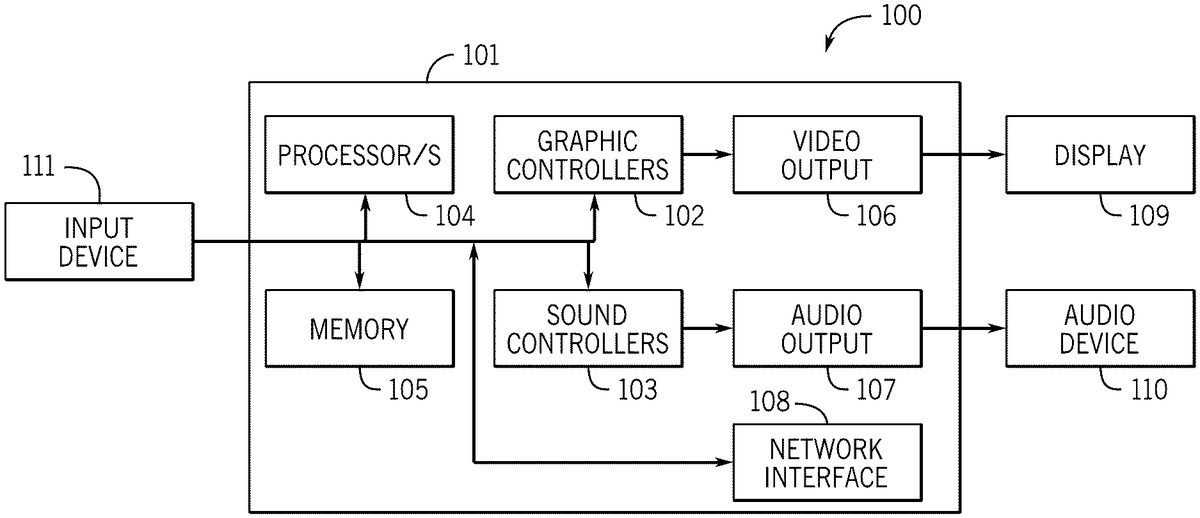
DETAILED DESCRIPTION OF THE INVENTION While the following description details the preferred embodiments of the present invention, it is to be understood that the invention is not limited in its application to the details of arrangement of the parts or steps of the methods illustrated in the accompanying figures, since the invention is capable of other embodiments and of being practiced in various ways. Some of the factors that motivate video game players to play video games include winning, financial gain, being fairly challenged by another player, and improving video game playing skills. This invention provides a system, method, and computer program product for professional league, tournament, and competition video game playing that provide these motivations to video game players and provide video game players at all skill levels the opportunity to play professionally. This invention can be implemented in a computer system and network system as shown inFIGS.1and2as non-transitory computer-readable media which comprise all computer-readable media except for a transitory, propagating signal.FIG.1provides a schematic block diagram of a user system100for implementing this invention. All of the blocks shown are implemented by suitable circuitry and may be implemented in hardware and/or software. The user system100has a computer system101having a graphics controller102and a sound controller103. The graphics controller102and sound controller103are provided by the one or more processors104and memory105. The graphics controller102is configured to provide a video output106. The sound controller103is configured to provide an audio output106. The computer system101has a network interface108allowing the computer system101to be able to communicate with a network such as the Internet or other communication infrastructure. The video output106is provided to a display109. The audio output107is provided to an audio device110such as a speaker and/or earphone. The user device100has an input device111which can take any suitable format and can be one or more keyboards, audio input, mouse, ...
DETAILED DESCRIPTION OF THE INVENTION
While the following description details the preferred embodiments of the present invention, it is to be understood that the invention is not limited in its application to the details of arrangement of the parts or steps of the methods illustrated in the accompanying figures, since the invention is capable of other embodiments and of being practiced in various ways.
Some of the factors that motivate video game players to play video games include winning, financial gain, being fairly challenged by another player, and improving video game playing skills. This invention provides a system, method, and computer program product for professional league, tournament, and competition video game playing that provide these motivations to video game players and provide video game players at all skill levels the opportunity to play professionally. This invention can be implemented in a computer system and network system as shown inFIGS.1and2as non-transitory computer-readable media which comprise all computer-readable media except for a transitory, propagating signal.FIG.1provides a schematic block diagram of a user system100for implementing this invention. All of the blocks shown are implemented by suitable circuitry and may be implemented in hardware and/or software. The user system100has a computer system101having a graphics controller102and a sound controller103. The graphics controller102and sound controller103are provided by the one or more processors104and memory105. The graphics controller102is configured to provide a video output106. The sound controller103is configured to provide an audio output106. The computer system101has a network interface108allowing the computer system101to be able to communicate with a network such as the Internet or other communication infrastructure. The video output106is provided to a display109. The audio output107is provided to an audio device110such as a speaker and/or earphone. The user device100has an input device111which can take any suitable format and can be one or more keyboards, audio input, mouse, touch screen, joystick or game controller. The user device100is shown by way of example only. In alternative embodiments, one or more of the parts may be omitted. Alternatively, or additionally, some embodiments may comprise one or more other parts. Alternatively, or additionally, one or more parts may be combined.
FIG.2shows block diagram of a service provider's network server system200for implementing this invention for matching video game players and for providing video game playing. The service provider's network server system200has a server201which may provide storage or be in communication with database202. The server201may have all the features shown inFIG.1, including computer games, learning programs, accounting programs, and data storage and comprise one or more units of memory to store video game results and accounting data. The server201may have one or more processors to implement and monitor video games, to evaluate, identify, and match video game players, and to run video game related programs, applications, and learning programs. The server201may communicate via a communications infrastructure203to one or more user computer systems101, shown as Xbox204, play station205, computer206, tablet207and smartphone208. The communications infrastructure203may be the Internet or the like. A user downloads an application to interface with the service provider's network server system200. The application may be obtained from an application provider209which may also be the service provider's network server system200.
FIG.3shows an example of a user's computer system101, such as a smartphone208, with a standard home page and lobby menu on the display screen300. A smartphone is a handheld personal computer having features like those shown inFIG.1. A smartphone possesses extensive computing capabilities, including high-speed access to the Internet using both Wi-Fi and mobile broadband. Most, if not all, smartphones are also built with support for Bluetooth wireless transmission and satellite navigation (GPS). Modern smartphones have a touchscreen color display300with a graphical user interface that covers the front surface and enables a user to use a virtual keyboard to type and press onscreen icons. Interaction is mostly done using touch, besides a few physical buttons. Smartphones function using a rechargeable lithium-ion or lithium-polymer battery. Smartphones use a mobile operating system and can process a variety of software components, known as applications or “apps”. Most basic apps (e.g. event calendar, camera, web browser) come pre-installed with the system, while others are available for download. Apps, and the operating system in the smartphone, can receive additional functionality through updates.
The user's computer system101is used by the user to download a league, tournament, and competition video game playing application (the application) from an application provider's network server system209. A login display is shown on the user's computer system101after downloading the application. After logging into the application provider's network server system209the standard home page and lobby menu is shown on the user's computer system101, as shown inFIG.3. The user's computer system101can be paired with game playing devices (platforms)204,205,206,207and208and serve as a remote controller for video game playing provided by the service provider's network server system200and for the devices. Access button301is used for selecting the platforms, access button302is used for selecting live video game tournaments302, and access button302is used for selecting upcoming video game tournaments303through the downloaded application. A user (game player) can select and find a video game contest304and play305or select creating a video game contest306and play307. At the bottom end of the smartphone300there may be a display of access tabs or icons308for accessing various functions such as, for example, accounting309, friends (social media networks),310, lobby311, recent matches312, and live matches313.
The top live tournaments302option shows major tournaments and events for the day, allowing the user to watch the gamer of their choice or a friend playing a video game in a match. The top live tournaments302option also gives users the chance to scout and recruit other video game players to join their teams or squads in other events and tournaments. Similarly, upcoming video game tournaments303can be reviewed for registration.
In order to participate in a video game, the user downloads the application and choses a platform and a video game displayed on the user's computer system. A smartphone itself can be used as a platform. Each video game will have unique contests and tournaments. For Example, a shooter would not have the same contest and events as a sports video game because each video game is formatted differently. After selecting a video game and contest304the user selects the play now option305. Selecting this option shows the user's friends that the user is ready to play cooperatively in a contest as well as showing with whom the user has recently interacted. This option gives the user and his or her friends a chance to join a contest of their choice together. After the video game is played, depending on where the user places in the video game contest, the user is compensated for the user's participation in the video game contest and receives earnings or winnings (payout) into the user's account. After the user receives his or her payout or if the user lost his or her event, the user remains able to play any match of his or her choosing, depending on how much money is in the user's account.
Using the Account tab309the user has access to his or her avatar and profile and can add or withdraw money, obtain financial transaction history, refer friends, access rewards, and adjust his or her notification settings. The user can get an adjusted balance on his or her profits or money total as well as access points and vouchers received for entering tournaments.
Using the Friends tab310a social media function is provided to the user. The user will be able to connect, chat, live stream, and share with friends, including live streaming.
Using the Lobby tab311provides the user an easy access to enter a game. The user selects a desired platform, selects a desired game, and then selects a desired game structure or contest.
Using the Recent Matches tab312shows the user the recent matches in which the user has participated as well as what platform the user used. The user can watch a video of any match in which the user participated. This feature provides the user the ability to view their performance on video, to edit the video, and to share the video with friends through the social media Friends310function.
Using the Live Matches tab313allows the user to view and stream the major video game events for the current day. Each day may have a major daily tournament or event for each game and platform. Providing viewing of daily video games to video game players is expected to give them confidence to participate in video game competition. There are many video game players who have not participated in video game competition because of a lack of confidence in their video game playing abilities. Watching other video game players and friends participate in the video game competition is expected to improve their video game playing ability and give them the confidence to compete in competitive, challenging, professional video game matches and tournaments.
FIG.4is a flow diagram of the method for professional league, tournament, and competition video game playing of this invention. A user initiates a video gaming competition application on the user's computer system which the user downloaded from an application provider's server onto the user's computer system (Step 1). The user logs into the service provider's server system through the internet and the quality and sufficiency of the user's network connection to the service provider's server is evaluated for video gaming sufficiency (Step 2). The user's options for playing video games through the service provider's server, based on the user's account status, network availability, and game availability are displayed to the user (Step 3).
Video game players that utilize an online gaming platform can gain status among a gaming community. Video game players that achieve specific goals in a video game may be awarded items that can be used by the player in that game, in other games, and/or in other services offered by the platform. These items may inform other players of that player's accomplishments on the platform. The achievement of such goals, in combination with high scores in games played on the platform, amount of time spent playing games on the platform, etc, may contribute toward a ranking of the player relative to other players on the platform. Such achievements and rankings can motivate players on the platform to continue to use the platform and improve game play over time. The probability of achieving these goals is achieved if the video game players are evenly and fairly matched.
Video game players can be properly matched if their game playing skills have been measured and quantitated. Video game skills have been measured using machine learning methods. The relationship between video game genres and video game skills has been described (Santos et al, “Relationship between video game genres and soft skills; https://gecon.es/game-genres-and-soft-skills/; 2018, incorporated herein by reference). The video game skills are of four types: cognitive and physical, basic, cross-functional and emotional. Cognitive and physical include the following skills: cognitive flexibility, creativity, logical reasoning, induction, speed of reasoning, problem sensitivity, visualization, spatial relations, and spatial scanning. Basic skills include communication, and monitoring self and monitoring others. Cross-functional skills include complex problem solving; people and team management; time management, judgement and decision making, and coordinating with others. Emotional skills include stress management, frustration tolerance, self-discipline, self-motivation, organizational skills, self-confidence, and goal setting. Video games are generally classified in the following video game genres: adventure, racing, platform, puzzle, racing, role playing, simulation, sports, strategy, and survival. In this invention a video game player's game playing skill may be adequately estimated for any specific video game genre by obtaining the player's score or average score from playing one or more video games in the specific video game genre (baseline score). An estimate of a video game player's overall video game playing skill baseline score can also be estimated from an average of scores obtained from a plurality of video games from a plurality of video game genres. A video game player's game playing skill can also be estimated using a machine learning program, such as, for example, described by LIU et al, U.S. Patent Application No. 2018/0182208, incorporated herein by reference. Liu et al measure a user's progress in a game which reflects the user's video game playing skills and can provide a video game playing progress baseline score. If a user, using a smartphone208selects play307for the first time, the user can be requested to select a video game in a specific genre and to play the video game in a match to obtain an estimate or measure of the video game player's game playing skills. The user can repeat this process as desired to obtain an overall measure of game playing skills in a plurality of video game genres.
When the user selects the option to play a video game the video games available for play are presented to the user and the user picks a video game (Step 4). The user's options for type of contest are presented to the user, such as solo match, duo match, or squad match and the user selects a contest (Step 5). A user can be an individual, a duo, or a squad. The user is placed in a lobby, pairs the user's computer system with one or more video game playing devices which include personal computers, Xboxes, PlayStations, iPads, or televisions, and uses the user's computer system for audio and visual communication during video game playing (Step 6). The smartphone208may also be used as a video game playing device. The user plays the selected video game and contest, scoring is monitored and recorded by the service provider's server, and the player's score is compared to his respective video game baseline score. (Step 7). User identification is further verified based on the results of machine learning monitoring. If the user's progress in a game is classified as abnormal based on machine learning monitoring, as described by LIU et al, then the user's game playing results may be invalidated (Step 8). The video game ends and winnings are distributed to winners (Step 9). For example, in a Royale Solo game with 100 players, with each player paying $1.00 to enter the video game, the following payout is made: first place $30.00, second place $17.50, third place $10.00, 4th place $5.00, 5th and 6th place $3.75, 7th-10th place $2.50, 11th-16th place $2.00, and 17th-20th place $1.50. The remaining $2.00 is paid as profit to the host of the video game contest. Players below 20th place may be automatically looped back to the lobby to play another game, as described below.
Video game playing skills can range from poor to average, to good, and to exceptional. These game skills can be measured as described above and can be used to place video game players into video game leagues, tournaments, and games that evenly match their skills with those of opposing players to ensure fair competition. Video games with a level of difficulty comparable to the skill level of the video game players can be also be provided. When video game players are evenly matched in this way, and the video games are evenly and fairly matched to the player skills, the satisfaction and pleasure of the players video game playing are maximized, and they are motivated to continue their video game playing. Based on a video game player's measurement of skills, video games can be selected to train and coach the player to improve his or her video game skills.
Various types of video games known in the art are provided to the video game player, for example, Dota, Starcraft, Counterstrike, Warcraft, Crossfire, FIFI, Fortnite, game styles to maintain video game player interest and enthusiasm.FIGS.5-10show various flows of game play of varying degrees of complexity.FIG.5shows a flow chart of a single video game play design (contest)500with game set501, having two or more video games1through n wherein the video games are identical The video games are different from each other in that the payout incentives for playing are different for each game. The payout incentives are greater in each video game in an ascending order from 1 through n. After a video game player has downloaded the video gaming competition application, from the application provider's server, onto the user's computer system, a main lobby502appears on the display of the computer system providing a choice of video games for play. When the user selects a video game and contest, the video game is displayed on the user's video game playing device and the user is assigned by the service provider's network server system, preferably randomly, to one of the video games. The user's computer system then automatically functions as an audio-visual device so that the user can communicate with others during game play, for example, with the video game player against whom the user is playing, i.e., another user also from the same video game as the user's video game. There may be many users in each video game and many video games in each a video game set. At the end of each video game the winners503are identified and receive a payout504.
FIG.6shows a flow chart of multiple aggressive video game play design600. The user selects a game from a main lobby601, enters into one of 1 through n video games in the video game set602, and initiates video game play with an opposing video game player on the user's video game playing device. A percentage603of top scoring video game players advance into another game set604and play a new video game. The remaining players are eliminated from play. A percentage605of top scoring video game players advance into another video game set606and play a new video game. The winners in each video game1through n will play a final video game607. Winners608in the final video game607will receive a payout609. In this video game design video game players have a chance to compete in multiple games. Although only three video game sets602,604, and606are shown, as many video games sets as desired may be used.
FIG.7shows a flow chart of a continuous single video game play design700based on the single video game play design ofFIG.5. The user selects a video game from a main lobby701and is presented with a loop lobby702wherein the user will be placed into one set703of video games1through n. Winners704in each video game will receive a payout705. Eliminated video game players706will be able to choose leaving game play707, rebuying708and entering the main lobby701, or being looped back709to the loop lobby702to be automatically entered into the same video game, into which the video game player was first placed, to play another video game. Eliminated video game players706can cycle or loop through the loop lobby702continuously or until video game play is ended by the service provider's network server system.
FIG.8shows a flow chart of a continuous multiple progressive video game play design800based on the continuous single video game play design ofFIG.7. The user selects a video game from a main lobby801and is presented with a loop lobby802wherein the user will be placed into one video game of a set803of video games1through n. Winners804in each video game will receive a payout805. Eliminated players806will be able to choose leaving game play807, rebuying808and entering the main lobby801, or being looped back809to the loop lobby802to be automatically entered into the same video game, into which the player was first placed, to play another video game. However, a percentage810of the eliminated players in each video game will be placed in a next higher video game (greater payout incentive), based on the player's video game performance in the player's previous video game. Eliminated players806can cycle or loop through the loop lobby802continuously or until video game play is ended by the service provider's network server system.
FIG.9shows a flow chart of a continuous multiple aggressive video game play design900based on the multiple aggressive video game play design ofFIG.6. The user selects a video game from a main lobby901and is presented with a loop lobby902wherein the user will be placed into one video game in a set903of video games1through n game sets903. The user initiates play with an opposing video game player on the user's game playing device. A percentage904of top scoring video game players advance into another video game set905and play a new video game. The remaining players are eliminated from video game play. A percentage906of top scoring video game players advance into another video game sets907and play a new video game. The winners in each video game set907will play a final video game908. Winners909in the final video game908will receive a payout910. Eliminated players911will be able to choose leaving video game play912, rebuying913, and entering the main lobby901, or being looped back914to the loop lobby902to be automatically entered into the same video game, into which the player was first placed, to play another video game. Eliminated players911can cycle or loop through the loop lobby902continuously or until video game play is ended by the service provider's network server system.
FIG.10shows a flow chart of a continuous multiple progressive aggressive video game play design1000based on the continuous multiple progressive video game design ofFIG.9. The user selects a video game from a main lobby1001and is presented with a loop lobby1002wherein the user will be placed into one video game in video game set1003. The user initiates play with an opposing video game player on the user's game playing device. A percentage1004of top scoring video game players advance into another video game set1005and play a new video game. The remaining players are eliminated from play. A percentage1006of top scoring video game players advance into another video game set1007and play a new video game. The winners in each video game will play a final video game1008. Winners1009in the final video game1008will receive a payout1010. Eliminated players1011will be able to choose leaving video game play1012, rebuying1013and entering the main lobby1001, or being looped back1014to the loop lobby1002to be automatically entered into the same video game, into which the player was first placed, to play another video game. However, a percentage1015,1016,1017of the eliminated players in each video game will be placed in a next higher game (greater payout incentive), based on the player's video game performance in the player's previous video game. Eliminated players1011can cycle or loop through the loop lobby1002continuously or until video game play is ended by the service provider's network server system.
The foregoing description illustrates and describes the disclosure. Additionally, the disclosure shows and describes only the preferred embodiments but, as mentioned above, it is to be understood that the preferred embodiments are capable of being formed in various other combinations, modifications, and environments and are capable of changes or modifications within the scope of the invention concepts as expressed herein, commensurate with the above teachings and/or the skill or knowledge of the relevant art. The embodiments described herein above are further intended to explain the best modes known by applicant and to enable others skilled in the art to utilize the disclosure in such, or other, embodiments and with the various modifications required by the particular applications or uses thereof. Accordingly, the description is not intended to limit the invention to the form disclosed herein. Also, it is intended that the appended claims be construed to include alternative embodiments. It will be further understood that various changes in the details, materials, and arrangements of the parts which have been described and illustrated above in order to explain the nature of this invention may be made by those skilled in the art without departing from the principle and scope of the invention as recited in the following claims.
Claims
- A computer implemented method for competition video game playing, comprising: 1) connecting by a user to a service provider's server system over a network using the user's computer system;2) buying by the user from the service provider placement of the user into a competition video game of the service provider on the user's computer system;3) measuring by the service provider a baseline score of the user's video game playing skill;4) placing the user in a lobby as a video game player through the service provider's server system and providing to the user by the service provider video games and video game play designs that evenly match the user's baseline score of the user's video game playing skills with those of opposing players and thereby ensuring fair video game playing competition for the user;5) selecting a video game and a video game play design by the user and playing the video game by the user on one or more video game playing devices over the network;6) verifying the identity of the user through the service provider's server system;and 7) providing payout by the service provider to winners of the video game.
- The computer implemented method of claim 1 wherein the identity of the user is verified by comparing the baseline score of the user with scoring of the user while playing the video game.
- The computer implemented method of claim 1 wherein the identity of the user in the video game is verified using machine learning programs by detecting the user's progress while the user plays the video game.
- The computer implemented method of claim 1 wherein cheating by the user is detected by comparing the baseline score of the user with scoring of the user while the user plays the video game.
- The computer implemented method of claim 1 wherein cheating by the user in the video game is detected using machine learning techniques while the user plays the video game.
- The computer implemented method of claim 1, wherein a user eliminated from a video game by the service provider prebuys and is returned to a loop lobby and is entered into a video game having a higher payout incentive than the video game from which the user was eliminated.
- The computer implemented method of claim 1 wherein video game play designs include a single video game design, a continuous multiple video game design, a multiple aggressive video game design, a continuous multiple progressive video game design, a continuous multiple aggressive video game design, and a continuous multiple progressive aggressive video game design.
- The computer implemented method of claim 7 wherein a single video game design has one set of video games, a multiple aggressive video game design has two or more sets of video games, a continuous video game design has a loop lobby, and a progressive video game design advances a video game player in a video game in a given set of video games to another video game within the given set of video games.
- The computer implemented method of claim 8 wherein a video game in a given set of video games is identical to all the other video games in the given set of video games.
- The computer implemented method of claim 8 wherein a video game in a given set of video games has a higher payout incentive compared to other video games in the given set of video games.
- A computer implemented method for competition video game playing, comprising: 1) connecting by a user to a service-provider's server system over a network using the user's computer system;2) buying by the user from the service provider placement of the user into a competition video game of the service provider on the user's computer system;3) measuring by the service provider a baseline score of the user's video game playing skill;4) placing the user in a lobby as a video game player through the service provider's server system and providing to the user by the service provider video games and video game play designs that evenly match the user's baseline score of the user's video game playing skills with those of opposing players and thereby ensuring fair video game playing competition for the user;5) selecting a video game and a video game play design by the user and playing the video game by the user on one or more video game playing devices over the network;6) detecting the identity of the user through the service provider's server system;and 7) providing payout by the service provider to winners of the video game, wherein a user eliminated from a video game by the service provider rebuys and is returned to a loop lobby and is entered into a video game having a higher payout incentive than the video game from which the user was eliminated, wherein video game play designs include a single video game design, a continuous multiple video game design, a multiple aggressive video game design, a continuous multiple progressive video game design, a continuous multiple aggressive video game design, and a continuous multiple progressive aggressive video game design, and wherein a single video game design has one set of video games, a multiple aggressive video game design has two or more sets of video games, a continuous video game design has a loop lobby, and a progressive video game design advances a video game player in a video game in a given set of video games to another video game within the given set of video games.
- The computer implemented method of claim 11 wherein the identity of the user is verified by comparing the baseline score of the user with scoring of the user while the user plays the video game and by detecting the user's progress using machine learning programs while the user plays the video game.
- The computer implemented method of claim 11 wherein cheating by the user is detected by comparing the baseline score of the user with scoring of the user while the user plays the video game and by detecting the user's cheating using machine learning techniques while the user plays the video game.
- The computer implemented method of claim 11 wherein a video game in a given set of video games is identical to all the other video games in the given set of video games and wherein a video game in a given set of video games has a higher payout incentive compared to other video games in the given set of video games.
- A computer implemented method for competition video game playing, comprising: 1) connecting by a user to a service-provider's server system over a network using the user's computer system;2) measuring by the service provider a baseline score of the user's video game playing skill;3) placing the user in a lobby as a video game player through the service provider's server system and providing to the user by the service provider video games and video game play designs that evenly match the user's baseline score of the user's video game playing skills with those of opposing players and thereby ensuring fair video game playing competition for the user;4) selecting a video game and a video game play design by the user and playing the video game by the user on one or more video game playing devices over the network;and 5) verifying the identity of the user through the service provider's server system.
- The computer implemented method of claim 15 wherein the identity of the user is verified by comparing the baseline score of the user with scoring of the user while the user plays the video game and by detecting the user's progress using machine learning programs while the user plays the video game.
- The computer implemented method of claim 15 wherein cheating by the user is detected by comparing the baseline score of the user with scoring of the user while the user plays the video game and by detecting the user's cheating using machine learning techniques while the user plays the video game.
- The computer implemented method of claim 15 wherein a video game in a given set of video games is identical to all the other video games in the given set of video games and wherein a video game in a given set of video games has a higher payout incentive compared to other video games in the given set of video games.
- The computer implemented method of claim 15 wherein a user eliminated from a video game by the service provider is returned to a loop lobby and is entered into a video game having a higher payout incentive than the video game from which the user was eliminated.
- The computer implemented method of claim 15 wherein video game play designs include a single video game design, a continuous multiple video game design, a multiple aggressive video game design, a continuous multiple progressive video game design, a continuous multiple aggressive video game design, and a continuous multiple progressive aggressive video game design and wherein a single video game design has one set of video games, a multiple aggressive video game design has two or more sets of video games, a continuous video game design has a loop lobby, and a progressive video game design advances a video game player in a video game in a given set of video games to another video game within the given set of video games.
Disclaimer: Data collected from the USPTO and may be malformed, incomplete, and/or otherwise inaccurate.