U.S. Pat. No. 11,704,703
Systems and Methods for Dynamically Modifying Video Game Content Based on Non-Video Gaming Content Being Concurrently Experienced by a User
AssigneeActivision Publishing, Inc.
Issue DateJanuary 20, 2022
Illustrative Figure
Abstract
The disclosed systems and methods integrate gaming functionality with viewing a video program. Systems and methods for generating an interactive multimedia game for a user during the viewing of a video program by the user includes a host computer that generates the game in a context of the video program viewed on a first graphical user interface and recommends the video game to the user. The user may opt to engage with the video game on a second graphical user interface, which may be overlaid on the first graphical user interface.
Description
DETAILED DESCRIPTION The present specification is directed towards multiple embodiments. The following disclosure is provided in order to enable a person having ordinary skill in the art to practice the invention. Language used in this specification should not be interpreted as a general disavowal of any one specific embodiment or used to limit the claims beyond the meaning of the terms used therein. The general principles defined herein may be applied to other embodiments and applications without departing from the spirit and scope of the invention. Also, the terminology and phraseology used is for the purpose of describing exemplary embodiments and should not be considered limiting. Thus, the present invention is to be accorded the widest scope encompassing numerous alternatives, modifications and equivalents consistent with the principles and features disclosed. For purpose of clarity, details relating to technical material that is known in the technical fields related to the invention have not been described in detail so as not to unnecessarily obscure the present invention. In the description and claims of the application, each of the words “comprise” “include” and “have”, and forms thereof, are not necessarily limited to members in a list with which the words may be associated. It should be noted herein that any feature or component described in association with a specific embodiment may be used and implemented with any other embodiment unless clearly indicated otherwise. As used herein, the indefinite articles “a” and “an” mean “at least one” or “one or more” unless the context clearly dictates otherwise. The term “viewing, transmitting, receiving or transporting media content over a separate media channel” shall mean, referring to the Open Systems Interconnection Model of communications, the viewing, transmission, reception or transportation of media content, such as video, images, or audio, over an application layer, presentation layer, session ...
DETAILED DESCRIPTION
The present specification is directed towards multiple embodiments. The following disclosure is provided in order to enable a person having ordinary skill in the art to practice the invention. Language used in this specification should not be interpreted as a general disavowal of any one specific embodiment or used to limit the claims beyond the meaning of the terms used therein. The general principles defined herein may be applied to other embodiments and applications without departing from the spirit and scope of the invention. Also, the terminology and phraseology used is for the purpose of describing exemplary embodiments and should not be considered limiting. Thus, the present invention is to be accorded the widest scope encompassing numerous alternatives, modifications and equivalents consistent with the principles and features disclosed. For purpose of clarity, details relating to technical material that is known in the technical fields related to the invention have not been described in detail so as not to unnecessarily obscure the present invention.
In the description and claims of the application, each of the words “comprise” “include” and “have”, and forms thereof, are not necessarily limited to members in a list with which the words may be associated. It should be noted herein that any feature or component described in association with a specific embodiment may be used and implemented with any other embodiment unless clearly indicated otherwise.
As used herein, the indefinite articles “a” and “an” mean “at least one” or “one or more” unless the context clearly dictates otherwise.
The term “viewing, transmitting, receiving or transporting media content over a separate media channel” shall mean, referring to the Open Systems Interconnection Model of communications, the viewing, transmission, reception or transportation of media content, such as video, images, or audio, over an application layer, presentation layer, session layer, transport layer, network layer, data link layer, or physical layer that is different from the application layer, presentation layer, session layer, transport layer, network layer, data link layer, or physical layer being used to view, transmit, receive, or transport other media. Conversely, different media content are not being viewed, transmitted, received, or transported over different channels if they share the same application layer, presentation layer, session layer, transport layer, network layer, data link layer, and physical layer.
The term “video program” shall mean any collection of video content configured to be transmitted over any type of network, including Internet, private ethernet, cellular, broadcast, or cable.
The term “video game” shall mean any collection of media content configured to be presented through a user interface, receive user feedback, and provide an interactive response in order to facilitate some type of gaming objective.
FIG.1illustrates an exemplary system environment100for providing an interactive game experience in the context of a video program being concurrently viewed by a user on a separate media channel, in accordance with some embodiments of the present specification. The environment100comprises at least one web server105, at least one game server110, and at least one client device120in data communication with each other through a network125. The servers105,110can be any computing device having one or more processors and one or more computer-readable storage media such as RAM, hard disk or any other optical or magnetic media. The servers105,110include a plurality of hardware, software, and/or firmware components operating together to provide or implement a plurality of functional, operational or service-oriented modules. In some embodiments, web server105and game server110are combined. In some embodiments, web server105and game server110are separate. In some embodiments, some modules and components of web server105and game server110are integrated.
In some embodiments, the game server110includes or is in communication with a game database system130. The game database system130stores game data associated with at least one interactive multimedia game, such as a video game, that is delivered or provided to the client devices120over the network125upon request or confirmation by a user. In some embodiments, the game server110may be implemented by a cloud of computing platforms operating together as game servers110. In some instances, the game server110may be associated with a proprietary gameplay network system, such as, without limitation, SONY PLAYSTATION NETWORK®, MICROSOFT XBOX LIVE®, and/or another type of gameplay network system. In this implementation, a given client device120may be associated with a particular type of gaming console. Other types of client devices120using other types of gameplay networks may be used as well.
In some embodiments, the web server105includes or is in communication with a video program broadcasting/streaming system135. Broadcasting/streaming system135may include one or more of a cable system, a satellite system, an over-the-top (OTT) streaming service, an app-based streaming system, an over the air broadcast system, or any other system that may be a source of streaming content. In some embodiments, system135is a satellite system for broadcasting or streaming programs for viewing by users of client devices120. In some embodiments, users subscribe to video programs broadcast/streamed by the system135through the web server130. In some embodiments, the system135comprises a database that stores one or more programs that may be requested for viewing by the users of client devices120, through the web server130and over the network125via one or more GUIs (Graphical User Interfaces). In some embodiments, the web server105may be implemented by a cloud of computing platforms operating together as web servers105. In some embodiments, at least one or both of web server105and game server110are in communication with one or more computing devices (not shown) that enable a person or a group of persons to interface with the programs executed by web server105. The computing device may be configured on a handheld device, a personal computer (for example, a desktop computer, a laptop computer), a smartphone, a tablet computing device, or any other type of computing device that may be used to interface with and analyze content of broadcasting/streaming system135, web server105, and game server110.
The client device120may be configured as a handheld gaming device, a personal computer (for example, a desktop computer, a laptop computer), a smartphone, a tablet computing device, a smart television, a personal assistant device such as Amazon Alexa or Google Home, and/or other device that can be used to interact with an instance of an interactive multimedia challenge. The client device120may include one or more processors, one or more storage devices, one or more peripherals, and/or other components. The processors may be programmed by one or more computer program instructions. The various computer program instructions may be stored in a storage device which may comprise random access memory (RAM), read only memory (ROM), and/or other memory. The storage device may store the computer program instructions to be executed by the processor as well as data that may be manipulated by the processor. The storage device may comprise floppy disks, hard disks, optical disks, tapes, or other storage media for storing computer-executable instructions and/or data.
The network125may include any one or more of, for instance, the Internet, an intranet, a PAN (Personal Area Network), a LAN (Local Area Network), a WAN (Wide Area Network), a SAN (Storage Area Network), a MAN (Metropolitan Area Network), a wireless network, a cellular communications network, a Public Switched Telephone Network, and/or other network. InFIG.1, as well as in other figures, different numbers of entities than those depicted may be used. Furthermore, according to various implementations, the components described herein may be implemented in hardware and/or software employed for configuring the hardware.
The various database systems130,135described herein may be, include, or interface to, for example, an Oracle™ relational database sold commercially by Oracle Corporation. Other databases, such as Informix™, DB2 (Database 2) or other data storage, including file-based, or query formats, platforms, or resources such as OLAP (On Line Analytical Processing), SQL (Structured Query Language), a SAN (storage area network), Microsoft Access™ or others may also be used, incorporated, or accessed. A blockchain may also be used. The database may comprise one or more such databases that reside in one or more physical devices and in one or more physical locations. The database may store a plurality of types of data and/or files and associated data or file descriptions, administrative information, or any other data.
Those skilled in the art may appreciate that the various modules described hereinafter, used to implement the embodiments of the present specification, may be incorporated in one or more of web server105, game server110, and client device120. In some embodiments, these modules may be distributed between web server105and game server110. In some embodiments, these modules are incorporated in client device120. Therefore, while the following description is provided in context of one type of arrangement of modules within environment100, various other implementations are envisioned.
In some embodiments, the at least one game server110provides or implements a plurality of modules, such as, but not limited to, a first game module112, a creation module114, and a modification module116. In some embodiments, the at least one web server105provides or implements a plurality of modules, such as, but not limited to, an interface module142, an analysis module144, a recommendation module146, and a second game module148. It should be appreciated that the term ‘module’ refers to computer logic utilized to provide a desired functionality, service or operation. In various embodiments, a module can be implemented in hardware, firmware and/or software controlling a general purpose processor. In one embodiment, the modules are programmatic codes or computer executable instructions stored on a storage system, such as the game and business database systems130,135, and executed by a processor.
In embodiments, the interface module142is configured to interface with the system135, the client device120, the game server110, and the computing devices that may be used by one or more persons to execute the function of interface module142. Interface module142is also configured to receive and process requests from the users to view selected programs and interface between the video program broadcast/streaming system135and the client devices120to display or present the selected programs to the users through at least one graphical user interface (GUI). Additionally, interface module142is configured to send recommendations to the client devices120through one or more GUIs to engage in interactive multimedia games based on a viewing history of the users, receive an acknowledgment from the client devices120that confirm whether the users have opted to engage, and present or display the recommended interactive multimedia game to the users through the one or more GUIs. Further, the interface module142is configured to interface with the game server110to send information about contextual interactive multimedia games related to the programs being viewed by the user, and receive responses from the game server110. In some embodiments, responses from the game server110are in the form of the interactive multimedia game content that is presented or displayed to the respective users. In some embodiments, the responses from the game server110comprise an acknowledgement that the respective client devices120are being presented with the interactive multimedia games opted by their users. In this embodiment, the game server110communicates with the client devices to present the interactive multimedia games directly to the users.
In embodiments, the analysis module144is configured to analyze the one or more programs viewed by the users at client devices120. In various embodiments, the analysis includes identification of a context of a program viewed by a user at a client device120. In an embodiment, the analysis module144receives, extracts, and processes metadata associated with the video program to generate a contextual indication. For example, the analysis module144may be configured to 1) receive metadata indicative of the type or name of the video program being viewed by the user, 2) using the metadata, access a social media network feed, such as Twitter or Instagram, associated with the video program, 3) semantically parse the social media network feed to identify an event, such as the scoring of a goal, the death of a character, the introduction of a character, the victory of a participant, the loss of a participant, the completion of some objective or any occurrence that has, associated with it, a reaction on social media in excess of a threshold value, and 4) define the contextual indication based on an output of the semantic parsing. It should be appreciated that, for a given type of program, there are a certain set of standard parameters which may be used to provide the context or contextual indication. For example, for a sporting or esporting event, the contextual indication may be provided by the following parameters: who is playing, score, score/lead change(s), the identity of the players currently playing in game, the identity of the players not currently playing in game, key actions that lead to changes in the score, key actions that lead to penalties or other disadvantages in the game, and/or the identity of the players who performed one or more such action(s).
Another example of the interaction could be watching the NBA finals between the Lakers and Celtics. Users can play a basketball videogame during the NBA finals broadcasts. If a particular player or team gets a block, then gamers using that player or team might get a boost to the blocking stat for a predefined period of time.
It should further be appreciated that a reaction on social media in excess of a threshold value may be measured in terms of engagement, such as comments, retweets, likes, reposts, or other engagement-related metrics that indicate that the event is of interest to an audience above an average (or one or two standard deviations) engagement level for a generic version of the same type of video program.
For example, if a user is watching the World Cup, the analysis module144would extract, from the metadata, an indication that the video program is the World Cup, would connect to a social network feed associated with the World Cup, would monitor, and semantically parse, updates, such as the scoring of a goal, as they are announced on the social feed, and would generate a contextual indication (“goal event”) based on the data acquired from the metadata and/or social feed. The event could also be an action by a player that elicits a reaction in social media in excess of a threshold value, such as an acrobatic save by a goalie, which causes a level of comments, likes, reposts, retweets, tweets, or other indices of engagement that is above an average level of engagement (or one or two standard deviations) for a generic version of the program.
In one embodiment, various functions of the analysis module144are executed by a person or a group of persons operating the one or more computing devices in communication with web server105. The person(s), hereinafter also termed as operator(s), may perform the analysis manually. The operator(s) may also watch the one or more programs viewed by the users at client devices120and manually look for events. Other sources such as channels including, but not limited to ESPN or news sites can also be mined by the operator(s) in real time for events, irrespective of whether a user is watching them or not. The one or more programs themselves can also be mined using programmatic methods, such as but not limited to basic Artificial Intelligence (AI) that “reads” the score on a sports telecast or “listens” for particular events, where the “reading” and “listening” includes mining for contextual indication from metadata. Some or a portion of the functions configured to be implemented by modules142and144and described herein may, in some embodiments, be manually controlled by the operator(s). In some embodiments, all functions are manually controlled by the operator(s) through their computing device(s). In some embodiments, a combination of manual intervention by the operator(s) and AI is used to implement the functions of modules142and144.
In embodiments, the metadata may include a name of the video program, a genre of the program, or a sporting event with names of the participating players or teams. For example, a contextual indication determined by the analysis module144may include ‘sports’ if the metadata comprises data indicative of a sports program; ‘action’ if the metadata comprises data indicative of an action movie or series; ‘war’ if the metadata comprises data indicative of a war movie or series; ‘football’ if the metadata comprises data indicative of a football game; ‘baseball’ if the metadata comprises data indicative of a World Series game or playoff game; ‘racing’ if the metadata comprises data indicative of the Indy500, or any other racing event.
In another embodiment, the analysis module144is configured to access a social media stream of the video program being viewed in order to obtain a real-time update of the events that occur during the video program while the user is viewing it and translate the real-time update(s) being posted on social media to one or more contextual indicators or descriptors which may later be used to identify one or more corresponding video games.
In embodiments, the analysis module144matches the contextual indicator of the video program with metadata associated with one or more video games accessible via the game server110. In embodiments, the recommendation module146is configured to prompt the interface module142to present or display to the user a recommendation to engage in a specific interactive multimedia game matched by analysis module144through a second GUI on either the client device120or another client device, while the user is viewing a program on the client device120through a first GUI. In some embodiments, the second GUI is in the form of picture-in-picture (PIP), displayed over the video program being viewed by the user, on client device120. In embodiments, the recommendation module recommends to the user to engage in one or more interactive multimedia games whose metadata semantically matches with the generated contextual indicators of the video program. In some alternative embodiments, analysis module144may match one or more interactive multimedia games with the video program being viewed by the user. In some embodiments, one or more operators manually match one or more interactive multimedia games with the video program being viewed by the user. In one exemplary embodiment, the operator(s) announce an event that the occurrence of certain events during a sports game, such as Overwatch League Finals, will trigger certain interactions for those playing a matching game. At the occurrence of one of the announced events, interface module142is prompted to present or display to the user an interactive recommendation to engage in a matching multimedia game. The recommendation comprises at least one textual, graphical and/or multimedia teaser, punch line or commercial, at least one icon (such as, but not limited to, a ‘play’ or a ‘challenge accepted’ button) to solicit the user's response of acceptance of the recommendation. In embodiments, the recommendation data includes one or more universal resource locators (URLs), pointing to one or more interactive multimedia games (stored in the game database system130). In embodiments, the plurality of interactive multimedia game elements is accessible to the recommendation module146.
In embodiments, the game module148is configured to generate the recommended interactive multimedia game if the recommendation is accepted by the user. In some embodiments, the game module148may also initiate a modification of the interactive multimedia game while the user is engaged with the game, based on events in the program, where the events are analyzed by the analysis module144, in real time during the program, as described above. The game server110may accordingly respond to the initiation by the game module148, by providing additional content for the ongoing interactive multimedia game.
More specifically, the game server110may provide any one of the following in respond to the determined context, as described above: increased or decreased power, points, health, treasure, or weapons in response to a player engaging in certain actions within the video game (where the actions relate to the determined context), making certain players available or not available within the video game (where the players relate to the determined context), providing more power, points, health, treasure, or weapons to one type of player within the video game (where the one type of player relates to the determined context), and making certain levels or gameplay scenarios available or not available within the video game (where the levels or scenarios relate to the determined context).
For example, the game server110may provide additional power to the user's players, if the user is playing as Spain in a soccer videogame and watching Spain on a live soccer match presented on the client device120and if Spain scores a goal in the live match. In another example, the game server110may provide an in-game effect in the user's first person shooter (FPS) game when the user's local FPS team wins a match in an e-sports stream that the user is watching. In yet another example, a reward or a point or a bonus may be generated for the user while the user is playing a game in context of a program when a favorable event occurs in the program during game play. In one exemplary embodiment, a score achieved by a user-favored team in a sport event triggers a change in coding for scoring for the user. Similar changes to the coding may be triggered based on other favorable events, such as for example scores achieved by a team of the same geography as that of the user. In another example, a user may be watching the NBA finals between the Lakers and Celtics and concurrently playing a basketball videogame during the NBA broadcast. If a particular player gets a block or team scores a three pointer, then the user using that blocking player or playing as that scoring team in the video game might receive, via the game server, a boost to the user's player's blocking stat for a predefined period of time or to the user's players' three point shooting accuracy for a predefined period of time. It should be appreciated that all of the aforementioned changes may be subject to predefined, limited time periods that are shorter than the video game or live event itself.
In embodiments, examples of the interactive multimedia games include, and are not limited to, a puzzle, mini-video game, time-bound video game (that is, a video game that must be played and won within the constraints of a predetermined time), sports games, board game, multiplayer online game, first person shooter game, arcade game, action and adventure game, casino game, card game, strategy game, shooting game, racing game, and simulations.
In embodiments, the game module112is configured to execute an instance of an online interactive multimedia game which is displayed on the user's client device120to facilitate interaction of the user with the game. The game module112controls aspects of the game for the user and receives and processes the user's interactions in the game. Stated differently, the game module112hosts and renders the online game for the user, receives game data from the client device120and transmits updates to the client device120based on the received game data so that the game, on the client device120, represents the most updated or current status with reference to interactions of the user with the game. In some embodiments, game modules112and148are integrated in to a single game module.
In embodiments, the online interactive multimedia game is rendered, displayed or presented to the user in any one of a first, second or third interactive interface. The first interactive interface corresponds to the online interactive multimedia game being rendered, displayed or presented to the user as an interface embedded within a webpage on the user's client device120. In such embodiments, the first interactive interface is implemented as a rich internet application using tools (that enable interactivity along with a functionality to communicate the user's interactions and outcomes to the game server110) such as, but not limited to, Adobe Flash, WebGL, JavaScript, Java Applet, ActiveX, and Curl. The second interactive interface corresponds to the online interactive multimedia game being rendered, displayed or presented to the user as a video playback on a native media player on the client device120. In such embodiments, a plurality of client-side program instructions (for example, using JavaScript) may be utilized to control and monitor the user's interaction with the game. The third interactive interface corresponds to the online interactive multimedia game being rendered or presented to the user through a downloadable executable file (client-side component) which when activated (post-download on the client device120) operates as a gaming application that provides the user with an interactive interface between the user and the game. In embodiments, the gaming application is in data communication with the game module112that controls the virtual environment of the gaming application and acquires the user interactions with the game rendered through the gaming application. It should be appreciated that the first, second and third interactive interfaces are exemplary and in no way limiting.
The interactive interfaces, for rendering the online interactive multimedia game, capture and process user inputs and interactions within the virtual environment and provide updates to the game server110over the network125. In embodiments, the game module112captures and stores (in the game database system130) a plurality of performance or outcome data generated as a result of the user's interactions with the virtual environment of the game. The performance data is communicated back or uploaded to the game server110in real-time or periodically (such as through batch updates) during a game and/or at an end of the game.
In embodiments, the creation module114is configured to create an interactive multimedia game based on context of a program identified by the analysis module144. In an embodiment the interactive multimedia game is created in real time to reflect an experience, or moment, or event, of the program being viewed by the user, and analyzed by the analysis module144. For example, when a World cup television program shows penalty kicks, a mini game of penalty kicks is created by the creation module114, to reflect the moment of penalty kicks, and presented to the user through game module112. In another example, the creation module114creates for the user a FPS mini game that recreates a combat scenario that the user may have just viewed in a movie.
In embodiments, the modification module116is configured to modify instances of the interactive multimedia game rendered to the user in real time, based on real time events occurring in the program being viewed by the user and identified by the analysis module144. The modification module116may respond to the event, by providing additional content for the ongoing interactive multimedia game. For example, the modification module116provides power for the user's players if the user is playing as Spain in a soccer videogame and watching Spain on a live soccer match presented on the client device120when they score a goal in the live match. In another example, the modification module116provides an in-game effect in the user's FPS game when the user's local FPS team wins a match in an e-sports stream that the user is watching. In yet another example, a reward or a point or a bonus is generated for the user while the user is playing a game in context of a program when a favorable event occurs in the program during game play.
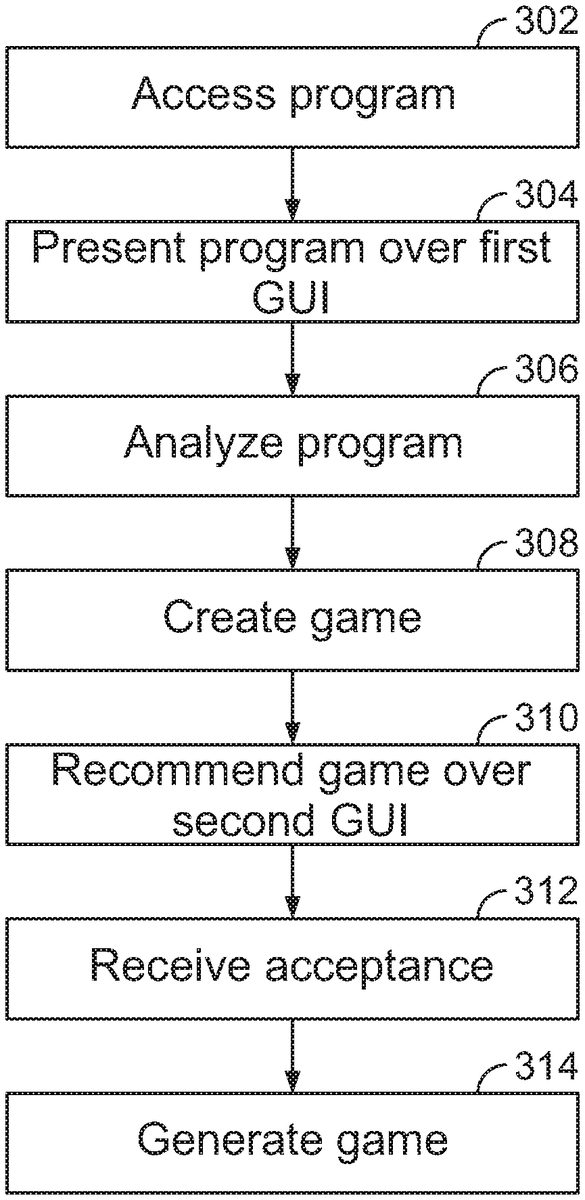
FIGS.2,3, and4are flow charts illustrating exemplary processes for implementing interactive multimedia games in the context of a program being viewed, in accordance with some embodiments of the present specification. The described processes may be accomplished using at least one or a plurality of the system components described in detail above and, in some implementations, various steps may be performed in different sequences and various steps may be omitted. Additional steps may be performed along with some or all of the steps shown in the depicted flow chart. One or more steps may be performed simultaneously. Accordingly, the steps as illustrated (and described in greater detail below) are exemplary by nature and, as such, should not be viewed as limiting.
FIG.2is a flow chart illustrating an exemplary process for implementing an interactive multimedia game in the context of a video program being viewed, in accordance with some embodiments of the present specification. Referring simultaneously toFIGS.1and2, according to aspects of the present specification, at step202, a user accesses (via the network125) a video program broadcast/streaming by system135, and hosted and managed by the web server105. In some embodiments, the user is a registered member and hence uniquely identifiable by way of a login ID. In embodiments, the web server105tracks the user's activities using the user's login ID and/or the IP (Internet Protocol) address of the client device120that the user uses to connect to the web server105. In some embodiments, the video program may be accessed through a software application residing on a user's device, for example, an application running on a user's personal computer, mobile phone, or video game console.
At step204, as a result of the user's request to view the video program, the video program is presented to the user on a first GUI screen. At step206, the user is identified and the video program viewed by the user is analyzed by the analysis module144, as described above. A context of the video program being viewed is identified. The context is used to match a game from the game database130through the game server110. In some embodiments, the context is identified from information about the video program. For example, in a sports program the context may be identified from information such as, and not limited to, who is playing, score, score/lead change, players currently in game, which players just performed an action, and any other event in the video program. In another example, the user may be watching NBA finals between the Lakers and Celtics. The matching game has a similar context as the video program. In this example, the context may be basketball game. In subsequent steps, the user can play a basketball videogame during the NBA finals broadcasts. If a particular player or team gets a block, then gamers using that player or team might get a boost to the blocking stat for a predefined period of time. At step208, based on the identified context, the user is presented with a recommendation to engage with an interactive multimedia game that matches the video program context, over a second GUI screen. In some embodiments, the second GUI screen is overlaid on the first GUI screen either in part or in whole, such that the user is able to view the second GUI screen concurrently with the video program, but via a separate media channel. In some embodiments, the recommendation is configured as an advertisement that, if activated by the user (such as by clicking a ‘play’ button of the advertisement), allows the user to play the online interactive multimedia game. In embodiments, examples of the interactive multimedia games include, and are not limited to, a puzzle, mini-video game, time-bound video game (that is, a video game that must be played and won within the constraints of a predetermined time), board game, multiplayer online game, first person shooter game, arcade game, action and adventure game, casino game, card game, strategy game, shooting game, sport game, and simulation.
The user may opt to engage with the recommended game by clicking the option to accept the recommendation. If the user decides to accept the recommendation then, the user clicks on a ‘play’ button on the second GUI screen, so that the acceptance is received by the web server105. In response, at step212, the user is connected to the game server110to enable the user to play the online interactive multimedia game over the second GUI screen. In embodiments, the online interactive multimedia game is presented to the user within an interactive interface on the user's client device120. As discussed earlier in this specification, the online interactive multimedia game may be rendered in any one of first, second or third interactive interface formats, wherein in the first format the game may be presented in an interface embedded within the GUI screen, wherein in the second format the game is presented as a multimedia playback using a media player native or residing on the client device120and wherein in the third format an executable program file is downloaded on the client device120which when activated presents an interface of a client-side gaming application. In some embodiments, the interactive multimedia game is a mini-game that can be played within a stipulated predetermined time frame.
FIG.3is a flow chart illustrating an exemplary process for implementing an interactive multimedia game in the context of a video program being viewed, in accordance with some other embodiments of the present specification. Referring simultaneously toFIGS.1and3, according to aspects of the present specification, at step302, a user accesses (via the network125) a video program broadcast/streaming by system135, and hosted and managed by the web server105. In some embodiments, the user is a registered member and hence uniquely identifiable by way of a login ID. In embodiments, the web server105tracks the user's activities using the user's login ID and/or the IP (Internet Protocol) address of the client device120that the user uses to connect to the web server105. In some embodiments, the video program may be accessed through a software application residing on a user's device, for example, an application running on a user's personal computer, mobile phone, or video game console.
At step304, as a result of the user's request to view the video program, the video program is presented to the user on a first GUI screen. At step306, the user is identified and the video program viewed by the user is analyzed by the analysis module144. A context of the video program being viewed is identified. In some embodiments, the context is identified from information about the video program. For example, in a sports program the context may be identified from information such as, and not limited to, who is playing, score, score/lead change, players currently in game, which players just performed an action, and any other event in the video program. In another example, the user may be watching NBA finals between the Lakers and Celtics. In this example, the context may be basketball game. In subsequent steps, the user can play a basketball videogame during the NBA finals broadcasts. If a particular player or team gets a block, then gamers using that player or team might get a boost to the blocking stat for a predefined period of time. At step308, the context is communicated to the game server110and is used to create a game of a matching context. In embodiments, the creation module114creates the interactive multimedia game based on context of the video program identified by the analysis module144. In an embodiment the interactive multimedia game is created in real time to reflect an experience, or moment, or event, of the video program being viewed by the user, and analyzed by the analysis module144. For example, when a World cup video program shows penalty kicks, a mini game of penalty kicks is created by the creation module114, to reflect the moment of penalty kicks, and presented to the user through game module112. In another example, the creation module114creates for the user a FPS mini game that recreates a combat scenario that the user may have just viewed in a movie. At step310, based on the identified context, the user is presented with a recommendation to engage with the created interactive multimedia game that matches the video program context, over a second GUI screen. In some embodiments, the second GUI screen is overlaid on the first GUI screen either in part or in whole, such that the user is able to view the second GUI screen concurrently with the video program. In some embodiments, the recommendation is configured as an advertisement that, if activated by the user (such as by clicking a ‘play’ button of the advertisement), allows the user to play the online interactive multimedia game. In embodiments, examples of the interactive multimedia games include, and are not limited to, a puzzle, mini-video game, time-bound video game (that is, a video game that must be played and won within the constraints of a predetermined time), board game, multiplayer online game, first person shooter game, arcade game, action and adventure game, casino game, card game, strategy game, shooting game, sport game, and simulation.
The user may opt to engage with the recommended game by clicking the option to accept the recommendation. If the user decides to accept the recommendation then the user clicks on a ‘play’ button on the second GUI screen, so that, at step312, the acceptance is received by the web server105. In response, at step314, the user is connected to the game server110to enable the user to play the online interactive multimedia game over the second GUI screen. In embodiments, the online interactive multimedia game is presented to the user within an interactive interface on the user's client device120. As discussed earlier in this specification, the online interactive multimedia game may be rendered in any one of first, second or third interactive interface formats, wherein in the first format the game may be presented in an interface embedded within the GUI screen, wherein in the second format the game is presented as a multimedia playback using a media player native or residing on the client device120and wherein in the third format an executable program file is downloaded on the client device120which when activated presents an interface of a client-side gaming application. In some embodiments, the interactive multimedia game is a mini-game that can be played within a stipulated predetermined time frame.
FIG.4is a flow chart illustrating an exemplary process for implementing an interactive multimedia game in the context of a video program being viewed, in accordance with yet other embodiments of the present specification. Referring simultaneously toFIGS.1and4, according to aspects of the present specification, at step402, a user accesses (via the network125) a video program broadcast/streaming by system135, and hosted and managed by the web server105. In some embodiments, the user is a registered member and hence uniquely identifiable by way of a login ID. In embodiments, the web server105tracks the user's activities using the user's login ID and/or the IP (Internet Protocol) address of the client device120that the user uses to connect to the web server105. In some embodiments, the video program may be accessed through a software application residing on a user's device, for example, an application running on a user's personal computer, mobile phone, or video game console.
At step404, as a result of the user's request to view the video program, the video program is presented to the user on a first GUI screen. At step406, the user is identified and the video program viewed by the user is analyzed by the analysis module144. A context of the video program being viewed is identified, as previously described. In some embodiments, the context is identified from information about the video program. For example, in a sports program the context may be identified from information such as, and not limited to, who is playing, score, score/lead change, players currently in game, which players just performed an action, and any other event in the video program. In another example, the user may be watching NBA finals between the Lakers and Celtics. In this example, the context may be basketball game. In subsequent steps, the user can play a basketball videogame during the NBA finals broadcasts. If a particular player or team gets a block, then gamers using that player or team might get a boost to the blocking stat for a predefined period of time. In some embodiments, an interactive multimedia game of a similar context is matched from the game database130. In some other embodiments, the context is communicated to the game server110and is used to create a game of a matching context. At step408, based on the identified context, the user is presented with a recommendation to engage with the interactive multimedia game that matches the video program context, over a second GUI screen. In some embodiments, the second GUI screen is overlaid on the first GUI screen either in part or in whole, such that the user is able to view the second GUI screen concurrently with the program, even though the game and video program are in separate media channels. In some embodiments, the recommendation is configured as an advertisement that, if activated by the user (such as by clicking a ‘play’ button of the advertisement), allows the user to play the online interactive multimedia game. In embodiments, examples of the interactive multimedia games include, and are not limited to, a puzzle, mini-video game, time-bound video game (that is, a video game that must be played and won within the constraints of a predetermined time), board game, multiplayer online game, first person shooter game, arcade game, action and adventure game, casino game, card game, strategy game, shooting game, sport game, and simulation.
The user may opt to engage with the recommended game by clicking the option to accept the recommendation. If the user decides to accept the recommendation then, the user clicks on a ‘play’ button on the second GUI screen, so that at step410the acceptance is received by the web server105. In response, at step412, the user is connected to the game server110to enable the user to play the online interactive multimedia game over the second GUI screen. In embodiments, the online interactive multimedia game is presented to the user within an interactive interface on the user's client device120. The video program is continually analyzed for evolving contexts or presence of events through, for example, a semantic monitoring of a social network feed. If one or more events occur in the video program, then at step414, they are used to modify the corresponding interactive multimedia game that the user may already be engaged with concurrently with the video program being viewed. In embodiments, the modification module116modifies instances of the interactive multimedia game rendered to the user in real time, based on real time events occurring in the video program being viewed by the user and identified by the analysis module144. The modification module116may respond to the event, by providing additional content for the ongoing interactive multimedia game. For example, the modification module116provides power for the user's players if the user is playing as Spain in a soccer videogame and watching Spain on a live soccer match presented on the client device120when they score a goal in the live match. In another example, the modification module116provides an in-game effect in the user's FPS game when the user's local FPS team wins a match in an e-sports stream that the user is watching.
As discussed earlier in this specification, the video game may be rendered in any one of first, second or third interactive interface formats, wherein in the first format the game may be presented in an interface embedded within the GUI screen, wherein in the second format the game is presented as a multimedia playback using a media player native or residing on the client device120and wherein in the third format an executable program file is downloaded on the client device120which when activated presents an interface of a client-side gaming application. In some embodiments, the video game is a mini-game that can be played within a stipulated predetermined time frame.
FIG.5is a flow chart illustrating an exemplary process for implementing an interactive multimedia game in the context of a video program being broadcast, in accordance with some embodiments of the present specification. Referring simultaneously toFIGS.1and5, according to aspects of the present specification, at step502, a video program broadcast/streaming by system135, and hosted and managed by the web server105, is analyzed to determine its context and one or more events that may occur in the video program. In some embodiments, the context may include information such as the geography of the video program, who is playing, score, score/lead change, players currently in game. Additionally, the one or more events may correspond to information such as and not limited to actions performed within the program, if the program is a sport then which players just performed an action, and any other event in the video program. The video program may or may not be viewed by the user during its broadcast.
In some embodiments, the user is a registered member and hence uniquely identifiable by way of a login ID. In embodiments, the web server105tracks the user's activities using the user's login ID and/or the IP (Internet Protocol) address of the client device120that the user uses to connect to the web server105and/or game server110.
At step504, the video program is matched with a game being played by the user on a first GUI screen, where the game has a similar context. For example, if the user is playing a basketball game using interactive multimedia means, then the video program containing a basketball match is matched with the user's game.
At step506, based on the identified context, the user is presented with a recommendation to engage with an interactive multimedia game that matches the video program context, over a second GUI screen. In some embodiments, the recommendation is to engage in an interactive game corresponding to the one or more events that occur in the video program. In some embodiments, the second GUI screen is overlaid on the first GUI screen either in part or in whole, such that the user is able to view the second GUI screen concurrently with the video program, but via a separate media channel. In some embodiments, the recommendation is configured as an advertisement that, if activated by the user (such as by clicking a ‘play’ button of the advertisement), allows the user to play the online interactive multimedia game. In embodiments, examples of the interactive multimedia games correspond to events occurring in the broadcast video program, including and not limited to, a puzzle, mini-video game, time-bound video game (that is, a video game that must be played and won within the constraints of a predetermined time), board game, multiplayer online game, first person shooter game, arcade game, action and adventure game, casino game, card game, strategy game, shooting game, sport game, and simulation.
At step508, the user may opt to engage with the recommended game by clicking the option to accept the recommendation. If the user decides to accept the recommendation then, the user clicks on a ‘play’ button on the second GUI screen, so that the acceptance is received by the web server105. In response, at step510, the user is connected to the game server110to enable the user to play the online interactive multimedia game over the second GUI screen. In embodiments, the online interactive multimedia game is presented to the user within an interactive interface on the user's client device120. As discussed earlier in this specification, the online interactive multimedia game may be rendered in any one of first, second or third interactive interface formats, wherein in the first format the game may be presented in an interface embedded within the GUI screen, wherein in the second format the game is presented as a multimedia playback using a media player native or residing on the client device120and wherein in the third format an executable program file is downloaded on the client device120which when activated presents an interface of a client-side gaming application. In some embodiments, the interactive multimedia game is a mini-game that can be played within a stipulated predetermined time frame.
FIG.6is an exemplary Graphical User Interface (GUI)600that includes a first screen602and a second screen604, in accordance with the various embodiments of the present specification. First screen602displays to a user a video program, a broadcast, or a streamed video to the user on the user's client device. Second screen604is generated in response to an analysis of the content viewed by the user through first screen602. In different embodiments, described in context ofFIGS.1through5, second screen604displays a recommendation to the user to engage with a game, or encourages the user to engage with a game that the user may have already been playing. In some embodiments, the second screen604is overlaid on the first GUI screen602either in part or in whole, such that the user is able to view the second screen604concurrently with the video program, but via a separate media channel. In some embodiments, the recommendation is configured as an advertisement that, if activated by the user (such as by clicking a ‘play’ button606of the advertisement), allows the user to play the online interactive multimedia game. In embodiments, examples of the interactive multimedia games include and are not limited to, a puzzle, mini-video game, time-bound video game (that is, a video game that must be played and won within the constraints of a predetermined time), board game, multiplayer online game, first person shooter game, arcade game, action and adventure game, casino game, card game, strategy game, shooting game, sport game, and simulation.
The user may opt to engage with the recommended game by clicking the option to accept the recommendation. If the user decides to accept the recommendation then, the user clicks on a ‘play’ button606on the second screen604. In response, the user is enabled to play the online interactive multimedia game on second screen604. In embodiments, the online interactive multimedia game is presented to the user within an interactive interface on the user's client device. As discussed earlier in this specification, the online interactive multimedia game may be rendered in any one of first, second or third interactive interface formats, wherein in the first format the game may be presented in an interface embedded within the screen604, wherein in the second format the game is presented as a multimedia playback using a media player native or residing on the client device and wherein in the third format an executable program file is downloaded on the client device which when activated presents an interface of a client-side gaming application.
The above examples are merely illustrative of the many applications of the methods and systems of present specification. Although only a few embodiments of the present invention have been described herein, it should be understood that the present invention might be embodied in many other specific forms without departing from the spirit or scope of the invention. Therefore, the present examples and embodiments are to be considered as illustrative and not restrictive, and the invention may be modified within the scope of the appended claims.
Claims
- A computer implemented method for generating an interactive multimedia video game during a viewing of a video program by a user, the method being implemented in a host computer having one or more physical processors programmed with computer program instruction that, when executed by the one or more physical processors, cause the host computer to perform the method, the method comprising: receiving metadata associated with the video program, wherein the video program is delivered to the user through a first channel and viewed through a first graphical user interface and wherein the first channel is defined by a first application layer, a first presentation layer, and a first session layer;analyzing the metadata to determine a characteristic of the video program;based on the characteristic of the video program, and while the video program is still being displayed through the first graphical user interface, generating an interactive multimedia game recommendation;causing the interactive multimedia game recommendation to be displayed via a second channel, wherein the interactive multimedia game recommendation comprises a first option associated with engaging in the interactive multimedia game and wherein the second channel is defined by a second application layer, a second presentation layer, and a second session layer;receiving, at the host computer, data indicative of whether the user selected the first option;and using the host computer, delivering, through the second media channel, the interactive multimedia game if the data is indicative of the user selecting the first option, wherein at least one of the first application layer differs from the second application layer, the first presentation layer differs from the second presentation layer, or the first session layer differs from the second session layer.
- The computer implemented method of claim 1, further comprising causing the second graphical user interface to be displayed such that the video program remains visible.
- The computer implemented method of claim 1, further comprising causing the second graphical user interface to be overlaid on a portion of the first graphical user interface such that the video program in the first graphical user interface remains visible.
- The computer implemented method of claim 1, wherein the video program is a broadcast television program.
- The computer implemented method of claim 1, further comprising accessing a social network feed based on the metadata.
- The computer implemented method of claim 5, further comprising analyzing the social network feed to determine the characteristic of the video program.
- The computer implemented method of claim 1, wherein the interactive multimedia game is configured as at least one of a downloadable executable that, if activated by the user, allows the user to engage with the interactive multimedia game or a scripted advertisement that, if activated by the user, allows the user to engage with the interactive multimedia game.
- The computer implemented method of claim 1, further comprising, using the host computer, directing the user to a game server if the user interacts with the second graphical user interface.
- The computer implemented method of claim 1, wherein analyzing the metadata to determine the characteristic of the video program comprises at least one of determining at least one event in the video program, one or more of identity of persons in the video program, actions performed in the video program, or goals achieved in the video program.
- The computer implemented method of claim 1, wherein analyzing the metadata comprises a semantic analysis.
- A computer implemented method for generating an interactive multimedia video game during a viewing of a video program by a user, the method being implemented in a host computer having one or more physical processors programmed with computer program instruction that, when executed by the one or more physical processors, cause the host computer to perform the method, the method comprising: receiving metadata associated with the video program, wherein the video program is an Internet-based streaming program delivered to the user through a first channel and viewed through a first graphical user interface and wherein the first channel is defined by a first application layer, a first presentation layer, and a first session layer;analyzing the metadata to determine a characteristic of the video program;based on the characteristic of the video program, and while the video program is still being displayed through the first graphical user interface, generating an interactive multimedia game recommendation;causing the interactive multimedia game recommendation to be displayed via a second channel, wherein the interactive multimedia game recommendation comprises a first option associated with engaging in the interactive multimedia game and wherein the second channel is defined by a second application layer, a second presentation layer, and a second session layer;receiving, at the host computer, data indicative of whether the user selected the first option;and using the host computer, delivering, through the second media channel, the interactive multimedia game if the data is indicative of the user selecting the first option, wherein at least one of the first application layer differs from the second application layer, the first presentation layer differs from the second presentation layer, or the first session layer differs from the second session layer.
- The computer implemented method of claim 11, further comprising causing the second graphical user interface to be displayed such that the video program remains visible.
- The computer implemented method of claim 11, further comprising causing the second graphical user interface to be overlaid on a portion of the first graphical user interface such that the video program in the first graphical user interface remains visible.
- The computer implemented method of claim 11, further comprising, while the video program is being displayed through the first graphical user interface, accessing a social network feed based on the metadata.
- The computer implemented method of claim 11, further comprising accessing a social network feed based on the metadata.
- The computer implemented method of claim 15, further comprising analyzing the social network feed to determine the characteristic of the video program.
- The computer implemented method of claim 11, wherein the interactive multimedia game is configured as at least one of a downloadable executable that, if activated by the user, allows the user to engage with the interactive multimedia game or a scripted advertisement that, if activated by the user, allows the user to engage with the interactive multimedia game.
- The computer implemented method of claim 11, further comprising, using the host computer, directing the user to a game server if the user interacts with the second graphical user interface.
- The computer implemented method of claim 11, wherein analyzing the metadata to determine the characteristic of the video program comprises at least one of determining at least one event in the video program, one or more of identity of persons in the video program, actions performed in the video program, or goals achieved in the video program.
- The computer implemented method of claim 11, wherein analyzing the metadata comprises a semantic analysis.
Disclaimer: Data collected from the USPTO and may be malformed, incomplete, and/or otherwise inaccurate.