U.S. Pat. No. 11,263,652
NON-TRANSITORY COMPUTER-READABLE MEDIUM STORING GAME PROGRAM, GAME PROCESSING METHOD, AND INFORMATION PROCESSING APPARATUS
AssigneeGREE, INC.
Issue DateJune 5, 2020
Illustrative Figure
Abstract
A non-transitory computer-readable medium storing a game program for a game which is played through a network causes a computer to realize a selection receiving function of receiving, from one user, the selection of whether to transmit a message to other user, an extraction function of extracting at least one other user to which the message is transmitted, on the basis of a certain condition, a message transmitting function of transmitting the message to the at least one other user extracted by the extraction function when the selection receiving function receives the selection indicating that the message is transmitted to the other user, and a reward giving function of giving a reward to the one user when the message transmitting function transmits the message to the at least one other user extracted by the extraction function.
Description
DETAILED DESCRIPTION OF THE INVENTION First, an information processing apparatus according to an embodiment of the invention will be described with reference to the drawings. As shown inFIG. 1, an information processing apparatus10processes information about a game which is played through a network and includes a selection receiving unit11, an extraction unit12, a message transmitting unit13, and a reward giving unit14. In the example shown inFIG. 1, the information processing apparatus10further includes a screen display control unit15, a setting unit16, and a check unit17. The selection receiving unit11receives, from one user, the selection of whether to transmit a message to other user. The message can be, for example, a sentence which is freely made by the one user, a sentence which is selected from fixed sentences by the one user, or a sentence which is automatically selected by the information processing apparatus10. The extraction unit12extracts at least one other user to which the message is transmitted, on the basis of certain conditions. The extraction may be performed before the selection receiving unit11receives the selection of whether to transmit the message, or it may be performed after the selection receiving unit11receives the selection of whether to transmit the message. The certain conditions are extraction conditions corresponding to the object to be extracted. For example, when a dormant user is the object to be extracted, the extraction conditions are that the user does not play the game for a certain period of time. When the selection receiving unit11receives the selection of whether to transmit the message to the other user, the message transmitting unit13transmits the message to the at least one other user extracted by the extraction unit12. When the message transmitting unit13transmits the message to the at least one other user extracted by the extraction unit12, the reward giving unit14gives a ...
DETAILED DESCRIPTION OF THE INVENTION
First, an information processing apparatus according to an embodiment of the invention will be described with reference to the drawings.
As shown inFIG. 1, an information processing apparatus10processes information about a game which is played through a network and includes a selection receiving unit11, an extraction unit12, a message transmitting unit13, and a reward giving unit14. In the example shown inFIG. 1, the information processing apparatus10further includes a screen display control unit15, a setting unit16, and a check unit17.
The selection receiving unit11receives, from one user, the selection of whether to transmit a message to other user. The message can be, for example, a sentence which is freely made by the one user, a sentence which is selected from fixed sentences by the one user, or a sentence which is automatically selected by the information processing apparatus10.
The extraction unit12extracts at least one other user to which the message is transmitted, on the basis of certain conditions. The extraction may be performed before the selection receiving unit11receives the selection of whether to transmit the message, or it may be performed after the selection receiving unit11receives the selection of whether to transmit the message.
The certain conditions are extraction conditions corresponding to the object to be extracted. For example, when a dormant user is the object to be extracted, the extraction conditions are that the user does not play the game for a certain period of time.
When the selection receiving unit11receives the selection of whether to transmit the message to the other user, the message transmitting unit13transmits the message to the at least one other user extracted by the extraction unit12.
When the message transmitting unit13transmits the message to the at least one other user extracted by the extraction unit12, the reward giving unit14gives a reward to the one user.
The reward can be given as, for example, in-game currency, an item, or a specific right. The specific right can be, for example, a continue right to revive a character operated by the user in the game and continue the game when the character is killed by the enemy, or a right to do an event again when it is difficult for the user to progress through the event.
As such, according to the information processing apparatus10of the invention, a reward is given to the transmitter of the message to urge the transmitter to transmit the message. Therefore, the information processing apparatus10according to the invention further activates the interaction between the users.
The screen display control unit15can display a screen for prompting the transmission of the message including information about the at least one other user extracted by the extraction unit12to the one user.
The setting unit16can set the at least one other user extracted by the extraction unit12as the transmission destination of the message, regardless of the selection of the one user.
The check unit17checks whether the one user selects the transmission of the message to the at least one other user within a certain period of time. The check unit17may store the number of messages transmitted by the one user and/or transmission targets.
The screen display control unit15displays a screen for prompting the transmission of the message to the one user. In addition, when the check unit17checks that the one user does not select the transmission of the message to the at least one other user within a certain period of time, the screen display control unit15can display a screen for prompting the transmission of the message to the one user.
The screen for prompting the transmission of the message can be displayed on a certain game screen for a certain period of time at a certain display position, and with a certain display size so as not to hinder the operation of the user or the progress of the game.
The screen for prompting the transmission of the message can be displayed for a certain period of time for which the user wants a reward. The screen for prompting the transmission of the message can be displayed on, for example, a screen displayed when the user does not have enough money to purchase an item and/or a battle defeat screen.
When the reward is not used for a certain period of time, it can be lost. For example, when the reward is not used in a message transmission date, it can be lost.
The other user can be dormant user who had played the game and has not played the game for a certain period of time or more. When the dormant user receives the message, it is possible to give the dormant user a chance to play the game again.
The certain period of time can be changed depending on the situation of the game or the user. For example, the certain period of time can be shortened before the end date of an event in the game or the expiration date of the items of other users.
The other user can be dormant user who had played the game at a high frequency for a certain period of time. The reason is that, when receiving the message, such dormant user is likely to play the game again.
The other user can be user who actively played the game for a play period. The user who actively played the game is, for example, a user who acquired a large number of items, a user who had a long total game play time, or a user who had a good battle record in the game.
The one user can be an active user who plays the game at a certain frequency or more.
The one user can be a user who is active in the game. The one user can be, for example, a user who acquires a large number of items or a user who has a good battle record in the game.
When other users who receive the message participate in the game again, the reward may be given to the one user. The reward may be given depending on the number of users who participate in the game again and/or the situation of the users. The situation of the users can be, for example, the duration of the dormant period of the user and/or the past records of the users.
The one user can be a user who requires a reward in the game. The one user can be, for example, a user who has a small amount of currency in the game, a user who has a small number of items, and/or a user who has a bad battle record.
The message can be a message which prompts the user to participate in the game. The message can be, for example, information about an event in the game, information about a new quest, or the evaluation of the user for the game.
The number of times the message is transmitted can be limited for a certain period of time. The number of times the message is transmitted can be limited to, for example, once a day, once for an event period, and/or once for a period for which the reward is not used.
When the other users receive the message and participate in the game again, the reward may be given to the other user. The reward can be given depending on the situation of other users. The situation of other users can be, for example, the duration of the dormant period of the other users and/or the past records of the other users.
Next, a game processing method according to an embodiment of the invention will be described with reference to the drawings.
FIG. 2is a flowchart illustrating the flow of the game processing method according to the embodiment of the invention.
A game processing method (S200) according to the invention processes the game played through the network and includes a selection receiving step (S210), an extraction step (S220), a message transmitting step (S230), and a reward giving step (S240).
In the selection receiving step (S210), selection receiving means receives, from one user, the selection of whether to transmit the message to other user. The selection receiving means can be, for example, the selection receiving unit11. The process of the selection receiving unit11has been described above.
In the extraction step (S220), when the selection indicating that the message is transmitted to the other user is received in the selection receiving step (S210), extraction means extracts at least one other user to which the message is transmitted, on the basis of certain conditions. The extraction means can be, for example, the extraction unit12. The process of the extraction unit12has been described above.
In this embodiment, the extraction step (S220) is performed after the selection indicating that the message is transmitted to the other user is received in the selection receiving step (S210). However, the extraction step (S220) may be performed before the selection receiving step (S210).
In the message transmitting step (S230), message transmitting means transmits the message to the at least one other user extracted by the extraction means. The message transmitting means can be, for example, the message transmitting unit13. The process of the message transmitting unit13has been described above.
In the reward giving step (S240), when the message is transmitted to the at least one other user extracted by the extraction means in the message transmitting step (S230), reward giving means gives a reward to the one user. The reward giving means can be, for example, the reward giving unit14. The process of the reward giving unit14has been described above.
Next, an example of a game program according to an embodiment of the invention will be described.
The game program according to the invention processes the game played through the network and causes a computer to realize a selection receiving function, an extraction function, a message transmitting function, and a reward giving function.
The selection receiving function receives, from one user, the selection of whether to transmit the message to other user. For example, the selection receiving function can be realized by the selection receiving unit11. The process of the selection receiving unit11has been described above.
When the selection receiving unit receives the selection indicating that the message is transmitted to the other user, the extraction function extracts at least one other user to which the message is transmitted, on the basis of certain conditions. For example, the extraction function can be realized by the extraction unit12. The process of the extraction unit12has been described above.
The message transmitting function transmits the message to the at least one other user extracted by the extraction function. For example, the message transmitting function can be realized by the message transmitting unit13. The process of the message transmitting unit13has been described above.
When the message is transmitted to the at least one other user extracted by the extraction function by the message transmitting function, the reward giving function gives a reward to the one user. For example, the reward giving function can be realized by the reward giving unit14. The process of the reward giving unit14has been described above.
The game program can be recorded on a computer-readable recording medium and then provided. The recording medium is not particularly limited as long as it can be read by the computer. For example, the recording medium is a CD-ROM or a DVD.
FIG. 3is a diagram illustrating the structure of a game system1according to an embodiment of the invention.
In the game system1according to the invention, a server apparatus2is connected to one or more user terminals3through a network4.
The game program according to the invention can be executed by the server apparatus2or the user terminal3or it can be separately executed by the server apparatus2and the user terminal3.
Similarly, the information processing apparatus10can be the server apparatus2or the user terminal3or it can be a combination of the server apparatus2and the user terminal3.
FIG. 4is a flowchart illustrating an example of the flow of the game realized by the game program, the game processing method, and the information processing apparatus10according to the invention.
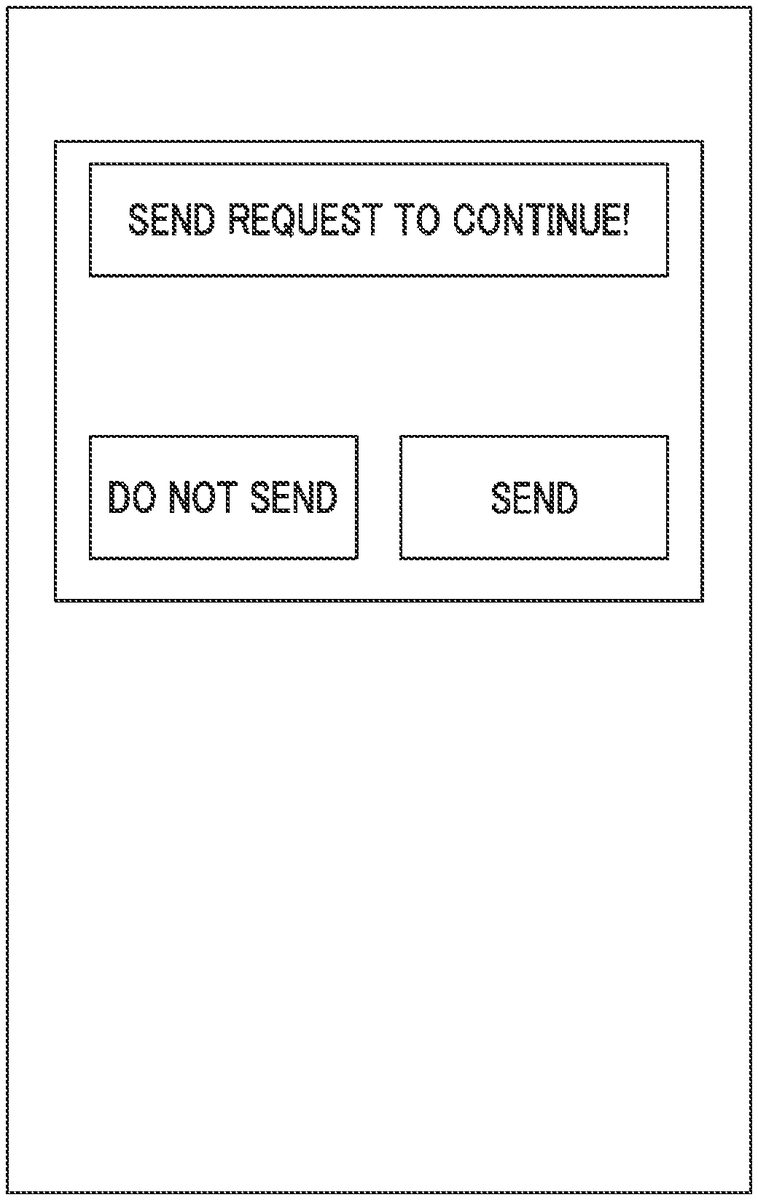
As shown inFIG. 4, when the user starts the game, a game top screen is displayed, an event is selected, and a stage selection screen is displayed (S10). Then, when a stage is selected, it is determined whether a request, which is a message for prompting the dormant user to participate in the game, is transmitted (S20and S30). When the request is transmitted, the process proceeds to a partner selection screen (S50). When the request is not transmitted, a request transmission screen is displayed. After the user performs an operation, the process proceeds to the partner selection screen (S40and S50). When the user performs a request transmission operation, a continue right, which is a reward for the transmission of the request, is given to the user (S45).
Then, a partner is selected and a battle starts (S60).
When the user wins the battle, the result of a victory or a defeat is displayed and the battle ends (S70and S120).
When the user loses the battle, the battle is interrupted and a continue screen is displayed (S80). When a continue right given by transmitting the request remains, a continue selection screen is displayed (S90to S100). When the continue right given by transmitting the request does not remain, a “continue” selection screen using other items is displayed (S110).
When the execution of “continue” is selected, the interrupted battle is resumed. When the execution of “continue” is not selected, the result of a victory or a defeat is displayed and the battle ends (S120). The resumed battle can take over the battle situation before the interruption. Examples of the taking-over of the battle situation before the interruption can include a case in which damage to the enemy before the interruption remains and/or a case in which the effects of the items used before the interruption are maintained.
In this embodiment, the request transmission screen is displayed after the stage is selected. However, as shown inFIG. 5, the request transmission screen may be displayed when the user presses a button displayed on the screen. For example, the button can be displayed together with each selection item on a screen for selecting events and/or stages.
As shown inFIG. 6, the request transmission screen may pop up on the screen at any time.
As shown inFIG. 7, one or more transmission targets can be displayed on the request transmission screen. For example, the user name of each user and/or the avatar of the user can be displayed on the request transmission screen.
The displayed user is set as the transmission destination of the message. When the user presses a “SEND” button to select the transmission of the message, the message can be collectively transmitted to all of the displayed users. In addition, the upper limit of the number of displayed users can be set, considering a screen display area of an information processing apparatus. Furthermore, a dormant user who has not played the game for a short time, a dormant user who had frequently played the game for a certain period of time, or a dormant user who was active for a play period can be preferentially displayed on the transmission screen.
The above-described embodiments are representative examples, but the invention is not limited to the above-described embodiments.
Claims
- A method comprising: extracting, by one or more processors, a dormant user who previously played a game but has not played the game for a first period of time or more;automatically displaying, by the one or more processors, to an active user, a screen prompting transmission of an invitation message in response to the active user having not transmitted the invitation message to other users within a second period of time;receiving from the active user, by the one or more processors, a selection of whether to transmit the invitation message to the dormant user;transmitting, by the one or more processors, the invitation message from the active user to the dormant user in response to the selection being received indicating that the invitation message is to be transmitted to the dormant user;and giving, by the one or more processors, a reward to the dormant user and/or the active user in response to the one or more processors confirming that the dormant user has received the invitation message and that the dormant user has participated in the game after receiving the invitation message.
- The method according to claim 1 , wherein the screen prompting transmission of the invitation message is automatically displayed to the active user in response to the one or more processors confirming that the active user does not have a first amount of currency in the game, or that the active user loses in the game.
- The method according to claim 1 , wherein the invitation message is a message prompting the dormant user to return to the game.
- An information processing apparatus comprising: one or more processors programmed to: extract a dormant user who previously played a game but has not played the game for a first period of time or more, automatically display to an active user a screen prompting transmission of an invitation message in response to the active user having not transmitted the invitation message to other users within a second period of time;receive from the active user a selection of whether to transmit the invitation message to the dormant user;transmit the invitation a message from the active user to the dormant user in response to the selection being received indicating that the invitation message is to be transmitted to the dormant user, and give a reward to the dormant user and/or the active user in response to confirming that the dormant user has received the invitation message and that the dormant user has participated in the game after receiving the invitation message.
- The information processing apparatus according to claim 4 , wherein the screen prompting transmission of the invitation message is automatically displayed to the active user in response to confirming that the active user does not have a first amount of currency in the game, or that the active user loses in the game.
- The information processing apparatus according to claim 4 , wherein the invitation messages a message prompting the dormant user to return to the game.
- A non-transitory computer-readable medium storing a program that causes a computer to realize: a first extraction function of extracting a dormant user who previously played a game but has not played the game for a first period of time or more;a screen display control function of automatically displaying to an active user a screen prompting transmission of an invitation message in response to the active user having not transmitted the invitation message to other users within a second period of time;a selection receiving function of receiving from the active user a selection of whether to transmit the invitation message to the dormant user;a message transmitting function of transmitting the invitation message from the active user to the dormant user in response to the selection being received indicating that the invitation message is to be transmitted to the dormant user;and a reward giving function of giving a reward to the dormant user and/or the active user in response to confirming that the dormant user has received the invitation message and that the dormant user has participated in a-the game after receiving the invitation message.
- The non-transitory computer-readable medium according to claim 7 , wherein the screen prompting transmission of the invitation message is automatically displayed to the active user in response to confirming that the active user does not have a first amount of currency in the game, or that the active user loses in the game.
- The non-transitory computer-readable medium according to claim 7 , wherein the invitation message is a message prompting the dormant user to return to the game.
Disclaimer: Data collected from the USPTO and may be malformed, incomplete, and/or otherwise inaccurate.