U.S. Pat. No. 11,040,280
GAME PROCESSING METHOD AND INFORMATION PROCESSING DEVICE
AssigneeSEGA CORPORATION
Issue DateOctober 2, 2019
Illustrative Figure
Abstract
A game processing method that causes a computer to execute a game program includes displaying, with a touchscreen, a reference operation and a deck that comprises an item, receiving a first input operation to select the deck and second input operations, determining a matching degree between the reference operation and each of the second input operations, outputting, from a processor to a memory, a level of the matching degree based on the determination, counting, with the processor, a number of consecutive times that the level continuously exceeds a predetermined threshold level, calculating, with the processor, a score of the user based on the number, and outputting, from the processor to the memory, the score. When the item comprises a card having a predetermined effect and continuation of exceeding the predetermined threshold level is interrupted, the number is counted as if no interruption has occurred.
Description
DETAILED DESCRIPTION Embodiments of the present invention will be described in detail below with reference to the drawings. In the following description of embodiments of the invention, numerous specific details are set forth in order to provide a more thorough understanding of the invention. However, it will be apparent to one of ordinary skill in the art that the invention may be practiced without these specific details. In other instances, well-known features have not been described in detail to avoid obscuring the invention. Configuration FIG. 1is a diagram showing a configuration example of a system according to one or more embodiments of the present invention. InFIG. 1, a terminal device1such as a smart phone, a tablet, a mobile phone, a Personal Computer (PC), or the like is connected to a network2such as the Internet, and a game management server device3is connected to the network2. Both the terminal device1and the game management server device3are information processing devices. Sometimes there is no game management server apparatus3, in which case the terminal apparatus1operates independently. A game application (game application program)100is installed in the terminal device1, and portions constituted by software include a performance scene selection acceptance/performance selection acceptance component101, a used deck/help friend selection acceptance component102, a performance execution component103, a reference operation indication component104, an input operation acceptance component105, a level determination component106, a combo counter107, a score calculator108, an item awarding component109, and a result display component110. Also, various kinds of data to be referred to or updated during processing are held in a storage area120allocated to the game application100. The various kinds of data will be discussed in detail below. The performance scene selection acceptance/performance selection acceptance component101has the function of accepting the selection of a performance scene from the user (player) of the terminal device1, indicating to the user ...
DETAILED DESCRIPTION
Embodiments of the present invention will be described in detail below with reference to the drawings. In the following description of embodiments of the invention, numerous specific details are set forth in order to provide a more thorough understanding of the invention. However, it will be apparent to one of ordinary skill in the art that the invention may be practiced without these specific details. In other instances, well-known features have not been described in detail to avoid obscuring the invention.
Configuration
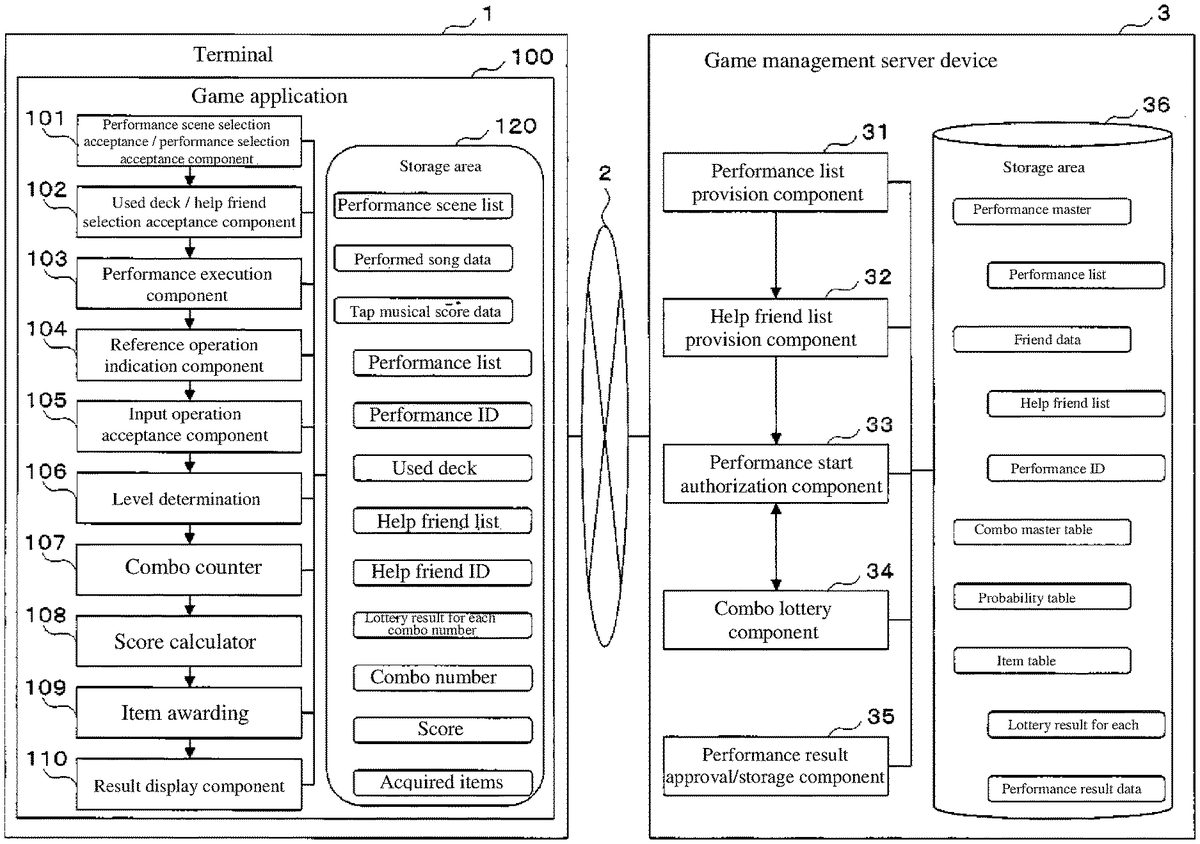
FIG. 1is a diagram showing a configuration example of a system according to one or more embodiments of the present invention.
InFIG. 1, a terminal device1such as a smart phone, a tablet, a mobile phone, a Personal Computer (PC), or the like is connected to a network2such as the Internet, and a game management server device3is connected to the network2. Both the terminal device1and the game management server device3are information processing devices. Sometimes there is no game management server apparatus3, in which case the terminal apparatus1operates independently.
A game application (game application program)100is installed in the terminal device1, and portions constituted by software include a performance scene selection acceptance/performance selection acceptance component101, a used deck/help friend selection acceptance component102, a performance execution component103, a reference operation indication component104, an input operation acceptance component105, a level determination component106, a combo counter107, a score calculator108, an item awarding component109, and a result display component110. Also, various kinds of data to be referred to or updated during processing are held in a storage area120allocated to the game application100. The various kinds of data will be discussed in detail below.
The performance scene selection acceptance/performance selection acceptance component101has the function of accepting the selection of a performance scene from the user (player) of the terminal device1, indicating to the user the performance (or performances) associated with that performance scene, and accepting the user's performance selection (decision).
The used deck/help friend selection acceptance component102has the function of accepting the user's selection of the deck to be used, which is a deck of cards used in the progress of a game, and accepting the user's selection (decision) of a help friend who cooperates in the progress of a game.
The performance execution component103has the function of executing a performance and performing basic screen display and audio output when it accepts a performance start indication from the user.
The reference operation indication component104has the function of displaying a screen (e.g., touchscreen) for indicating to the user a reference operation of a tap operation (an operation of touching the screen with a finger) in the execution of a performance by the performance execution component103. The reference operation is a finger operation on the touchscreen of the terminal device1. The tap operation is an example of the finger operations. For example, the finger operations include finger gestures such as slide finger and pinch spread operations.
The input operation acceptance component105has the function of accepting an input operation such as a tap operation from the user.
The level determination component106has the function of comparing the input operation accepted by the input operation acceptance component105with the reference operation indicated by the reference operation indication component104and determining which one of the plurality of levels is applicable on the basis of match. Thus, the level determination component106may determine a matching degree between the input operation and the reference operation.
The combo counter107has the function of counting the number of continuous (consecutive) times that the level determined by the level determination component106is at or above a predetermined level (number of consecutive times, combo number). If the deck to be used selected by the used deck/help friend selection acceptance component102includes a specific card (a death-dealing item or the like), the combo counter107performs a lottery at a predetermined winning probability when the continuation of a predetermined threshold level is interrupted, and, if there is a win, continues counting as if the continuation had not been interrupted.
The score calculator108has the function of calculating the score of the user on the basis of the level determined by the level determination component106, the combo number counted by the combo counter107, or the like.
When the combo number counted by the combo counter107has reached a specific number of times (a plurality of achieved number of consecutive times), the item awarding component109has the function of awarding an item as a bonus (remuneration, reward) at a winning probability that was allocated in advance to that number of times.
The result display component110has the function of displaying the user's score, the awarded item, etc., on the screen.
FIG. 2is a diagram showing an example of the structure of data held in the storage area120of the game application100of the terminal device1.
InFIG. 2, the performance scene list contains a plurality of “performance scenes.” Performance song data has “song data” or the like associated with a “performance ID” that identifies a performance.
Tap musical score data has “tap information” or the like, which specifies the reference operation, associated with a “performance ID” that identifies a performance. Tap information includes the “grid position” where the tap is to be performed, the “time” at which the tap is to be performed (the elapsed time since the start of the song being performed), the “tap type” indicating the type of tap, and “performance duration.”
FIG. 3shows an example of a screen when, out of the eight boxes provided on the screen, the tap type “normal press” is specified for the second box from the right in the bottom row. In this example, dots gradually move from the four corners of the box toward the center, and the point when the dots meet up in the center indicates the timing for tapping.
FIG. 4shows an example of a screen when, out of the eight boxes provided on the screen, the tap type “long press” is specified for the second box from the left in the top row. In this example, dots separate from the four corners of the box (with dots remaining in the four corners) and gradually move toward the center, the background of a specific color moves as if a shutter were closing from the top and bottom, and the timing of the tap is indicated by continuing to press from the point when they meet up in the center until all the dots and the background disappear.
FIG. 5shows an example of a screen when, out of the eight boxes provided on the screen, the first box from the right in the top row is tapped, and then the first box from the left in the top row is tapped to complete a “continuous press.” The tap timing is the same as in a “normal press,” but the display is changed. Although not depicted in the drawing, when two or more boxes are specified at the same time, the result is a “simultaneous press.”
Returning toFIG. 2, a performance list is provided from the game management server device3, and includes “performance ID,” “performance title,” and “difficulty.” The performance ID is the “performance ID” selected (decided) by the user.
The used deck is what is selected by the user, and includes a “card ID list.” The help friend list is provided from the game management server device3, and includes a plurality of “help friend IDs” and “attributes.” The help friend ID is the “help friend ID” selected (decided) by the user.
The lottery result for each combo number is provided from the game management server device3, and includes item information corresponding to four kinds of achieved number of consecutive times: “combo number (1) item information,” “combo number (2) item information,” “combo number (3) item information,” and “combo number (4) item information.” Although the achieved number of consecutive times is four here, the number is not limited thereto.
The combo number is the current combo number. The score is the current score. The acquired items are a list of the item IDs of the current acquired items.
Returning toFIG. 1, the portions realized by software include a performance list provision component31, a help friend list provision component32, a performance start authorization component33, a combo lottery component34, and a performance result approval/storage component35. Various kinds of data to be referred to or updated during processing are held in the storage area36.
The performance list provision component31has the function of acquiring from the terminal device1and providing a performance list in response to a performance list request accompanying a performance scene selected by the user.
The help friend list provision component32has the function of acquiring from the terminal device1and providing a help friend list in response to a help friend list request.
The performance start authorization component33has the function of acknowledging the receipt of a performance start by performing authorization on a performance start authorization request from the terminal device1. In acknowledging the receipt of a performance start, the performance start authorization component33also transmits data such as the lottery result for each combo number produced by the combo lottery component34. The reasons for providing the lottery result for each combo number by performing a combo lottery before the start of a performance are to avoid problems if the terminal device1and the game management server device3should be unable to communicate after the start of the performance, and to prevent cheating (the fraudulent act of falsifying programs or data) on the terminal device1side. Therefore, when it is unnecessary to take such things into account, the terminal device1may send a notification to the game management server device3at the point when a specific combo number is established at the terminal device1, and a combo lottery may be performed at the game management server device3and the result sent to the terminal device1.
The combo lottery component34has the function of performing a lottery on the basis of the performance ID specified by the performance start authorization request, a combo master table, a probability table, and an item table, and deciding the item that will serve as a bonus for each specific combo number (achieved number of consecutive times). The result of the combo lottery is delivered to the performance start authorization component33as a lottery result for each combo number.
The performance result approval/storage component35has the function of approving a performance result approval request from the terminal device1, acknowledging the receipt of the performance result, and storing the performance result.
When there is no game management server device3, the function of the game management server device3is absorbed by the game application100of the terminal device1.
FIG. 6is a diagram showing an example of the structure of data held in the storage area36of the game management server device3.
InFIG. 6, the performance master includes “performance scene,” “performance title,” “performance ID,” and “difficulty.” The performance list is extracted from the performance master by using the performance scene as a key, and includes “performance ID,” “performance title,” and “difficulty.” Friend data includes “friend ID,” “attribute,” and “image.” The help friend list includes a plurality of “help friend IDs” and “attributes.” The performance ID is the “performance ID” selected (decided) by the user of the terminal device1.
In the combo master table, “combo number,” “probability table ID,” and “item table ID” are associated with the “performance ID” for each frame of the four achieved number of consecutive times. Although the achieved number of consecutive times is four here, the number is not limited thereto. The “performance ID” may be associated with a specific number of a plurality of frames, without associating “performance ID” with each frame of the achieved number of consecutive times. For example, one common “performance ID” may be associated with all frames.
In the probability table, “winning probability” is associated with “probability table ID” for each frame of five items. Although five item frames are used here, the number is not limited thereto.
In the item table, “asset_type,” “asset_id” and “asset_num” are associated with “item table ID” for each frame of five items. The number of item frames used here is the same as in the probability table.
FIG. 7shows specific examples of a combo master table, a probability table, and an item table.FIG. 7will be referred to in the description of the operation below. In the combo master table, the combo number is set for each performance, and the combo number is set so as to increase in the order of combo number (1)→combo number (2)→combo number (3)→combo number (4).
In the probability table, rarity of an item increases in the order of item “1”→item “2”→item “3”→item “4”→item “5,” and the settings are such that the higher is the rarity, the lower is the winning probability. Also, as the combo number in the combo master table increases, a record (probability table record) with a high winning probability is specified for items with a high degree of rarity.
Returning toFIG. 6, the lottery result for each combo number includes “combo number (1) item information,” “combo number (2) item information,” “combo number (3) item information,” and “combo number (4) item information” corresponding to four kinds of achieved number of consecutive times. The “combo number (1) item information,” etc., include combo numbers of specific numerical values and “asset_type,” “asset_id,” and “asset_num” that specifically identify items.
The performance result data is transmitted from the terminal device1, and “score,” “combo number,” “acquired items,” etc., are associated with “user ID.”
FIG. 8is a diagram showing a hardware configuration example of the terminal device1.
InFIG. 8, the terminal device1comprises a power supply system1001, a main system1002(which includes a processor1003, a memory controller1004, and a peripheral interface1005), and a storage component1006. The terminal device1also comprises an external port1007, a high frequency circuit1008, an antenna1009, an audio circuit1010, a speaker1011, a microphone1012, a proximity sensor1013, and a GPS (global positioning system) circuit1014. The terminal device1also comprises an I/O (input/output) subsystem1015(which includes a display controller1016, an optical sensor controller1017, and an input controller1018), a touch reaction-type display system1019, an optical sensor1020, and an input component1021. The touchscreen of the terminal device1includes the touch reaction-type display system1019, the optical sensor1020, and the input component1021.
FIG. 9is a diagram showing a hardware configuration example of the game management server device3.
InFIG. 9, the game management server device3comprises a CPU (central processing unit)302, a ROM (read only memory)303, a RAM (random access memory)304, and a NVRAM (non-volatile random access memory)305, connected to a system bus301. The game management server device3also comprises an OF (interface)306, an I/O (input/output device)307, which is connected to the OF306, a HDD (hard disk drive)308, a NIC (network interface card)309, and a monitor310, a keyboard311, a mouse312, etc., that are connected to the I/O307. A CD/DVD (compact disk/digital versatile disk) drive or the like can also be connected to the I/O307.
Operation
FIG. 10is a sequence diagram showing an overall processing example according to one or more embodiments of the present invention.
InFIG. 10, when the user selects a performance scene (step S101), the performance scene selection acceptance/performance selection acceptance component101of the terminal device1accepts the selection, and sends a performance list request to the game management server device3along with the performance scene selected by the user (step S102).
In response to the performance list request from the terminal device1, the performance list provision component31of the game management server device3searches the performance master using the performance scene as a key, to acquire a performance list (step S103). The performance list provision component31then transmits the performance list to the terminal device1(step S104).
Upon receiving the performance list from the game management server device3, the performance scene selection acceptance/performance selection acceptance component101of the terminal device1presents the performance list to the user and requests selection of the performance (step S105).
In response to this, when the user selects (decides on) the performance (step S106), the performance scene selection acceptance/performance selection acceptance component101stores the data for the performance internally.
Next, the used deck/help friend selection acceptance component102requests the user to select the deck to be used (step S107).
In response to this, when the user selects (decides on) the deck to be used (step S108), the used deck/help friend selection acceptance component102internally stores the data of the deck to be used.
Next, the used deck/help friend selection acceptance component102makes a request for a help friend list to the game management server device3(step S109).
The help friend list provision component32of the game management server device3performs extraction from the friend data on the basis of attributes in response to the help friend list request from the terminal device1, and acquires a help friend list (step S110). The help friend list provision component32then transmits the help friend list to the terminal device1(step S111).
Upon receiving the help friend list from the game management server device3, the used deck/help friend selection acceptance component102of the terminal device1presents the help friend list to the user and requests selection of a help friend (step S112).
In response to this, when the user selects (decides on) a help friend (step S113), the used deck/help friend selection acceptance component102stores the help friend data internally.
Next, the performance execution component103of the terminal device1requests the user to indicate the start of the performance (step S114).
In response to this, when the user indicates the start of the performance (step S115), the performance execution component103issues a performance start authorization request to the game management server device3accompanied by the performance ID (step S116).
The performance start authorization component33of the game management server device3authorizes the performance start authorization request from the terminal device1and also performs a combo lottery with the combo lottery component34to acquire a lottery result for each combo number (step S117), and transmits the terminal device1data such as the lottery result for each combo number and the performance start receipt (step S118). The processing for the combo lottery will be described in detail below.
Upon receiving the data such as the lottery result for each combo number and the performance start receipt from the game management server device3, the performance execution component103of the terminal device1internally stores this data (lottery result for each combo number, etc.) and executes the performance and indicates to the user the reference operation along with the reference operation indication component104(step S119).
In response to this, when the user performs an operation input (step S120), the input operation acceptance component105accepts the operation input, the level is determined by the level determination component106, the combo count is performed by the combo counter107, the score is calculated by the score calculator108, and an item is awarded by the item awarding component109(step S121). This processing is repeated until the performance ends. Processing from level determination up to the item awarding will be discussed in detail below.
When the performance ends, the result display component110makes a request for approval of the performance result to the game management server device3(step S122).
The performance result approval/storage component35of the game management server device3approves the performance result approval request from the terminal device1, stores the performance result (step S123), and transmits the performance result receipt to the terminal device1(step S124).
When the result display component110of the terminal device1receives the performance result receipt from the game management server device3, it displays the result (step S125).
FIG. 11is a flowchart showing a processing example of a combo lottery (step S117inFIG. 10).
InFIG. 11, the combo lottery component34of the game management server device3specifies a record of the combo master table from the performance ID (step S201). For example, inFIG. 7, when the performance ID is “100131,” a record of “100131” that is the same as the “performance ID” in the combo master table (one row of data) is specified.
Next, returning toFIG. 11, the combo lottery component34specifies a record of the probability table from the probability table ID for each combo number in the combo master table (step S202). InFIG. 7, the “combo number (1)” of the performance ID “100131” in the combo master table is “8,” and a record of “2521” that is the same as the “probability table ID” of the probability table is specified from the probability table ID “2521.” This would be similar for “combo number (2)” through “combo number (4).”
Next, returning toFIG. 11, the combo lottery component34specifies a record of the item table from the item table ID for each combo number in the combo master table (step S203). InFIG. 7, a record of “100131” that is the same “item table ID” of the item table is specified from the item table ID “100131” of the “combo number (1)” of the performance ID “100131” in the combo master table. This would be similar for “combo number (2)” through “combo number (4).”
Next, returning toFIG. 11, the combo lottery component34executes a lottery of items from the winning probability for each item in the record of the specified probability table for each combo number (step S204). InFIG. 7, for “combo number (1)” in the combo master table, based on the record of the probability table ID “2521” in the probability table, the lottery is performed at “44%” for item “1,” “30%” for item “2,” “20%” for item “3,” “5%” for item “4,” and “1%” for item “5.”
Next, returning toFIG. 11, the combo lottery component34acquires information about specific items that have been won from the record of the specified item table for each combo number (step S205). InFIG. 7, when item “3” has been won for the “combo number (1)” in the combo master table, for example, specific item information is acquired from “asset_type ‘3,’” “asset_id ‘3,’” and “asset_num ‘3’” in the record of the item table ID “100131” in the item table.
Next, returning toFIG. 11, the combo lottery component34produces a lottery result for each combo number based on the acquired information, and transfers it to the performance start authorization component33(step S206).
FIG. 12is a flowchart showing a processing example from the indication of a reference operation to the granting of a reward (steps S119to S121inFIG. 10).
InFIG. 12, the reference operation indication component104of the terminal device1acquires tap information from tap musical score data (step S301).
Next, the reference operation indication component104presents an indication of the reference operation based on the grid position, clock time, tap type, and performance duration specified by the acquired tap information (step S302).
Next, the level determination component106acquires the timing at which the specified grid position was tapped from the input operation of the user accepted by the input operation acceptance component105(step S303).
Next, the level determination component106compares the timing of the reference operation at the specified grid position with the timing of the tap at the grid position (step S304), and determines from the timing comparison result (continuous press and simultaneous press are also considered) which of five levels is applicable (perfect, great, safe, bad, or miss) (step S305). The number of levels is not limited to five.
Next, the combo counter107increments the combo number when a predetermined level or higher (such as a level of “safe” or higher) is continued (when a combo is established) (step S306). If the deck to be used selected by the used deck/help friend selection acceptance component102includes a specific card (a death-dealing item or the like), the combo counter107performs a lottery at a predetermined winning probability (such as 80%) when the continuation of a predetermined threshold level is interrupted, and, if there is a win, continues counting at or above a predetermined level as if the continuation had not been interrupted. The processing then repeats from the acquisition of tap information (step S201).
Also, when the combo number reaches a specific value (the combo numbers (1) to (4) in the combo master table), the item awarding component109awards the user with the item according to the lottery result acquired in advance by combo number (Step S307).
Summary
As described above, according to one or more embodiments of the present invention, as an improvement to conventional gaming technology, even a user unfamiliar with an input operation can enjoy combo numbers.
That is, even a user who can achieve only the minimum combo number for which an item lottery is performed will derive the pleasure of acquiring some kind of item, and can find a sense of purpose in trying to achieve a combo number. Also, since there is a chance to acquire all of the items, including items with high degree of rarity, albeit at a low probability, players will derive great pleasure. Furthermore, the chances to acquire items with a high degree of rarity are increased by increasing the combo number, so it is also possible to find a sense of purpose in continuing the game and improving one's skills.
Also, a user unfamiliar with the input operation can be assisted by saving him from having a combo interrupted by a death-dealing item or the like.
Although the disclosure has been described with respect to only a limited number of embodiments, those skilled in the art, having benefit of this disclosure, will appreciate that various other embodiments may be devised without departing from the scope of the present invention. Accordingly, the scope of the invention should be limited only by the attached claims.1Terminal Device100Game Application101Performance Scene Selection Acceptance/Performance Selection Acceptance Component102Used Deck/Help Friend Selection Acceptance Component103Performance Execution Component104Reference Operation Indication Component105Input Operation Acceptance Component106Level Determination Component107Combo Counter108Score Calculator109Item Awarding Component110Result Display Component120Storage Area2Network3Game Management Server Device31Performance List Provision Component32Help Friend List Provision Component33Performance Start Authorization Component34Combo Lottery Component35Performance Result Approval/Storage Component
Claims
- A game processing method that causes a computer to execute a game program, the method comprising: displaying, with a touchscreen of the computer, a reference operation and a deck that comprises an item;receiving, with the touchscreen, a first input operation to select the deck and second input operations;determining, with a processor of the computer, a matching degree between the reference operation and each of the second input operations;outputting, from the processor to a memory of the computer, a level of the matching degree based on the determination;counting, with the processor, a number of consecutive times that the level continuously exceeds a predetermined threshold level;calculating, with the processor, a score of the user based on the number;and outputting, from the processor to the memory, the score, wherein when the item comprises a card having a predetermined effect and continuation of exceeding the predetermined threshold level is interrupted, the number is counted as if no interruption has occurred.
- The game processing method according to claim 1 , wherein when the continuation of exceeding the predetermined threshold level is interrupted: a lottery is performed at a predetermined winning probability;and in the event a result of the lottery is a win, the number is counted as if no interruption has occurred.
- The game processing method according to claim 1 , further comprising: outputting, from the processor to the memory, information to award a bonus when the number reaches achieved numbers of consecutive times.
- The game processing method according to claim 3 , further comprising: storing, with the memory, table data in which the achieved numbers of consecutive times is set for each performance and a predetermined winning probability for a predetermined number of bonuses is set for each of the achieved numbers of consecutive times, wherein the outputting outputs, using the table data, the information to award the bonus based on a lottery result for each of the achieved numbers of consecutive times.
- The game processing method according to claim 1 , wherein the displaying displays the level of the matching degree on the touchscreen.
- The game processing method according to claim 1 , wherein the displaying displays the score on the touchscreen.
- An information processing device comprising: a touchscreen that;displays a deck that comprises an item at a start of game and a reference after the start of game;and receives a first input operation to select the deck and second input operations after the start of game from a user and second input operations after the start of game from the user;a memory;and a processor connected to the touchscreen and the memory and that: determines a matching degree between the reference operation and each of the second input operations;outputs, to the memory, a level of the matching degree based on the determination;counts a number of consecutive times that the level continuously exceeds a predetermined threshold level;calculates a score of the user based on the number;and outputs, to the memory, the score, wherein when the item comprises a card having a predetermined effect and continuation of exceeding the predetermined threshold level is interrupted, the number is counted as if no interruption has occurred.
- The information processing device according to claim 7 , wherein when the continuation of exceeding the predetermined threshold level is interrupted: a lottery is performed at a predetermined winning probability;and in the event a result of the lottery is a win, the number is counted as if no interruption has occurred.
- The information processing device according to claim 7 , wherein the processor outputs information to award a bonus when the number reaches achieved numbers of consecutive times.
- The information processing device according to claim 9 , wherein the memory stores table data in which the achieved numbers of consecutive times is set for each performance and a predetermined winning probability for a predetermined number of bonuses is set for each of the achieved numbers of consecutive times, and wherein the processor outputs, using the table data, the information to award the bonus based on a lottery result for each of the achieved numbers of consecutive times.
- The information processing device according to claim 7 , wherein the touchscreen displays the level of the matching degree.
- The information processing device according to claim 7 , wherein the touchscreen displays the calculated score.
Disclaimer: Data collected from the USPTO and may be malformed, incomplete, and/or otherwise inaccurate.