U.S. Pat. No. 11,030,594
NETWORK SERVER AND METHOD OF OPERATING THEREOF TO MEDIATE ACTIONS BETWEEN USER TERMINALS RELATING TO ONLINE GAMES
AssigneeNHN Entertainment Corporation
Issue DateMay 3, 2018
Illustrative Figure
Abstract
A network server includes a communicator and at least one processor coupled to the communicator. The at least processing is configured to: receive a first data signal from a first user terminal that is shared with a game server; transfer to the game server a first request, together with the first data signal, to verify validation of a game item when a first message including information relating to the game item is received from the first user terminal; receive from the second user terminal a second message relating to the game item; and transfer to the game server a second request, together with the first data signal, to change an owner of the game item from a first game ID associated with the first user terminal to a second game ID associated to the second user terminal in response to determining whether second message is authorized.
Description
DETAILED DESCRIPTION In the following description, for the purposes of explanation, numerous specific details are set forth in order to provide a thorough understanding of various exemplary embodiments or implementations of the invention. As used herein “embodiments” and “implementations” are interchangeable words that are non-limiting examples of devices or methods employing one or more of the inventive concepts disclosed herein. It is apparent, however, that various exemplary embodiments may be practiced without these specific details or with one or more equivalent arrangements. In other instances, well-known structures and devices are shown in block diagram form in order to avoid unnecessarily obscuring various exemplary embodiments. Further, various exemplary embodiments may be different, but do not have to be exclusive. For example, specific shapes, configurations, and characteristics of an exemplary embodiment may be used or implemented in another exemplary embodiment without departing from the inventive concepts. Unless otherwise specified, the illustrated exemplary embodiments are to be understood as providing exemplary features of varying detail of some ways in which the inventive concepts may be implemented in practice. Therefore, unless otherwise specified, the features, components, modules, layers, films, panels, regions, and/or aspects, etc. (hereinafter individually or collectively referred to as “elements”), of the various embodiments may be otherwise combined, separated, interchanged, and/or rearranged without departing from the inventive concepts. In the accompanying drawings, the size and relative sizes of elements may be exaggerated for clarity and/or descriptive purposes. When an exemplary embodiment may be implemented differently, a specific process order may be performed differently from the described order. For example, two consecutively described processes may be performed substantially at the same time or performed in an order opposite to the described order. Also, like reference numerals denote like elements. When an element is referred to as being “on,” “connected to,” or “coupled to” ...
DETAILED DESCRIPTION
In the following description, for the purposes of explanation, numerous specific details are set forth in order to provide a thorough understanding of various exemplary embodiments or implementations of the invention. As used herein “embodiments” and “implementations” are interchangeable words that are non-limiting examples of devices or methods employing one or more of the inventive concepts disclosed herein. It is apparent, however, that various exemplary embodiments may be practiced without these specific details or with one or more equivalent arrangements. In other instances, well-known structures and devices are shown in block diagram form in order to avoid unnecessarily obscuring various exemplary embodiments. Further, various exemplary embodiments may be different, but do not have to be exclusive. For example, specific shapes, configurations, and characteristics of an exemplary embodiment may be used or implemented in another exemplary embodiment without departing from the inventive concepts.
Unless otherwise specified, the illustrated exemplary embodiments are to be understood as providing exemplary features of varying detail of some ways in which the inventive concepts may be implemented in practice. Therefore, unless otherwise specified, the features, components, modules, layers, films, panels, regions, and/or aspects, etc. (hereinafter individually or collectively referred to as “elements”), of the various embodiments may be otherwise combined, separated, interchanged, and/or rearranged without departing from the inventive concepts.
In the accompanying drawings, the size and relative sizes of elements may be exaggerated for clarity and/or descriptive purposes. When an exemplary embodiment may be implemented differently, a specific process order may be performed differently from the described order. For example, two consecutively described processes may be performed substantially at the same time or performed in an order opposite to the described order. Also, like reference numerals denote like elements.
When an element is referred to as being “on,” “connected to,” or “coupled to” another element, it may be directly on, connected to, or coupled to the other element or intervening elements may be present. When, however, an element is referred to as being “directly on,” “directly connected to,” or “directly coupled to” another element, there are no intervening elements present. To this end, the term “connected” may refer to physical, electrical, and/or fluid connection, with or without intervening elements. For the purposes of this disclosure, “at least one of X, Y, and Z” and “at least one selected from the group consisting of X, Y, and Z” may be construed as X only, Y only, Z only, or any combination of two or more of X, Y, and Z, such as, for instance, XYZ, XYY, YZ, and ZZ. As used herein, the term “and/or” includes any and all combinations of one or more of the associated listed items.
Although the terms “first,” “second,” etc. may be used herein to describe various types of elements, these elements should not be limited by these terms. These terms are used to distinguish one element from another element. Thus, a first element discussed below could be termed a second element without departing from the teachings of the disclosure.
The terminology used herein is for the purpose of describing particular embodiments and is not intended to be limiting. As used herein, the singular forms, “a,” “an,” and “the” are intended to include the plural forms as well, unless the context clearly indicates otherwise. Moreover, the terms “comprises,” “comprising,” “includes,” and/or “including,” when used in this specification, specify the presence of stated features, integers, steps, operations, elements, components, and/or groups thereof, but do not preclude the presence or addition of one or more other features, integers, steps, operations, elements, components, and/or groups thereof. It is also noted that, as used herein, the terms “substantially,” “about,” and other similar terms, are used as terms of approximation and not as terms of degree, and, as such, are utilized to account for inherent deviations in measured, calculated, and/or provided values that would be recognized by one of ordinary skill in the art.
In exemplary embodiments, a server, and/or one or more components thereof, may be implemented via one or more general purpose and/or special purpose components, such as one or more discrete circuits, digital signal processing chips, integrated circuits, application specific integrated circuits, microprocessors, processors, programmable arrays, field programmable arrays, instruction set processors, and/or the like.
According to one or more exemplary embodiments, the features, functions, processes, etc., described herein may be implemented via software, hardware (e.g., general processor, digital signal processing (DSP) chip, an application specific integrated circuit (ASIC), field programmable gate arrays (FPGAs), etc.), firmware, or a combination thereof. In this manner, a server, and/or one or more components thereof may include or otherwise be associated with one or more memories (not shown) including code (e.g., instructions) configured to cause a server, and/or one or more components thereof to perform one or more of the features, functions, processes, etc., described herein.
The memories may be any medium that participates in providing code to the one or more software, hardware, and/or firmware components for execution. Such memories may be implemented in any suitable form, including, but not limited to, non-volatile media, volatile media, and transmission media. Non-volatile media include, for example, optical or magnetic disks. Volatile media include dynamic memory. Transmission media include coaxial cables, copper wire and fiber optics. Transmission media can also take the form of acoustic, optical, or electromagnetic waves. Common forms of computer-readable media include, for example, a floppy disk, a flexible disk, hard disk, magnetic tape, any other magnetic medium, a compact disk-read only memory (CD-ROM), a rewriteable compact disk (CD-RW), a digital video disk (DVD), a rewriteable DVD (DVD-RW), any other optical medium, punch cards, paper tape, optical mark sheets, any other physical medium with patterns of holes or other optically recognizable indicia, a random-access memory (RAM), a programmable read only memory (PROM), and erasable programmable read only memory (EPROM), a FLASH-EPROM, any other memory chip or cartridge, a carrier wave, or any other medium from which information may be read by, for example, a controller/processor.
Unless otherwise defined, all terms (including technical and scientific terms) used herein have the same meaning as commonly understood by one of ordinary skill in the art to which this disclosure is a part. Terms, such as those defined in commonly used dictionaries, should be interpreted as having a meaning that is consistent with their meaning in the context of the relevant art and should not be interpreted in an idealized or overly formal sense, unless expressly so defined herein.
Unless otherwise defined, all terms (including technical and scientific terms) used herein have the same meaning as commonly understood by one of ordinary skill in the art to which this disclosure is a part. Terms, such as those defined in commonly used dictionaries, should be interpreted as having a meaning that is consistent with their meaning in the context of the relevant art and should not be interpreted in an idealized or overly formal sense, unless expressly so defined herein.
FIG. 1is a block diagram of a network system constructed according to an exemplary embodiment of the invention for mediating exchange of game items between first and second user terminals.FIG. 2is a conceptual diagram illustrating organization of game items of a game user ID managed by a game server according to one embodiment of the invention.FIG. 3is a conceptual diagram illustrating organization of credit values, such as digital currency or game play credits, according to individual user IDs managed by a game item mediation server according to one embodiment of the invention.
Referring toFIG. 1, the network system100includes a network105, a game server110, a first user terminal120, a second user terminal130, and an item mediation server140. The network system100may include or implement a plurality of devices, servers, and/or software components that operate to perform various methodologies according to the described principles and exemplary embodiments of the invention. It can be appreciated that the devices and/or servers illustrated inFIG. 1may be deployed in other ways and that the operations and services provided by the devices and/or servers may be combined or separated for the described exemplary embodiments and may be performed by a greater number or fewer number of devices and/or servers. One or more devices and/or servers may be operated and/or maintained by the same or different entities.
The network105couples the devices and servers in the network system100, such as the game server110, the first and second user terminals120and130, and the item mediation server140. The network105may be at least one of public network, such as the Internet, one or more private networks, wire networks, wireless networks, other appropriate types of networks, and combinations thereof that may be accessible by the game server110, the first and second user terminals120and130, and the item mediation server140. The game server110, the first and second user terminals120and130, and the item mediation server140may have at least one of wire communication capabilities and wireless communication capabilities and may communicate each other through the network105.
The game server110communicates with user terminals in the network system100, such as the first and second user terminals120and130, to provide an online game service. The first user terminal120and the second user terminal130may register a first game ID (Identification) associated with a first user and a second game ID associated with a second user on the game service, respectively, and then may carry out actions required by the game service as the first and second users play the game through the first game ID and the second game ID, respectively. Of course, one user may have multiple game IDs.
The game server110may provide various game items used in the game service, such as virtual characters, emojis, properties of the virtual characters, items used by or with the virtual characters, power levels, credits, items provided to make the game progress favorably, etc. The game server110may store and manage information related to or representative of game items for each game ID so that the game ID may utilize the game items while playing the game service. Referring toFIG. 2, the game items ITM1to ITMm for each game ID GMID are shown as being listed in an item list LST_GMID, where m is a positive integer. Each game item may be defined by an item ID for identifying the game item, and by a quantity of the game item, etc. InFIG. 2, a first game item ITM1includes a first item ID ITM_ID1and a first quantity QNT1, a second game item ITM2includes a second item ID ITM_ID2and a second quantity QNT2, and an m-th game item ITMm includes an m-th item ID ITM_IDm and an m-th quantity QNTm. Of course, other ways of organizing and storing game items within computer memory are possible.
Referring back toFIG. 1, each of the first and second user terminals120and130may receive information related to or representative of the game items that the game ID has, and may display the game items to enable the user to recognize them. Also, each of the first and second user terminals120and130may receive at least part of an open item list from the item mediation server140, and may display the open item list to enable the user to recognize the game items. Each of the first and second user terminals120and130may include one or more processors, memories, and other appropriate components for executing computer programs including instructions stored on one or more computer readable mediums to implement applications to access and utilize the game service of the game server110and the item mediation service of the item mediation server140.
In an exemplary embodiment, the first and second user terminals130and140may employ devices suitable for communicating information through wire communications and/or wireless communications and for processing the information, such as a personal computer (PC), an Ultra Mobile PC, a workstation, a net-book, a Personal Digital Assistant (PDA), a portable computer, a web tablet, a wireless phone, a mobile phone, a smart phone, an e-book, a Portable Multimedia Player (PMP), a game console, and a portable game console, or the like.
The item mediation server140communicates with the game server110and the first and second user terminals120and130to mediate actions relating to the game items, such as the exchange of game items between the first game ID and the second game ID, which are associated to the first and second user terminals120and130, respectively. The first user terminal120and the second user terminal130register a first user ID and a second user ID on the item mediation service of the item mediation server140, respectively, and then access the item mediation server140through the first user ID and the second user ID. Each of the first and second user terminals120and130may transfer to the item mediation server140a message including information related to or representative of the game item, while accessing the item mediation server140. The message may request any type of action relating to a game item, such as a sale, purchase, or free exchange or use of the game item. The item mediation server140may process the requests in the messages transferred from the first and second user terminals120and130based on communications with the game server110.
The item mediation server140may include a exchange manager141, an item list generator142, and a transaction mediator143. The item mediation server140may include one or more processors, memories, and other appropriate components for executing one or more computer programs including instructions stored on one or more computer readable mediums to implement the exchange manager141, the item list generator142, and the transaction mediator143.
The exchange manager141may manage any type or combination of credit, reward or debit systems associated with the user IDs, such as digital currency, through which the first user terminal120and the second user terminal130access the item mediation server140. For illustrative purposes according to exemplary embodiments, the exchange information will be described herein as being in the form of digital currency, the value of which may be stored in a database150for each user ID. The database150may include at least one of a storage medium provided in the item mediation server140and a storage medium external to the item mediation server140. In case where the database150includes the external storage medium, the exchange manager141may communicate with the database150through a wire communication and/or a wireless communication.
Referring toFIG. 3, an amount of digital currency for each user ID, which is stored in the database150, is shown as being listed in a digital currency list CRNC. InFIG. 3, the first user ID UID1has a first amount of digital currency CRNC1, the second user ID UID2has a second amount of digital currency CRNC2, and the z-th user ID UIDz has a z-th amount of digital currency CRNCz, where z is a positive integer.
Referring back toFIG. 1, the exchange manager141may verify an amount of digital currency that each user ID has, and may change the amount of digital currency of each user ID in response to control signals or command from the item list generator142, the transaction mediator143, and the other appropriate elements in the network system100. Of course, if another system, such as a credit system based upon game play or success points, etc. is used to facilitate exchanges of game items, the exchange manager verifies and may change the amount of credit used to exchange game items.
While the exchange manager141is shown as being included in the item mediation server140, exemplary embodiments of the invention are not limited thereto. For example, the exchange manager141may be provided as a separate server which is able to communicate with the item mediation server140. In this manner, the item list generator142and the transaction mediator143may transfer control signals or data to the exchange manager141through the network105.
The item list generator142may generate and update an open game item list by communicating with the game server110and a user terminal transferring a message requesting a transfer of the game item. The open item list includes information related to or representative of the game item. In case where the message requests the transfer of the game item for the selected amount of digital currency, the open item list may further include a selected amount of digital currency. The item list generator142may provide user terminals in the network system100that access the item mediation server140with at least some of the information related to or representative of the game items included in the open item list. That is, the open item list is accessible by the user terminals in the network system100. The open item list may be stored in the database150.
The transaction mediator143may facilitate the exchange of the game items included in the open item list by communicating with the game server110and a user terminal transferring the message requesting one of the game items included in the open item list.
Hereinafter, for descriptive convenience, it is assumed that the first user terminal120transfers a message requesting the sale of the game item and the second user terminal130transfers a message requesting the purchase of the game item.
The item list generator142may transfer, to the game server110, a first request to verify a validation of the game item when a message for a sale of the game item is received from the first user terminal120. The message may include information related to or representative of the game item. The message may further include the selected amount of digital currency. To this end, the item list generator142updates the open item list to include information related to or representative of the game item and the selected amount of digital currency depending on the validation of the game item.
According to an exemplary embodiment of the invention, the item mediation server140stores a data signal provided from the first user terminal120, the data signal being determined by communications between the game server110and the first user terminal120and shared between the game server110and the first user terminal120. The item list generator142transfers the stored data signal together with the first request to the game server110. The data signal may be authentication data144such as an authentication token, as shown inFIG. 1. The authentication data144may be determined based on information associated with a user terminal, such as an identifier (e.g. identification number) of the user terminal, an identifier of one of the applications installed on the user terminal such as an operating system (OS) or a game application, the game ID of the user terminal, the game item, or the combinations thereof. Hereinafter, it is assumed that the data signal is the authentication data144for descriptive convenience.
The item list generator142cannot transfer the authentication data144to the game server110unless the first user terminal120provides the authentication data144to the item mediation server140since the authentication data144is determined by the communication between the game server110and the first user terminal120. Therefore, if authentication data144is transferred by the item mediation server140it means that the first request has been authorized based on an approval or selection of the first user terminal120, and not by unknown sources. That is, the authentication data144may ensure the reliability of the first request being transferred together with the authentication data144.
The game server110may verify the validation of the game item of the first request when the authentication data144is the one shared with the first user terminal120. For example, the game server110verifies whether the game item of the first request is valid based on its database such as the item list LST_GMID shown inFIG. 2. For instance, the game item of the first request is valid when it is in the item list LST_GMID. To this end, the game server110may provide the item mediation server110with a feedback signal or data indicating the game item is valid or invalid.
The second user terminal130may transfer, to the item mediation server140, a message requesting the purchase of the game item listed in the open item list. The transaction mediator143determines whether the message transferred from the second user terminal130is authorized. For example, the transaction mediator143transfers a control signal to the exchange manager141to access the database150to determine whether at least the selected amount of digital currency belongs to the second user ID. The transaction mediator143may determine that the message transferred from the second user terminal130is authorized when at least the selected amount of digital currency belongs to the second user ID.
The transaction mediator143transfers, to the game server110, a second request to change an owner of the game item from the first game ID to second game ID in response to determining that the message transferred from the second user terminal130is authorized. In response to feedback indicating completion of the change of the owner, the transaction mediator143may control the exchange manager141to update the database150to withdraw the selected amount or more of digital currency from the second user ID and to transfer the selected amount or less of digital currency to the first user ID.
It is important for the game server110to verify whether the second request is caused or approved by the first user terminal120since the game item is to be withdrawn from the first game ID in response to the second request. The game server110should not change the owner of the game item if the second request is not caused or approved by the first user terminal120but caused by other resources, such as another user terminal in the network system100.
According to an exemplary embodiment of the invention, the transaction mediator143transfers, to the game server110, the authentication data144together with the second request to change the owner of the game item, the authentication data144being provided by the first user terminal120. The authentication data144transferred together with the second request means that the second request is based on the approval or selection of the first user terminal120, and not caused by unknown resources. That is, the authentication data144may ensure the reliability of the second request transferred together with the authentication data144.
The game server110may change the owner of the game item from the first game ID to the second game ID when the authentication data144is the one shared with the first user terminal120. For example, the game item is deleted from the item list LST_GMID of the first game ID, and the game item is added to the item list LST_GMID of the second game ID. To this end, the game server110may provide the item mediation server140with a feedback signal or data indicating completion of the change of the owner.
According to exemplary embodiments of the invention, the item mediation server140facilitates the exchange of the game item by communicating with the game server110instead of the user terminals120and130. Accordingly, the network capacity and resources required when the user terminals120and130access the game server110to exchange the game item themselves may be reduced. Thus, overall networking performance of the network system100may also be improved. Furthermore, convenience of game users may further be improved since the item mediation server140mediates the game item exchange by using a system such as the digital currency. For example, a game user who sells a game item of a certain game service may purchase a game item of another game service as well as a game item of the certain game service by using the digital currency.
According to exemplary embodiments of the invention, the item mediation server140transfers the authentication data144to the game server110when transferring requests associated with game item exchanges. Accordingly, the reliability of the requests may be improved, and the item mediation server140may perform the exchanges more efficiently than in conventional systems. For example, the number of communications between the game server110, the user terminals120and130, the item mediation server140, and other/or required components to ensure the reliability of the requests may be reduced, thereby reducing the network traffic and resources required for the exchange of the game items.
FIG. 4is a flowchart of an exemplary embodiment of a method for operating a game server to prepare for exchanges of game items by communicating with the item mediation server.
Referring toFIGS. 3 and 4, at step S10, information related to or representative of a particular game service is transferred to the item mediation server140. The game server110may transfer various types information related to the game service, such as the name of game service (e.g., “echo of soul”), information related to or representative of game items (hereinafter “game item information”), information related to or representative of game items allowed to exchange, etc.
At step S20, a test for the exchanges of the game items is performed with the item mediation server140. For example, when the game server110requests the test, the item mediation server150transfers a first request to verify the validation of the game item or a second request to change the owner of the game item together with a test authentication data. At step S30, step S10to S20may be performed repeatedly depending on whether the test is passed or failed. For example, the test may be passed when the request is transferred based on a required manner and has a determined data format.
FIG. 5is a flowchart of a method of processing a first message requesting a transfer of the game item according to an exemplary embodiment of the invention.
Referring toFIGS. 1 and 5, at step S110, the authentication data114is received from the first user terminal120. The first user terminal120may access through a first user ID and provide the authentication data114. The first user terminal120may transfer the authentication data144after sharing the authentication data144with the game server110. A first game ID may be further received from the first user terminal120. Step S110may be performed before step S120is performed. Alternatively, requesting the first user terminal120to provide the authentication data144may be performed when the first message of the step S120is received but the authentication data144is not received.
At step S120, a first message requesting a transfer of the game item for selected amount of digital currency is received from the first user terminal120.
At step S130, a first request is transferred together with the authentication data144to the game server110to verify a validation of the game item. Since the authentication data144ensures the reliability of the first request, the authentication data144may enable the game server110to access game item information belonging to the first game ID and to verify the validation of the game item. In an exemplary embodiment, the game server110may access its database such as the item list LST_GMID shown inFIG. 2.
At step S140, whether the game item is valid is determined based on a feedback signal or data from the first request received from the game server110. The feedback may include information indicating the authentication data144is invalid. In the case where the authentication data144is valid, the feedback may include information indicating the game item is valid. In another exemplary embodiment, the feedback may include game item information of the first game ID. If the game item is valid, step S150is performed.
At step S150, the open item list is updated to include the game item and the selected amount of digital currency. The open item list is accessible to the second user terminal130.
FIG. 6is a flowchart of a method of processing a second message requesting a transfer of the game item according to an exemplary embodiment of the invention.
Referring toFIGS. 1 and 6, at step S210, a second message requesting a transfer of the game item listed in the open item list is received from the second user terminal130. The second user terminal130may access through a second user ID and transfer the second message in response to an input from the user. A second game ID may be further received from the second user terminal130.
At step S220, whether the second message is authorizable is determined. For instance, whether the second message is authorizable is determined by accessing the database150to determine whether at least the selected amount of digital currency belongs to the second user ID.
At step S230, a second request to change the owner of the game item from the first game ID to the second game ID is transferred together with the authentication data144to the game server110in response to determining that the second message is authorizable. The first and second game IDs may also be transferred to the game server110. Since the authentication data144ensures the reliability of the second request, the authentication data144may enable the game server110to change the owner of the game item. The game server110may update the item list LST_GMID for the first game ID and the item list LST_GMID for the second game ID.
At step S240, the digital currency of the first and second user IDs are updated.
A method according to exemplary embodiments of the invention facilitates the exchange of game items by communicating with the game server110instead of the user terminals120and130. Accordingly, the network traffic and resources required when the user terminals120and130access the game server110and trade the game item themselves may be reduced. Thus, overall networking performance of the network system100may also be improved. Furthermore, convenience of game users may further be improved.
A method according to exemplary embodiments of the invention transfers the authentication data144to the game server110when transferring the requests associated with the exchange of the game items. Accordingly, the reliability of the requests may be improved, thereby improving the exchange efficiency.
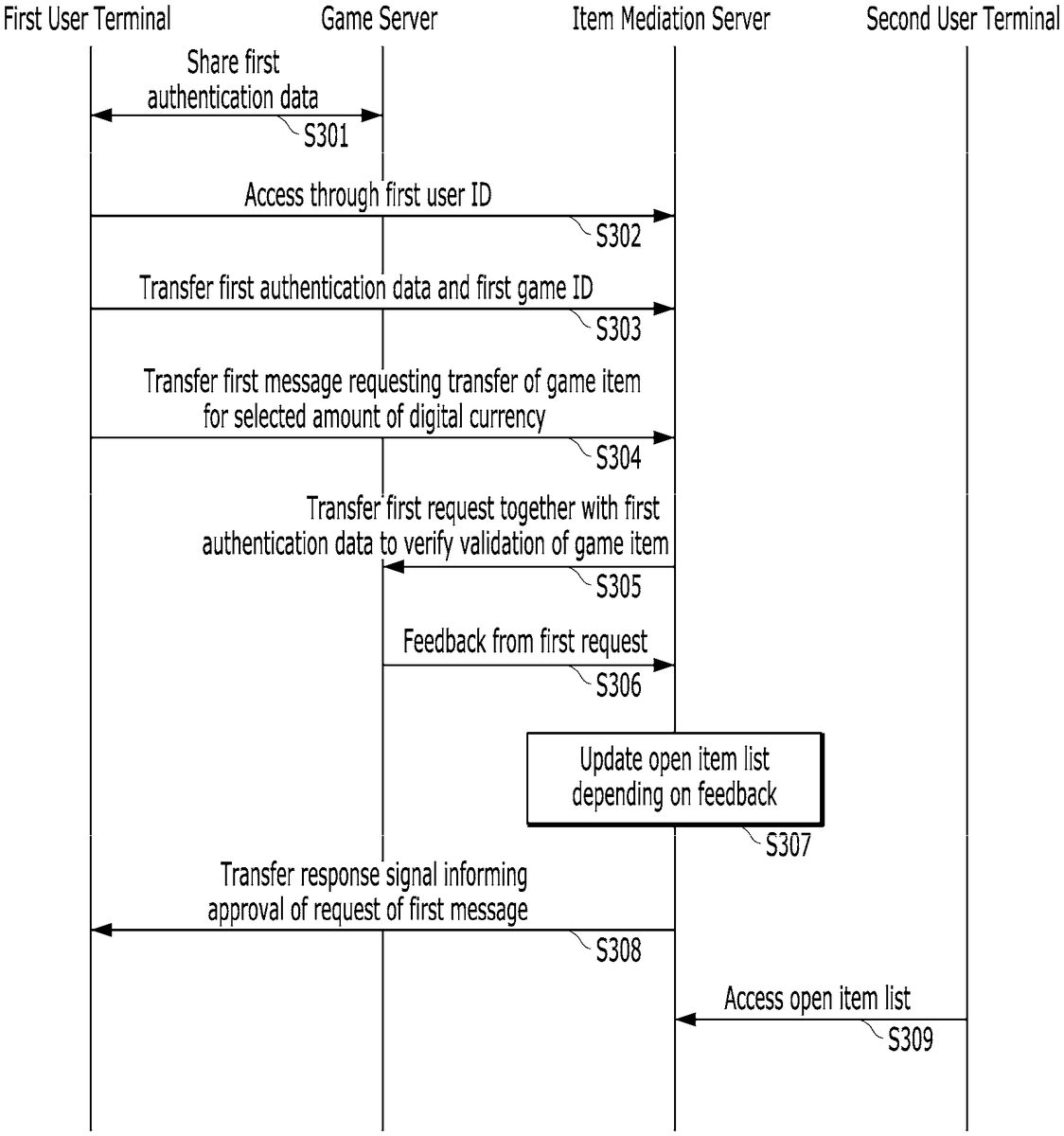
FIG. 7is a flowchart of an exemplary embodiment of a method of processing the first message requesting the transfer of the game item.
Referring toFIG. 7, at step S301, the first user terminal120and the game server110share first authentication data. The first user terminal120may access the game server110through the first game ID and carry out actions required by the game service, and may share the first authentication data with the game server110while accessing the game server110. The first authentication data is determined in the same manner as described with reference to the authentication data144ofFIG. 1.
At step S302, the first user terminal120accesses the item mediation server140through the first user ID. At step S303, the first user terminal120transfers the first authentication data and the first game ID to the item mediation server140. For instance, the first user terminal120may transfer the first authentication data in response to a user input agreeing to transfer the first authentication data to an external device such as the item mediation server140. The item mediation server140may store the first authentication data as described with reference toFIG. 1.
At step S304, the first user terminal120transfers, to the item mediation server140, a first message requesting the transfer of the game item for the selected amount of digital currency. For example, the first user terminal120may provide a user interface for receiving a user input selecting the game item and an amount of digital currency.
At step S305, the item mediation server140transfers, to the game server110, a first request together with the first authentication data to verify a validation of the game item. The mediation server140may further transfer the first game ID to the game server110.
At step S306, the game server110transfers a feedback signal or data from the first request to the item mediation server140. The game server110may determine whether the first authentication data is the one shared with the first user terminal120. If so, the game server110may access game item information belonging to the first game ID, and may verify whether the first game ID has the requested game item. The game server110may verify the validation of the game item by determining whether the identification number of the game item exists in its database. Depending on the verification, the game server110may transfer the feedback to the user terminal120indicating whether the game item is valid or invalid. If the first authentication data is not the one shared with the first user terminal120, the game server110may transfer the feedback indicating that the first authentication data is invalid.
At step S307, the item mediation server140updates the open item list to include the game item and the selected amount or more of digital currency when the game item is determined to be valid depending on the feedback received from the game server110. The game server110may manage the game item as an item to be exchanged. For example, the game server110may inform the first user terminal120that the game item is the item to be exchanges when the first user terminal120accesses the game server110. For example, the game server110may withdraw the game item from the item list LST_GMID (shown inFIG. 2) of the first game ID in advance.
At step S308, the item mediation server140transfers, to the first user terminal120, a response signal informing an approval of the request of the first message. Based on the received response signal, the first user terminal120may display that the request of the first message is approved so that the user of the first user terminal120may recognize the game item registered in the open item list.
At step S309, the second user terminal130accesses the open item list of the item mediation server140. That is, the open item list of the item mediation server140is accessible by user terminals able to communicate with the item mediation server140.
FIG. 8is a flowchart of an exemplary embodiment of a method of processing the second message requesting the transfer of the game item.
Referring toFIG. 8, at step S401, the second user terminal130and the game server110share second authentication data. The second user terminal130may access the game server110through the second game ID and carry out actions required by the game service, and may share the second authentication data with the game server110while accessing the game server110. The second authentication data is determined in the same manner as described with reference to the authentication data144ofFIG. 1.
At step S402, the second user terminal130accesses the item mediation server140through the second user ID. At step S403, the second user terminal130transfers the second authentication data and the second game ID to the item mediation server140in response to, for example, a user input agreeing to transfer the second authentication data to an external device such as the item mediation server140.
At step S404, the second user terminal130transfers, to the item mediation server140, a second message requesting the transfer of the game item at the selected amount or more of digital currency. For example, the second user terminal130may provide a user interface for receiving a user input selecting the game item listed in the open item list while displaying the open item list received from the item mediation server140. The second user terminal130may communicate with the item mediation server140to receive digital currency information of the second user ID and may further display the amount of digital currency belonging to the second user ID.
The item mediation server140determines whether the second message is authorizable through suitable processes such as steps S405to S407. If the second game ID is invalid, the owner of the game item cannot be changed from the first game ID to the second game ID. At step S405, the item mediation server140transfers, to the game server110, a third request together with the second authentication data to verify whether the second game ID is valid. If the second authentication data transferred by the item mediation server140, it means that the third request has been authorized based on an approval or selection of the second user terminal130, and not by unknown sources. That is, the second authentication data may ensure the reliability of the third request being transferred together with the second authentication data. The game server110may determine whether the second game ID exists in its database in response to the third request, and at step S406, the game server110transfers a feedback signal or data from the third request according to the determination. At step S407, the item mediation server140determines whether at least the selected amount of digital currency indicated by the open item list belongs to the second user ID. The item mediation server140may determine that the second message is authorizable if the second game ID is valid and the second user ID has at least the selected amount of digital currency.
At step S408, the item mediation server140transfers, to the game server110, a second request together with first and second authentication data to change the owner of the game item from the first game ID to the second game ID when the second message is authorizable. That is, the item mediation server140may transfer the second authentication data as well as the first authentication data when transferring the second request. The second authentication data further transferred by the item mediation server140means that the second request is based on the approval or selection of the second user terminal120as well. Therefore, the second authentication data may further ensure a reliability of the second request. The game server110may delete the game item in the item list LST_GMID of the first game ID and add the game item to the item list LST_GMID of the second game ID.
At step S409, the game server110transfers a feedback signal or data from the second request to the item mediation server140. The feedback from the second request may indicate completion of the change of the owner of the game item.
At step S410, the item mediation server410updates the digital currency of the first user ID and the second user ID in response to the feedback from the second request. The item mediation server410may update the database150, shown inFIG. 1, to withdraw the selected amount or more of digital currency from the first user ID, and to transfer the selected amount or less of digital currency to the second user ID.
At steps S411and S412, the item mediation server411transfers, to the first and second user terminals120and130, signals informing completion of the exchange of the game item.
FIG. 9is a block diagram of an exemplary computer device suitable for the item mediating server140shown inFIG. 1.
Referring toFIG. 9, a computer system1000may include a bus1100, a processor120, a system memory1300, a non-volatile storage medium1400, and a communicator1500.
The bus1100is coupled to various elements of the computer system1000to transfer data, signals, and information. The processor1200may be a general purpose processor and/or a special purpose processor, and may be configured to control overall operations of the computer system1000.
The processor1200loads computer programs and/or instructions to the system memory1300, and may execute the loaded computer programs and/or instructions to provide various functions. For example, the system memory1300may be provided as a working memory of the processor1200.
The processor1200may load an exchange management module1310providing functions of the exchange manager141shown inFIG. 1, an item list generation module1320providing functions of the item list generator142shown inFIG. 1, a transaction mediation module1330providing functions of the transaction mediator143shown inFIG. 1, when executed by the processor1200. The loaded computer programs and/or instructions may be executed by the processor1200to perform processes described with reference toFIGS. 4, 5, 6, 7, and8. In addition, the processor1200may load other computer programs and/or instructions providing one or more additional functions when executed by the processor1200.
The system memory1300may include at least one of various types such as a Read Only Memory (ROM), a Static RAM (SRAM), a Dynamic RAM (DRAM), and a Synchronous DRAM (SDRAM).
The computer programs and/or instructions to be loaded to the system memory1300may be stored in the non-volatile storage medium1400which retains stored data regardless power on/off conditions. For example, the nonvolatile storage1300includes at least one of various types such as a flash memory, a hard disk, a Read Only Memory (ROM), a Programmable ROM (PROM), an Electrically Programmable ROM (EPROM), an Electrically Erasable and Programmable ROM (EEPROM), a Phase-change RAM (PRAM), a Magnetic RAM (MRAM), a Resistive RAM (RRAM), a Ferroelectric RAM (FRAM). The computer programs and/or instructions may be loaded to the system memory1300from an external device through the communicator1500.
The communicator1500may be a transceiver or other component capable of receiving and transferring data between the computer system1000and other devices in the network system100through the network105. The communicator1500may provide a wire interface and/or wireless interface to communicate through the network105.
Although certain exemplary embodiments and implementations have been described herein, other embodiments and modifications will be apparent from this description. Accordingly, the inventive concepts are not limited to such embodiments, but rather to the broader scope of the appended claims and various obvious modifications and equivalent arrangements as would be apparent to a person of ordinary skill in the art.
Claims
- A network server to mediate actions relating to online games between user terminals, the network server comprising: a communicator;a first storage medium;a second storage medium to store a list of game items;and at least one processor coupled to the communicator to receive data from and transfer data to an online gaming network, the at least processor being configured to: receive a first data signal from a first user terminal, the first data signal comprising a first authentication token that is shared by the first user terminal and a game server;store the first authentication token in the first storage medium in associated with the first user terminal;transfer to the game server a first request, together with the first authentication token, to verify validation of a game item when a first message including information relating to the game item is received from the first user terminal;update the list of game items of the second storage medium to include the game item information based on feedback from the first request received from the game server and provide access to the list of game items to a second user terminal;receive from the second user terminal a second message relating to the game item;determine whether the second message is authorized;and transfer to the game server a second request, together with the first authentication token, to change an owner of the game item from a first game ID associated with the first user terminal to a second game ID associated to the second user terminal in response to determining whether second message is authorized.
- The network server of claim 1 , wherein the first authentication token is determined by communication between the first user terminal and the game server.
- The network server of claim 1 , wherein: the first request comprises the first game ID and information related to or representative of the game item;and the processor is further configured to receive the first game ID from the first user terminal and to update the list of the game items in response to the feedback from the first request indicating that the game item belongs to the first game ID.
- The network server of claim 1 , wherein: the first message further comprises information representative of a selected amount of digital currency;and the processor is further configured to update the list of game items to include the digital currency information based on the feedback from the first request.
- The network server of claim 4 , wherein the processor is further configured to determine whether the second message is authorized by accessing a database to determine whether at least the selected amount of digital currency belongs to a first user ID associated with the second user terminal.
- The network server of claim 5 , wherein the processor is further configured to update a database to withdraw the selected amount of digital currency from the first user ID, and to transfer the selected amount to a second user ID associated with the first user terminal, in response to feedback from the second request received from the game server indicating completion of the change of the owner.
- The network server of claim 1 , wherein: the processor is further configured to receive the second game ID from the second user terminal and to determine whether the second message is authorized by transferring to the game server a third request to verify whether the second game ID is valid.
- The network server of claim 7 , wherein: the processor is further configured to receive a second authentication token from the second user terminal that is shared by the second user terminal and the game server and to transfer the second authentication token together with the third request to enable the game server to verify whether the second game ID is valid.
- The network server of claim 1 , wherein: the processor is further configured to receive a second authentication token from the second user terminal that is shared by the second user terminal and the game server and to transfer the second authentication token together with the second request and the first authentication token.
- The network server of claim 1 , wherein the processor is further configured to: inform the first user terminal that the request in the first message is authorized when the list of game items is updated;and inform the first user terminal that the request in the first message is not authorized when the game item is invalid.
- A method of operating a network server to mediate actions between user terminals relating to online games, the method comprising steps of: receiving a first data signal from a first user terminal, the first data signal comprising a first authentication token shared by the first user terminal and a game server;storing the first authentication token in a first storage medium in associated with the first user terminal;transferring to the game server a first request, together with the first authentication token, to verify validation of a game item associated with the game server when a first message including information relating to the game item is received from the first user terminal;updating a list of game items of a second storage medium to include the game item information based on feedback from the first request received from the game server;providing access to the updated list of game items to a second user terminal;receiving from the second user terminal a second message relating to the game item;determining whether the second message is authorized;and transferring to the game server a second request together with the first authentication token to change an owner of the game item from a first game ID associated with the first user terminal to a second game ID associated with the second user terminal in response to determining whether the second message is authorized.
- The method of claim 11 , wherein the first authentication token is determined by communication between the first user terminal and the game server.
- The method of claim 11 , further comprising the step of receiving the first game ID from the first user terminal, and wherein the first request comprises the first game ID and the game item information, and wherein the step of updating the list of game items comprises updating the list of game items in response to the feedback from the first request indicating that the game item belongs to the first game ID.
- The method of claim 11 , wherein: the first message further includes a selected amount of digital currency;and the step of updating the list of game items comprises updating the list of game items to further include the selected amount of digital currency based on the feedback from the first request.
- The method of claim 14 , wherein: the step of determining whether the second message is authorized comprises accessing a database to determine whether at least the selected amount of digital currency belongs to a first user ID associated to the second user terminal.
- The method of claim 15 , further comprising: updating a database to withdraw at least the selected amount of digital currency from the first user ID, and to transfer the selected amount of digital currency to a second user ID associated to the first user terminal, in response to feedback from the second request received from the game server indicating completion of the change of the owner.
- The method of claim 11 , further comprising a step of: receiving the second game ID from the second user terminal, and wherein the step of the determining whether the second message is authorized comprises transferring to the game server a third request to verify whether the second game ID is valid.
- The method of claim 17 , further comprising a step of: receiving a second authentication token from the second user terminal, the second authentication token being shared by the second user terminal and the game server, and wherein the step of transferring the third request comprises transferring the second authentication token together with the third request to enable the game server to verify whether the second game ID is valid.
- The method of claim 11 , further comprising the step of: receiving a second authentication token from the second user terminal, the second authentication token being shared by the second user terminal and the game server, and wherein the step of transferring the second request comprises transferring the second authentication token together with the second request and the first authentication token.
- The method of claim 11 , further comprising steps of: informing the first user terminal that the request in the first message is authorized when the list of game items is updated;and informing the first user terminal that the request in the first message is not authorized when the game item is invalid.
Disclaimer: Data collected from the USPTO and may be malformed, incomplete, and/or otherwise inaccurate.