U.S. Pat. No. 10,929,335
GENERATING SEGMENTED NOTIFICATIONS IN A VIRTUAL SPACE
AssigneeKabam, Inc.
Issue DateMarch 28, 2019
Illustrative Figure
Abstract
A system and method for facilitating segmented notifications relating to a virtual space are disclosed. Such notifications may be segmented for different user segments within the virtual space. In some examples, the segmentation of the notification may be at least in part with respect to contents included in notification for different user segments. The content segmentation may be with respect to a communication style, pattern, format, a language expressed in, one or more culture references used and/or any other aspects related to contents that may be included in notifications for the different user segments. In some examples, the notifications may include incentive offers and may be segmented with respect to parameters of the incentive offers for presentation to the different user segments. In some implementations, transmission frequencies for transmitting notifications to the different user segments may be determined.
Description
DETAILED DESCRIPTION FIG. 1illustrates a system100for generating segmented notifications in a virtual space. Providing the virtual space may include hosting the virtual space over a network. In some implementations, system100may include a server102. The server102may be configured to communicate with one or more client computing platforms104according to a client/server architecture. The users may access system100and/or the virtual space via client computing platforms104. The server102may comprise a processor108configured to execute computer readable instructions to implement system components. The computer program components may include one or more of a space component112, a user component114, a notification generation component116, a notification frequency determination component118, a notification transmission module120, and/or other components. The space components112may be configured to execute an instance of the virtual space in which an online game takes place. Within the instance of the virtual space, the users may interact with virtual space elements and/or with each other through gameplays provided by the online game. The gameplays may include role-playing, first-person shooter, real-time strategy, turn-based strategy, simulation, music or rhythm playing, social interaction, twitching and/or any other gameplays. The execution of the instance of the virtual space by space component112may include determining the state communicated (e.g., via streaming visual data, via object/position data, and/or other state information) from server102to client computing platforms104for presentation to users. The state determined and transmitted to a given client computing platform104may correspond to a view for a user character being controlled by a user via the given client computing platform104. The state determined and transmitted to a given client computing platform104may correspond to a location in the virtual space. The view described by the state for the given client computing platform may correspond, for example, to the location from which the view is taken, the location the view depicts, and/or other locations, a zoom ratio, a ...
DETAILED DESCRIPTION
FIG. 1illustrates a system100for generating segmented notifications in a virtual space. Providing the virtual space may include hosting the virtual space over a network. In some implementations, system100may include a server102. The server102may be configured to communicate with one or more client computing platforms104according to a client/server architecture. The users may access system100and/or the virtual space via client computing platforms104. The server102may comprise a processor108configured to execute computer readable instructions to implement system components. The computer program components may include one or more of a space component112, a user component114, a notification generation component116, a notification frequency determination component118, a notification transmission module120, and/or other components.
The space components112may be configured to execute an instance of the virtual space in which an online game takes place. Within the instance of the virtual space, the users may interact with virtual space elements and/or with each other through gameplays provided by the online game. The gameplays may include role-playing, first-person shooter, real-time strategy, turn-based strategy, simulation, music or rhythm playing, social interaction, twitching and/or any other gameplays. The execution of the instance of the virtual space by space component112may include determining the state communicated (e.g., via streaming visual data, via object/position data, and/or other state information) from server102to client computing platforms104for presentation to users. The state determined and transmitted to a given client computing platform104may correspond to a view for a user character being controlled by a user via the given client computing platform104. The state determined and transmitted to a given client computing platform104may correspond to a location in the virtual space. The view described by the state for the given client computing platform may correspond, for example, to the location from which the view is taken, the location the view depicts, and/or other locations, a zoom ratio, a dimensionality of objects, a point-of-view, and/or view parameters of the view. One or more of the view parameters may be selectable by the user.
The instance of the virtual space and/or the online game that takes place therein may be persistent. That is, the virtual space and/or the online game may continue on whether or not individual users are currently logged in and/or participating in the virtual space. A user that logs out of the virtual space and then logs back in some time later may find the game space has been changed through the interactions of other users with the game space during the time the user was logged out. These changes may include changes to the simulated physical space, changes in the user's inventory, changes in other users' inventories, changes experienced by non-user characters, and/or other changes.
The instance of the virtual space may comprise a simulated space that is accessible by users via clients (e.g., client computing platforms104) that present the views of the virtual space to a user. The simulated space may have a topography, express ongoing real-time interaction by one or more users, and/or include one or more objects positioned within the topography that are capable of locomotion within the topography. In some instances, the topography may be a 2-dimensional topography. In other instances, the topography may be a 3-dimensional topography. The topography may include dimensions of the space, and/or surface features of a surface or objects that are “native” to the space. In some instances, the topography may describe a surface (e.g., a ground surface) that runs through at least a substantial portion of the space. In some instances, the topography may describe a volume with one or more bodies positioned therein (e.g., a simulation of gravity-deprived space with one or more celestial bodies positioned therein). The instance executed by the computer components may be synchronous, asynchronous, and/or semi-synchronous.
The instance of the virtual space may comprise virtual space entities automatically controlled in the instance of the virtual space. Such virtual space entities may not be associated with any user. As such, the automatically controlled virtual space entities may be generated and/or developed by artificial intelligence configured with the server102by a provider, administrator, moderator, and/or any other entities related to the virtual space. These automatically controlled entities may evolve within the virtual space free from user controls and may interact with the entities controlled by or associated with the users, other automatically controlled virtual space entities and as well as the topography of the virtual space. Certain manifested traits may be associated with the automatically controlled entities in accordance with the artificial intelligence configured with the server102. As used herein, such automatically controlled virtual space entities in the instance of the virtual space are referred to as “AI entities”.
The above description of the manner in which state of the virtual space is determined by space component112is not intended to be limiting. The space component112may be configured to express the virtual space in a more limited, or richer, manner. For example, views determined for the virtual space representing the state of the instance of the virtual space may be selected from a limited set of graphics depicting an event in a given place within the virtual space. The views may include additional content (e.g., text, audio, pre-stored video content, and/or other content) that describes particulars of the current state of the place, beyond the relatively generic graphics. For example, a view may include a generic battle graphic with a textual description of the opponents to be confronted. Other expressions of individual places within the virtual space are contemplated.
Within the instance(s) of the virtual space executed by space component112, the users may participate in the instance of the virtual space by controlling one or more of an element in the virtual space. The user controlled elements may include avatars, virtual space characters, virtual space units (e.g., troops), objects (e.g., weapons, horses, vehicle and so on), simulated physical phenomena (e.g., wind, rain, earthquakes, and/or other phenomena), and/or other user controlled elements. The user controlled avatars may represent the users in the virtual space. The user characters may include heroes, knights, commanders, leaders, generals and/or any other virtual space entities that may possess strength, skills, abilities, magic powers, knowledge, and/or any other individualized attributes. The virtual space units controlled by the user may include troops and/or any other virtual space entities that may be trained, recruited, captured, and/or otherwise acquired by the users in groups or en mass. The objects controlled by the users may include weapons, vehicles, projectiles, magic items, wardrobes, boots, armor, knapsacks, medicine, healing potion, and/or any other virtual items that may be employed by the users for interaction with the virtual space.
In any case, the user controlled elements may move through and interact with the virtual space (e.g., AI entities, elements controlled by other users and/or topography in the virtual space). The elements controlled by a given user may be created and/or customized by the given user. The given user may have an “inventory” of virtual goods and/or currency usable within the virtual space.
Within the instance of the virtual space executed by space component112, resources may be, for example, generated, cultivated, prospected, mined, harvested, purchased, earned, traded and/or gifted over time by units, characters, pets, buildings, facilities and/or any other infrastructure or entities in the virtual space for a given user. Resources may include virtual items that are accumulated en masse and then used to satisfy resource requirements in the virtual space. By way of non-limiting examples, virtual space resources may include food (e.g., rice, fish, wheat, etc.), wood, minerals (e.g., good, iron, ore, coal, oil, stone, crystal, etc.), plants, animals, virtual items, virtual currencies, and/or any other resources appropriate for the virtual space. Transfer of resources between users may be reflected through user inventories
Controls of virtual elements may be exercised through commands input by a given user through client computing platforms104. The given user may interact with other users through communications exchanged within the virtual space. Such communications may include one or more of textual chat, instant messages, private messages, voice communications, and/or other communications. Communications may be received and entered by the users via their respective client computing platforms104. Communications may be routed to and from the appropriate users through server102(e.g., through space component112).
The given user may input commands with specific parameters to undertake specific deeds, actions, functions, sphere of actions and/or any other types of interactions within the virtual space. For example, the given user may input commands to construct, upgrade and/or demolish virtual buildings, harvest and/or gather virtual resources, heal virtual user controlled elements, AI entities and/or elements controlled by other users, train, march, transport, reinforce, reassign, recruit, and/or arrange troops, attack, manage, create, demolish and/or defend cities, realms, kingdoms, and/or any other virtual space locations controlled by or associated with the users, craft or transport virtual items, interact with, compete against or along with AI entities and/or virtual space elements controlled by other users in combats, research technologies and/or skills, mine and/or prospect for virtual resources, complete missions, quests, and/or campaigns, exercise magic power and/or cast spells, and/or perform any other specific deeds, actions, functions, or sphere of actions within the virtual space. In some examples, the given user may input commands to compete against elements in an environment within the virtual space—i.e., PvE activities. In some examples, the given user may input commands to compete against each other within the virtual space—i.e., PvP activities.
The space component112may be configured to execute user actions to facilitate interaction of the users with the virtual space and/or each other in response to receiving virtual space commands input by the users. Execution of the user action by the space component112may produce changes to the virtual space state, which may reflect progresses and/or results of the user actions. In some examples, state changes caused by the execution of the user actions may be recorded in the electronic storage122to facilitate persistency throughout the instance of the virtual space. In some examples, execution of the user actions may not produce persistent changes to the virtual space state (e.g., a user character jumping forward and backward successively may not produce any perceivable game state changes to other users).
The user actions executed by the space component112may include combat actions enabling users to direct user entities to compete against AI entities and/or against virtual space elements controlled by other users in combats. The combat actions may include real-time combat actions through which the users may direct user entities (e.g., avatars) to perform maneuvers in real or near-real time; may include turn-based combat actions through which the users may direct user entities (e.g., user character, troops and/or combat equipment) to inflict damages and/or resist damages; may include strategy combat actions through which the users may position the user entities strategically in combats; and/or may include any other types of combat actions.
Within the instance of the virtual space, the users may control virtual space locations to generate revenues, productions, resources, troops, culture, wonders, special units and/or any other types of output enabled by the virtual space locations controlled by the users. The user controlled locations may include virtual space towns, cities, kingdoms, castles, villages, fortresses, land masses, resource cores, and/or any other types of virtual space locations. Typically, through controlling such virtual locations, the users may grow populations, construct infrastructures, conduct commerce, collect taxes, raise troops, train special units, train knights and/or any other user characters, research technologies, gain skills and/or abilities, and/or undertake any other actions, functions, deeds, sphere of actions as enabled by such virtual space locations. For example, a given user may control multiple cities in the virtual space and the cities may generate revenues to fund the given user activities within the virtual space; may generate troops; may generate growth in science; may produce weapons; may generate production; may produce food and so on.
The users may control resource cores in the virtual space. A resource core is a type of virtual space object that may provide specific raw materials, resources, currencies, substances, and/or any other virtual space elements when harvesting actions are performed by user characters with proper skills, equipment, gears, formulas, time duration, and/or any other harvesting parameters. Resource cores may or may not be visible to the users, depending on the user skills. Resource cores may be depleted due to harvesting actions by users and in some examples may be destroyed in the virtual space. In some examples new resource cores may be created to replace the destroyed ones in the virtual space at times determined by the provider, administrator, moderator, and/or any other entities related to the virtual space. Examples of resource cores may include mines, rivers, wells, oceans, swamp, mountains, forests, boxes, pets, plants, and/or any other virtual space locations or objects.
Within the instance of the virtual space, user controlled avatars, characters, objects (e.g., weapons), and/or any other user controlled elements may be associated with virtual space locations. In some examples, such associations may be implicated in the virtual space such that a given user controlled element may be associated with some or all of the virtual space locations controlled by or associated with the given user. In some other examples, such associations may be implicated in the virtual space such that the given user element may be associated with some of the virtual space location controlled by or associated with the given user as however predefined by the provider, administrator, moderator, and/or any other entities related to the virtual space (e.g., the given user character may be only associated with a location where the user character was originally trained and another a location where the user character is currently being stationed at).
Within the instance of the virtual space, AI entities may be associated with virtual space locations as predefined by the provider, administrator, moderator, and/or any other entities related to the virtual space. For example, an AI character may be associated with a virtual space location such that the AI character is supported by the virtual space location (e.g., through production, resources and/or commerce generated by that virtual space location). The virtual space locations associated with Al entities may be controlled automatically by artificial intelligence configured with server102and may evolve in accordance with such artificial intelligence within the virtual space.
Within the instance of the virtual space, levels may be established to facilitate and/or incentivize user advancements. Users may receive virtual points for performing actions, participating in virtual space activities, interacting with virtual space elements and/or other users, and/or for engaging in any other interactions provided by the virtual space. A user may advance to a next virtual space level when a certain goal has been reached, an end condition has been fulfilled by the user in the virtual space, and/or the virtual points acquired by the user has reached a threshold corresponding to the next level. Advancements in user levels typically result in attribute boosts, skill boosts, resistance boosts, higher status, and/or any other user progressions in the virtual space. In some examples, for different categories of gameplays, skills, abilities, and/or any other areas that may be progressed by users, different levels may be established. For example, experience levels may be established in the virtual space to reflect overall experiences of the users in the virtual space, levels in certain skills may be established to reflect user progressions in acquiring or mastering these skills in the virtual space, and so on.
The user component114may be configured to access and/or manage one or more user profiles and/or user information associated with users of the system100. The one or more user profiles and/or user information may include information stored by server102, one or more of the client computing platforms104, and/or other storage locations. The user information associated with a given user may comprise one or more user parameters related to the given user. The one or more user parameters may include, but not limited to, a language spoken by, a geolocation of, an age group of, a time zone of, a level of experience related to the virtual space by, a level of activity level by the given user, and/or any other user parameters associated with the given user. The level of experience of the given user may include and/or indicate a rank of the user in the virtual space, cumulative experience points (XP) acquired by the given user in the virtual space, a skill level of the given user in the virtual space, a level of progression of the given user in the virtual space, or any other progressive aspects indicating a status of the given user in the virtual space. The activity level may include previous login time(s), previous logout time(s), login frequency, time spent logged in, and/or other activity information.
The user information may include information related to purchases or spending by the given user in or for the virtual space. Such spending information may include, for example, purchase information for individual transactions, a spend rate, a total spend amount, and/or other information related to user purchases. The spending information associated with a given user may indicate a level of spending by the given user within the virtual space, for example, without limitation, lifetime spending (total spending by the given user in the virtual space), average spending during certain predetermined periods (e.g., spending by the given user during thanksgiving, Christmas and/or any other periods), spending by the given user during certain events within the virtual space (e.g., spending by the given user during a specific tournament, quest, contest, and/or any other types of virtual space events), and any other spending information by the given user.
The user profiles may include, for example, information identifying users (e.g., a username or handle, a number, an identifier, and/or other identifying information) within the virtual space, security login information (e.g., a login code or password), virtual space account information, subscription information, virtual currency account information (e.g., related to currency held in credit for a user), relationship information (e.g., information related to relationships between users in the virtual space), virtual space usage information, demographic information associated with users, interaction history among users in the virtual space, information stated by users, purchase information of users, browsing history of users, a client computing platform identification associated with a user, a phone number associated with a user, and/or other information related to users. The user information managed by the user component114may include information indicating levels of interaction with the virtual space by individual users. The interaction level of an individual user as indicated in such information may reflect an amount of interaction with the virtual space by the individual user.
The notification generation component116may be configured to generate notifications to notify individual users of information related to the virtual space. The notifications generated by notification generation component116may notify the individual users of events, activities, news, updates, and/or any other types of state change within the virtual space. This may include notifications of user (including the user's own and other users') developments and/or progression within the virtual space, character (including AI and user character's) progression and/or developments, conditions that have occurred, one or more events that will, are taking place or have completed in the virtual space and/or any other types of state changes within the virtual space. For example, the events that may be notified by the notifications generated by the notification generation component116may include trigger events that may impact user progression or user character progression in the virtual space with respect to a given user. Examples of such trigger events may include conclusory events, initiatory events, first party events, third party events, warning events, and/or other types of events. A conclusory event may occur at the end of some process within the virtual space. By way of example, a conclusory event may occur at the end of an upgrade period, at the end of a travel period (e.g., user troops march from one point in the virtual space to another point), at the end of a contest (e.g., between entities controlled by users), at the end of a cool down period, and/or at the end of other processes. An initiatory event may occur at the beginning of a process. An event may be a first party event to a user that initiates the event (or the corresponding process), or the event may be a first party event to a user directly involved in the event (or the corresponding process). An event may be a third party event to a user that did not initiate the event (or corresponding process), or the event may be a third party event to a user that is not directly involved in the event (or corresponding process).
The activities that may be notified by the notifications generated by notification generation component116may include campaigns, missions, quests, challenges, secondary games, mini-games, and/or any other types of activities that users may participate in the virtual space. By way of non-limiting example, without limitation, a notification may be generated to notify a given user that the given user is eligible to participate in a mission that is under way within the virtual space and the user may gain experience points by participating in the mission.
The character developments that may be notified by the notifications generated by notification generation component116may include skill, level, experience, strength, personality, defense, health, attack and/or any other character attributes progression within the virtual space. The character developments may include those associated with user characters and/or AI characters. The notified character developments may not be necessarily limited to positive character developments, e.g., level up of the characters; the notified character developments may include negative developments, e.g., for example an AI character has lost certain amount of health in defeating an attack and thus may be vulnerable.
The conditions that may be notified by the notifications generated by notification generation component116may inform the users that these conditions have been satisfied within the virtual space. The notified conditions may include those predetermined by a provider, administrator, moderator, and/or any other entities related to the virtual space or may be dynamically configured by the users. By way of non-limiting example, without limitation, a user may initiate marching of some troops to a rally point in the virtual space; the marching may take an extended period of time, say 1 day during which the user may not actively participate in the virtual space; absent from user's participation of the user, the troops will nevertheless march to the rally point en route various ragged areas within the virtual space on the way; when in those areas, AI characters may attack the troops; and the user may set a condition for notification such that when the troops engage in a battle in those areas against the AI characters and incur more than 5% troop loss, a notification should be generated and transmitted to the user, e.g., via a push notification. In this way, upon receiving such a notification, the user may log into the virtual space to control the troops either to fight the AI characters more strategically or take detour around a specific ragged area where the user's troops suffer more than 5% losses.
In some examples, the notifications generated by notification generation component116may convey information to remind individual users to participate in the virtual space after a period of inactivity. For example, a notifications may be generated to reengage—e.g., “wake up” dormant users the virtual space. For instance, as an illustration, a notification may be generated for a given user to notify him/her that his/her troops need his/her leadership in the virtual space. In some implementations, for incentivizing the dormant users to reengage the virtual space, incentive offers may be included in the notifications. For example, a notification may be generated to remind the user that the user has not logged into the virtual space for 3 days and if the user logs into the virtual space, certain amount of resources may be awarded to the user (e.g., 2 gems).
In some examples, the notifications generated by notification generation component116may include incentive offers offering virtual items in exchange of stored consideration from the users. A given virtual item included in such an offer may include one or more of a given virtual item of clothing, a tool, a weapon, a pet, a vehicle, currency, a potion or elixir, ingredients, and/or other virtual items that exist in the virtual space. The given virtual item may provide a functional advantage in the virtual space to its owner (e.g., an advantage in the online game). The given virtual item may be expressed aesthetically within views of the instance of the virtual space. The given virtual item may have value in the virtual space that facilitates trading the virtual item for some other consideration within the virtual space (e.g., for another virtual item, for a service, for an advantage, and/or other consideration). The stored consideration may include, but not limited to, virtual currency, virtual resources, real-world money credits and/or any other stored consideration associated with the users, for example stored in the user accounts managed by the user component114. The notifications generated by the notification generation component116presenting such offers may facilitate the users to accept the offers by transferring the stored consideration the user accounts to the provider of the virtual space, a third party in connection with the virtual space, and/or any other entities that are in connection with offers of the virtual items included in the notifications generated by notification generation component116.
In any case, the notification generation component116may segment the notifications described above for different user segments within the virtual space. Users of the virtual space may be segmented by different parameter values for a set of one or more user parameters, e.g., those managed by the user component114. As described above, the user parameters may include, but not limited to, a language spoken by, a geolocation of, an age group of, a time zone of, a level of experience related to the virtual space by, a level of activity level by a given user, and/or any other user parameters associated with the given user. By way of non-limiting example, without limitation, a user segment in the virtual space may comprise users physically located in the U.S. age between 15-25; another user segment in the virtual space may comprise users physically located in the US age between 25-40; yet another user segment in the virtual space may comprise users physically located in China age between 18-20; and so on. In another non-limiting example, a user segment in the virtual space may comprise users that have total lifetime spending more than $100 per capita; another user segment in the virtual space may comprise users that have total lifetime spending between $50-$100; yet another user segment in the virtual space may comprise users that have total lifetime spending between $25-$50 and so on. A given user segment as however defined by one or more user parameters may be sub-segmented by additional user parameters. It is understood a “user segment” may be such a sub-segment. For example, within the user segment of physically located in the U.S. between age 15-25, further user segments may be divided based on states these users are located in. In some implementations, the user segments in the virtual space may be determined by the provider, administrator, moderator, and/or any other entities related to the virtual space at a configuration stage of the system100. In some implementations, the user segments may be determined by the provider, administrator, moderator, and/or any other entities related to the virtual space through a graphical user interface during runtime of the system100.
In some examples, a given notification about a state change in the virtual space may be segmented for transmission to different user segments with respect to at least contents included in the given notification for different user segments. The contents included in such a notification for different user segments within the virtual space may be differentiated based on parameter values for a set of one or more parameters that segment the users. Such content differentiation for user segments may include differentiation in terms of communication style, format, pattern, and/or any other aspects related to communication of the notification to the user segments, in terms of a language the contents in the notification are expressed in, in terms of culture references used in the contents in the notification, in terms of a level of detail of the contents in the notification and/or differentiation in terms of any other aspects related to the contents in the notification.
FIG. 2illustrates one example of segmented user notifications based on different parameter values for a set of user parameters. It will be described with references toFIG. 1. As can be seen in this example, one or more notifications206may be generated for users202in the virtual space as triggered by a stage change in the virtual space. As shown, the event208may, for example include an occurrence (including past, current and/or future occurrence) of an event, an activity, a condition and/or any other state changes in the virtual space as described above. As can be seen, in this example, in response to identification of the state change208, notifications206may be generated for the users202of the virtual space to notify them about the state change208in the virtual space and/or any other information in connection with the state change208.
As illustrated, the users202may be segmented based on a set of user parameters204related to various attributes or aspects associated with the users, such as, but not limited to, a language spoken, a level of past spending, a level of activities, an age group, a geographical location, a time zone, a level of experience, a class/race/role assumed in the virtual space, a number of virtual items associated with, and/or any other user parameters. As shown in this example, the users202may be segmented based on different values for the user parameters204associated with the users. In this example, as illustrated, the users202are segmented for a language spoken, an age group and other user parameters.
As still shown inFIG. 2, for the corresponding ones of the segmented users202a, b, c, d,segmented notifications206a, b, c, dmay be generated with different contents therein. As illustrated, for segmenting the notifications206, the contents included in the respective notifications206may be differentiated with respect to, for example, but not limited to, a level of details of the information conveyed by the respective notifications, a communication pattern, a communication format (e.g., still images, graphical art, animation, video), and/or a communication style in which the contents of the respective notification is presented to the respective user segment; a language in which the content of respective segmented notification is expressed; a culture context in which the content of the respective notification is expressed; a and any other aspects that may segmented the contents of the notifications206.
For example, the content #1included in the notifications206afor user segment202a—English speaking users between age 15 to 25 may be expressed in a less formal style—e.g., a colloquial communication style popular among English speaking youth. Content #2included in the notifications206bfor user segment202b—English speaking users between age 25 and 40 may be expressed in communication appropriate for that age group—e.g., a formal communication style adopted by middle class users of that age group. Content #3included in the notifications206cfor user segment202c—Chinese speaking users between age 15 and 25 may be expressed in Chinese using a communication style adopted by youth in China. Content #4included in the notifications206dfor user segment202d—Spanish speaking users between age 15 and 25 may be expressed in Spanish using communication style popular among Spanish speaking youth.
In another example, the notifications conveying a state change208may be segmented based on a level of experience associated with the users in the virtual space. In that example, the user segment206amay comprise users having at least experience level (XP) 10 or above in the virtual space. For the user segment206a,the contents included in the notifications206amay be express in a level of details with great specificity as to entities, places, characters, events, and/or any other aspects involved in the state change208. By comparison, for the user segment under level 10, such a notification may be brief without as many details. This may motivate user to progress in the virtual space for receiving enhanced notifications. This may encourage user activity in the virtual space as the less experienced user may be required to explore the virtual space in order to ascertain the details of the notification generated for them.
In still another example, the notifications conveying a state change208may be segmented with respect to communication format based on user age. In that example, the notifications206about a state change208generated for user segment of children younger than 12 may include animations and sounds but no texts; while notifications206generated for user segment of users of older age may include texts. This may communicate notifications206to user segments effectively in formats understandable to corresponding user segments.
In yet another example, the notifications206conveying a given state change208in the virtual space may be segmented based on a level of spending by the users in the virtual space. Contents included in notifications generated for users who have spending in the virtual space above a threshold level may be expressed more sensitively (e.g., more politely) than that included in notifications generated for users who have spending in the virtual space less than that threshold level. This may enhance monetization opportunities for the provider of the virtual space.
In another example, the notifications conveying a given state change208in the virtual space may be segmented with respect to culture context based on user segments from different cultures. In that example, information conveyed in the notifications206for user segment of users from the United States may include terms with culture references (e.g., a slang, a reference to a TV show, a movie, a novel), familiar in the U.S.; information conveyed in the notifications206for user segment of users from China may include terms with culture references familiar in China (e.g., a reference to a historical character, idiom, fiction, teaching); and so on.
Returning toFIG. 1, in some implementations, the notification generation component116may be configured to determine incentive offers for inclusion in the segmented notifications. The determination of a given incentive offer for inclusion in segmented notifications may involve a determination which virtual item(s) may be included in incentive offers, a determination of the size of discounts included in the incentive offers, a determination of prices for the virtual items included in the incentive offers, and/or a determination of any other offer parameters of incentive offers for inclusion in the segmented notifications generated by the notification generation component116. Such determinations of the offer parameters may be based on one or more user parameters, such as, for example, an activity level parameter, a user spending parameter, and/or other user parameters. Determination of an incentive offer based on an activity level parameter may include attempting to lure an inactive user back to the virtual space (e.g., making a more valuable offer to less active users). Determination of an incentive offer based on a user spending parameter may include attempting to entice a user to make a larger purchase than usual, attempting to entice a user to spend money for a different type of virtual item, and/or enticing other spending behaviors. Other determinations of virtual items for inclusion in incentive offers in notifications based on user parameters are contemplated.
In those implementations, the incentive offers included in the notification may be segmented for different user segments. By way of non-limiting example, without limitation, the price of a particular virtual item that is on sale in a virtual store within the virtual space may be differentiated in notifications generated for different user segments. For example, as an illustration, for a user segment of users with lifetime spending above a threshold, a first price of a virtual item included in an offer included in a notification presented to that user segment may be determined; for a user segment of users with lifetime spending below that threshold, a second price of a virtual item included in an offer included in a notification presented to that user segment may be determined, wherein the second price may be lower than the first price. This may entice users that do not spend as often in the virtual space to spend.
The notification frequency determination component118may be configured to determine notification frequencies at which the notifications generated by the notification generation component116may be transmitted to the corresponding users. For different user segments, the determination component118may determine different notification frequencies at which notifications generated by the notification generation component116may be transmitted to the different user segments. For example, the notification frequency determination component118may determine a first frequency at which a notification conveying a given piece of information may be transmitted to a first user segment; and a second frequency, different from the first frequency, at which the notification may be transmitted to a second user segment. By way of non-limiting example, without limitation, a notification reminding user to actively participate in the virtual space may be transmitted at a less frequency to a user segment of users with individual lifetime spending above a threshold; and by comparison such a notification may be transmitted to a user segment of users with individual lifetime spending below a threshold. Other determinations of notification frequencies based on other user parameters are contemplated.
The notification transmission component120may be configured to effectuate transmission of notifications through electronic communication media internal and/or external to virtual space. This may include determining one or more of communication media through which the notification may be transmitted to the corresponding users, and/or other aspects of the notifications. Determining the communication media may include selecting one or more communication media, e.g., email, text, instant message, push notification, voice, visual alert and/or other media for a given notification to the corresponding users. For example, notification transmission component120may effectuate transmission of notifications to different user segments using different communication media. For example, a given notification generated by the notification generation component116may be transmitted to a user segment of users of age between 15 and 15 using instance message; may be transmitted to a user segment of users of age between 25 and 40 using email; and so on.
Communication media external to the virtual space may include communication media not relayed to the users by server102. Instead, such communication may be relayed to the users through an external service provider. As notifications are transmitted to users, records of such transmissions may be made (e.g., in the user accounts). The records may include information about one or more of a format of the notifications, the state changes that triggered the notifications, the content in the notifications, the communication media used to transmit the notifications, and/or other information about the notifications. These records may be used by space component112, notification generation component116, used by notification frequency determination component118, and/or other modules.
The server102, client computing platforms104, and/or external resources106may be operatively linked via one or more electronic communication links. For example, such electronic communication links may be established, at least in part, via a network such as the Internet and/or other networks. It will be appreciated that this is not intended to be limiting, and that the scope of this disclosure includes implementations in which servers102, client computing platforms104, and/or external resources106may be operatively linked via some other communication media.
A given client computing platform104may include one or more processors configured to execute computer program components. The computer program components may be configured to enable an expert or user associated with the given client computing platform104to interface with system100and/or external resources106, and/or provide other functionality attributed herein to client computing platforms104. By way of non-limiting example, the given client computing platform104may include one or more of a desktop computer, a laptop computer, a handheld computer, a tablet computing platform, a NetBook, a Smartphone, a gaming console, and/or other computing platforms.
The external resources106may include sources of information, hosts and/or providers of virtual environments outside of system100, external entities participating with system100, and/or other resources. In some implementations, some or all of the functionality attributed herein to external resources106may be provided by resources included in system100.
The server102may include electronic storage110, one or more processors108, and/or other components. The server102may include communication lines, or ports to enable the exchange of information with a network and/or other computing platforms. Illustration of server102inFIG. 1is not intended to be limiting. The server102may include a plurality of hardware, software, and/or firmware components operating together to provide the functionality attributed herein to server102. For example, server102may be implemented by a cloud of computing platforms operating together as server102.
Electronic storage110may comprise electronic storage media that electronically stores information. The electronic storage media of electronic storage110may include one or both of system storage that is provided integrally (i.e., substantially non-removable) with server102and/or removable storage that is removably connectable to server102via, for example, a port (e.g., a USB port, a firewire port, etc.) or a drive (e.g., a disk drive, etc.). Electronic storage110may include one or more of optically readable storage media (e.g., optical disks, etc.), magnetically readable storage media (e.g., magnetic tape, magnetic hard drive, floppy drive, etc.), electrical charge-based storage media (e.g., EEPROM, RAM, etc.), solid-state storage media (e.g., flash drive, etc.), and/or other electronically readable storage media. The electronic storage110may include one or more virtual storage resources (e.g., cloud storage, a virtual private network, and/or other virtual storage resources). Electronic storage110may store software algorithms, information determined by processor108, information received from server102, information received from client computing platforms104, and/or other information that enables server102to function as described herein.
Processor(s)108is configured to provide information processing capabilities in server102. As such, processor108may include one or more of a digital processor, an analog processor, a digital circuit designed to process information, an analog circuit designed to process information, a state machine, and/or other mechanisms for electronically processing information. Although processor108is shown inFIG. 1as a single entity, this is for illustrative purposes only. In some implementations, processor108may include a plurality of processing units. These processing units may be physically located within the same device, or processor108may represent processing functionality of a plurality of devices operating in coordination. The processor108may be configured to execute components112,114,116,118,120. Processor108may be configured to execute components112,114,116,118,120by software; hardware; firmware; some combination of software, hardware, and/or firmware; and/or other mechanisms for configuring processing capabilities on processor108.
It should be appreciated that although components112,114,116,118,120are illustrated inFIG. 1as being co-located within a single processing unit, in implementations in which processor108includes multiple processing units, one or more of components112,114,116,118,120may be located remotely from the other components. The description of the functionality provided by the different components112,114,116,118,120described below is for illustrative purposes, and is not intended to be limiting, as any of components112,114,116,118,120may provide more or less functionality than is described. For example, one or more of components112,114,116,118,120may be eliminated, and some or all of its functionality may be provided by other ones of components112,114,116,118,120. As another example, processor108may be configured to execute one or more additional components that may perform some or all of the functionality attributed below to one of components112,114,116,118,120.
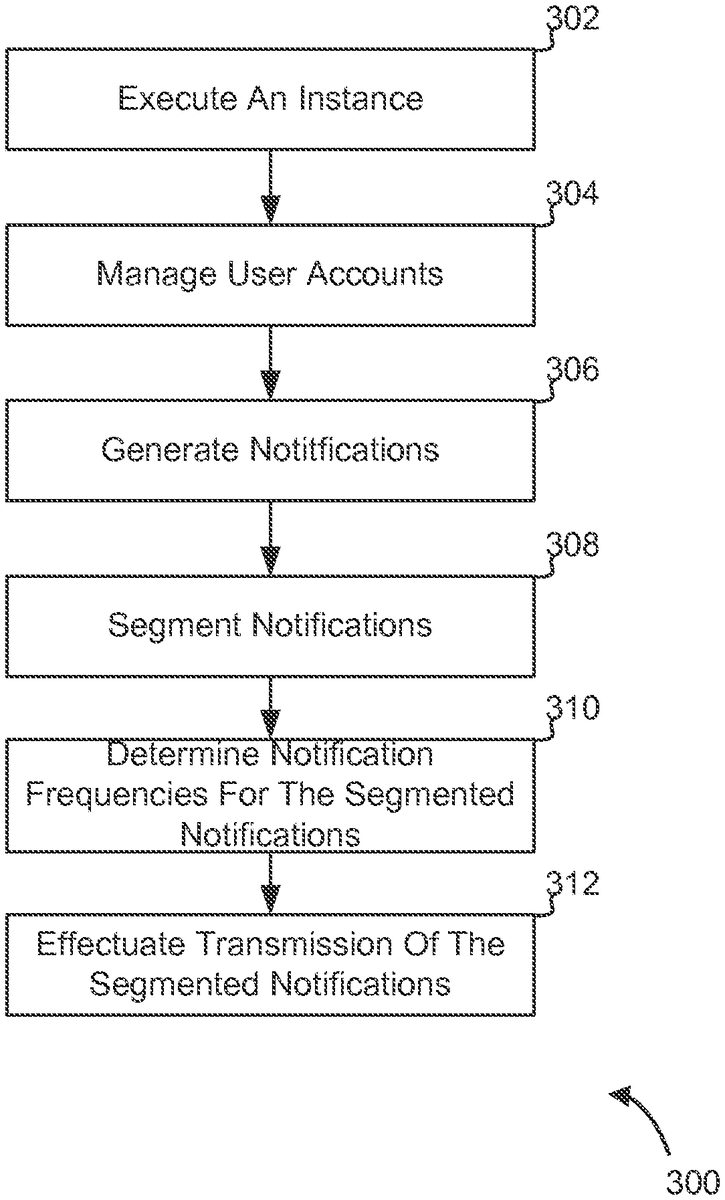
FIG. 3illustrates one exemplary method300for facilitating segmented notifications in a virtual space in accordance with the disclosure. The operations of method300presented below are intended to be illustrative. In some embodiments, method300may be accomplished with one or more additional operations not described, and/or without one or more of the operations discussed. Additionally, the order in which the operations of method300are illustrated inFIG. 3and described below is not intended to be limiting.
In some embodiments, method300may be implemented in one or more processing devices (e.g., a digital processor, an analog processor, a digital circuit designed to process information, an analog circuit designed to process information, a state machine, and/or other mechanisms for electronically processing information). The one or more processing devices may include one or more devices executing some or all of the operations of method300in response to instructions stored electronically on an electronic storage medium. The one or more processing devices may include one or more devices configured through hardware, firmware, and/or software to be specifically designed for execution of one or more of the operations of method300.
At an operation302, an instance of a virtual space may be executed and implemented to determine view information for transmission to one or more client computing platforms associated with users. The users may interact with the virtual space by initiating virtual space commands to perform user actions. The user actions may be executed in the virtual space. In some implementations, operation302may be performed by a space component the same as or similar to space component112(shown inFIG. 1and described herein).
At an operation304, user accounts associated with the users may be managed. The user accounts may include a first account associated with the first user. The first account may include an inventory of virtual items for the first user. In some implementations, operation304may be performed by a user component the same as or similar to user component114(shown inFIG. 1and described herein).
At operation306, notifications about a state change within the virtual space may be generated for users of the virtual space. The notifications generated in operation306may notify the users of events, activities, news, updates, and/or any other types of state change within the virtual space. In some examples, the notifications generated in operation306may convey information to remind individual users to participate in the virtual space after a period of inactivity. In some examples, the notifications generated in operation306may include incentive offers offering virtual items in exchange of stored consideration from the users. In some implementations, operation306may be performed by a notification generation component the same as or similar to notification generation component116(shown inFIG. 1and described herein).
At an operation308, notifications generated in operation306may be segmented. Users of the virtual space may be segmented by different parameter values for a set of one or more user parameters managed in operation304. For different user segments, the notifications may be segmented with respect to at least contents included in the notifications. The content differentiation may include differentiation in terms of communication style, format, pattern, and/or any other aspects related to communication of the notification to the user segments, in terms of a language the contents in the notification are expressed in, in terms of culture references used in the contents in the notification, in terms of a level of detail of the contents in the notification and/or differentiation in terms of any other aspects related to the contents included in the notification. In some implementations, operation308may be performed by a notification generation component the same as or similar to notification generation component116(shown inFIG. 1and described herein).
At an operation310, frequencies for transmitting the notifications generated and segmented in operation306and308respectively may be determined. For different user segments, the notifications may be transmitted at different frequencies to different user segments. For example, the notification frequency determination component may determine a first frequency at which a notification conveying a given piece of information may be transmitted to a first user segment; and a second frequency, different from the first frequency, at which the notification may be transmitted to a second user segment. In some implementations, operation310may be performed by notification frequency determination component the same as or similar to notification frequency determination component118(shown inFIG. 1and described herein).
At an operation312, the transmission of the notifications to the different user segments may be effectuated. Operation312may include determining one or more of communication media through which the notification may be transmitted to the corresponding users, and/or other aspects of the notifications. Determining the communication media may include selecting one or more communication media, e.g., email, text, instant message, push notification, and/or other media for a given notification to the corresponding users. In some implementations, operation312may be performed by a notification transmission module the same as or similar to notification transmission module120(shown inFIG. 1and described herein).
Although the present technology has been described in detail for the purpose of illustration based on what is currently considered to be the most practical and preferred implementations, it is to be understood that such detail is solely for that purpose and that the technology is not limited to the disclosed implementations, but, on the contrary, is intended to cover modifications and equivalent arrangements that are within the spirit and scope of the appended claims. For example, it is to be understood that the present technology contemplates that, to the extent possible, one or more features of any implementation can be combined with one or more features of any other implementation.
Claims
- A system for facilitating segmented notifications based on user parameters in a virtual space in which an online game takes place, the system comprising: one or more physical processors configured by machine-readable instructions to: execute an instance of a virtual space in which the online game takes place, facilitate presentation of views of the virtual space to users through client computing platforms that are associated with the users;manage user accounts associated with the individual users, the user accounts including: (i) external communication media preferences, wherein the external communication media preferences define one or more electronic communication media external to the virtual space through which individual users prefer to receive notifications, and wherein the external communication media preferences are associated with the individual users, and (ii) user parameters related to the individual users such that the user accounts include accounts associated with a first set of one or more users having a first range of values for a first user parameter, and accounts associated with a second set of one or more users having a second range of values for the first user parameter, wherein the first range and the second range of values for the first user parameter are ranges of spend rates by the individual users that reflect average amounts spent by the individual users within the virtual space per a real-world unit of time;automatically generate the notifications that convey information to encourage the users to participate in the virtual space and include information about events and/or activities within the virtual space that the users could have participated in without receiving the notification, the notifications being generated based on the user parameters related to the individual users the notifications are intended for and will be transmitted to, such that a first set of notifications is generated for the first set of one or more users, and a second set of notifications is generated for the second set of one or more users, wherein the first and second set of notifications are separate and distinct from each other in content;determine frequencies at which the notifications are to be transmitted to the individual users such that: (i) a first frequency is determined for transmitting the first set of notifications to the first set of one or more users, and (ii) a second frequency is determined for transmitting the second set of notifications to the second set of one or more users, wherein the first and second frequencies are different from each other;and effectuate transmissions of the notifications through the one or more electronic communication media external to the virtual space such that the first set of notifications is transmitted to the first set of one or more users at the first frequency and the second set of notifications is transmitted to the second set of one or more users at the second frequency, wherein transmissions of the notifications to the individual users use the one or more electronic communication media external to the virtual space in accordance with the external communication media preferences per individual user, wherein the first and second set of notifications are separate and distinct from each other at least in one aspect related to contents of the first and second set of notifications, wherein the at least one aspect includes a language, a level of detail, a communication pattern, a communication format, and/or a communication style of the first and second set of notifications.
- The system of claim 1 , wherein the user parameters further include one or more of a language spoken by corresponding ones of the individual users, a level of experience of corresponding ones of the individual users, a level activity associated with corresponding ones of the individual users, and a time zone associated with corresponding ones of the individual users.
- The system of claim 1 , wherein the first and second set of notifications are generated in response to occurrence of a first trigger event that impacts both the first set of one or more users and the second set of one or more users.
- The system of claim 1 , wherein the communication format includes one or more of text, still image, graphical art, animation, video, 3D graphics, and/or audio.
- The system of claim 1 , wherein first and second set of notifications both include an incentive offer of one or more virtual items usable in the virtual space, wherein the one or more virtual items are offered in exchange of first stored consideration from the first set of one or more users, and the one or more virtual items are offered in exchange of second stored consideration from the second set of one or more users, the first and second stored consideration being separate and distinct from each other.
- The system of claim 1 , the electronic communication medium via which the first and second set of notifications are transmitted includes an electronic mail, an instant message, a text message, a push notification, a voice notification, and/or a visual alert.
- A method for facilitating segmented notifications based on user parameters in a virtual space in which an online game takes place, the method being implemented in one or more physical processors configured to execute computer programs, the method comprising: executing an instance of a virtual space in which the online game takes place, facilitating presentation of views of the virtual space to users through client computing platforms that are associated with the users;managing user accounts associated with the individual users, the user accounts including: (i) external communication media preferences, wherein the external communication media preferences define per individual user one or more electronic communication media external to the virtual space through which individual users prefer to receive notifications, and wherein the external communication media preferences are associated with the individual users, and (ii) user parameters related to the individual users such that the user accounts include accounts associated with a first set of one or more users having a first range of values for a first user parameter, and accounts associated with a second set of one or more users having a second range of values for the first user parameter, wherein the first range and the second range of values for the first user parameter are ranges of spend rates by the individual users that reflect average amounts spent by the individual users within the virtual space per a real-world unit of time;automatically generating the notifications that convey information to encourage the users to participate in the virtual space and include information about events and/or activities within the virtual space that the users could have participated in without receiving the notification, the notifications being generated based on the user parameters related to the individual users the notifications are intended for and will be transmitted to, such that a first set of notifications is generated for the first set of one or more users, and a second set of notifications is generated for the second set of one or more users, wherein the first and second set of notifications are separate and distinct from each other in content;determine frequencies at which the notifications are to be transmitted to the individual users such that: (i) a first frequency is determined for transmitting the first set of notifications to the first set of one or more users, and (ii) a second frequency is determined for transmitting the second set of notifications to the second set of one or more users, wherein the first and second frequencies are different from each other;and effectuating transmissions of the notifications through the one or more electronic communication media external to the virtual space such that the first set of notifications is transmitted to the first set of one or more users at the first frequency and the second set of notifications is transmitted to the second set of one or more users at the second frequency, wherein transmissions of the notifications to the individual users use the one or more electronic communication media external to the virtual space in accordance with the external communication media preferences per individual user , wherein the first and second set of notifications are separate and distinct from each other at least in one aspect related to contents of the first and second set of notifications, wherein the at least one aspect includes a language, a level of detail, a communication pattern, a communication format, and/or a communication style of the first and second set of notifications.
- The method of claim 7 , wherein the user parameters further include a language spoken by corresponding ones of the individual users, a level of experience of corresponding ones of the individual users, a level activity associated with corresponding ones of the individual users, and a time zone associated with corresponding ones of the individual users.
- The method of claim 7 , wherein the first and second set of notifications are generated in response to occurrence of a first trigger event that impacts both the first set of one or more users and the second set of one or more users.
- The method of claim 7 , wherein the communication format includes one or more of text, still image, graphical art, animation, video, 3D graphics, and/or audio.
- The method of claim 7 , wherein first and second set of notifications both include an incentive offer of one or more virtual items usable in the virtual space, wherein the one or more virtual items are offered in exchange of first stored consideration from the first set of one or more users, and the one or more virtual items are offered in exchange of second stored consideration from the second set of one or more users, the first and second stored consideration being separate and distinct from each other.
- The method of claim 7 , the electronic communication medium via which the first and second set of notifications are transmitted includes an electronic mail, an instant message, a text message, a push notification, a voice notification, and/or a visual alert.
- The system of claim 1 , wherein the users include a first user and a second user, wherein the first set of one or more users includes the first user, wherein the second set of one or more users includes the second user, wherein the first set of notifications is transmitted to the first user through a first external communication medium that is external to the virtual space in accordance with the external communication media preferences associated with the first user, and wherein the second set of notifications is transmitted to the second user through a second external communication medium that is external to the virtual space in accordance with the external communication media preferences associated with the second user.
- The method of claim 7 , wherein the users include a first user and a second user, wherein the first set of one or more users includes the first user, wherein the second set of one or more users includes the second user, wherein the first set of notifications is transmitted to the first user through a first external communication medium that is external to the virtual space in accordance with the external communication media preferences associated with the first user, and wherein the second set of notifications is transmitted to the second user through a second external communication medium that is external to the virtual space in accordance with the external communication media preferences associated with the second user.
Disclaimer: Data collected from the USPTO and may be malformed, incomplete, and/or otherwise inaccurate.