U.S. Pat. No. 10,898,813
Methods and Systems for Generating and Providing Virtual Objects And/Or Playable Recreations of Gameplay
AssigneeActivision Publishing Inc
Issue DateJanuary 30, 2019
Illustrative Figure
Abstract
A system and method is provided that generates a game log that specifies game events during gameplay to enable efficient distribution of video game playback, facilitates the annotation of gameplay through content from users and others, and generates a video game stream that includes the game log and content. The system facilitates the efficient sharing of video game playback, as well as annotations from users and others. For example, e-sportscasters may use the system to broadcast video game playback with their commentary and/or graphical overlays. Video game players may use the system to share video game playback efficiently with other users. The system may also facilitate the sharing of loadout conditions and micro-transactions relevant to video game playback.
Description
DETAILED DESCRIPTION OF THE INVENTION The invention described herein relates to a system and method of generating a game log that specifies game events during gameplay to enable efficient distribution of video game playback, facilitating the annotation (and replication) of gameplay through content from users and others, and generating a video game stream that includes the game log and content. While aspects of the invention may be described herein with reference to particular types of video game genres, the system and method described in detail herein may be used in any genre of single or multiplayer video game. Exemplary System Architecture FIG. 1illustrates a system100of generating and distributing video game streams, according to an implementation of the invention. In one implementation, system100may include a computer system110, one or more databases130, one or more end user devices140, and/or other components. Computer System110 Computer system110may be configured as a server (e.g., having one or more server blades, processors, etc.), a gaming console, a handheld gaming device, a personal computer (e.g., a desktop computer, a laptop computer, etc.), a smartphone, a tablet computing device, and/or other device that is programmed to encode, decode, and/or distribute game streams as described herein. Computer system110may include one or more processors112(also interchangeably referred to herein as processors112, processor(s)112, or processor112for convenience), one or more storage devices114(which may store a VGS application120), and/or other components. Processors112may be programmed by one or more computer program instructions. For example, processors112may be programmed by video game stream application120and/or other instructions. VGS application120may include various instructions that program computer system110. As described herein, VGS application120will be described as programming computer system110to perform various operations. However, it should be understood that a portion (or all) of VGS application120may, alternatively or additionally, program other system components (e.g., end user device140) to perform at least ...
DETAILED DESCRIPTION OF THE INVENTION
The invention described herein relates to a system and method of generating a game log that specifies game events during gameplay to enable efficient distribution of video game playback, facilitating the annotation (and replication) of gameplay through content from users and others, and generating a video game stream that includes the game log and content. While aspects of the invention may be described herein with reference to particular types of video game genres, the system and method described in detail herein may be used in any genre of single or multiplayer video game.
Exemplary System Architecture
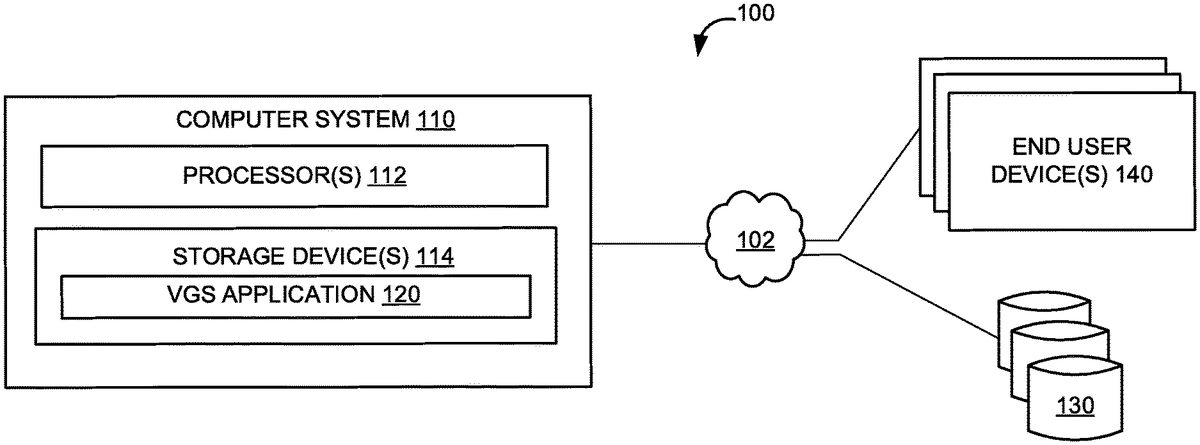
FIG. 1illustrates a system100of generating and distributing video game streams, according to an implementation of the invention. In one implementation, system100may include a computer system110, one or more databases130, one or more end user devices140, and/or other components.
Computer System110
Computer system110may be configured as a server (e.g., having one or more server blades, processors, etc.), a gaming console, a handheld gaming device, a personal computer (e.g., a desktop computer, a laptop computer, etc.), a smartphone, a tablet computing device, and/or other device that is programmed to encode, decode, and/or distribute game streams as described herein.
Computer system110may include one or more processors112(also interchangeably referred to herein as processors112, processor(s)112, or processor112for convenience), one or more storage devices114(which may store a VGS application120), and/or other components. Processors112may be programmed by one or more computer program instructions. For example, processors112may be programmed by video game stream application120and/or other instructions. VGS application120may include various instructions that program computer system110. As described herein, VGS application120will be described as programming computer system110to perform various operations. However, it should be understood that a portion (or all) of VGS application120may, alternatively or additionally, program other system components (e.g., end user device140) to perform at least some of the functions of VGS application120.
End User Devices140
End user device140may be configured as a gaming console, a handheld gaming device, a personal computer (e.g., a desktop computer, a laptop computer, etc.), a smartphone, a tablet computing device, and/or other device that can be programmed to present a video game to be played, view a video game replay, encode a game log, generate a metadata track, and/or perform other functions described herein. Although not illustrated inFIG. 1, end user devices140may include one or more physical processors programmed by computer program instructions. For example, end user device140may be programmed by all or a portion of VGS application120.
Although illustrated inFIG. 1as a single component, computer system110and end user device140may each include a plurality of individual components (e.g., computer devices) each programmed with at least some of the functions described herein. In this manner, some components of computer system110and/or end user device140may perform some functions while other components may perform other functions, as would be appreciated. The one or more processors112may each include one or more physical processors that are programmed by computer program instructions. The various instructions described herein are exemplary only. Other configurations and numbers of instructions may be used, so long as the processor(s)112are programmed to perform the functions described herein.
Furthermore, it should be appreciated that although the various instructions are illustrated inFIG. 1as being co-located within a single processing unit, in implementations in which processor(s)112includes multiple processing units, one or more instructions may be executed remotely from the other instructions.
The description of the functionality provided by the different instructions described herein is for illustrative purposes, and is not intended to be limiting, as any of instructions may provide more or less functionality than is described. For example, one or more of the instructions may be eliminated, and some or all of its functionality may be provided by other ones of the instructions. As another example, processor(s)112may be programmed by one or more additional instructions that may perform some or all of the functionality attributed herein to one of the instructions.
The various instructions described herein may be stored in a storage device114, which may comprise random access memory (RAM), read only memory (ROM), and/or other memory. The storage device may store the computer program instructions (e.g., the aforementioned instructions) to be executed by processor112as well as data that may be manipulated by processor112. The storage device may comprise floppy disks, hard disks, optical disks, tapes, or other storage media for storing computer-executable instructions and/or data.
Databases130
The various databases130described herein may be, include, or interface to, for example, an Oracle™ relational database sold commercially by Oracle Corporation. Other databases, such as Informix™, DB2 (Database 2) or other data storage, including file-based, or query formats, platforms, or resources such as OLAP (On Line Analytical Processing), SQL (Structured Query Language), a SAN (storage area network), Microsoft Access™ or others may also be used, incorporated, or accessed. The database may comprise one or more such databases that reside in one or more physical devices and in one or more physical locations. The database may store a plurality of types of data and/or files and associated data or file descriptions, administrative information, or any other data.
The various components illustrated inFIG. 1may be coupled to at least one other component via a network, which may include any one or more of, for instance, the Internet, an intranet, a PAN (Personal Area Network), a LAN (Local Area Network), a WAN (Wide Area Network), a SAN (Storage Area Network), a MAN (Metropolitan Area Network), a wireless network, a cellular communications network, a Public Switched Telephone Network, and/or other network. InFIG. 1, as well as in other drawing Figures, different numbers of entities than those depicted may be used. Furthermore, according to various implementations, the components described herein may be implemented in hardware and/or software that configure hardware.
VGS Application120
FIG. 2depicts a block diagram of VGS application120, according to an implementation of the invention. The instructions of VGS application120may include, without limitation, a VGS encoder222, a search and localization engine224, a VGS decoder226, a subscription module228, a VGS to media converter230, an Application Programming Interface (“API”)232, an inference engine234, and/or other instructions236that program computer system110to perform various operations, each of which are described in greater detail herein. As used herein, for convenience, the various instructions will be described as performing an operation, when, in fact, the various instructions program the processors112(and therefore computer system110) to perform the operation.
Game Logs
In an implementation, VGS encoder222may obtain a game log and generate a VGS based on the game log. A game log, which may be generated by a game engine, describes gameplay during a given video game session such that events occurring during the video game session may be recreated. In a sense, a game log may be thought of as a recording of events that occurred during gameplay, even though a game log may not be a “video recording” per se in that the game log itself is not played back by a conventional media player (unless converted to a conventional media format as described herein). Instead, a game log may include information that indicates one or more game events that have occurred during gameplay. In an implementation, a game log may include information relating to player activity during gameplay such as the presence or absence of player chats via headsets, the amplitude/volume of such headset chat, texting/chatting in out-of-band streams, observed physical behavior of a player (e.g., a player standing, jumping, etc.) based on inputs from peripheral devices such as cameras, and/or other player activity information.
Accordingly, gameplay that occurred during a video game session may be replayed based on the game events (hereinafter, such replay based on a game log will be referred to as a “video game playback” even though a replay may occur substantially in real-time—e.g., as a gameplay session is occurring—or not in real-time—e.g., stored and later retrieved for later video game playback). Because a game log specifies game events that occurred during gameplay rather than a rendering of the gameplay, a given game log occupies a much smaller footprint than a conventional media file that would, for example, render video of the gameplay.
The game events may include, without limitation, a player's input, a game engine's response to a player's input, an interaction between a bot and another player (e.g., another human player or another bot), an interaction between virtual objects and other objects or players, and/or other event that can occur during gameplay. A game event may be recorded as information that encodes the event. For instance, a game event may be encoded as a generic event, such as “player input button A,” or a specific event (e.g., specific to a particular game), such as “player defeated boss X.” A computer readable mapping of events to encodings may be stored in VGS database as well, in which case a game log may simply include encodings that map to particular events.
A given game log may be associated with video game information such as, without limitation, a video game title, a video game genre related to the video game title, a publisher of the video game title, the names of player(s) involved in a video game session to which the game log relates, and/or other information relating to the video game or video game session to which the game log relates.
In an implementation, VGS encoder222may assign an identifier to an obtained game log and store the game log and its corresponding identifier (as well as any video game information) in a VGS database, such as a database130. Game logs may be persistently stored in VGS database for later search and retrieval. In this manner, game logs of interest may be searched for or otherwise obtained.
Generating a VGS Based on a Game Log and Metadata
In an implementation, VGS encoder222may generate a VGS based on a game log and one or more metadata tracks (the term “track” is used with respect to metadata merely to illustrated that metadata may include discreet information separate from information from other metadata). A VGS may include a set of content that includes information from a game log (or the game log itself) and one or more metadata that annotate the game log. Such metadata may be stored separately from the game log (e.g., as an eXtensible Markup Language or other format file) or be integrated with the game log (or derivative of the game log) by compiling the game log and metadata tracks together. VGS encoder222may integrate a metadata track with a game log or otherwise compile the appropriate metadata track(s) along with the game log.
In implementations in which metadata is stored separately, an association between metadata and a game log may be created and stored in the VGS database. For instance, a given game log may be associated with one or more metadata tracks. In this manner, a viewer or others may be able to pick and choose which metadata is to be used to annotate a given game log. As such, multiple VGSs may be generated based on a single game log, each VGS associated with its own set of metadata.
Each metadata track may include information such as, without limitation, a region of origin (e.g., a geographic location, locality, etc.) where the metadata track was created, a language associated with the metadata track (e.g., a spoken or written language for its content), a demographic of a user that originated or otherwise created the metadata track, an identification of a program used to create the metadata track, a date the metadata track was created, and/or other information related to the metadata track. Such metadata information may be used to search for or otherwise filter different metadata to be used to generate a VGS. For instance, a viewer or others may wish to view a replay of a video game session with commentary in a particular language, in which case metadata relating to the particular language may be searched for and used (as will be described in more detail herein) to generate an appropriate VGS. Each metadata track may include one or more different types of content as well.
Types of Metadata
In an implementation, a metadata track may include one or more types of metadata to annotate a game log. Such metadata types may include, for example, audio, visual, tactile, and/or other types of information that can be used to annotate a game log.
Audio metadata may include audio signals relating to gameplay. For example, and without limitation, the audio signals may encode utterances from an e-sportscaster (e.g., one who, professionally or as a hobby, comments on gameplay), utterances from one or more players involved in gameplay, utterances from one or more users not involved in gameplay, sound effects added by one or more users or VGS encoder222, and/or other audio signals that can be output as audio alongside a video game playback.
Visual metadata may include graphical objects displayed alongside (e.g., overlaid onto) a video game playback. Similar to the audio metadata, the visual metadata may originate from e-sportscasters (or their production crews), players, other users, VGS encoder222(e.g., automatically generated), and/or others.
Tactile metadata may include tactile signals relating to gameplay. For example, the tactile signals may cause tactile feedback to occur alongside a video game replay. Similar to the audio metadata, the tactile metadata may originate from e-sportscasters (or their production crews), players, other users, VGS encoder222(e.g., automatically generated), and/or others.
Metadata Tracks with Additional Camera Angles
In an implementation, a metadata track may include alternate “camera” angles. For example, a game log may capture gameplay from a given camera angle or perspective. A metadata track may include a different perspective and another metadata track may include yet another perspective. In this manner, a given game log may be associated with different metadata tracks, each providing its own perspective view of gameplay. In a particular example, each metadata track may correspond to a first-person-view of a player in a multi-player first-person shooter game (or other game that includes a first-person perspective view of gameplay). Because each metadata track may be associated with information that identifies a corresponding player, viewers may choose which metadata track to use, effectively being able to toggle different player's perspective view during video game playback. Other types of perspective views (other than first-person) may be used as well, such as a top-down view or scrolling view.
Metadata Tracks with Loadout Recreation
In an implementation, a metadata track may include loadout information that indicates a state of a player and/or video game environment during gameplay that is represented in a game log. For instance, the loadout information may indicate a virtual object (e.g., virtual weapon/ammo) used, a video game level (e.g., a virtual racetrack, a virtual boss, etc.), a video game level of difficulty, and/or other state of the video game during gameplay represented in a game log. The loadout information may be used to recreate the conditions of gameplay. For instance, when decoded, a VGS that includes a metadata track with loadout information may provide the viewer with an option to attempt to play the video game under the same loadout conditions as in the video game playback. This may be useful when, for example, a user wishes to view a tutorial on how to defeat a particular level, a user wishes to achieve a better score than a friend who shared the VGS with loadout to challenge the user, and/or other situations in which a user may wish to recreate loadout conditions associated with a video game playback.
In some instances, VGS encoder222may generate a loadout object. A loadout object may refer to all or a portion of a VGS. For instance, the loadout object may specify all or portion of a game log and/or all or a portion of a metadata track that includes loadout information. In this manner, a given loadout object may be used to convey a state of a particular gameplay session (or portion of a gameplay session, such as a given time interval of the gameplay session). Loadout objects may be generated automatically by the system and/or based on user input. For instance, loadout objects may be automatically generated based on inference information (described herein) or user input that specifies a portion or all of a VGS (associated with gameplay of the user or gameplay of others) that should be made into a loadout object.
A loadout object may be configured as a virtual trading card, a Skylanders™ object, and/or other virtual or actual object that can convey loadout information such that others may replicate a state of gameplay described by the loadout information. Users may acquire, share, trade, and/or otherwise use loadout objects to enable recreating a given state of a given gameplay session (or portion of the gameplay session), whether to play a video game using the same state or to simply view the gameplay associated therewith.
In some instances, a loadout object may refer to single player gameplay or multiplayer gameplay (e.g., a competitive and/or cooperative match between multiple players). In multiplayer gameplay implementations, two or more users with whom the loadout object has been shared may enter a multiplayer match using a video game state specified (and/or identified) by the loadout object.
VGS encoder222may use a given loadout object to place a user with whom the loadout object has been shared into a match. For instance, a matchmaking engine (which places users into matches) may use a loadout object to place one or more players into a gameplay match that includes the loadout condition(s) specified or identified by the loadout object.
In some instances, VGS encoder222may associate users with loadout objects. For instance, the system may store an indication of loadout objects that the user has shared, viewed, participated in gameplay that replicates loadout conditions, or otherwise interacted with.
VGS encoder222may receive, from a user, an annotation of a given loadout object. For instance, a user may include a comment or other content relating to the loadout object. Users with whom the loadout object has been shared (or others) may view the annotations by the user.
Metadata Tracks with Micro-Transaction Hotspots
In an implementation, a metadata track may include micro-transaction information that identifies an item available for purchase. In some instances, the item may include a virtual item depicted in a corresponding video game playback, or a real-world item advertised as an overlay over the corresponding video game playback.
In some instances, the metadata track may include hotspot information that indicates selectable coordinates on the video game playback corresponding to the item available for sale. In an implementation, the hotspot information may be generated from a game engine. Because the game engine rendered graphics for a given video game session, it may encode the hotspot information into a metadata track so that a video game playback of the video game session may include selectable regions. For instance, in a shooter game, a location on the display (e.g., pixel position) of a virtual weapon that may be purchased by the viewer for use in the viewer's gameplay may be encoded in the metadata track. In this instance, during playback, the viewer may be able to select the location (e.g., the “hotspot”), which causes a purchase transaction to occur. The purchase transaction may cause the virtual item to be made available to the viewer when the viewer plays the video game. Similarly, an advertising item may be selected to cause a purchase transaction for a real-world item to be initiated.
Metadata Tracks with Player Profiles for VGS Enhancements
In an implementation, a metadata track may include player profile information that describes a player involved in a video game and/or a player's avatar. VGS encoder222may obtain the player profile information from a pre-stored player profile database (e.g., a database130), meta data that may accompany a game log, a game log annotator (as will be described herein), and/or other source. All or a portion of the player profile information may be used annotate a VGS so that viewers (e.g., users who view a replay of gameplay) may be provided with background or other information relating to the player.
The player profile information may include human player information that describes an actual (human) player and/or avatar information that describes an avatar controlled by the player. For instance, the human player information may include, without limitation, a user demographic (e.g., age, gender, ethnicity, residence location, familial information, marital/relationship status, etc.), social media handles, a number of years of experience playing games (e.g., on a professional level or as a hobby), the player's favorite game(s), a player's gameplay statistics, sponsorships (if any), and/or other information relating to the player. Avatar information may include, without limitation, virtual health or experience levels, statistics relating to the avatar (e.g., max power, special powers/skills/abilities, etc.), and/or other information relating to an avatar.
In an implementation, while encoding a VGS, all or a portion of the player profile information may be used to describe a player (or the player's avatar). For example, a player's name, prior or historical game statistics, or other player information may be overlaid onto a player's avatar so that viewers may be able to view the player information during a playback of gameplay facilitated by a VGS. Such overlays may integrated with the playback or be provided on a separate track so that the end user may toggle such feature on or off.
Authoring Tools to Create Metadata Tracks
In an implementation, VGS encoder222may provide one or more inputs configured to accept user-provided content to create metadata tracks. Such tools may provide video game playback (via VGS decoder226described herein) and accept content for creating metadata tracks. For instance, an VGS encoder222may include an audio input interface configured to receive utterances or other audio from users. In this manner, a user may view a video game playback, which is generated based on a corresponding game log, and provide commentary or other audio, which may be synchronized with the corresponding game log. Alternatively or additionally, an VGS encoder222may include a graphical input interface configured to receive graphical inputs or other graphical markup to be overlaid onto a video game playback. As with the audio input, the graphical input may be synchronized to the corresponding game log. Still alternatively or additionally, an VGS encoder222may include a tactile input interface configured to receive tactile inputs that specify tactile feedback to be provided during video game playback. In this manner, a user may design particular tactile feedback that should be output during a video game playback in relation to a corresponding game log to which the tactile feedback may be synchronized.
In some instances, VGS encoder222may cause different metadata tracks to be layered onto one another. For instance, a first user may provide content (e.g., his commentary on gameplay) for a first metadata track to annotate a game log. A second user may obtain the game log and the first metadata track and provide further commentary (such as a translation of the first user's commentary and/or additional commentary or content) for a second metadata track to annotate the game log and the first metadata track. In this manner, the second user may annotate the first user's commentary (or other content) with the second user's commentary (or other content). Likewise, a third user may annotate the first user's commentary and/or the second user's commentary. In some instances, VGS encoder222may automatically create a metadata track. For instance, using a speech recognition engine, VGS encoder222may process a first metadata track containing a user's commentary in a first language, then translate the recognized text into a second language. The text may be used as subtitles in the automatically generated metadata track or may be processed using a text-to-voice engine so that a machine uttered translation may be stored in the automatically generated metadata track.
In these instances, VGS encoder222may store a parent-child or other association in the VGS database between information identifying a game log and information identifying the first metadata track, as well as a parent-child or other association between information identifying the first metadata track and information identifying the second metadata track to indicate that the second metadata track should be used in combination with the first metadata track. In some instances, despite the association, the second metadata track may still be used to annotate the game log without the first metadata track. For instance, if the second metadata track includes a translation into another language of the commentary from a first metadata track, the second metadata track may be separately provided to those interested listening to the commentary in the other language.
Although described herein with respect to adding content to video game playback, such playback may be “annotated” by removing certain aspects of the playback. For instance, VGS encoder222may be configured to receive an input that removes certain content from the video game playback. Such removed content may include background music, certain sound or visual effects, conversation between players, etc. As such, a metadata track may include an instruction to omit or remove certain content that appears in a game log (e.g., an instruction to omit a sound track during video game playback during a certain time interval). Such removal may be used in conjunction with content to be added. For instance, for a sports video game playback, commentary from the artificial intelligence commentator may be replaced with a user's commentary.
In some instances, VGS encoder222may add content that isn't necessarily related to the gameplay itself. For instance, VGS encoder222may receive inputs relating to graphical or audio advertisements or other content to be added to a corresponding video game playback. In this manner, ads or other content may be seamlessly incorporated into a corresponding video game playback.
Whether or not a given metadata track is to be used in combination with one or more other metadata tracks, and without regard to the type of content added (or removed), a given metadata track may be synchronized with a game log so that the content from the metadata track is replayed alongside a replay of gameplay at the appropriate time.
In some instances, VGS encoder222may synchronize a metadata track with a timeline associated with the game log. For instance, the game log may be associated with a game log timeline that includes a timestamp for each event. The timestamp may indicate a time that a given event has occurred relative to the start of the game log. VGS encoder222may assign events or content within the metadata track with a timestamp that corresponds to the game log timeline.
In some instances, VGS encoder222may establish a master timeline that applies to the game log and any metadata tracks. In these instances, events specified in the game log and content in any metadata tracks may be synchronized to the master timeline.
In instances in which a second metadata track is to be used in combination with a first metadata track, VGS encoder222may synchronize the second metadata track with a timeline associated with the first metadata track (i.e., the second metadata track may be synchronized to the first metadata track). In other instances, VGS encoder222may synchronize both the first metadata track and the second metadata track with a master timeline or a game log timeline.
In some instances, VGS encoder222may generate and store a VGS based on a game log and one or more metadata tracks. In other instances, because a given game log may be associated with different sets of one or more metadata tracks, or may be streamed live with real-time metadata tracks, VGS encoder222may dynamically create (e.g., responsive to requests or for real-time gameplay streams) particular combinations of a game log and metadata tracks.
Searching for and Localizing a VGS
In an implementation, search and localization engine224may identify combinations of metadata tracks that should be used to annotate a game log. For instance, search and localization engine224may identify an appropriate metadata track to responsive to search inputs from a user, automatically based on localization rules, and/or other information that can be used to identify a suitable metadata track for a given game log.
In some instances, for example, search and localization engine224may provide a user interface that provides one or more search inputs that are configured to receive a search input. The search input may relate to the game log (e.g., using the searchable information previously described) and/or one or more metadata tracks. Responsive to receipt of one or more search inputs, search and localization engine224may identify an appropriate game log and/or metadata track(s) for generation of a VGS (by VGS encoder222, for example).
In a non-limiting example, a user may specify that she wishes to view a video game replay of a particular game title involving a particular player with commentary in the English language. Responsive to the search inputs, search and localization engine224may query VGS database to determine whether any of the game logs match search criteria specified by the search inputs relating to game logs (namely, the particular game title involving the particular player). If one or more game logs that satisfy the criteria are found (or simultaneously with the previous query), search and localization engine224may determine whether any metadata tracks have been associated with the one or more game logs, and if so, present the results to the user for selection.
Upon receipt of a selection of a game log and any corresponding metadata tracks, search and localization engine224may cause VGS encoder222to generate a VGS based on the game log and corresponding metadata tracks for provision to the user. Other examples involving alternative or additional search inputs/criteria may be used as well. For instance, the user may provide inputs specifying that particular commentators be returned for selection.
In some instances, once a VGS has been generated responsive to the search request, the requesting user may further annotate the VGS to generate further metadata tracks by that user, in which case the new metadata tracks will be associated with the game log and/or existing metadata tracks for later search and retrieval by the user or others.
In some instances, search and localization engine224may automatically select a given metadata track for a game log based on one or more localization rules. A localization rule may specify that certain metadata tracks be used with a game log based on a native language of a geographic location to which a VGS is to provided, a custom of a geographic location to which a VGS is to provided, and/or other localization, and/or other criteria that can be used to automatically select a given metadata track for use with a game log.
For instance, search and localization engine224may obtain a location of a user who is to be provided with a video game playback. Such location may be based on Internet Protocol address information, network connection information (e.g., network devices used to connect the user to the Internet), Global Positioning System or other location information based on a location device or receiver, and/or other location information.
Search and localization engine224may identify a native language associated with the location, and automatically select metadata track(s) that are in the native language (e.g., commentary spoken in the native language, ads presented in the native language, etc.). Alternatively or additionally, search and localization engine224may identify a custom or regional preference based on the location and automatically select appropriate metadata track(s) for the given game log. Such local customs or preferences may include, for example, a preference for tactile over audio annotations, in which case tactile metadata tracks may be automatically selected over audio metadata tracks.
In some instances, search and localization engine224may automatically select a given metadata track for a game log based on one or more personalization preferences. For instance, a user may provide preferences (e.g., language, audio and video preference over tactile, etc.), which may be stored in a user profile for that user. When the user requests or is otherwise is to be provided with a video game playback, search and localization engine224may automatically select appropriate metadata track(s) based on the personalization preferences.
Decoding a VGS
In an implementation, VGS decoder226may obtain a VGS and decode the VGS to provide a video game playback. For instance, VGS decoder226may decompile a VGS to obtain a game log and any corresponding metadata tracks. In other instances, VGS decoder226may obtain the game log and any corresponding metadata tracks packaged together, but in separate files.
In any event, in an implementation, VGS decoder226may provide the game log to a corresponding game engine that created the game log and receive, back from the game engine, a video game playback that is unannotated. VGS decoder226may parse any corresponding metadata tracks and synchronize content therein with the video game playback from the game engine. Such synchronization may be based on a master timeline VGS encoder222created, a time associated with the game log, and/or other timeline that can be used to synchronize events from the game log with content from the metadata tracks. In some instances, to synchronize events from the game log with content from the metadata tracks, VGS decoder226may store either or both of the events or content in a buffer or other memory while one is synchronized to the other.
In some instances, VGS decoder226may include (or be part of) the game engine, in which case VGS decoder226may be specific for a particular game or set of games for which the game engine provides gameplay. In other instances, VGS decoder226may be generic to different types of game engines (and therefore different types of games), in which case VGS decoder226may identify an appropriate game engine to use to read the game log to provide video game playback. For instance, the game log may be associated with identifying information that identifies the game engine and/or game title to which the game log relates. VGS decoder226may use the identifying information to identify an appropriate game engine to use. In either case, VGS decoder226may provide annotated video game playback using content from the metadata tracks synchronized with events from the game log.
In an implementation, VGS decoder226may dynamically change metadata tracks on the fly (e.g., during video game playback based on a game log). For instance, VGS decoder226may cause a user interface with selectable inputs corresponding to different metadata tracks to be provided that allow a user to specify which metadata track should be used. Alternatively or additionally, VGS decoder226may receive an input (e.g., via user remote control or other peripheral device input) corresponding to a command to change (e.g., replace, add, remove) a metadata track being used during video game playback. As previously described, a given metadata track may correspond to a perspective view of gameplay in which case a user may toggle through different perspectives. In other instances, a user may toggle through different languages, subtitles, or other content provided by different metadata tracks.
In an implementation, VGS decoder226may make a video game playback static or interactive. In static instances, the video game playback may not be interacted with by a viewer other than through ordinary media player controls (e.g., play, pause, etc). Instead, the video game playback is linear, view-only.
In interactive instances, the video game playback may include hotspots or otherwise cause interactive elements configured to receive user inputs. In these instances, VGS decoder226may cause a user interface that includes the video game playback and hotspots or interactive elements. For instance, when a VGS includes loadout information, VGS decoder226may parse the loadout information and provide the viewer with an option, in the user interface, to recreate the loadout conditions specified by the loadout information. Upon receipt of an indication from the viewer to play under the loadout conditions, VGS decoder226may provide the loadout information to a game engine, which may render the video game with the loadout conditions so that the viewer may play the video game under the same conditions as the video game playback.
In another example, when a VGS includes micro-transaction hotspots, VGS decoder226may parse the hotspot or pixel position information and provide selectable regions within the user interface that corresponds to a virtual or real item in the video game playback that is available for purchase. Upon receipt of a selection of a hotspot, VGS decoder226may either automatically cause a purchase of a corresponding item (e.g., by looking up pre-stored financial account information of the viewer or virtual currency account information of the viewer) or cause a transaction interface to be presented to the viewer, which allows the user to input (financial or virtual) account information. In some implementations, the hotspot item may be changed from time to time. For instance, an advertised item may be changed from one product to another product, depending on sponsorships, ad contracts, etc. Additionally or alternatively, the system may change the in-game placement of such ads (and corresponding hotspot).
VGS Subscription Models
In an implementation, the consumption and/or creation of metadata tracks may be subject to different levels of subscriptions. Users may subscribe to different levels of subscription by providing user information, payments, and/or other items of value.
In this implementation, different types of metadata tracks may be made available to users subject to a subscription level of the user. For instance, a free subscription level may be associated with a first set of metadata tracks, while a paid subscription level may be associated with additional sets of metadata tracks. In particular, some of the premium metadata tracks may be associated with celebrities or others whose commentary are more valued than others. In some of these implementations, different levels of paid subscriptions may be further subjected to different levels of metadata available to users.
Other consumption subscription models may be used as well, such as allowing more accesses to metadata tracks in a given time period for certain subscription levels than others (e.g., a paid subscription may be associated with access to a greater number of metadata tracks in a given month than a free subscription).
Likewise, in some implementations, an ability to create metadata tracks may be subject to a level of subscription. For instance, a first subscription level may be associated with allowing a user to create a first number of metadata tracks in a given month, while a second subscription level may be associated with allowing a user to create a second (different) number of metadata tracks in the given month. In some instances, subscriptions may be related to metadata tracks created by or related to one or more individuals (e.g., professional commentators, players, etc.). In such instances, the one or more individuals may share in the revenue generated by such subscriptions.
Converting VGS to Media
In an implementation, VGS to media converter230may generate a video game playback (e.g., using VGS decoder226) and then convert the playback to a conventional media format such as the Moving Picture Experts Group (MPEG)-4 format as specified in the ISO/IEC 14496-12:2004 specification, which is incorporated by reference herein in its entirety. Other media formats may be used as well; the MPEG-4 format is described here for illustrative purposes. In some instances, the video portion of the video game playback may be encoded as an MPEG-4 video stream, the audio portion of the video game playback may be encoded as an MPEG-4 audio stream, and any remaining metadata track may be encoded in the an MPEG-4 metadata stream. To be compatible with playback in conventional media players, VGS to media converter230may encode all metadata (whether visual, audio, etc.) into corresponding video or audio streams. Some media players may understand certain metadata streams (e.g., tactile signals within the metadata streams). To support those instances, VGS to media converter230may encode any tactile metadata tracks into an MPEG-4 metadata stream.
Such conversion may occur via server-based processing (e.g., on computer system110), distributed processing using end user devices140, cloud services processing (e.g., via cloud computer systems), and/or through other computer processing techniques.
APIs for Accessing and Sharing a VGS
In an implementation, API232may provide access to game logs and metadata tracks. In some instances, API232may provide a given game log and any corresponding metadata track as a VGS. In some instances, API232may provide access to a game log and any corresponding metadata track as a conventional media file that can be played in a conventional media player.
Whichever format in which a game log and/or metadata tracks are provided, API232may facilitate sharing of a game log and metadata tracks. For instance, a user may, through end user device140, request to share a game log representative of a gameplay session being played or already played. The game log may be annotated with the user's content and/or other user's content, and then shared. API232may share the game log and metadata tracks, in any format described herein, to social sharing networks (e.g, YouTube™, Facebook™, etc.). Although described herein as relating to a video game session for convenience, a game log may relate to a continuous type of game (e.g., a virtual world simulation) that has no discrete ending. In these instances, a game log may refer to a segment of time during a portion of the continuous game. Alternatively, a game log may refer to a starting point in the continuous game and continue to “record” events indefinitely or until some terminating point has been reached. As such, a game log need not be limited to gameplay sessions that have a finite ending, but instead may relate to gameplay sessions that are continuous in nature.
Furthermore, it should be understood that a game log may be integrated with at least first metadata and stored in association with second metadata such that the game log integrally includes the first metadata and is associated with other metadata (e.g., the second metadata) as well.
Inferring Interest in a Portion or All of a Video Game Stream and Facilitate Playback of Content Based on the Inferred Interests
In an implementation, inference engine238may generate an inferred object that identifies a VGS and a portion of the VGS in which the user(s) is inferred to be interested. An inferred object may include an identification of the VGS, an identification of a game log, an identification of specific portion(s) of the game log, an identification of a player character/avatar, an identification of a metadata track (e.g., particular commentary, graphics, camera angles, etc.), an identification of specific portion(s) of the metadata track, and/or other information that can specify all or a portion of a VGS in which users are likely interested.
For example, inference engine238may identify aspects of gameplay in which users may be interested, specific clips from gameplay, specific commentary or other metadata, and/or other aspects of a VGS in which users may be interested. Such identification may be specific for a particular user (or specific group of users such as a group of friends) or general for a non-specific population of users. For example, inference engine238may identify a portion or all of video gameplay (e.g., events of a game log) and/or metadata (e.g., commentary or other annotations) that a specific user or general population may be interested.
In an implementation, inference engine238may identify an inference object based on one or more inference factors, which may indicate user interest. An inference factor may include, without limitation, viewer input (e.g., camera angles/scenes viewers are using, voting inputs provided by viewers specifying all or portions of gameplay they wish to see, etc.), social sharing aspects (e.g., number of “likes” of video game playbacks, number of times a portion or all of a VGS has been shared or viewed, number of times that a user-generated video of gameplay has been created, etc.), player actions during gameplay (e.g., headset chatter from a player, chatter intensity—such as amplitude/frequency of audio input, whether the player has suddenly stood up/is jumping), and/or other inputs that can indicate user interest.
In an implementation, inference engine238may build inference models of user interests, which may be informed by one or more of the inference factors. In some instances, human analysts may analyze popular VGSs (e.g., VGSs that have been shared, viewed, etc. a number of times that exceed a threshold value) to identify events that are common between such VGSs, and input them for inclusion into the inference models. Inference engine238may also automatically perform such analysis, by determining common events or other aspects of gameplay that are common to popular VGSs.
In an implementation, inference engine238may initiate the creation of an inference object upon detection of one or more inference triggers. A given inference trigger may signal that an interesting event has occurred or will occur. Such triggers may be predefined (e.g., by a game developer) or may be dynamically determined based on an inference model. An inference trigger may include, without limitation, an indication that a player during gameplay has achieved a certain performance metric (e.g., exceeded a threshold in-game kill/death ratio, exceeded a threshold in-game kill streak, exceeded a threshold in-game number of kills within a particular time period, performed a particular in-game maneuver such as performing an in-game kill shot while jumping off a virtual building), in-game taunts (e.g., teabagging, doing a dance, jumping on a fallen opponent, showboating etc.), predictive triggers that use events to predict interesting gameplay will occur (e.g., a number of players converging on a particular location on a game map, a player moving toward a flag in a capture the flag match, a player entering a dangerous situation such as an ambush, a player imminently fighting a level boss, etc.), and/or other triggers that can indicate an event of likely interest has or will occur.
In some instances, the system (e.g., via VGS decoder226) may generate a video game playback based on an inferred object. For example, if an inferred object relates to a specific 30 second highlight clip of gameplay for a 10 minute game, the system may generate a video game playback of the 30 second clip by identifying relevant events from the game log and/or content from relevant metadata tracks associated therewith.
In some instances, based on an inference object, the system may generate hints or suggestions of events or metadata related to a VGS that may be of interest to users. A user may use the hints (e.g., a listing of top 20 interesting events that occurred during gameplay) to generate a highlight clip relating to the events. Alternatively or additionally, the system may also automatically generate such a highlight clip. In another example, an e-sports commentator may be informed of particular events, camera angles, players being followed, etc., that are potentially interesting so that they can focus their commentary on such aspects of gameplay.
In some instances, based on an inference object, the system may generate loadout objects. For example, VGS encoder222may identify particular VGSs (or portions thereof) that users may be interested in duplicating for gameplay (or sharing) based on an inference object from inference engine238. In this manner, loadout objects may be generated based on predicted user interested.
In some instances, inference engine238may generate an inference object in real-time. For example, during gameplay, inference engine238may identify a specific portion of gameplay that should be made into a replay clip, and cause the replay clip to be played. Various effects may be specified by an inferred object as well, such as slow-motion effects, zooming effects, and/or other type of visual effect to be applied to the replay clip (or other playback relating to an inference object).
FIG. 3depicts a process300of generating a video game stream, according to an implementation of the invention. The various processing operations and/or data flows depicted inFIG. 3(and in the other drawing figures) are described in greater detail herein. The described operations may be accomplished using some or all of the system components described in detail above and, in some implementations, various operations may be performed in different sequences and various operations may be omitted. Additional operations may be performed along with some or all of the operations shown in the depicted flow diagrams. One or more operations may be performed simultaneously. Accordingly, the operations as illustrated (and described in greater detail below) are exemplary by nature and, as such, should not be viewed as limiting.
In an operation302, process300may include obtaining a game log. The game log may be obtained from a game engine substantially in real-time as gameplay is occurring (e.g., at least some of the game log is received while a corresponding gameplay session is occurring) or the game log may be pre-stored (e.g., after the gameplay session has completed) and obtained from the VGS database. In some instances, process300may be performed by a game engine that generates a game log. In other instances, process300may be performed by a system component separate from the game engine, in which case the system component may obtain the game log directly or indirectly from the game engine. The game log may include or be associated with identifying information.
In an operation304, process300may include identifying one or more metadata tracks that include content used to annotate a game log (i.e., gameplay represented by the game log). Process300may identify appropriate metadata tracks responsive to a user query and/or may automatically identify metadata tracks (e.g., based on localization rules or other criteria).
In an operation306, process300may include generating a VGS that includes the game log and any corresponding metadata tracks. The VGS may be used to parse the game log and corresponding metadata tracks to generate a video game playback of the relevant gameplay session, along with any content from the corresponding metadata tracks. For instance, the video game playback may include a rendition of gameplay annotated with a user's commentary and/or other content.
In an operation308, process300may include causing the VGS to be provided. For example, process300may cause the VGS to be transmitted to an end user device via a network. The end user device may then process the VGS to generate a video game playback annotated by content from the identified metadata tracks.
FIG. 4depicts a process400of decoding a video game stream to generate a video game playback, according to an implementation of the invention.
In an operation402, process400may include obtaining a game log. The game log may be obtained substantially in real-time while gameplay is occurring or from storage after gameplay has concluded.
In an operation404, process400may include parsing events from the game log. In some instances, each event may be associated with a timestamp that indicates when in a game log timeline the event has occurred.
In an operation406, process400may include obtaining a metadata track associated with the game log and parsing content from the metadata track. Each content may be associated with a timestamp that indicates a time that the content should be presented, relative to a game log timeline.
In an operation408, process400may include synchronizing the parsed content with the events. The synchronization may be based on the game log timeline (or other timeline common to both the events and content).
In an operation410, process400may include generating a video game playback based on the synchronized content and events. The video game playback may be in the form of a native rendering (e.g. by a game engine) or may be converted to a conventional media file format for replay.
FIG. 5depicts a process500of annotating a video game log and encoding a video game stream, according to an implementation of the invention. Process500may be used to annotate a game log, whether on top of existing annotation(s) of the game log or annotating the game log without other annotations.
In an operation502, process500may include obtaining pre-game annotations. Such pre-game annotations may include initial content (e.g., commentary) on a gameplay session, such as a commentary on match-ups.
In an operation504, process500may include obtaining a game log associated with the gameplay session.
In an operation506, process500may include parsing the game log to obtain game events from the game log.
In an operation508, process500may include generating a video game playback based on the game events.
In an operation510, process500may include obtaining content to annotate gameplay during playback. Such content may include user commentary relating to gameplay, graphics to overlay onto gameplay, and/or other content described herein.
In an operation512, process500may include associating the content with a timestamp relative to a timeline of the game log.
In an operation514, process500may include synchronizing the content with the game log. For instance, the content may be synchronized with the game log based on a timeline associated with the game log or a master timeline associated with both the game log and other content that is to annotate the game log. In some instances, the game log timeline may be shifted to account for any pre-game annotations.
In an operation516, process300may include generating a metadata track based on the synchronized content and storing an association between the game log and the metadata track. For instance, process300may include storing an association between identifying information for the game log and identifying information for the metadata track. In this manner, a database (such as the VGS database) may be used to query (or otherwise retrieve from) the game log and any corresponding metadata tracks.
FIG. 6depicts a process600of generating a game log and encoding a video game stream during a gameplay session, according to an implementation of the invention.
In an operation602, process600may include initializing a gameplay session of a video game and encoding video game identifying information into a game log. The video game identifying information may include an identification of a video game. Other information may be encoded into the game log as well, such as a time/date of the gameplay session, a number of players, whether the gameplay session is being played over a network connection (and if so, a type of network connection used, an internet service provider used, a quality of network connection), etc.).
In an operation604, process600may include obtaining an indication of a game event.
In an operation606, process600may include recording the game event with a timestamp in the game log.
In an operation608, process600may include determining whether content/metadata related to the game event is received. For instance, content may be related to a game event when the content is received within a predetermined threshold time of the game event.
In an operation610, process600may include recording the metadata with a timestamp in the game log, responsive to a determination that the metadata is related to the game event.
In an operation612, process600may include determining whether another game event is received. If another game event is received, process600may return to operation606. If another game event is not received, process600may proceed to an operation614.
In operation614, process600may include generating a VGS based on the game log and the content related to game events.
FIG. 7depicts a process700of localizing video game playback, according to an implementation of the invention.
In an operation702, process700may include obtaining a game log. In an operation704, process700may include obtaining a metadata track associated with the game log. The metadata track may include content that can be localized according to a geographic region to which a video game playback will be provided. For instance, the content may be translated into another language.
In an operation706, process700may include localizing the metadata track. For instance, process700may include identifying a geographic location to which the video game playback will be provided. Localizing the metadata track may include automatically translating text, spoken utterances, and/or other information included in the metadata track.
In an operation708, process700may include causing the localized metadata track to be provided with the game log.
FIG. 8depicts a process800of identifying localization parameters for localizing video game playback, according to an implementation of the invention.
In an operation802, process800may include obtaining a game log. In an operation804, process800may include obtaining a localization parameter. The localization parameter may specify that certain language or other types of content should be used based on a particular locale to which the game log will be provided.
In an operation806, process800may include identifying a metadata track based on the localization parameter and parse content to be included in a video game playback. In an operation808, process800may include obtaining one or more game events from the game log.
In an operation810, process800may include generating the video game playback based on the game events and the content from the metadata track. For instance, process800may include identifying a metadata track that is associated with the target geographic location. In a particular example, a first metadata track may include first commentary in a first language and a second metadata track may include second commentary in a second language (which may or may not simply be a human translation of the first commentary). Process800may automatically (or responsive to a user query) select the appropriate metadata track.
FIG. 9depicts a process900of driving micro-transactions based on video game streams, according to an implementation of the invention.
In an operation902, process900may include generating a VGS. The VGS may be generated as described herein throughout. In an operation904, process900may include causing the VGS to be transmitted via network102to an end user device140. The VGS may be decoded at the end user device to provide a video game playback of a video game session specified by the VGS.
In an operation906, process900may include receiving, from the end user device, a selection of a loadout object associated with the video game stream or a hotspot associated with the video game stream. The loadout object or the hotspot may be pre-specified as a metadata track in the VGS, or the end user device may generate the loadout object or the hotspot based on a game engine executing at the end user device.
In an operation908, process900may include causing, by the computer, a recreation of the state of the gameplay or the virtual object to be provided responsive to the selection. For instance, if a loadout object was selected, a video game playback associated with the loadout object may be generated or the user associated with the end user device may be provided with an opportunity to play the video game with the loadout conditions or state specified by the loadout object. If a hotspot was selected, a virtual or other object corresponding to the hotspot may be provided to the user for gameplay.
In an operation910, process900may include debiting an account of a user associated with the end user device based on an amount of value relating to the video game playback/recreation or the virtual object. For example, a monetary (real currency value) or perceived/virtual value may be debited from a financial or game account associated with the user.
Other ways of driving micro-transactions and/or using loadouts may be performed as well. For instance, the system may sell load out slots that can be configured with what was depicted by a VGS, charge for or facilitate the creation of loadout objects (which may each be named by a creator, such as “TestSubject-M used in 2015 Nationals”), which may be used to easily swap loadouts in and out for gameplay, charge for or facilitate matchmaking into gameplay sessions that have the same loadout conditions and map as seen in a playback from a VGS, charge for or facilitate social network integration, in which users may share playback or loadouts associated with VGSs (e.g., users may inquire “Have you tried that sniper/shotty loadout “TestSubject-M used in 2015 Nationals”), and/or other ways that will be apparent based on the disclosure herein.
FIG. 10depicts a process1000of inferring interest in an aspect of a video game streams, according to an implementation of the invention.
In an operation1002, process1000may include identifying an aspect of a video game stream that will be interesting to one or more users. An identified aspect may include an entire gameplay session represented by a VGS, a portion of the gameplay session (e.g., a start and end time interval), a particular event in the gameplay session, a particular character or object in the gameplay session, a particular metadata track or portion thereof (e.g., a specific commentary, graphical overlays, etc.), and/or other aspect of a VGS.
In an operation1004, process1000may include generating an inference object based on the identified aspect. An inference object may specify the aspect such that a video game playback relating to the aspect may be generated.
In an operation1006, process1000may include causing a video game playback of at least a portion of the gameplay to be generated based on the inference object. For example, process1000may include generating a separate metadata track of inferred objects or may generate a separate VGS based on the inference object. In some instances, process1000may generate the video game playback or may simply cause the inference object (or metadata track/VGS generated therefrom) to be transmitted via a network (e.g, network102).
Other implementations, uses and advantages of the invention will be apparent to those skilled in the art from consideration of the specification and practice of the invention disclosed herein. The specification should be considered exemplary only, and the scope of the invention is accordingly intended to be limited only by the following claims.
Claims
- A computer implemented method of generating at least one of a loadout object and a hotspot based on a video game stream for a playback of a gameplay of a video game, the method being implemented in a computer having one or more physical processors programmed with computer program instructions that, when executed by the one or more physical processors, cause the computer to perform the method, the method comprising: generating, by the computer, the video game stream that includes a game log and a metadata track, wherein the game log specifies at least a first event that occurred during the gameplay of the video game and information that indicates at least a first time in which the first event occurred during the gameplay, and the metadata track includes annotation content relating to the gameplay;causing, by the computer, the video game stream to be transmitted via a network to an end user device;receiving, by the computer, from the end user device, a selection of the loadout object associated with the video game stream or the hotspot associated with the video game stream, wherein the loadout object specifies a state of the gameplay and the hotspot specifies a virtual object used during the gameplay;and causing, by the computer, a playable recreation of the state of the gameplay or the virtual object to be provided responsive to the selection wherein, if the loadout object is selected, the end user device is provided with an opportunity to play the video game with the state of the gameplay specified by the loadout object and wherein, if the hotspot is selected, the virtual object is provided to the end user device for use in gameplay.
- The method of claim 1 , wherein receiving from the end user device the selection of the loadout object associated with the video game stream or the hotspot associated with the video game stream comprises receiving the selection of the hotspot, the method further comprising identifying, by the computer, a virtual item used during the gameplay based on the hotspot and providing, by the computer, the virtual item in the playable recreation.
- The method of claim 2 , the method further comprising: predicting, by the computer, a portion of the gameplay that will be of interest to the user;generating, by the computer, the loadout object based on the portion of the gameplay;and providing, by the computer, the loadout object for selection in association with the video game stream.
- The method of claim 1 , wherein receiving from the end user device the selection of the loadout object associated with the video game stream or the hotspot associated with the video game stream comprises receiving the selection of the loadout object, the method further comprising: matching, by the computer, the user into a multi-player game session that recreates the state of the gameplay and causing, by the computer, the user to be added to the multi-player game session.
- The method of claim 1 , wherein receiving from the end user device the selection of the loadout object associated with the video game stream or the hotspot associated with the video game stream comprises receiving the selection of the loadout object, the method further comprising: receiving, by the computer, a request to share the loadout object to a second user;and providing, by the computer, the loadout object to the second user responsive to the request.
- The method of claim 1 , the method further comprising: providing, by the computer, in association with the video game stream, a second loadout object that specifies a second state of a second gameplay of the video game;and providing, by the computer, responsive to a selection of the second loadout object, a playable recreation of the second state of the second gameplay.
- The method of claim 6 , the method further comprising: generating by a second user the second loadout object;and receiving, by the computer, the second loadout object from the second user.
- The method of claim 1 , the method further comprising: providing, by the computer, at least one of the loadout object or the hotspot in one or more metadata tracks of the video game stream.
- A system for generating at least one of a loadout object and a hotspot based on a video game stream for playback of a gameplay of a video game, the system comprising: one or more physical processors programmed with one or more computer program instructions which, when executed, cause the one or more physical processors to: generate the video game stream that includes a game log and a metadata track, wherein the game log specifies at least a first event that occurred during the gameplay of the video game and information that indicates at least a first time in which the first event occurred during the gameplay, and the metadata track includes annotation content relating to the gameplay;transmit the video game stream via a network to an end user device;receive, from the end user device, a selection of the loadout object associated with the video game stream or the hotspot associated with the video game stream, wherein the loadout object specifies a state of the gameplay and the hotspot specifies a virtual object used during the gameplay;and provide a playable recreation of the state of the gameplay or the virtual object responsive to the selection;wherein, if the loadout object is selected, the end user device is provided with an opportunity to play the video game with the state of the gameplay specified by the loadout object and wherein, if the hotspot is selected, the virtual object is provided to the end user device for use in gameplay.
- The system of claim 9 , wherein to receive from the end user device the selection of the loadout object associated with the video game stream or the hotspot associated with the video game stream, the one or more physical processors are caused to receive the selection of the hotspot, and wherein the one or more physical processors are further caused to identify a virtual item used during the gameplay based on the hotspot, and provide the virtual item in the playable recreation.
- The system of claim 10 , wherein the one or more physical processors are further caused to: predict a portion of the gameplay that will be of interest to the user;generate the loadout object based on the portion of the gameplay;and provide the loadout object for selection in association with the video game stream.
- The system of claim 9 , wherein to receive from the end user device the selection of the loadout object associated with the video game stream or the hotspot associated with the video game stream, the one or more physical processors are caused to receive the selection of the loadout object, and wherein the one or more physical processors are further caused to: match the user into a multi-player game session that recreates the state of the gameplay;and add the user to the multi-player game session.
- The system of claim 9 , wherein to receive from the end user device the selection of the loadout object associated with the video game stream or the hotspot associated with the video game stream, the one or more physical processors are caused to receive the selection of the loadout object, and wherein the one or more physical processors are further caused to: receive a request to share the loadout object to a second user;and provide the loadout object to the second user responsive to the request.
- The system of claim 9 , wherein the one or more physical processors are further caused to: provide in association with the video game stream, a second loadout object that specifies a second state of a second gameplay of the video game;and provide, responsive to a selection of the second loadout object, a playable recreation of the second state of the second gameplay.
- The system of claim 14 , wherein the one or more physical processors are further caused to: generate by a second user the second loadout object;and receive the second loadout object from the second user.
- The system of claim 9 , wherein the one or more physical processors are further caused to: provide at least one of the loadout object or the hotspot in one or more metadata tracks of the video game stream.
- A computer program product for facilitating generating at least one of a loadout object and a hotspot based on a video game stream for playback of a gameplay of a video game, the computer program product comprising: one or more tangible, non-transitory computer-readable storage devices;program instructions, stored on at least one of the one or more tangible, non-transitory computer-readable tangible storage devices that, when executed, cause a computer to: generate the video game stream that includes a game log and a metadata track, wherein the game log specifies at least a first event that occurred during the gameplay of the video game and information that indicates at least a first time in which the first event occurred during the gameplay, and the metadata track includes annotation content relating to the gameplay;transmit the video game stream via a network to an end user device;receive, from the end user device, a selection of the loadout object associated with the video game stream or the hotspot associated with the video game stream, wherein the loadout object specifies a state of the gameplay and the hotspot specifies a virtual object used during the gameplay;and provide a playable recreation of the state of the gameplay or the virtual object responsive to the selection, wherein, if the loadout object is selected, the end user device is provided with an opportunity to play the video game with the state of the gameplay specified by the loadout object and wherein, if the hotspot is selected, the virtual object is provided to the end user device for use in gameplay.
Disclaimer: Data collected from the USPTO and may be malformed, incomplete, and/or otherwise inaccurate.