U.S. Pat. No. 10,469,048
SYSTEM, SOUND PROCESSING APPARATUS AND SOUND PROCESSING METHOD FOR ELECTRONIC GAMES
AssigneeCreative Technology Ltd
Issue DateFebruary 27, 2014
Illustrative Figure
Abstract
A system, a sound processing method and a sound processing apparatus suitable for enhancing gamer experience for electronic games. The sound processing apparatus can communicate with a terminal suitable for playing an electronic game. The electronic game can be associated with audio data which can be communicated from the terminal to the sound processing apparatus. The sound processing apparatus includes a receive module for receiving the audio data and a processing module coupled to the receive module. The audio data can include low frequency range audio signals, mid frequency range audio signals and high frequency range audio signals. The audio data can be communicated from the receive module to the processing module. The processing module can be configured to process the audio data in a manner such that at least one of the low frequency range audio signals and the high frequency range audio signals are accentuated relative to the mid frequency range audio signals.
Description
DETAILED DESCRIPTION Representative embodiments of the disclosure, for addressing one or more of the foregoing problems associated with conventional techniques, are described hereinafter with reference toFIG. 1toFIG. 4. A system100, in accordance with an embodiment of the disclosure, which includes a terminal102and a sound processing apparatus104, is shown inFIG. 1. The terminal102and the sound processing apparatus104can be coupled to each other via one or both of wired coupling and wireless coupling. Specifically, via one or both of wired coupling and wireless coupling, the terminal102and the sound processing apparatus104can be configured to signal/data communicate with each other. For example, audio data can be signal/data communicated between the terminal102and the sound processing apparatus104. The terminal102can, for example, be an electronic device such as a desktop computer, a portable computer or an electronic tablet device suitable for use by one or more gamers for playing electronic games. An electronic game played on the terminal102can be associated with game data. The terminal102can include a sound module102a. The terminal102can further include a sound reproduction module102b. The sound module102aand the sound reproduction module102bcan be coupled to each other. The sound module102acan be capable of processing game data in a manner so as to produce gaming audio signals. In this regard, the gaming audio signals can be associated with an electronic game played on the terminal102. Additionally, the gaming audio signals can correspond to the aforementioned audio data. In this regard, an electronic game played on the terminal102can also be associated with audio data. The sound module102acan, for example, be a sound card or an audio card. The sound module102acan be configured to communicate the gaming audio signals to one or both of the sound reproduction module102band the sound processing apparatus104. The sound reproduction module102bcan be configured to receive gaming audio signals from the sound module102ain a ...
DETAILED DESCRIPTION
Representative embodiments of the disclosure, for addressing one or more of the foregoing problems associated with conventional techniques, are described hereinafter with reference toFIG. 1toFIG. 4.
A system100, in accordance with an embodiment of the disclosure, which includes a terminal102and a sound processing apparatus104, is shown inFIG. 1. The terminal102and the sound processing apparatus104can be coupled to each other via one or both of wired coupling and wireless coupling. Specifically, via one or both of wired coupling and wireless coupling, the terminal102and the sound processing apparatus104can be configured to signal/data communicate with each other. For example, audio data can be signal/data communicated between the terminal102and the sound processing apparatus104.
The terminal102can, for example, be an electronic device such as a desktop computer, a portable computer or an electronic tablet device suitable for use by one or more gamers for playing electronic games. An electronic game played on the terminal102can be associated with game data. The terminal102can include a sound module102a. The terminal102can further include a sound reproduction module102b. The sound module102aand the sound reproduction module102bcan be coupled to each other.
The sound module102acan be capable of processing game data in a manner so as to produce gaming audio signals. In this regard, the gaming audio signals can be associated with an electronic game played on the terminal102. Additionally, the gaming audio signals can correspond to the aforementioned audio data. In this regard, an electronic game played on the terminal102can also be associated with audio data. The sound module102acan, for example, be a sound card or an audio card. The sound module102acan be configured to communicate the gaming audio signals to one or both of the sound reproduction module102band the sound processing apparatus104.
The sound reproduction module102bcan be configured to receive gaming audio signals from the sound module102ain a manner so as to output the gaming audio signals, thus enabling a gamer to hear the gaming audio signals. The sound reproduction module102bcan, for example, be a speaker.
As mentioned, the sound module102acan be configured to communicate gaming audio signals, corresponding to audio data, to the sound processing apparatus104. The sound processing apparatus104can be configured to receive and process the audio data in a manner, as will be discussed in further detail with reference toFIG. 2, so as to produce processed audio signals. Moreover, as will also be discussed in further detail with reference toFIG. 2, the sound processing apparatus104can be configured to process the audio data based on one or more control schemes.
In one embodiment, the sound processing apparatus104can be configured to output the processed audio signals in a manner so as to enable a gamer to hear the processed audio signals. In another embodiment, the sound processing apparatus104can be configured to communicate the processed audio signals to the terminal102such that the processed audio signals can be output by the sound reproduction module102bin a manner so as to enable a gamer to hear the processed audio signals. In yet another embodiment, the sound processing apparatus104can be configured to output the processed audio signals and communicate the processed audio signals to the terminal102.
Referring toFIG. 2, the sound processing apparatus104can include a receive module104a, a processing module104band an output module104c. The receive module104acan be configured to signal/data communicate with the terminal102in a manner so as to receive audio data. Specifically, the receive module104acan be coupled to the sound module102aand audio data can be communicated from the sound module102ato the receive module104a. The receive module104acan be coupled to the processing module104bin a manner such that audio data can be communicated from the receive module104ato the processing module104b. The processing module104bcan be configured to process the audio data in a manner so as to produce processed audio signals. The processing module104bcan be coupled to the output module104cin a manner such that the processed audio signals can be communicated from the processing module104bto the output module104c.
The receive module104acan, for example, be a transceiver which can be configured for one or both of wired communication and wireless communication with the sound module102a. In this regard, the sound module102acan, for example, include a corresponding transceiver (not shown) which can be configured to signal/data communicate with the receive module104a.
The processing module104bcan, for example, be an audio processing capable integrated circuit (IC), a microprocessor or a digital signal processor (DSP). As mentioned earlier, the processing module104bcan be configured to process audio data in a manner so as to produce processed audio signals. Processing of audio data by the processing module104bto produce audio signals will be discussed in further detail hereinafter.
Audio data received by the processing module140bcan include low frequency range audio signals, mid frequency range audio signals and high frequency range audio signals. Low frequency range audio signals can, for example, correspond to audio signals associated with frequencies substantially equal to, or below, 150 Hz. Mid frequency range audio signals can, for example, correspond to audio signals associated with frequencies between 800 Hz and 1 KHz. High frequency range audio signals can, for example, correspond to audio signals associated with frequencies between 2 KHz and 16 KHz.
The processing module104bcan, for example, be configured to process audio data based on one or both of smart volume management (SVM) based techniques and custom tuned audio equalization (EQ) based techniques. With regard to SVM, any one of the low frequency range audio signals, mid frequency range audio signals and high frequency range audio signals, or any combination thereof, can, for example, be boosted if amplitude/power/energy characteristics of the audio signals are undesirably low/weak. Alternatively, if desired, SVM can also be used for attenuation of audio signals. SVM can be associated with volume normalization. Similarly, custom tuned audio EQ can also be utilized to boost and/or attenuate any one of the low frequency range audio signals, mid frequency range audio signals and high frequency range audio signals, or any combination thereof.
In one exemplary scenario, the processing module140bcan process the audio data in a manner such that low frequency range audio signals are amplified or boosted. Additionally, the processing module140bcan process the audio data such that the mid frequency range audio signals can be attenuated relative to the low frequency range audio signals. Furthermore, the processing module140bcan process the audio data such that the high frequency range audio signals can be moderately amplified or boosted relative to mid frequency range audio signals. The amplification or boost of high frequency range audio signals should preferably not be higher than that for low frequency range audio signals.
In this regard, the processing module140bcan be configured to process audio data in a manner such that amplification or boost for low frequency range audio signals is higher compared to high frequency range audio signals. In addition, with the processing module140bcan be configured to process audio data in a manner such that mid frequency range audio signals are attenuated relative to one or both of the low frequency range audio signals and the high frequency range audio signals. Thus one or both of the low frequency range audio signals and the high frequency range audio signals can be accentuated relative to the mid frequency range audio signals. Preferably, the low frequency range audio signals are more accentuated compared to the high frequency range audio signals when both the low frequency range audio signals and the high frequency range audio signals are accentuated relative to the mid frequency range audio signals.
Preferably, the processing module140bcan be configured to process audio data in a manner so as to accentuate both of the low frequency range audio signals and the high frequency range audio signals relative to the mid frequency range audio signals. Additionally, the low frequency range audio signals are preferably more accentuated compared to the high frequency range audio signals.
Thus processed audio signals produced by the processing module140bcan be such that one or both of the low frequency range audio signals and the high frequency range audio signals are accentuated relative to the mid frequency range audio signals. The processed audio signals can further be such that the low frequency range audio signals are more accentuated compared to the high frequency range audio signals when both the low frequency range audio signals and the high frequency range audio signals are accentuated relative to the mid frequency range audio signals.
The output module104ccan, for example, be one or both of a transceiver, as discussed earlier with reference to the receiver module104a, and a speaker, as discussed earlier with reference to the sound reproduction module102b. In this regard, the foregoing discussion pertaining to the receiver module104aand the sound reproduction module102b, where appropriate, analogously applies to the output module104c.
Additionally, earlier mentioned, the sound processing apparatus104can be configured to process the audio data based on one or more control schemes.
More specifically the sound processing apparatus104can be configured to process the audio data based on any one of a first control scheme, a second control scheme and a third control scheme, or any combination thereof.
The first control scheme can be associated with an automatic activation based control scheme. In particular, the sound processing apparatus104can be automatically activated to receive and/or process audio data communicated from the terminal102so as to produce processed audio signals.
For example, one or both of the terminal102and the sound processing apparatus104can further include a database (not shown). The database can include a games list. The games list can be a list of game titles. If an electronic game played on the terminal102corresponds to a game title in the list of game titles, a control signal can be generated so as to activate the sound processing apparatus104to receive and/or process audio data communicated from the terminal102. The control signal can, in one example, be generated by the terminal102and communicated from the terminal102to the sound processing apparatus104. The control signal can, in another example, be generated by the database. Conversely, if an electronic game played on the terminal102does not correspond to a game title in the list of game titles, the control signal is not generated. In the absence of a control signal, the sound processing apparatus104is not activated to receive and/or process audio data communicated from the terminal102.
The second control scheme can be associated with a manual activation based control scheme. In particular, the sound processing apparatus104can be manually activated to receive and/or process audio data communicated from terminal102so as to produce processed audio signals.
In one example, a hardware based activation button (shown later with reference toFIG. 3) can be implemented at one or both of the terminal102and the sound processing apparatus104. The activation button can, for example, be pressed by a gamer such that the aforementioned control signal can be generated to activate the sound processing apparatus104to receive and/or process audio data communicated from the terminal102.
In another example, a software based activation button can be implemented at one or both of the terminal102and the sound processing apparatus104. In one exemplary scenario, the software based activation button is implemented at the terminal102. In this regard, the terminal102can include display (not shown) which can be a touch screen based display. The software based activation button can be in the form a graphics user interface (GUI). By contacting the appropriate portion of the display screen corresponding to the GUI, a control signal can be generated to activate the sound processing apparatus104to receive and/or process audio data communicated from the terminal102.
The third control scheme can be an audio activation based control scheme. For example, the sound processing apparatus104can be voice activated to receive and/or process audio data communicated from terminal102so as to produce processed audio signals.
For example, a voice recognition module (not shown) can preferably be implemented at one or both of the terminal102and the sound processing apparatus104. Alternatively the voice recognition module can be a module separate from the terminal102and sound processing apparatus104. The voice recognition can be coupled to one or both of the terminal102and sound processing apparatus104. The voice recognition module can, for example, be configured to learn and recognize a gamer's preferred word or phrase. If a gamer utters the preferred word or phrase, the voice recognition module can be configured to generate the control signal so as to activate the sound processing apparatus104to receive and/or process audio data communicated from the terminal102.
In one exemplary application, the electronic game played on the terminal102can be a war related game. In this regard gaming audio signals produced by the sound module102acan be associated with sound or audio cues such as footsteps, weapon reloading, ammunition discharge, explosions and ricochet. Gaming audio signals can be further associated with voice audio when a character of the game speaks during game play. Gaming audio signals can yet be further associated with other sounds such as background music or soundtrack.
Audio cues such as footsteps and explosions can be associated with low frequency range audio signals. Audio cues such as ammunition discharge and ricochet can be associated with high frequency range audio signals. The voice audio can be associated with mid frequency range audio signals.
For a gamer to have a more realistic gaming experience, it may be desired for the audio cues to be emphasized or accentuated relative to the voice audio and/or background music.
As mentioned earlier, the processing module140bcan be configured to process audio data in a manner such that amplification or boost for low frequency range audio signals is higher compared to high frequency range audio signals. In addition, with the processing module140bcan be configured to process audio data in a manner such that mid frequency range audio signals are attenuated relative to one or both of the low frequency range audio signals and the high frequency range audio signals. Thus one or both of the low frequency range audio signals and the high frequency range audio signals can be accentuated relative to the mid frequency range audio signals. Preferably, the low frequency range audio signals are more accentuated compared to the high frequency range audio signals when both the low frequency range audio signals and the high frequency range audio signals are accentuated relative to the mid frequency range audio signals.
In this regard, the processing module140bcan be configured to process audio data, corresponding to gaming audio signals, in a manner such that audio cues such as footsteps and explosions are higher amplified compared to audio cues such as ammunition discharge and ricochet. Furthermore, the processing module140bcan be configured to process audio data, corresponding to gaming audio signals, in a manner so as to attenuate voice audio and/or background music.
In this manner audio cues can be appropriately emphasized or accentuated relative to the voice audio and/or background music, thus providing a gamer with a more realistic gaming experience.
FIG. 3shows a casing200which can be configured to carry the receive module104a, the processing module104band the output module104c. The casing200can include control buttons210such as the aforementioned hardware based activation button for generating the aforementioned control signal. Further shown inFIG. 3, the hardware based activation button for generating the control signal can be labeled as “Scout Mode”.
Other control buttons, such as a first volume control button for increasing the volume of gaming audio signals and/or processed audio signals and a second volume control button for decreasing the volume of gaming audio signals and/or processed audio signals, can optionally be included. As shown inFIG. 3, the first volume control button can be labeled as “Vol +” and the second volume control button can be labeled as “Vol −”.
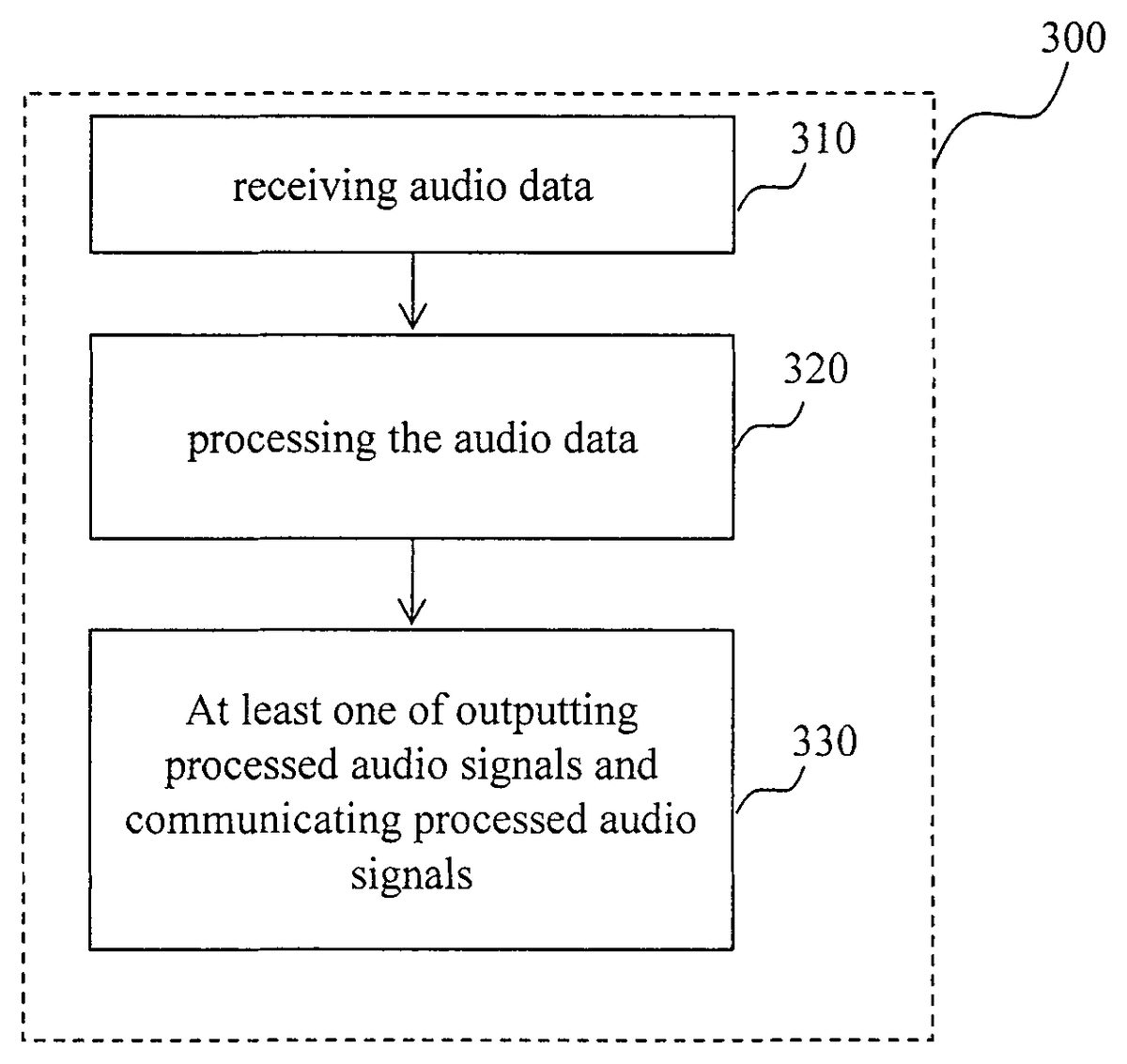
FIG. 4shows a sound processing method300which can be implemented in association with the system100.
The sound processing method300can include receiving audio data310. Audio data, corresponding to gaming audio signals, can be communicated from the terminal102and received by the sound processing apparatus104. More specifically, audio data can be communicated from the sound module102aand received by the receive module104a.
The sound processing method300can further include processing the audio data320to produce the processed audio signals. The audio data can be processed by the sound processing apparatus104to produce the processed audio signals. More specifically, audio data received by the receive module104acan be communicated to the processing module104bfor processing to produce the processed audio signals.
Processed audio signals produced by the processing module140bcan be such that one or both of the low frequency range audio signals and the high frequency range audio signals are accentuated relative to the mid frequency range audio signals. The processed audio signals can further be such that the low frequency range audio signals are more accentuated compared to the high frequency range audio signals when both the low frequency range audio signals and the high frequency range audio signals are accentuated relative to the mid frequency range audio signals.
The sound processing method300can optionally include one or both of outputting the processed audio signals and communicating the processed audio signals330.
In one embodiment, the sound processing apparatus104can be configured to output the processed audio signals in a manner so as to enable a gamer to hear the processed audio signals. In another embodiment, the sound processing apparatus104can be configured to communicate the processed audio signals to the terminal102such that the processed audio signals can be output by the sound reproduction module102bin a manner so as to enable a gamer to hear the processed audio signals. In yet another embodiment, the sound processing apparatus104can be configured to output the processed audio signals and communicate the processed audio signals to the terminal102.
In the foregoing manner, various embodiments of the disclosure are described for addressing at least one of the foregoing disadvantages. Such embodiments are intended to be encompassed by the following claims, and are not to be limited to specific forms or arrangements of parts so described and it will be apparent to one skilled in the art in view of this disclosure that numerous changes and/or modification can be made, which are also intended to be encompassed by the following claims.
Claims
- A sound processing apparatus communicable with a terminal having a first processor suitable for using with an electronic game, the electronic game being associable with audio data communicable from the terminal to the sound processing apparatus, the sound processing apparatus comprising: a receive module for receiving the audio data via the first processor of the terminal, the audio data comprising low frequency range audio signals, mid frequency range audio signals and high frequency range audio signals, wherein the receive module is a transceiver;and a processing module having a second processor coupled to the receive module, the audio data being communicable from the receive module to the processing module, wherein the processing module is configurable to process via the second processor the audio data in a manner such that at least one of the low frequency range audio signals and the high frequency range audio signals are accentuated relative to the mid frequency range audio signals, wherein the electronic game being associable with the audio data is communicable from a sound card in the terminal to the sound processing apparatus, and wherein the sound processing apparatus supplements the sound card in the terminal when activated to process the audio data.
- The sound processing apparatus as in claim 1 wherein the processing module is configurable to process the audio data in a manner so as to attenuate the mid frequency range audio signals relative to at least one of the low frequency range audio signals and the high frequency range audio signals.
- The sound processing apparatus as in claim 2 wherein the processing module is further configurable to process the audio data in a manner such that the low frequency range audio signals are more amplified compared to the high frequency range audio signals.
- The sound processing apparatus as in claim 1 , wherein the processing module is configurable to process the audio data in a manner such that the mid frequency range audio signals are attenuated relative to the low frequency range audio signals and the high frequency range audio signals, and wherein the processing module is further configurable to process the audio data in a manner such that the low frequency range audio signals are more amplified compared to the high frequency range audio signals.
- The sound processing apparatus as in claim 1 , wherein the sound processing apparatus is configurable to process the audio data based on at least one control scheme, the at least one control scheme determining whether or not the sound processing apparatus is activated to process the audio data, the at least one control scheme being at least one of an automatic based control scheme, a manual activation based control scheme and an audio activation based control scheme.
- The sound processing apparatus as in claim 5 , wherein the automatic based control scheme comprises including a database in at least one of the terminal and the sound processing apparatus, the database comprising a games list having a list of game titles, wherein a control signal is generated if the electronic game played on the terminal corresponds to a game title in the list of game titles and the control signal is not generated otherwise, and wherein the sound processing apparatus is activated to process the audio data if the control signal is generated and the sound processing apparatus is not activated otherwise.
- The sound processing apparatus as in claim 5 , wherein the manual activation based control scheme comprises implementing an activation button in at least one of the sound processing apparatus and the terminal, the activation button being usable to generate a control signal to activate the sound processing apparatus to process the audio data.
- The sound processing apparatus as in claim 5 , wherein the audio activation based control scheme comprises having at least one of the first processor and the second processor programmed to provide voice recognition by recognizing one of a preferred word and a preferred phrase, and wherein upon recognition of one of the preferred word and the preferred phrase, a control signal is generated by the at least one of the first processor and the second processor to activate the sound processing apparatus to process the audio data.
- The sound processing apparatus as in claim 1 , wherein the audio data correspond to gaming audio signals associated with audio cues and at least one of voice audio and background music, and wherein the audio cues are accentuated relative to the at least one of voice audio and background music.
- The sound processing apparatus as in claim 1 , wherein the first processor is integral to the sound card in the terminal.
- A sound processing apparatus communicable with a terminal having a first processor suitable for using with an electronic game, the electronic game being associable with audio data communicable from the terminal to the sound processing apparatus, the sound processing apparatus comprising: a receive module for receiving the audio data via the first processor of the terminal, the audio data comprising low frequency range audio signals, mid frequency range audio signals and high frequency range audio signals, wherein the receive module is a transceiver;and a processing module having a second processor coupled to the receive module, the audio data being communicable from the receive module to the processing module, wherein the processing module is configurable to process via the second processor the audio data in a manner such that the mid frequency range audio signals are attenuated relative to the low frequency range audio signals and the high frequency range audio signals, wherein the processing module is further configurable to process via the second processor the audio data in a manner such that the low frequency range audio signals are more amplified compared to the high frequency range audio signals, wherein the electronic game being associable with the audio data is communicable from a sound card in the terminal to the sound processing apparatus, and wherein the sound processing apparatus supplements the sound card in the terminal when activated to process the audio data.
- The sound processing apparatus as in claim 11 , wherein the sound processing apparatus is configurable to process the audio data based on at least one control scheme, the at least one control scheme determining whether or not the sound processing apparatus is activated to process the audio data, the at least one control scheme being at least one of an automatic based control scheme, a manual activation based control scheme and an audio activation based control scheme.
- The sound processing apparatus as in claim 12 , wherein the automatic based control scheme comprises including a database in at least one of the terminal and the sound processing apparatus, the database comprising a games list having a list of game titles, wherein a control signal is generated if the electronic game played on the terminal corresponds to a game title in the list of game titles and the control signal is not generated otherwise, and wherein the sound processing apparatus is activated to process the audio data if the control signal is generated and the sound processing apparatus is not activated otherwise.
- The sound processing apparatus as in claim 12 , wherein the manual activation based control scheme comprises implementing an activation button in at least one of the sound processing apparatus and the terminal, the activation button being usable to generate a control signal to activate the sound processing apparatus to process the audio data.
- The sound processing apparatus as in claim 12 , wherein the audio activation based control scheme comprises having at least one of the first processor and the second processor programmed to provide voice recognition by recognizing one of a preferred word and a preferred phrase, and wherein upon recognition of one of the preferred word and the preferred phrase, a control signal is generated by the at least one of the first processor and the second processor to activate the sound processing apparatus to process the audio data.
- A sound processing apparatus communicable with a terminal having a first processor suitable for using with an electronic game, the electronic game being associable with audio data communicable from the terminal to the sound processing apparatus, the sound processing apparatus comprising: a receive module for receiving the audio data via the first processor of the terminal, the audio data comprising low frequency range audio signals, mid frequency range audio signals and high frequency range audio signals, wherein the receive module is a transceiver;and a processing module having a second processor coupled to the receive module, the audio data being communicable from the receive module to the processing module, wherein the processing module is configurable to process the audio data in a manner so as to attenuate the mid frequency range audio signals relative to at least one of the low frequency range audio signals and the high frequency range audio signals, wherein the electronic game being associable with the audio data is communicable from a sound card in the terminal to the sound processing apparatus, and wherein the sound processing apparatus supplements the sound card in the terminal when activated to process the audio data.
- The sound processing apparatus as in claim 16 , wherein the sound processing apparatus is configurable to process the audio data based on at least one control scheme, the at least one control scheme determining whether or not the sound processing apparatus is activated to process the audio data, the at least one control scheme being at least one of an automatic based control scheme, a manual activation based control scheme and an audio activation based control scheme.
- The sound processing apparatus as in claim 17 , wherein the automatic based control scheme comprises including a database in at least one of the terminal and the sound processing apparatus, the database comprising a games list having a list of game titles, wherein a control signal is generated if the electronic game played on the terminal corresponds to a game title in the list of game titles and the control signal is not generated otherwise, and wherein the sound processing apparatus is activated to process the audio data if the control signal is generated and the sound processing apparatus is not activated otherwise.
- The sound processing apparatus as in claim 17 , wherein the manual activation based control scheme comprises implementing an activation button in at least one of the sound processing apparatus and the terminal, the activation button being usable to generate a control signal to activate the sound processing apparatus to process the audio data.
- The sound processing apparatus as in claim 17 , wherein the audio activation based control scheme comprises having at least one of the first processor and the second processor programmed to provide voice recognition by recognizing one of a preferred word and a preferred phrase, and wherein upon recognition of one of the preferred word and the preferred phrase, a control signal is generated by the at least one of the first processor and the second processor to activate the sound processing apparatus to process the audio data.
Disclaimer: Data collected from the USPTO and may be malformed, incomplete, and/or otherwise inaccurate.